
On the way to the Autoroute which will take him to towards Strasbourg, Donqui passes dozens of First World War cemeteries. It seems as if there is another one every couple of hundred metres.

He decides to stop off and pay his respects at the Vimy battlefield where in 1917 the Canadian Division captured a prominent ridge now topped by a colossal monument.

A section of the trenches have been preserved with concrete ‘sandbags’. DonQui paces out the distance between the original frontline Canadian and German trenches. They are only 50 metres apart! Between them are a number of craters formed by shells and the larger ones by mines set off in tunnels dug underneath the trenches.

DonQui takes the evocative guided tour of a section of the tunnels — now reinforced and better lit than they would have been in 1917. Parts of the tunnels served as field headquarters as well being a relatively safe way of moving between positions.
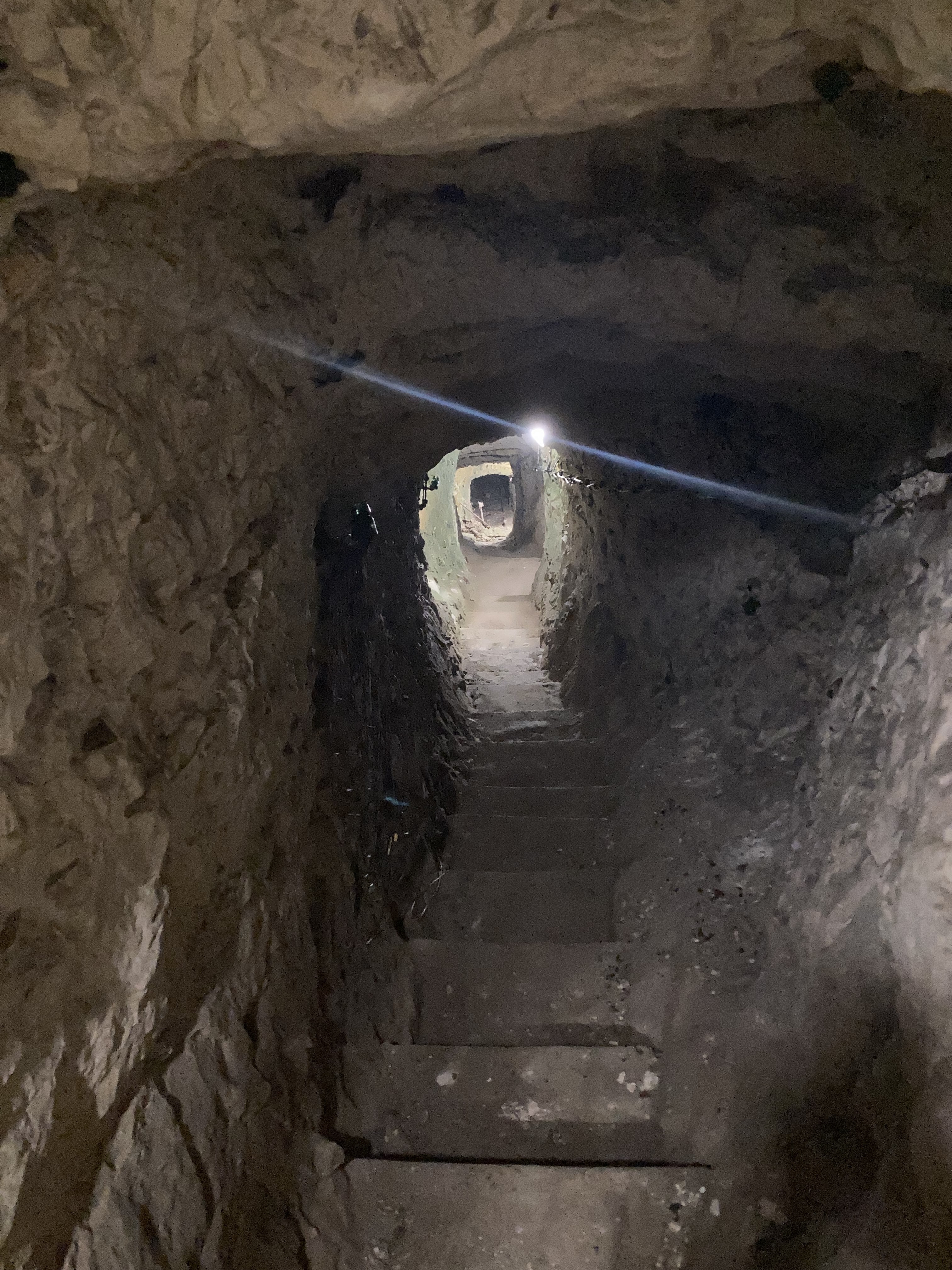
One mine tunnel still exists, dug deep to work its way under the German trenches. This one was never blown. The big crater below was caused by an exploded mine.

Vimy is an amazingly evocative and sobering battlefield site — preserved, staffed and maintained by Veterans Affairs Canada. DonQui had only expected to make a brief stop but ended up staying several hours. It gave him lots to think about.
 donquiblog
The Great War battle fields and the cemeteries that are nearby are incredibly moving and evocative.
At the battle of Vimy Ridge I believe the Canadians were commanded by a General Byng, he and his family lived in the village of Thorpe-Le-Soken in Essex. There is still a grand house there called Byng House, I understand that the family, especially Lady Byng, were well liked and respected in the village. I spent the first five years of my life in the same village, our (much humbler) house is only about 150 metres from the entrance to the grounds of Byng House.
LikeLiked by 1 person