DonQui’s Tips for Road Trips

Having been home for a couple of days, DonQui Oaty has been reflecting on his wonderful road trip through France, Germany, Switzerland and Italy (and also a tiny bit of Austria). He drove 3000 miles (well 2955 to be exact), took 1 month over it, stayed in some wonderful places, ate a lot of good food, and drank a lot of good wine (and beer too).
So what are his top tips for those readers contemplating a European road trip?

Your Car

The success of the trip hugely depends on your car. DonQui had his fully serviced a couple of weeks before leaving. If the tyres are still OK but becoming worn – replace them. Same for windshield wipers and anything else that is borderline. The last thing you want is to have a breakdown or spend time searching for a garage and try to get things fixed en-route.
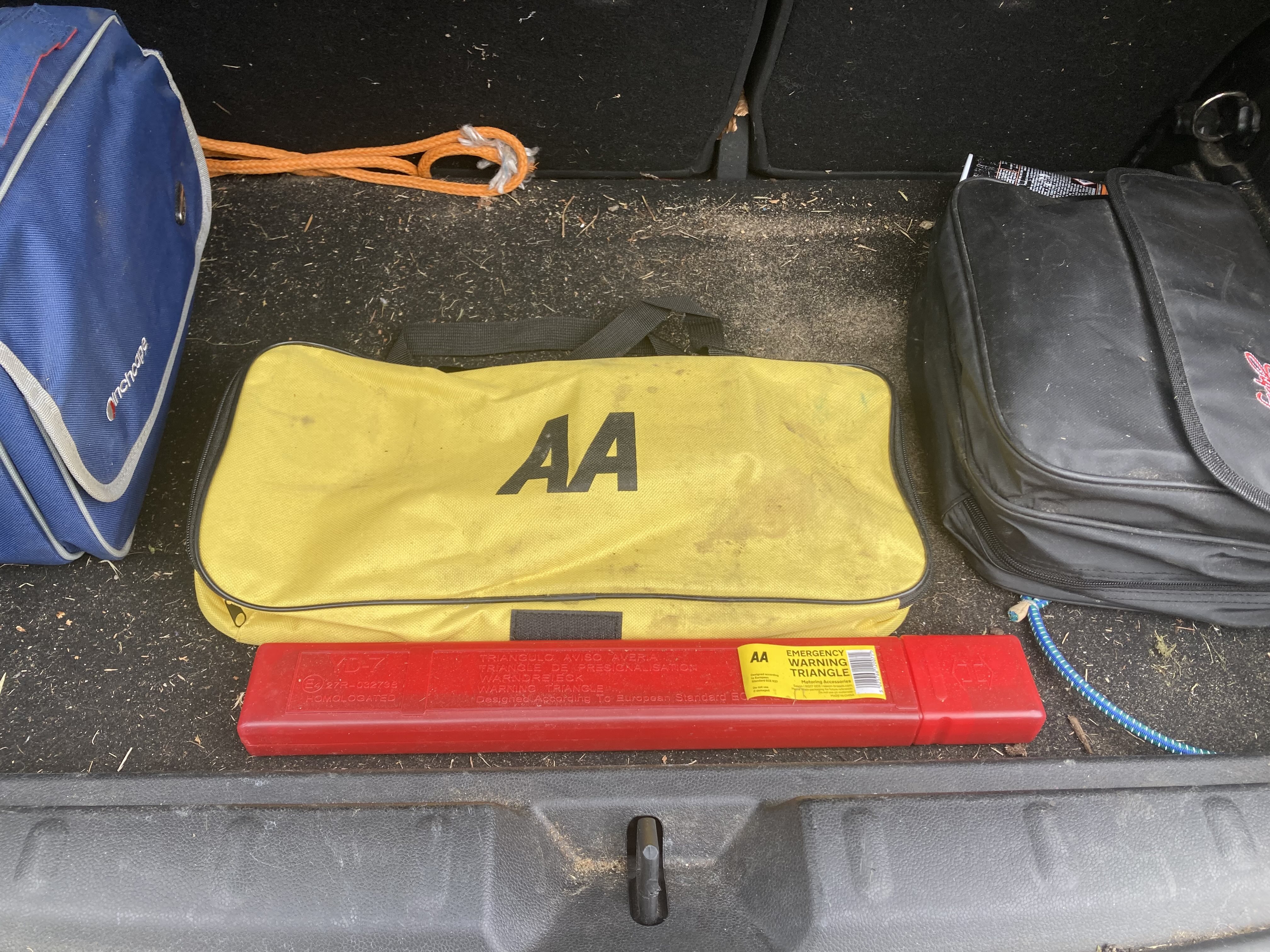
The AA provides good advice of what you need to drive in various countries They also sell a kit containing some essential items such as safety triangle, high vis vest, UK sticker and other things you need when driving in many European countries

Paperwork

Obviously you need a valid up to date passport. DonQui is blessed to have an Irish passport and so does not have to contend with the myriad of new post-Brexit complications for non-EU passport holders. New visa waiver systems are coming into force soon which will apply to all non-EU passport holders entering Europe. The will make the already long delays at the channel even more fun.

Driving licence, car insurance certificate valid for Europe, and proof of car ownership (V5C logbook) are also essential. Donqui got into a bit of bother at the Swiss border when they were looking for some form he did not have, however with the above they did let him through. He still does not know what form they were after even after searching the internet. 

Also for both Austria and Switzerland you need to pay the road tax in advance. This can be done on-line or purchased from a service station just before the border. 

Insurance

Breakdown insurance covering all the countries you are travelling through is also pretty important. Fortunately DonQui dot not have to use his but he has in the past. Should something go wrong with the car you don’t want to be trying to find help in another language without a clue of where or whom to go to. 

The same is true for medical insurance. DonQui likes to think he is invincible but accidents do happen.

Pre-Book

DonQui is not a natural planner. He is very much spur of the moment. However pre-booking accommodation in Europe these days is essential if you want to stay in nice places — and DonQui does like to stay in nice places. He travelled in May-June. Although off-season many good places were booked out months in advance. This does mean sticking to a schedule but DonQui always pays a little more to allow cancellation should he wish to change his mind. 

He also advises pre-booking for exceptional restaurants and popular tourist sites. Some, such as Versailles, only allow visitors at pre-set times and prime times are filled days in advance. Others — Juliette’s house in Verona for example, do not sell tickets at the door. You have to book online in advance and carry the ticket on your phone.

Your Phone

These days almost everything from entrance tickets to parking requires the use of a smart phone. It is also hugely helpful for navigation. Therefore it is well worth paying in advance for a package that will not cost you an arm and a leg when downloading data.

Parking
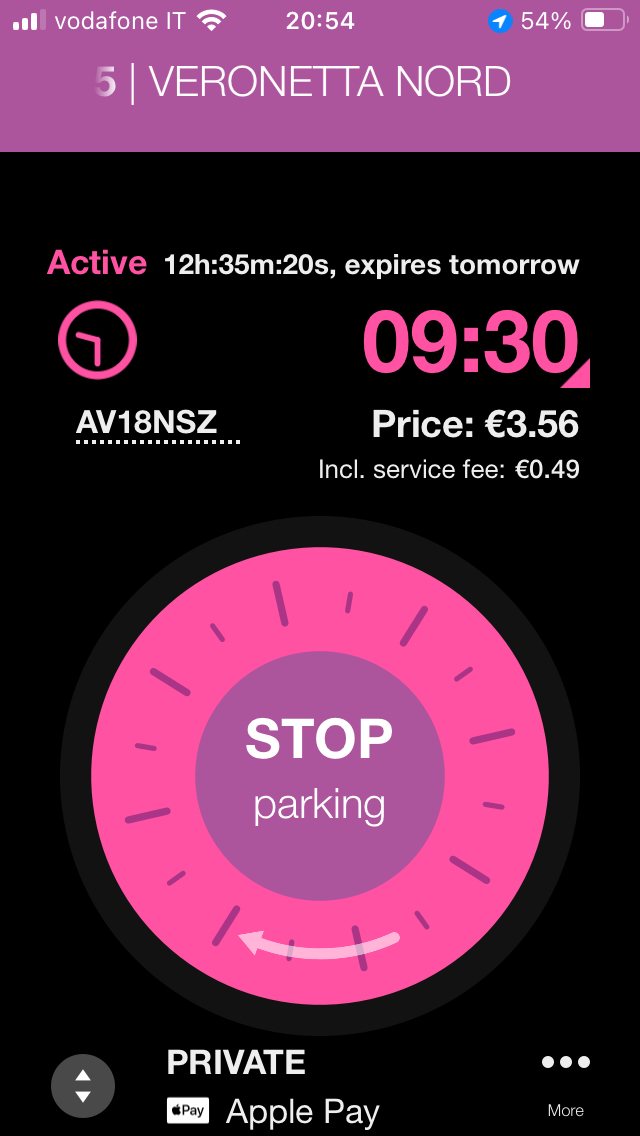
Most street parking places in France and Italy (but not all) used the Easy Park App. Once downloaded and details filled in it was — well, easy to park. For those other places the instructions were relatively easy to follow with some available in English. A touch screen allowed payment by phone or card. In Germany, however, some meters still required coins.

Cash or card?

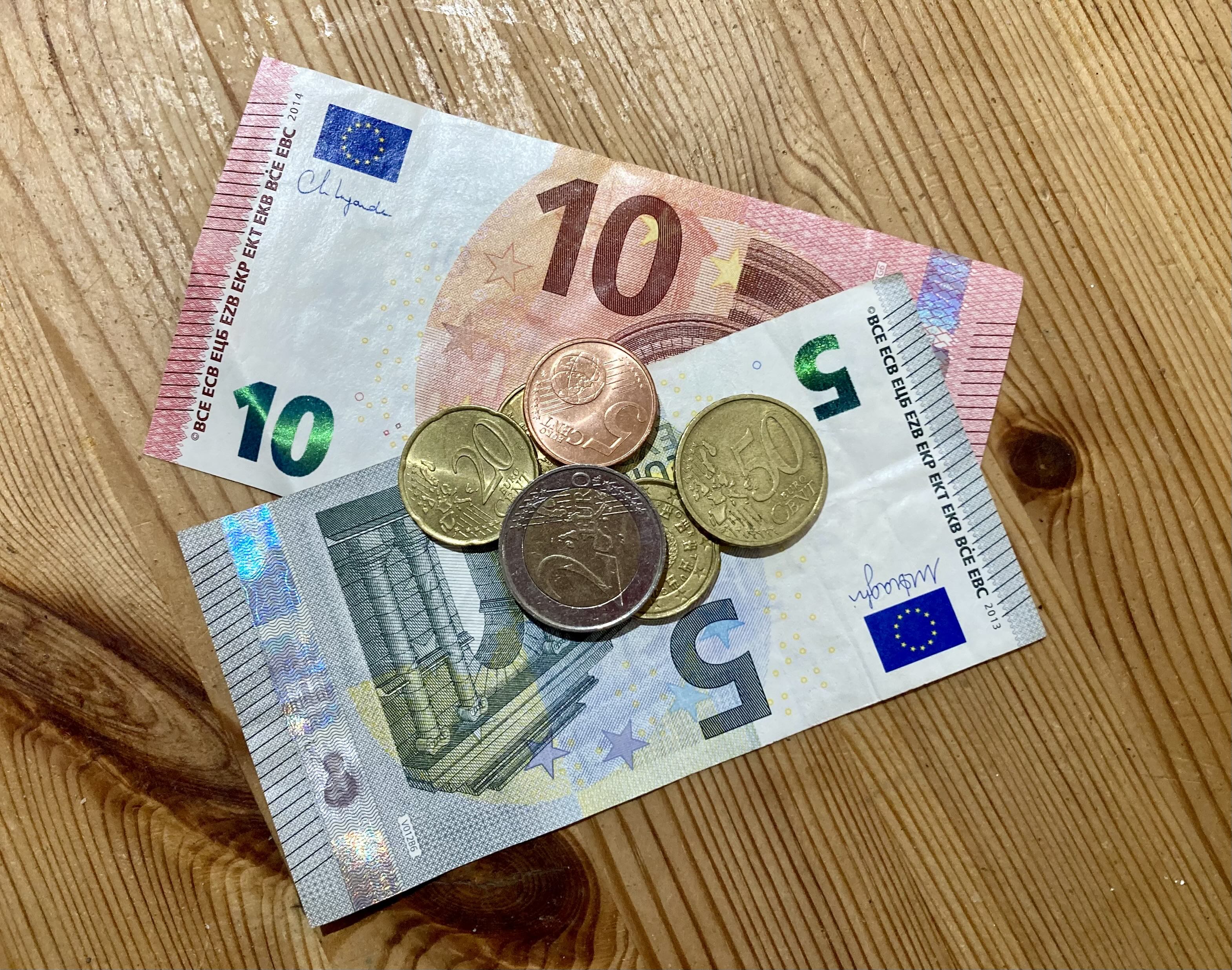
Pretty well everything in France can be paid for by card or phone. Not so in Germany. With only one exception, every restaurant that DonQui went to in Germany was cash only. He has experienced similar in Austria. So before entering the Germanic world, make sure you have plenty of Euros.

In Italy most places happily take cards but for smaller transactions they prefer cash. On a couple of occasions DonQui was told that they accepted cards but unfortunately their card reader was ‘broken’. So always useful to have a bit of cash in pocket.

Speaking of cards, many UK banks charge for every foreign transaction. It is worth having a card from a bank that does not do this as the charges can really add up. DonQui has an online account with Starling Bank which he uses for travel as they do not charge extra fees. Other banks do similar. It is worth setting up such an account in advance.

Short hops

One of the joys of a road trip is that the journey is a big part of the experience. DonQui likes to keep each leg relatively short to allow him the opportunity to stop off and visit places en-route as he did from Genoa to Arles. 

Most of his drives were about 3 hours (excluding stops). This made each leg not too arduous to allow not only time to explore along the way but also for a late start and early arrival. 

DonQui did have a couple of longer drives. Crossing the alps from Germany to Italy was five hours straight driving, taking seven hours to arrive at Verona after stops. This he found quite tedious, especially as the traffic around Milan was horrendous. The drive from Périgord to Versailles was also a bit too long to be enjoyable.

In future DonQui will try to limit each leg to 4 hours maximum (excluding stops). 

Really long trips can be broken up by a one night stay at someplace mildly interesting between the main destination points. Donqui did so at Arras, Genoa and Toulouse. None of these were places he desperately wanted to go to — they were merely stops along the way. In each case, however, he throughly enjoyed his quick stop-over.

For these quick one-night stops he found it handy to have a small pack which contained the overnight essentials so he did not have to drag all his baggage into the hotel.

Even a Donkey can Dream

Leaving Versailles, DonQui navigates his way around Paris and then heads towards Calais and home. 

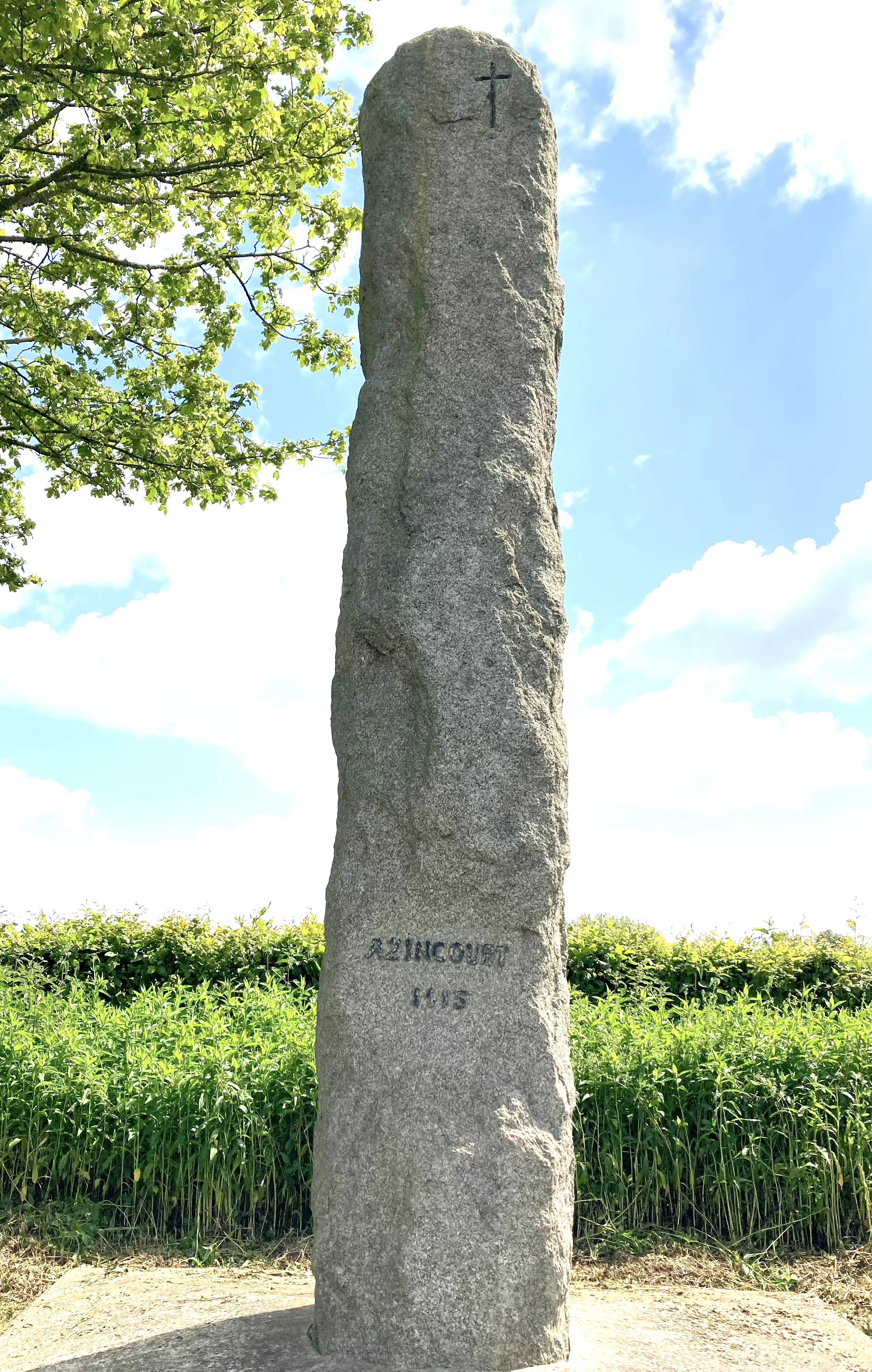
He breaks his journey for an overnight stay at Azincourt, better know in English as Agincourt — the site of the 1415 battle where Henry V’s vastly outnumbered English decimated the flower of French chivalry. 

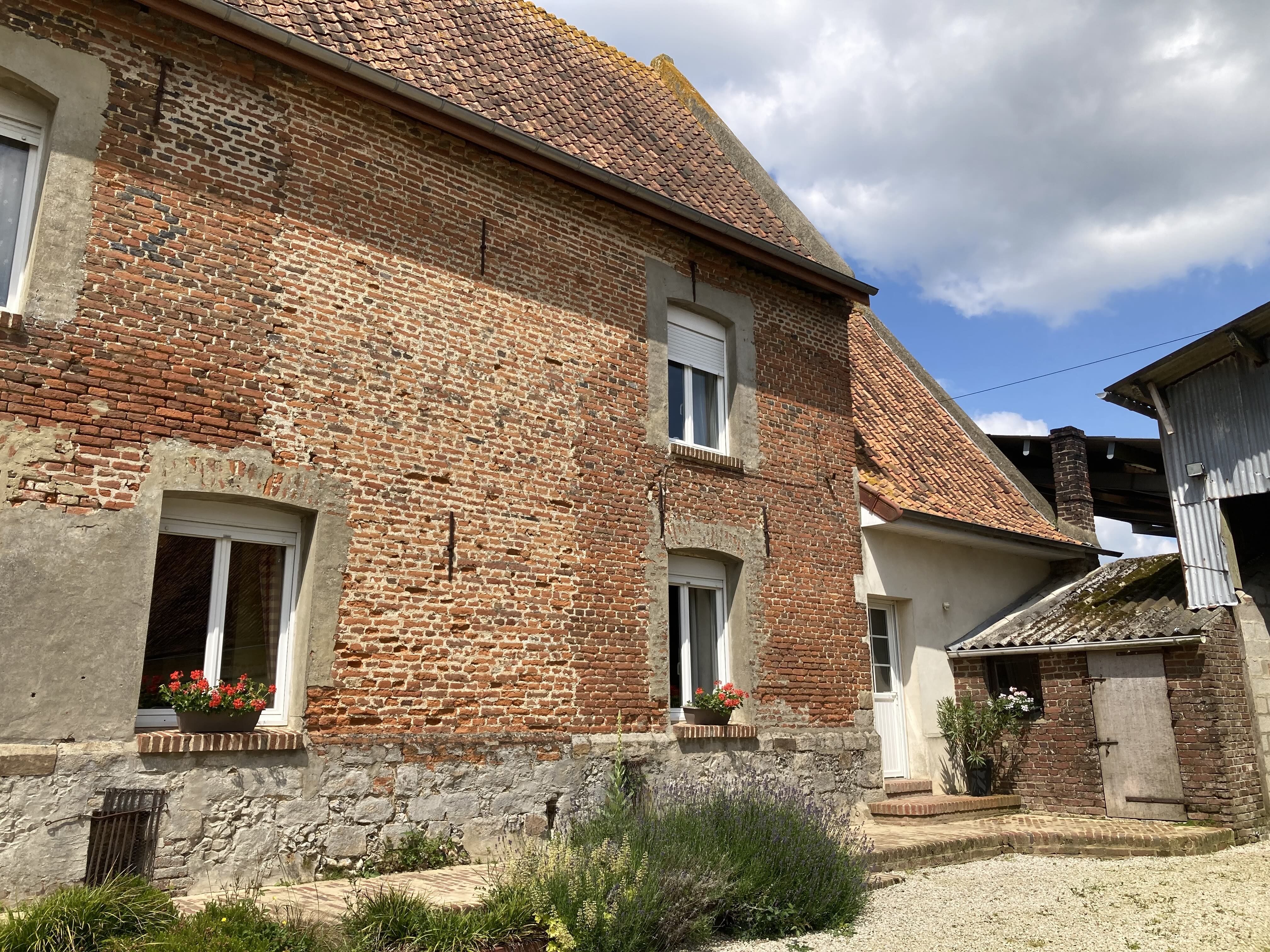
DonQui spends the night at the delightful Au Repos du Roi in the tiny hamlet of Maisoncelle. 

Now a working farm, this is the very same place that King Henry V spent the night before the battle in 1415.

As a young colt DonQui quite fancied himself as a stout yeoman archer standing firm and loosing arrow after arrow against the advancing knights. Of course had he actually been there it is far more likely he would have been assigned to the baggage train to haul supplies. Still, even a donkey can dream the impossible!

“From this day to the ending of the world,

But we in it shall be remembered,

We few, we happy few, we band of brothers.

For he today that sheds his blood with me,

Shall be my brother.” (Wm. Shakespeare, Henry V)

There is a small visitor centre in Azincourt which gives a good orientation to the battle and the events leading up to it. 

The actual battlefield is — well a field. This is the view from the far right of the English position looking towards the French. The woods that hemmed in both sides of the field in 1415 have now been mostly cut down. 

After a last fabulous French breakfast, DonQui heads off on the very last leg of his road trip.

The border controls on the French side of the channel tunnel are far less chaotic than they had been on the English side

After one month and 3000 miles, DonQui is soon back home in Suffolk

Palace of the Sun King

After a long and quite boring drive DonQui arrives at the penultimate stop on his epic European road trip — Versailles. Of course he is here to view the palace which was built by King Louis XIV to escape the noise and smells of Paris and also to imprison his nobles in a golden cage. 

The approach to the front gate is truly spectacular.

DonQui imagines how awe inspiring it must have been for guests arriving in the 17th century from the provinces or other countries. 

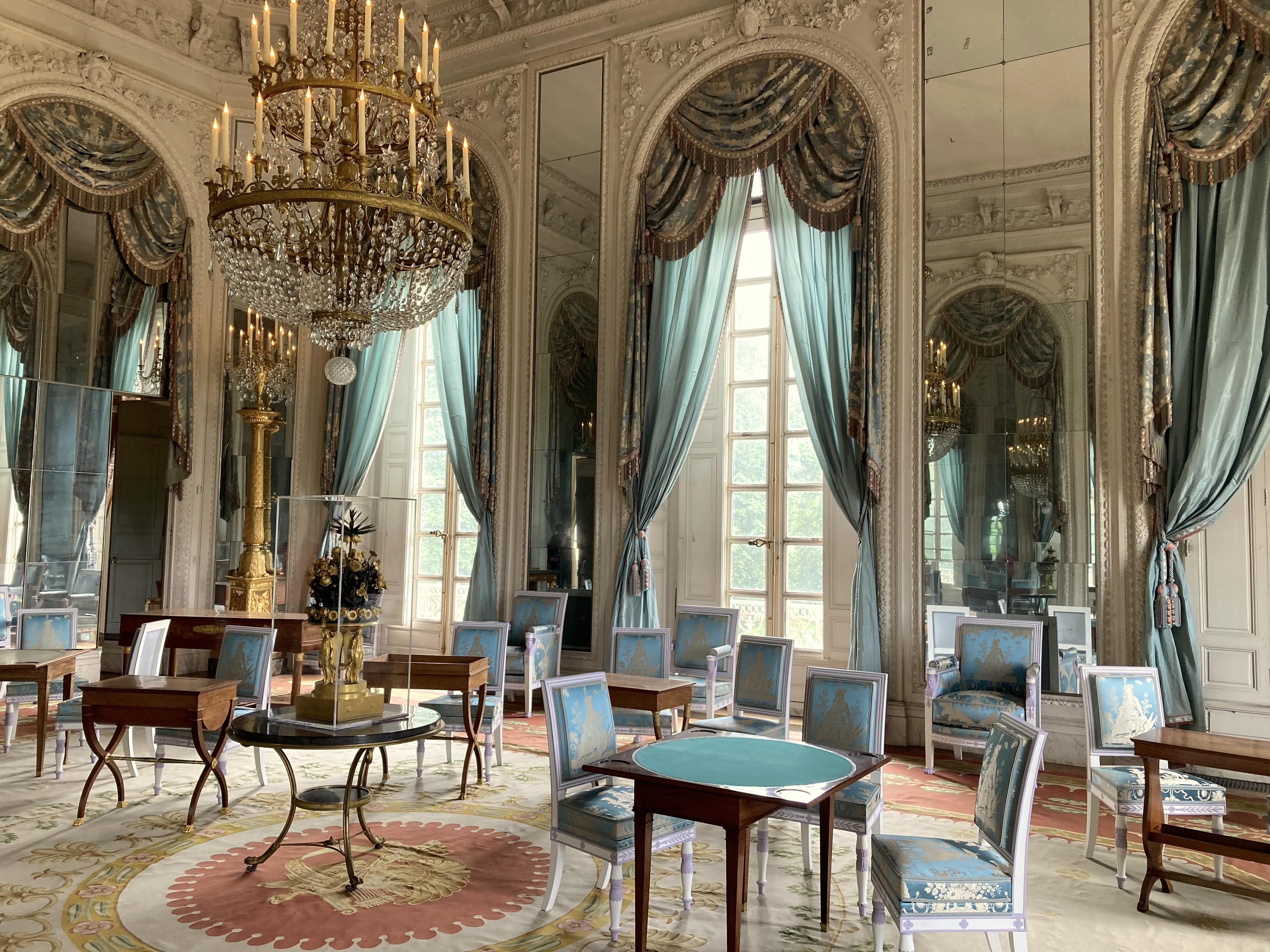
Tickets have set entry times to avoid overcrowding. Yet DonQui struggles at times negotiating large tour groups which tend to clog up entrances to the most interesting parts of the palace such as the famous hall of mirrors.

The king’s bedchamber does not look particularly comfortable and his bed seems remarkably small.

At least he didn’t have far to go to reach his modest private chapel when in the mood to say a prayer or two.

DonQui very much enjoys the Gallery of Battles which is adorned with large paintings featuring French victories from Clovis to Napoleon. There is no mention of defeats. This painting shows Louis XIV leading the storming party at the siege of Spanish-held Valenciennes in 1677. Well not exactly leading, as the King’s Musketeers are in front of him. In truth he was probably not there at all,  which just goes to show that Fake News is not a 21st century invention.

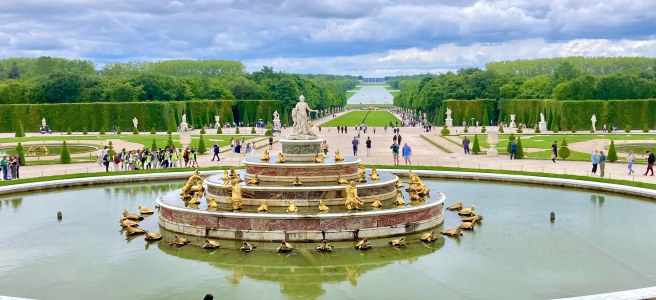
DonQui is quite looking forward to a good trot around the grounds but, although they are quite pleasant and uncrowded, he is a little underwhelmed. Lots of works are going on to get them ready for the 2024 Olympics when the grounds will host the equestrian events. There is quite a bit of replanting going on and no blooms anywhere in sight.

It is a shame that none of the impressive fountains are in operation.

None-the-less it is a pleasant trot through the extensive grounds. Leaving the coach loads of visitors behind him, DonQui reaches the Trianon estate which good King Louis built for his mistress Madame de Montespan and where they carried our their amorous liaisons. 

In a pleasant contrast to the main palace, DonQui has the place to almost to himself.

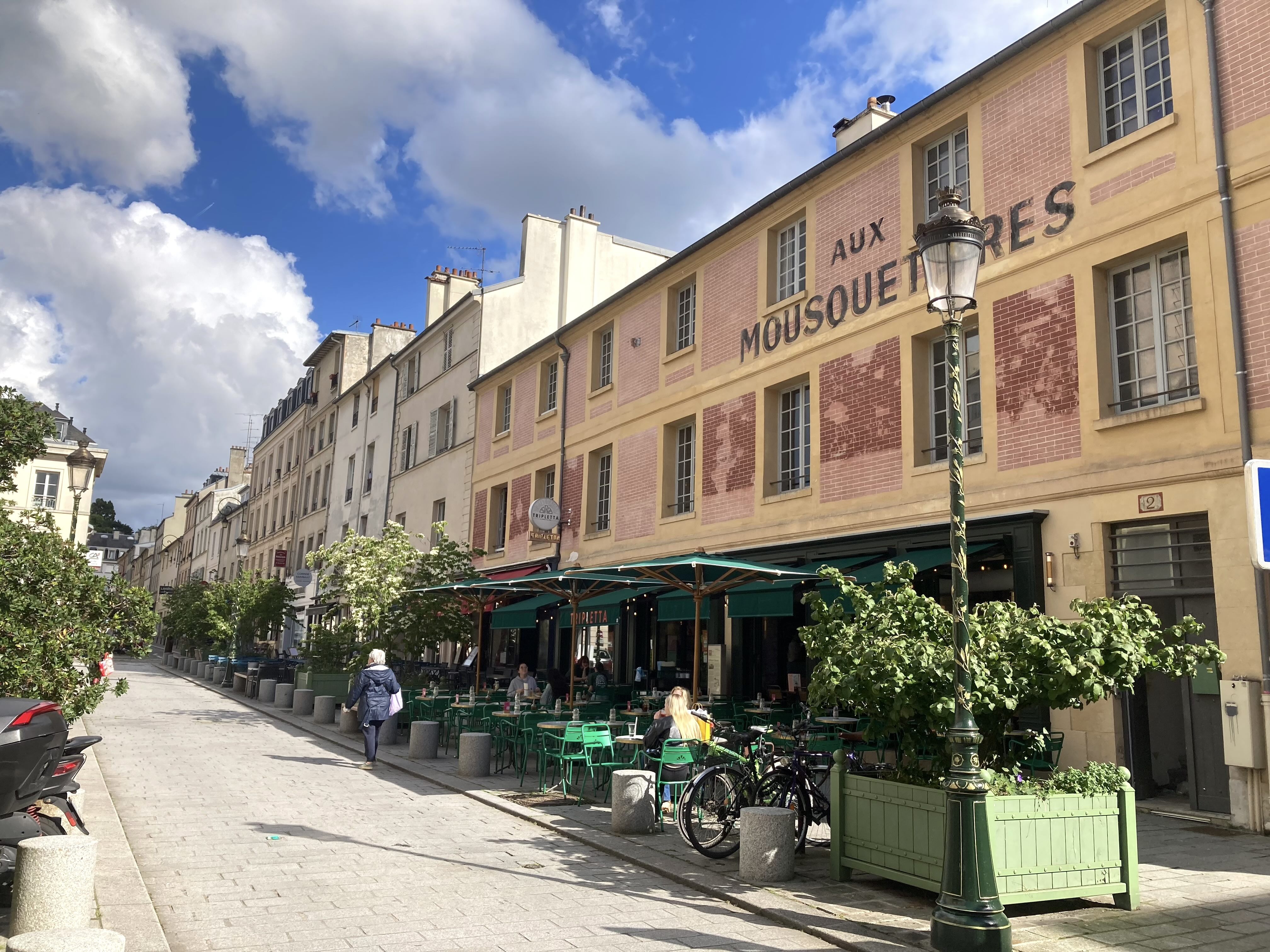
Apart from the palace and its adjuncts, modern Versailles does not have much to offer the visitor. It looks and feels like a Paris suburb — which is indeed what it is. There are, however, a few pleasant streets.

The following morning DonQui visits the King’s Kitchen Gardens which are maintained as  17th century kitchen gardens would have been with traditional vegetables, fruit and herbs. It reminds him of the Chelsea Physic Garden in London which dates from the same time.

There is a lovely scent of herbs in the air and the fountain is working, even if it is not much of a fountain.

Caves and Castles

The Périgord is a region of France DonQui has never visited before. He is excited to have a few days free to explore.

The scenery is stunning with rocky outcrops, deep ravines and deciduous forest interspersed with farmland. The villages are incredibly pretty with buildings all made from the sandy limestone that is characteristic of this region. Hiking and cycling trails are ubiquitous and plenty of places offer canoe trips on the Dordogne river.

DonQui’s first port of call is the beautiful town of Sarlat which is quite close to where he is staying. 

Built around a 9th century Benedictine abby, the old city is one of the best preserved in France with much of the architecture (albeit restored) dating to the 14th century.

DonQui’s host at his gîte recommends lunch at the hamlet of Montfort. It turns out to be very good advice both for the location and food.

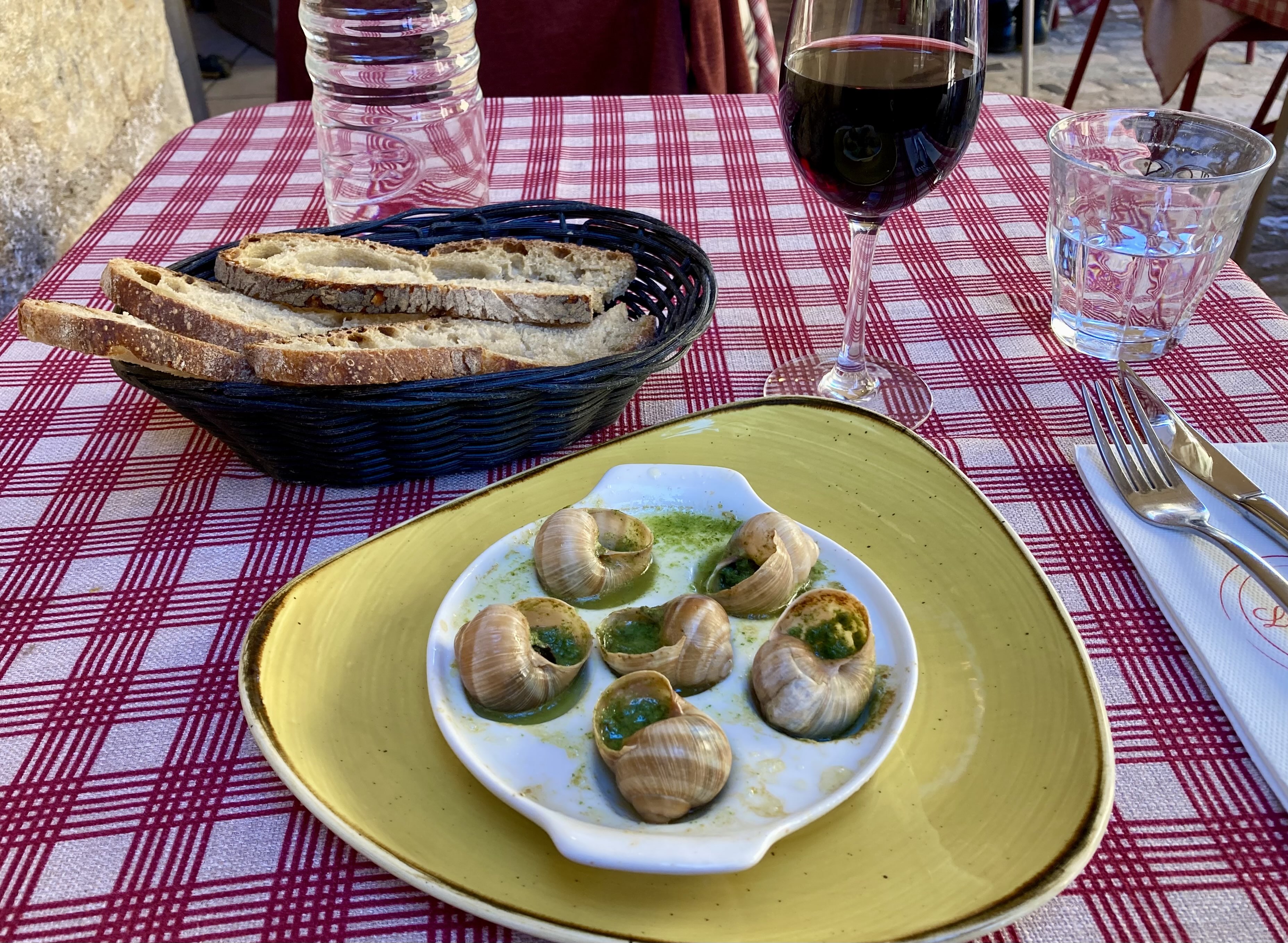
The gourmet speciality of this region (vegans look away now) is foie gras. The terrine de foie gras is utterly delicious.

DonQui is also quite taken by the Rocamadour goat’s cheese served with a little honey. He will be going to Rocamadour shortly and resolves to pick some up to bring home with him. 

After lunch he takes a short walk along the Dordogne ravine to work off a calorie or two. 

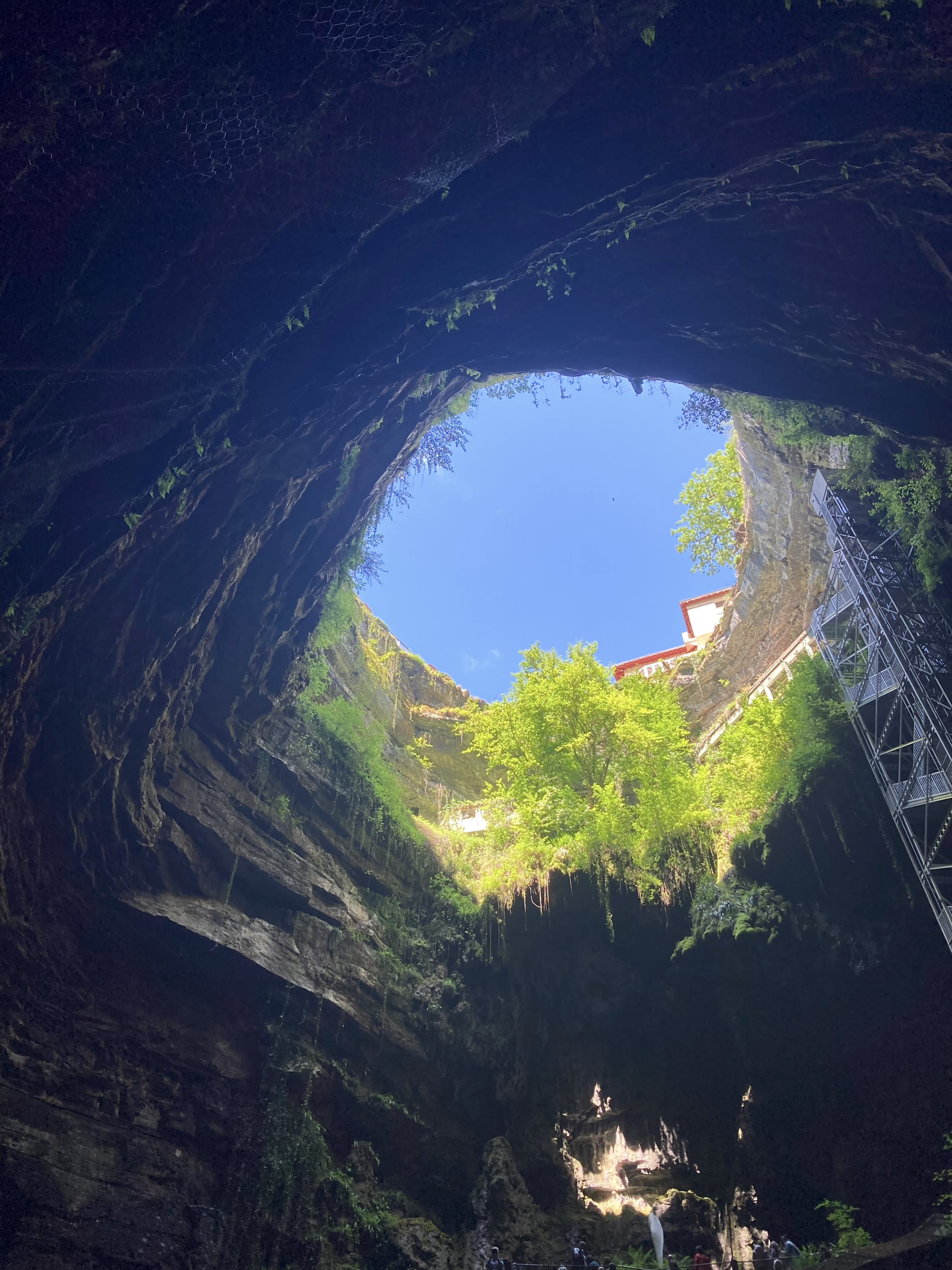
On Duchess’s advice (she visited this area years ago), DonQui heads out to the Gouffre de Padirac the following day. This is an immense chasm over 100m deep with long caves and an underground river. The drop from the surface to the caves below is straight down. Fortunately there are now lifts in place so DonQui is not obliged to recall his abseiling lessons from long ago.

Words fail DonQui as he tries to describe the grandeur, atmosphere and incredible geological wonders that he encounters. So the photos will have to serve. 

Eventually the footpath winding its way through the cavern comes to an end. DonQui’s journey then continues in a small boat along the underground river. 

DonQui is quite certain that this underground lake is the very place where the hobbit Bilbo Baggins encountered Gollum after discovering the ring and escaping the goblins.

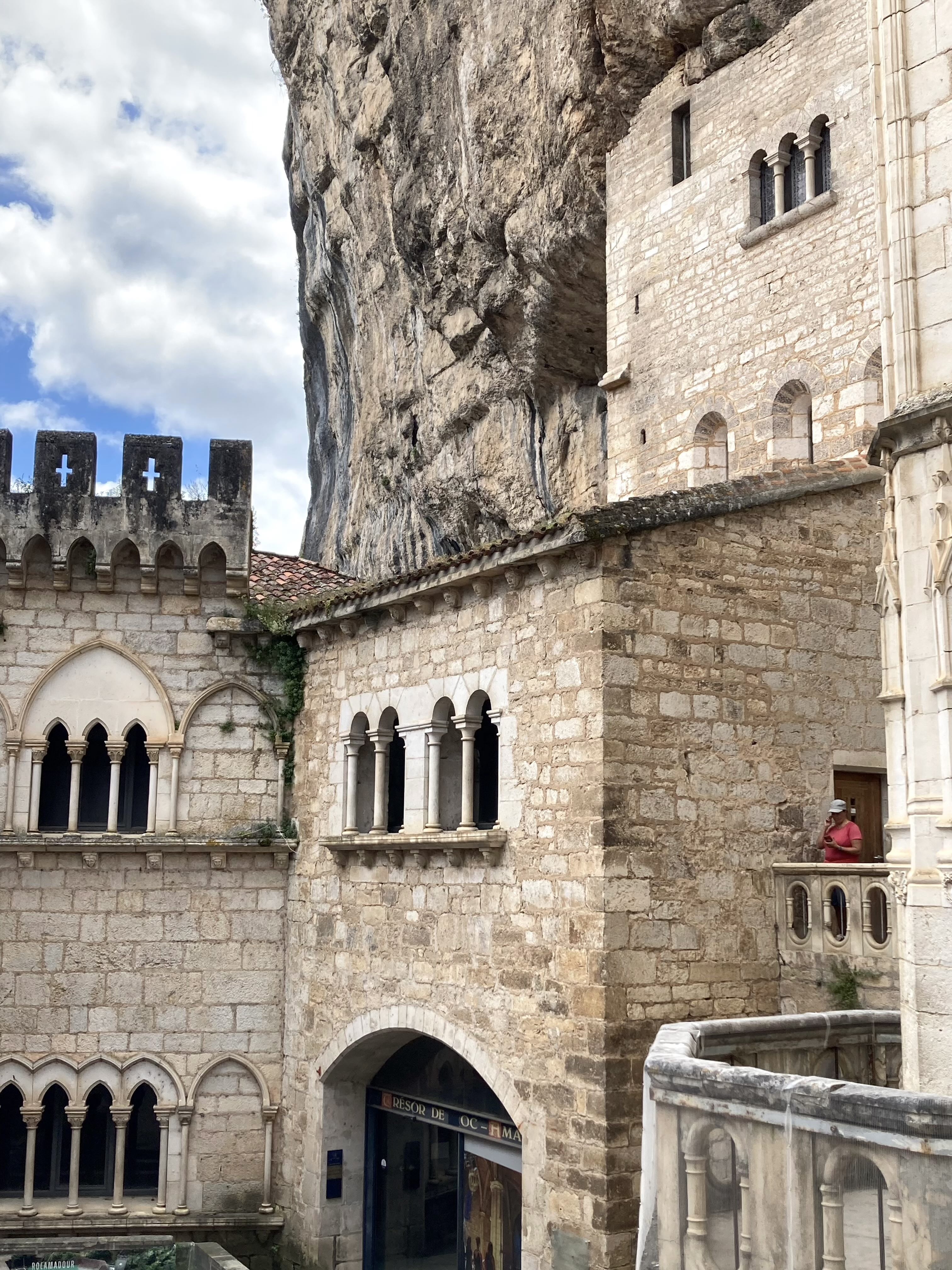
Then it is on to Rocamadour. Tightly hugging a steep gorge, Rocamadour is on three levels — chateau at the top, religious sanctuary in the middle and small town at the bottom. Fortunately, once again, there are lifts. The small medieval town lies along a single road on the lower level by the river. Being impossible to defend, the inhabitants had to take sanctuary on the upper levels when attack was threatened. This happened several times in the middle ages, invariably when threatened by marauding English armies.

The view from the top is stunning. Although the battlements can be walked around, the chateau itself is private.

The Sanctuary of the Blessed Virgin on the middle level has been a pilgrimage site since the 12th century. The first miracle attributed to the Virgin Mary here was recorded in 1148, many more are alleged to have taken place since. Most of the current buildings date to the 15th century when much of Rocamadour was rebuilt.

The much venerated wooden statue of the Black Madonna is believed to have been carved in the 12th century.

DonQui heads back to Sarlat for his final supper in this delightful region. He choses the unpretentious Bistrot de Sarlat hoping for some typical French bistro food.

And that is exactly what he gets.

The Midi to Périgord

With the arrival of June, DonQui now begins to slowly wind his way home to the Misty Isles in the far northwest.

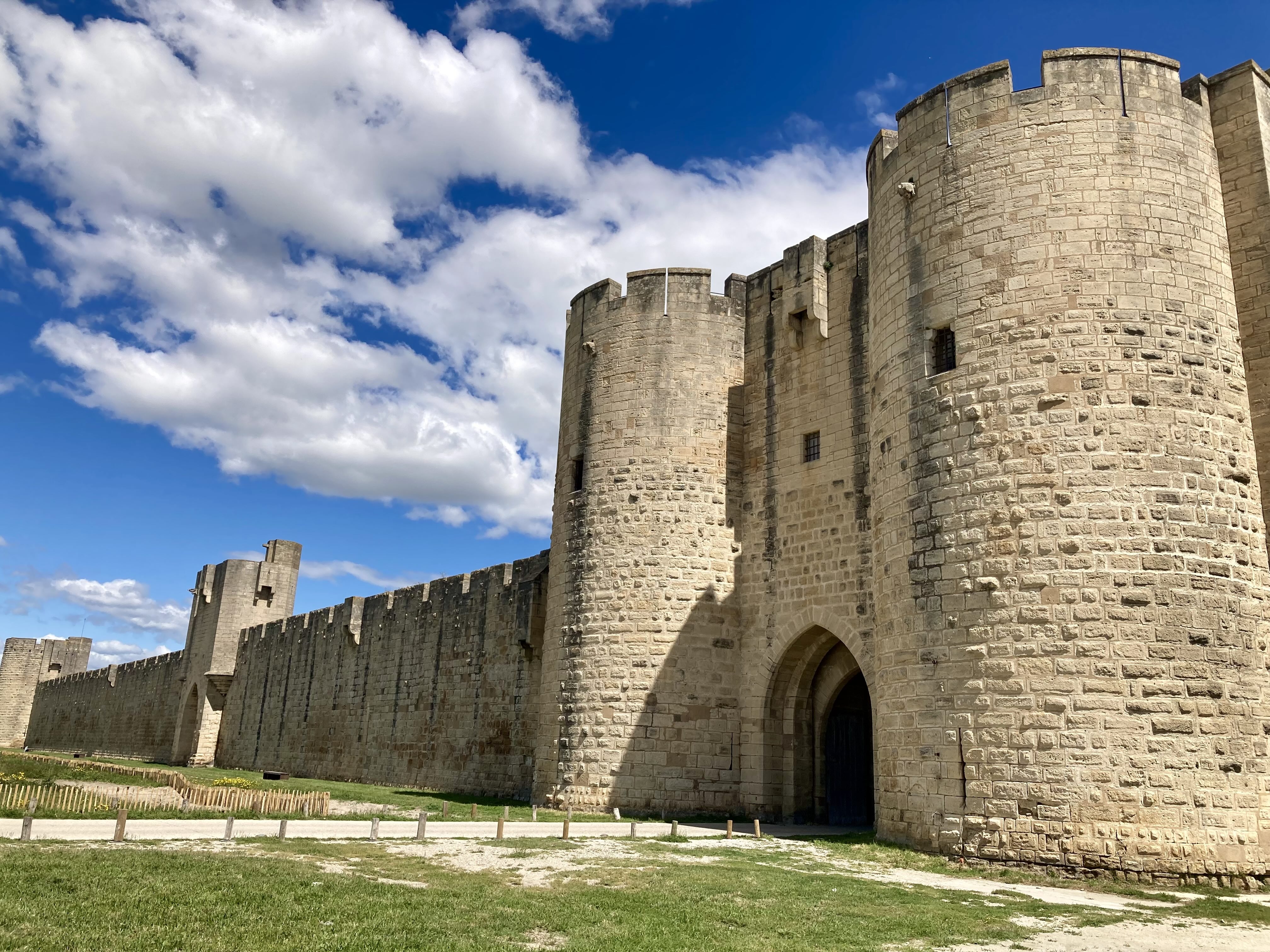
He first heads along the Mediterranean coast towards the Spanish border, taking a mid morning coffee stop at Aigues-Mortes. The name of the town (stagnant waters) comes from the surrounding marshes at the mouth of the Rhône. 

It is a magnificent fortified town which came to prominence in 1240 when King Louis IX developed it into a maritime base in order to rid France of its dependency on the Italian states for access to the Mediterranean. At that time Aigues-Mortes became France’s only port on the Med as even Marseilles belonged to the Kingdom of Naples then.

It was from here that Louis IX launched the ill fated seventh and eighth crusades. In the first of these, against Egypt, Louis was captured and ransomed. In the second, against Tunis, he died from fever. Despite not having slaughtered quite as many people as the Pope might have wished, he did get a sainthood out of it.

DonQui passes the magnificent medieval city of Carcassonne. It may surprise readers that DonQui does not stop here for a bit of an explore. Even he, however, can take only so many medieval cites in one day and he has been to Carcassonne before. For those that have not been there, DonQui highly recommends a visit.

DonQui breaks his journey for an overnight stop in Toulouse. Once the capital of the Visigothic Kingdom it is now the centre of the French Aerospace industry. It feels like a lively, vibrant city — a good place to stop but not necessarily a place to go out of one’s way to visit.

DonQui was going to go easy on the food but then he stumbles across the Restaurant au Gascon down a small back street. Feeling his inner d’Artagnan, and tempted by the 3 course menu for only €21, he goes inside — emerging a couple of satisfying hours later.

The highlight of his meal is a delicious cassoulet — which is a speciality of this region. Cooked with confit duck leg and Toulouse sausage, it elevates bangers and beans to a whole new level.

The following morning DonQui turns his car towards the north and drives on, noting with some dismay the falling temperatures as the miles pass by. He stops for a while at Cahors which has a magnificent 14th century towered bridge.

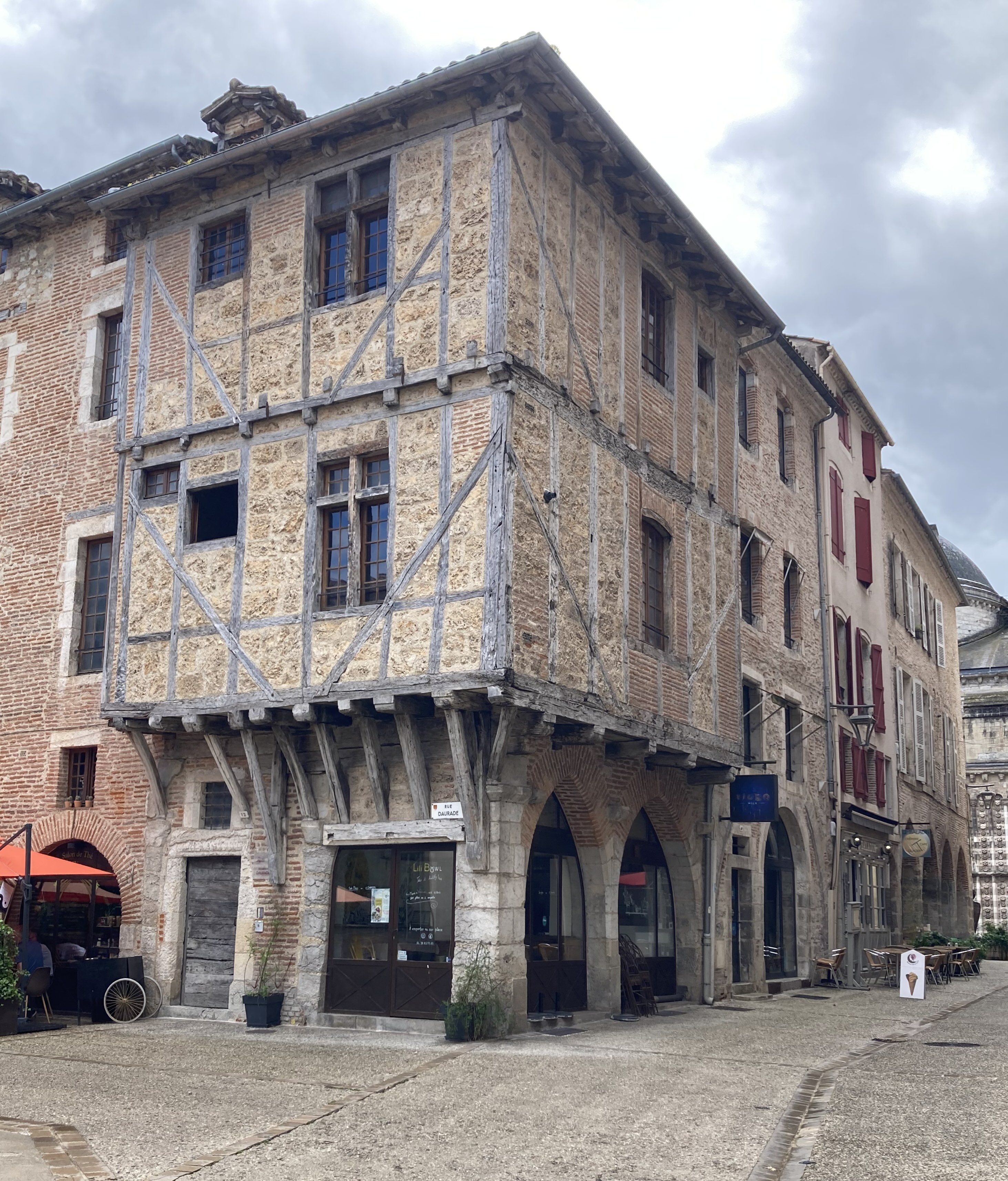
Not particularly touristy, Cahors has some evocative streets with lots of interesting medieval architecture that has not yet been Disneyfied. It known for its dark red wines made with Malbec grapes. And yes, you guessed it, DonQui picks up a couple of bottles. 

Moving on into the Périgord,  DonQui holes up in a small gîte deep in the countryside and far from the maddening crowd. This is a region of France DonQui has never been to before. He looks forward to exploring it, 

Sea, Sun and Saints

DonQui has timed his arrival on the Med at the end of May to hopefully coincide with the sort of weather conducive to lazing around on a beach but without it being overrun with other sun seekers.

His destination is Les-Saintes-Maries-de-la-Mer with its 36kms of sand beaches at the mouth of the Rhône. It is only about a ½ hour drive from Arles.

It is a fairly laid back place and nothing like as expensive or as up itself as the Côte d’Azur further east. 

Les-Saintes-Maries-de-la-Mer gets its name from the three saintly Marys (Magdalene, Clopas and Salome) who were present at Jesus’ crucifixion. In AD 46 the three Marys escaped Roman persecution in Palestine by boat, coming ashore at the village of Ra which is today (you guessed it) Saintes-Maries-de-la-Mer.  Fortunately for them there were no patrols attempting to stop small boats carrying unwanted asylum seekers.

The ‘discovery’ of the relics of Mary Clopas and Mary Salome in the 15th century ‘verified’ the story and kicked off a lucrative pilgrimage which still continues today. The fate of Mary Magdalene is shrouded in legend and remains a favourite theme for thriller writers and holy grail hunters.  

DonQui admires the impressive 9th century fortified church which houses the relics of two of the saintly Marys. 

This is a serious fortification, complete with a well to sustain the 9th-10th century inhabitants when they sought sanctuary from Viking or Saracen raiders.

The view from the battlements provides good early warning of any malicious sea raiders. Perhaps DonQui is not the most alert of look-outs but then he has reliable intelligence that no Viking raiders are expected any time soon. 

With forecasts of windy days ahead, DonQui decides to embark now on a boat tour along the coast and up the Petit Rhône into the heart of the more than 340,000 acres of marshland that constitutes the Camargue. 

Along the way he sees a wide variety of birdlife including a couple of flamingoes flying overhead. Then (no doubt carefully timed with his boat’s progress) a gardian (Camargue cowboy if you like) rides up to the shore herding some of the animals in his charge. 

The Camargue is famous for its free-ranging black bulls and white horses. The former are bred for non-fatal bull fighting but also end up the dining table. DonQui can attest to the deliciousness of their meat. 

The horses are primarily work horses but, unlike their Veronese cousins, do not end on the dining table. The colts are born dark and only acquire the famous white coat when they get older.

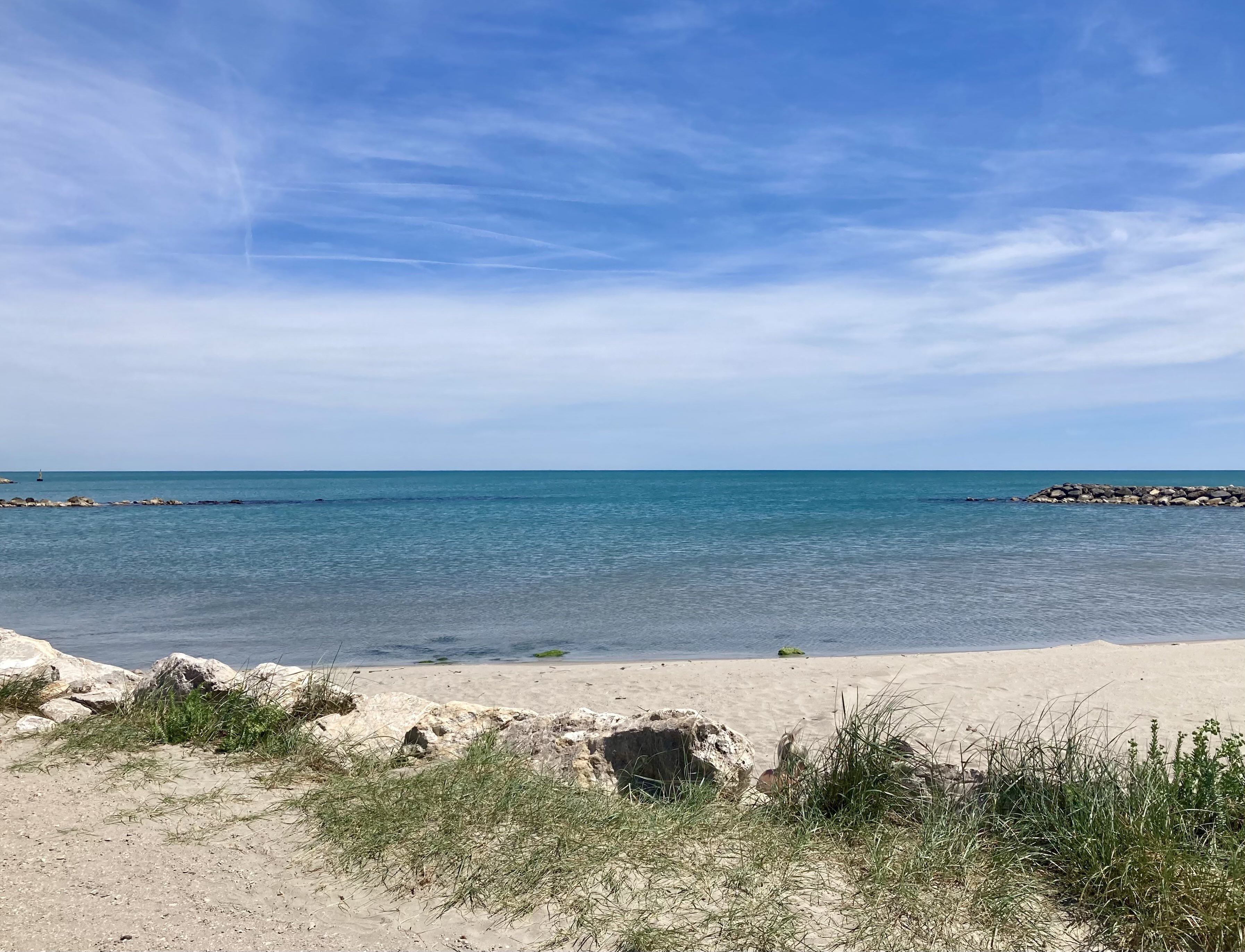
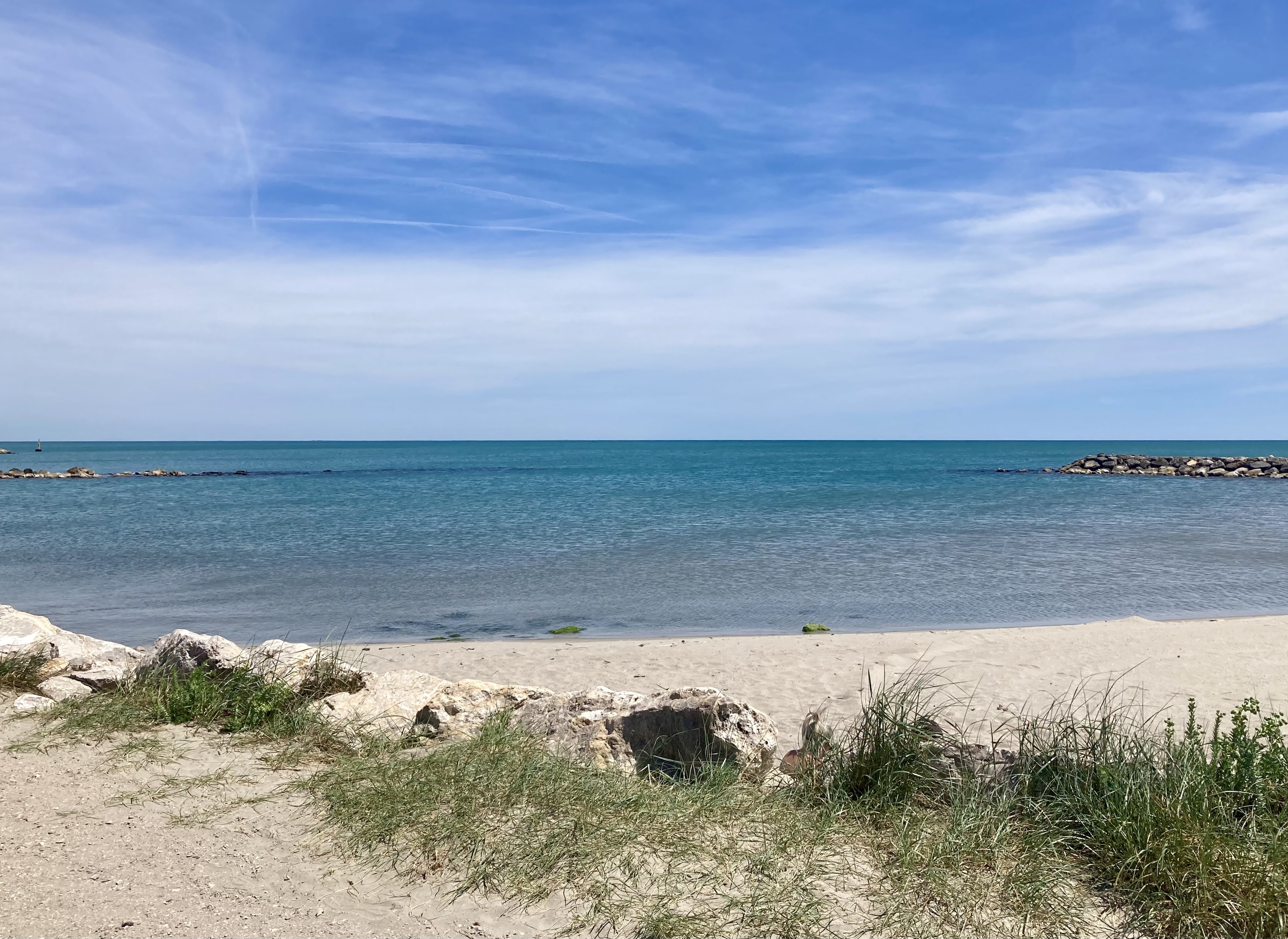
After the boat trip DonQui spends a lazy few days at Saintes-Maries-de-la-Mer. With day time temperatures pleasantly in the mid 20s and few other tourists to spoil his view, he very much enjoys his time by the beach.  The water is a little on the cold side still — not North Sea cold — but cool enough for DonQui to limit his bathing to simply getting his hooves wet.

Having previously tasted Camargue bull (gardiane de taureau) in Arles , he feasts on local seafood whilst at the coast. 

DonQui’s favourite dish by far consists of tellines cooked in a creamy garlic and parsley sauce. These are tiny clams (apparently wedge clams in English) raked up from the first 10 cm of sand at the water’s edge. A speciality of this region of Provence, they are not easily available elsewhere due to the labour-intensive harvesting. He likes them so much that he samples them at several restaurants on succeeding days.

He is also quite taken with poutargue. This is the same dried, cured fish roe he had in a pasta in Genoa where it is called bottarga. At the excellent Restaurant Les Launes the friendly waitress explains to DonQui that here it is eaten as a starter on thin slices of bread with butter and a squeeze of lemon. The taste is not dissimilar to a strong hard cheese with only a hint of fish. DonQui is very glad he got the opportunity to sample it.

Sojourn in Arles

DonQui has stayed in Arles before and loved the city. So he is going to revisit for a couple of days before heading to the Mediterranean coast.

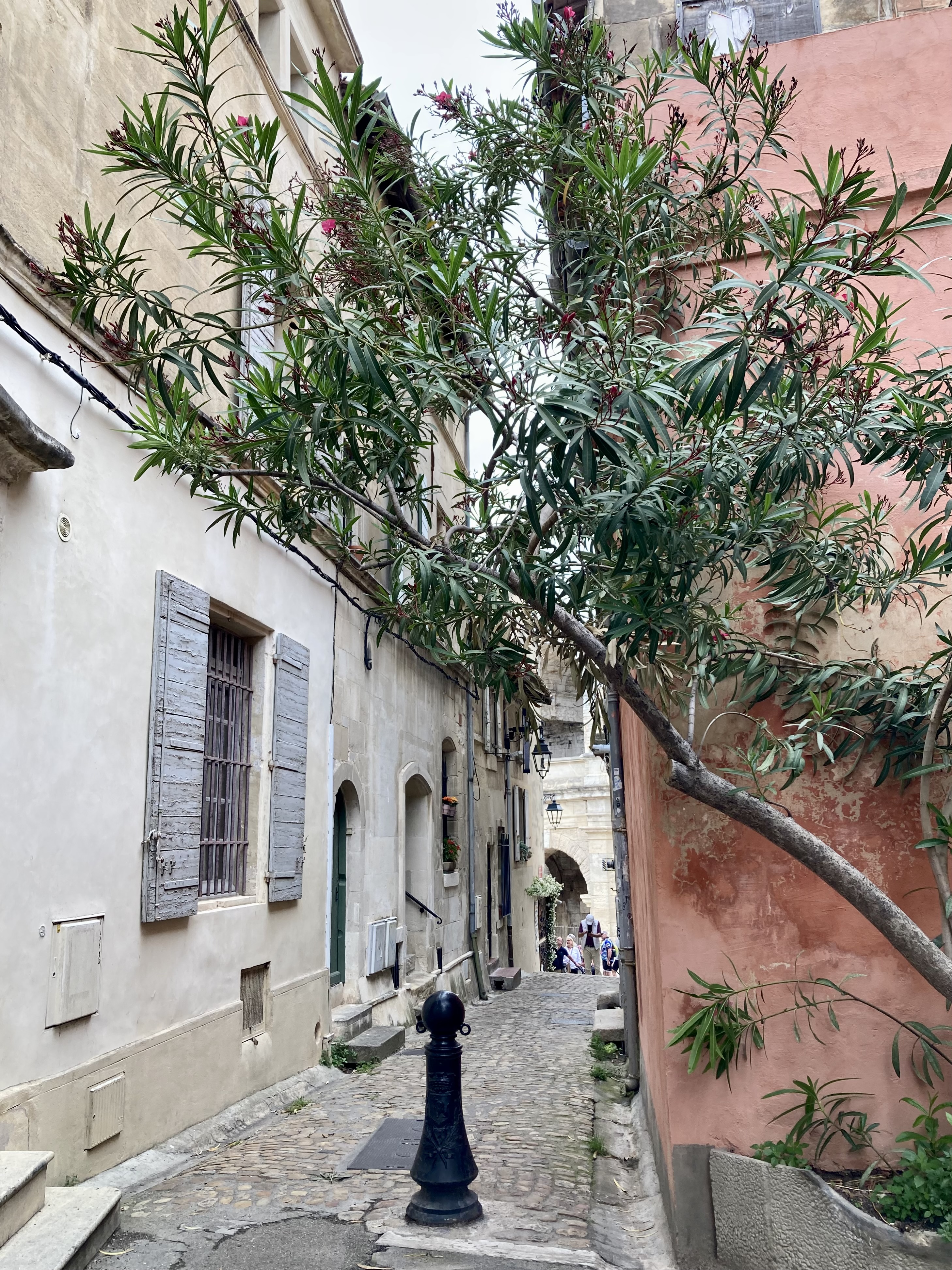
He loves simply wandering around the streets without any particular plan just to see what is around the next corner.

And Arles is an eminently walkable city. At this time of year (May) it is not overrun with tourists apart from a few small gaggles temporarily let off their cruise ships for good behaviour.

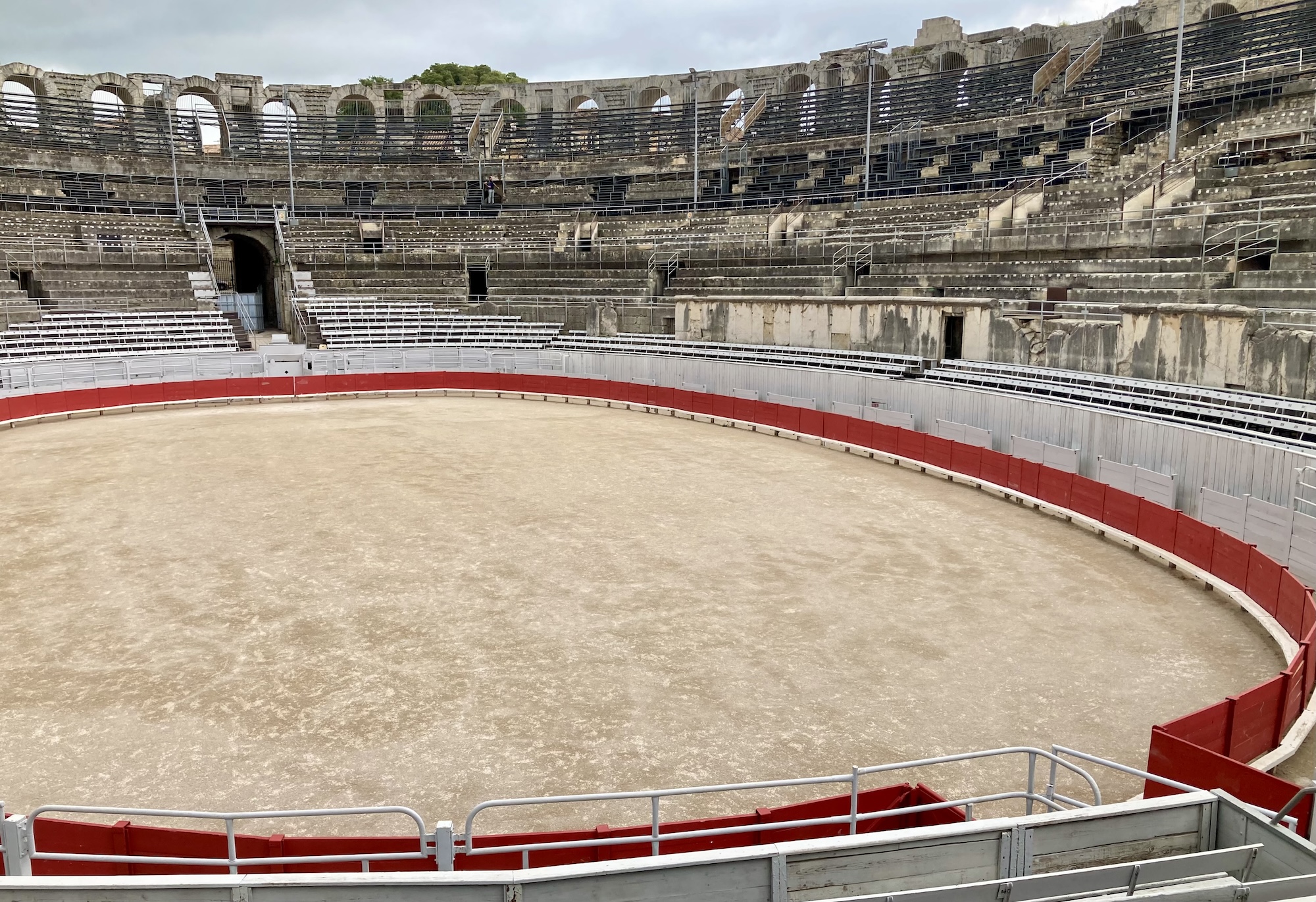
An important Gallo-Roman town and capital of Roman Gaul in the 5th C AD, there is plenty of good Roman stuff for DonQui to enjoy. The Roman arena served as walls of the city in the middle ages with most of the town (much reduced after the Roman era) being crammed inside it.

The arena was cleared and partially restored in the early 20th century and now once again functions as a place of entertainment — although without  gladiatorial combat as far as DonQui can ascertain.

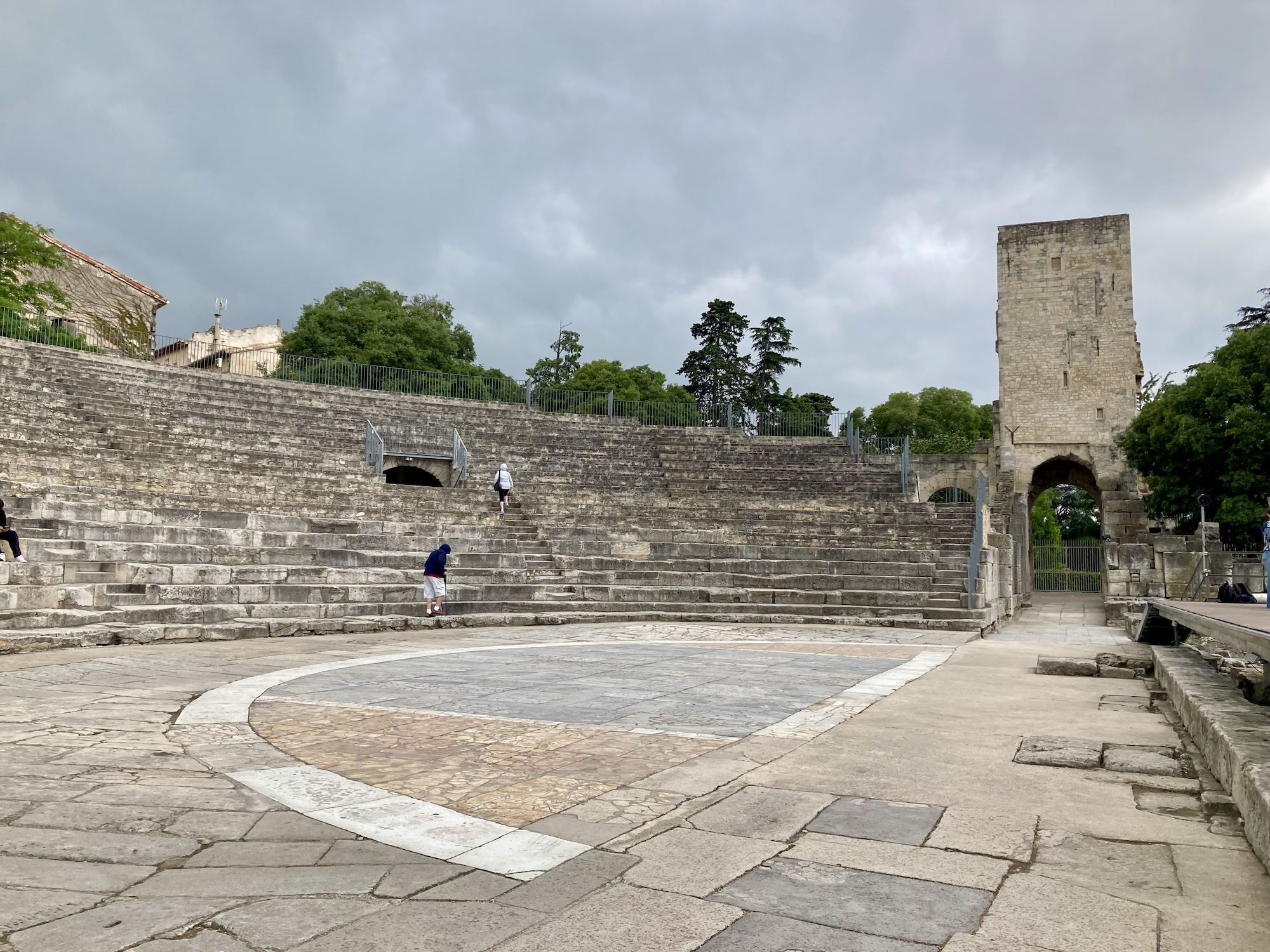
The well-preserved Roman amphitheatre is also still in use for plays and concerts.

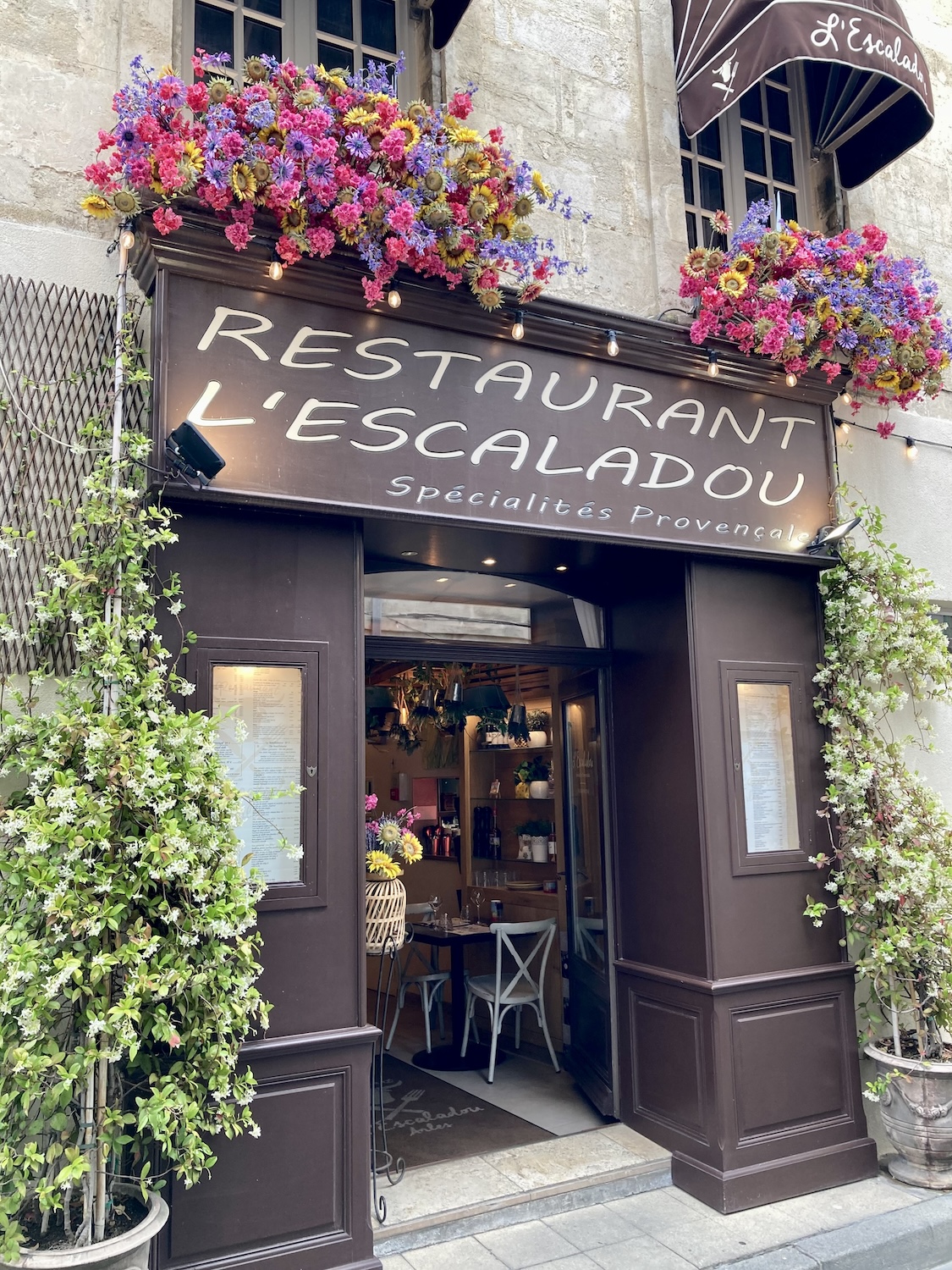
After a good trot around the place, DonQui pauses for a little sustenance at the delightful Restaurant Escaladou, just around the corner from the Roman arena.

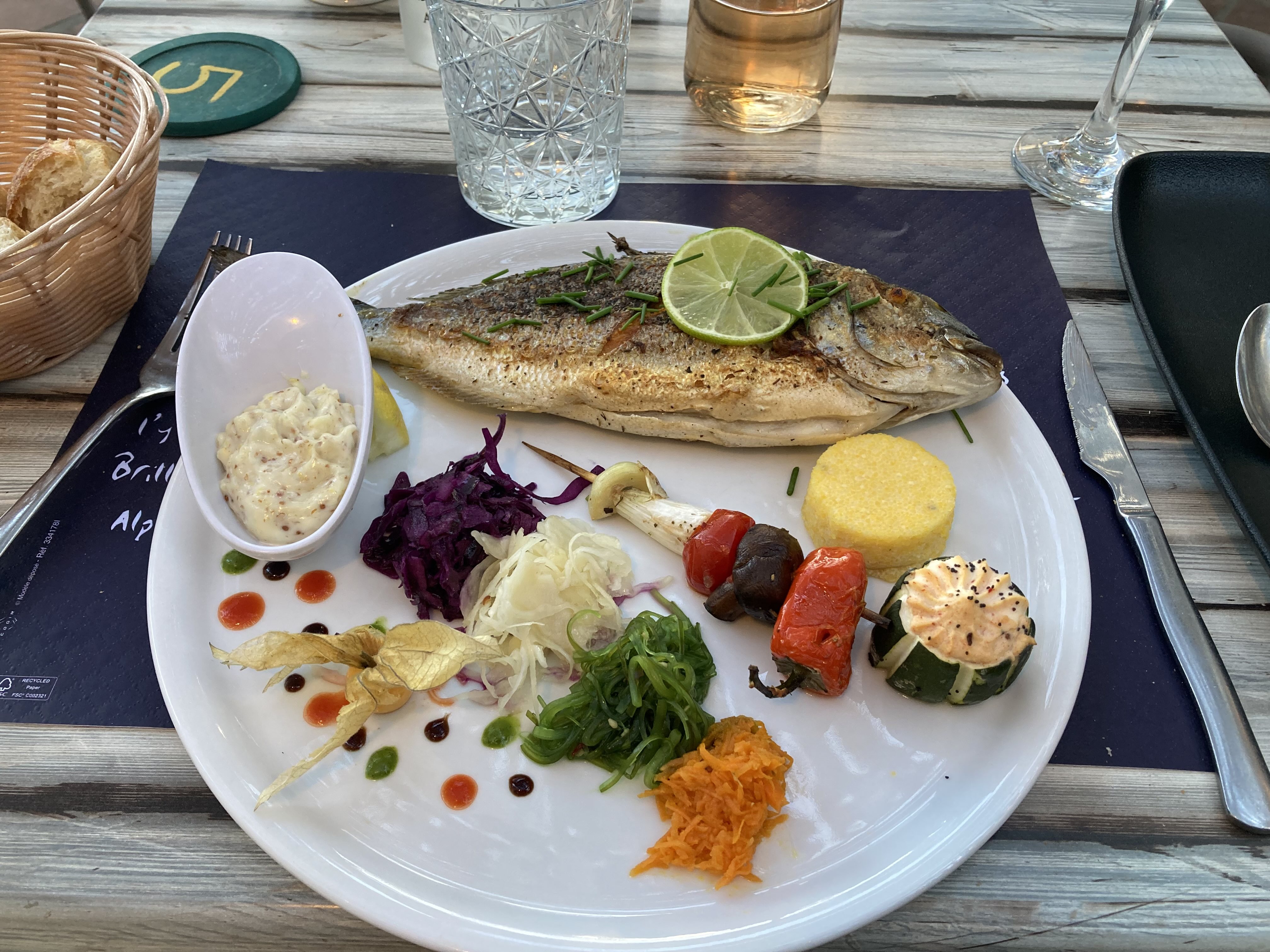
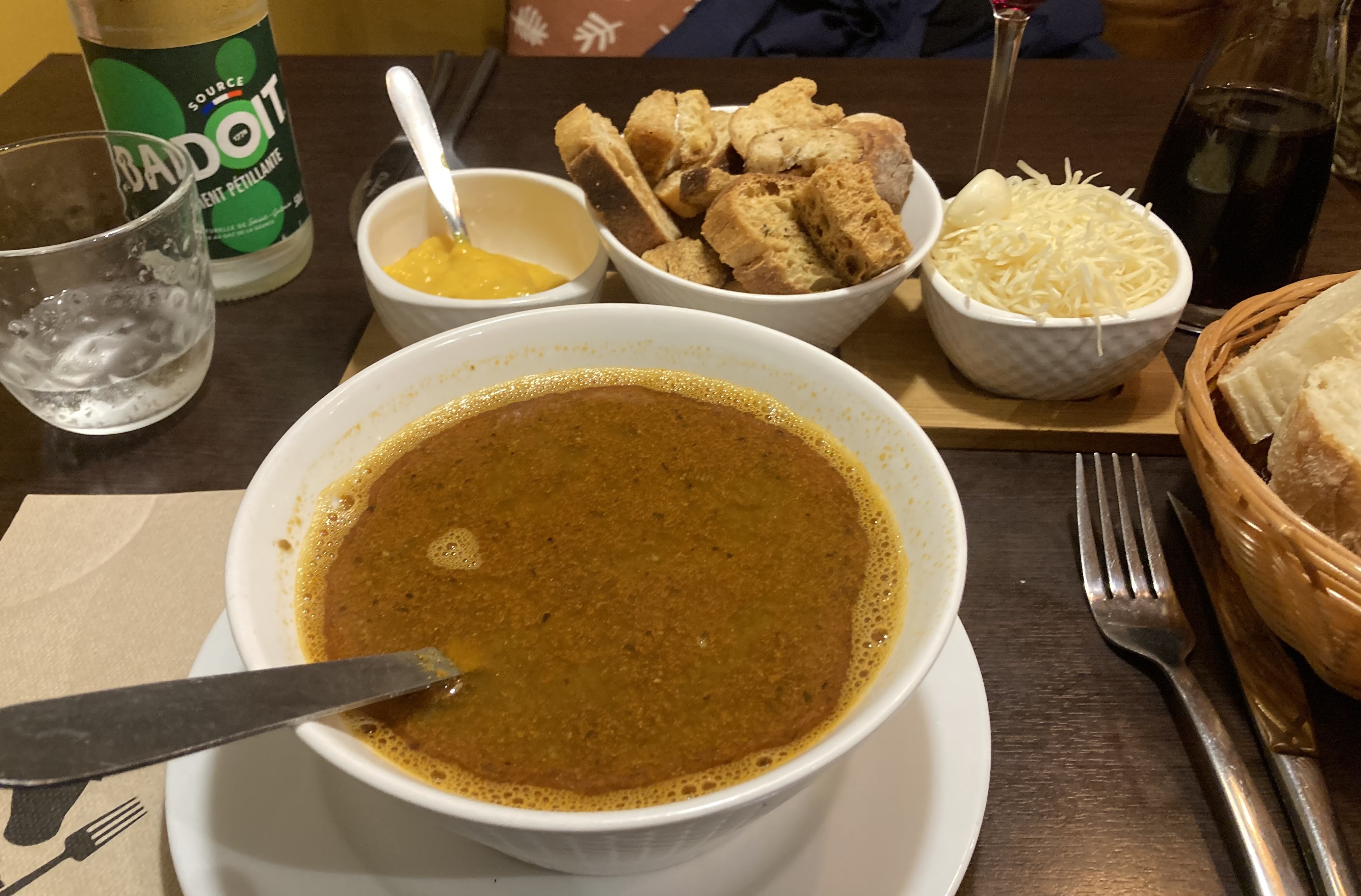
When abroad DonQui likes to sample local dishes rather than something he might have at home. In this case his meal starts with this delicious Provençal fish soup complete with croutons, cheese and rouille (a sort of aioli made with egg yolks). It is followed by a traditional stew of Camargue wild bull (gardiane de taureau)— well, partially wild as although roaming freely through the salt marshes of the Camargue the herds are looked after by humans. The slow-cooked meat is lean, tender and flavoursome.

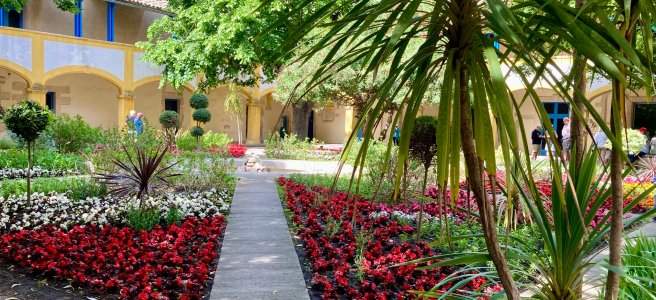
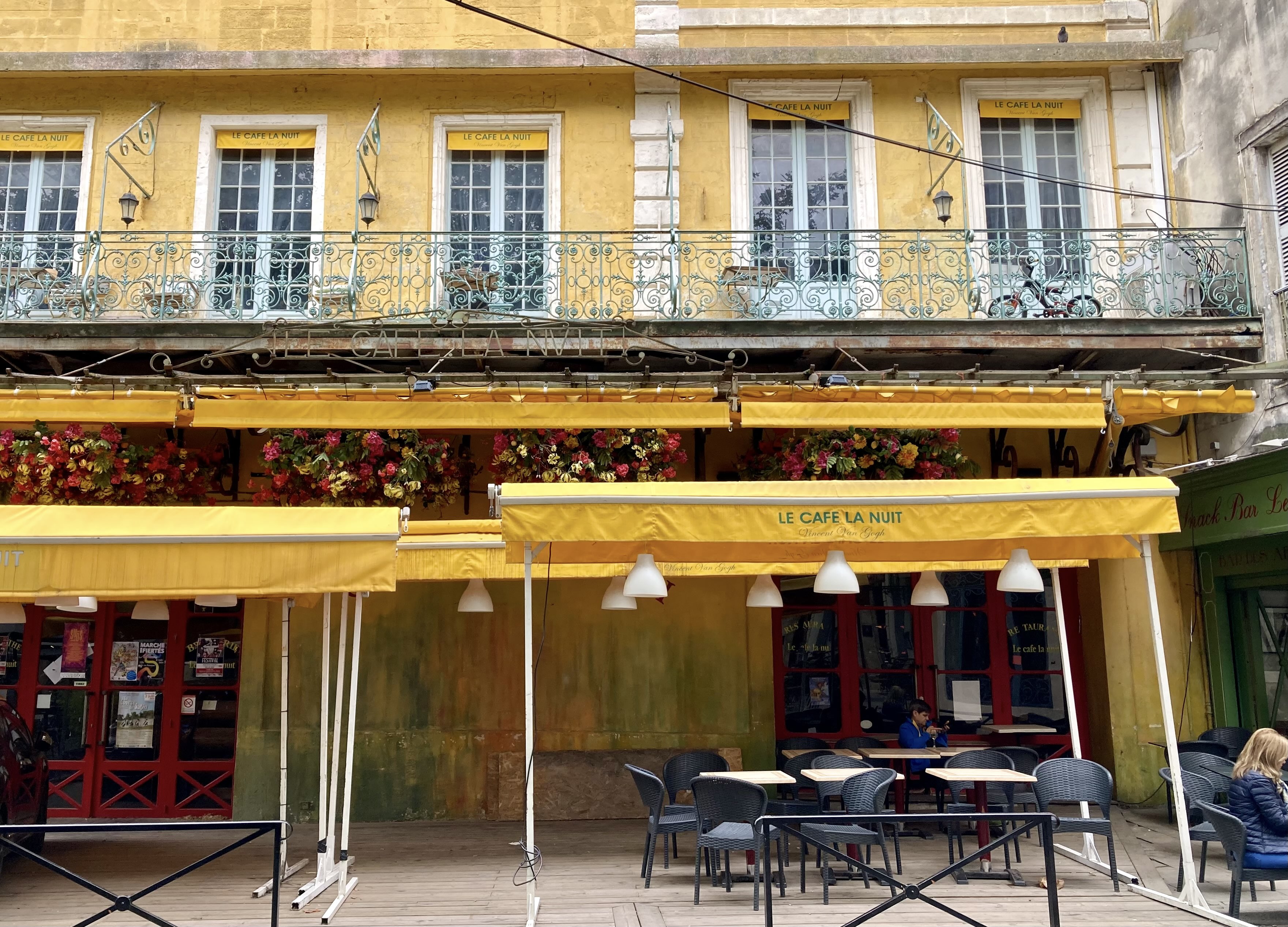
Arles was immortalised by Vincent Van Gogh who stayed here to paint some of his most famous works (1888–1889). 

There are couple of places that have been maintained more or less as they were when he painted them.

With the weather warming up to a pleasant 27º DonQui now heads to the sea to cool off and relax for a few days.

From Italy to France

DonQui could quite happily have spent another day in Verona but he must be on his way to the south of France.

It is a long journey first through the flat fields of Lombardy and then into the Ligurian alps. He decides to break his trip with an overnight stay in Genoa.

Genoa is perhaps not the most exciting of cities but it is pleasant enough for a quick visit and it is about half way along his journey. DonQui spends an enjoyable afternoon trotting around the streets before stopping for an aperitivo to watch the evening passeggiata

Then he has his last meal in Italy which includes a delightfully flavoursome tortelli with sea bass, clams and bottarga (cured, dried fish roe). The bottarga adds a taste not dissimilar from parmesan cheese.

His car fuelled with petrol and his body fuelled with super concentrated Italian coffee, DonQui continues his journey the following morning. His route takes him along the coastal road that winds its way through the Ligurian alps and then the French alpes maritimes

Reaching Monaco at around lunch time he makes a brief pit stop.

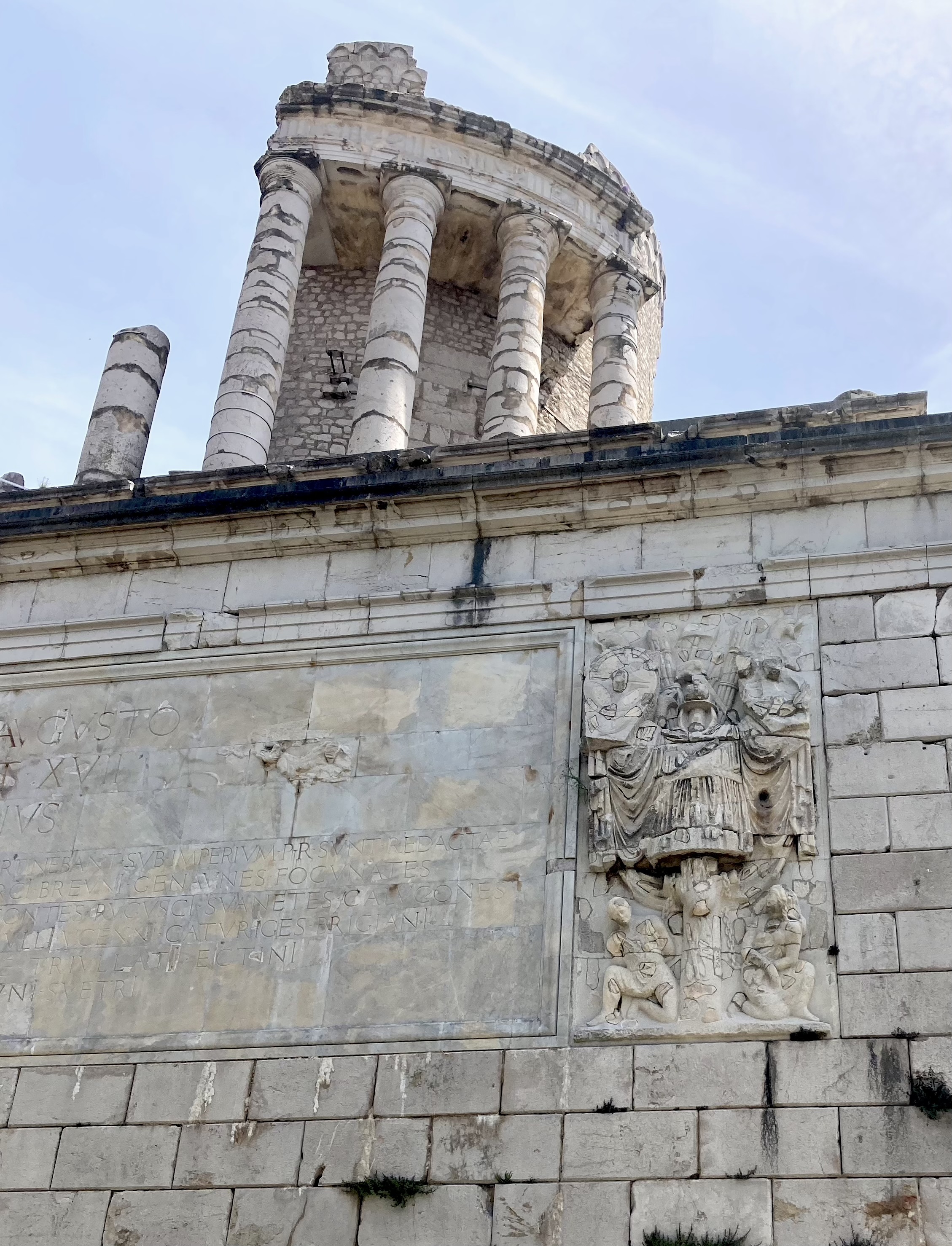
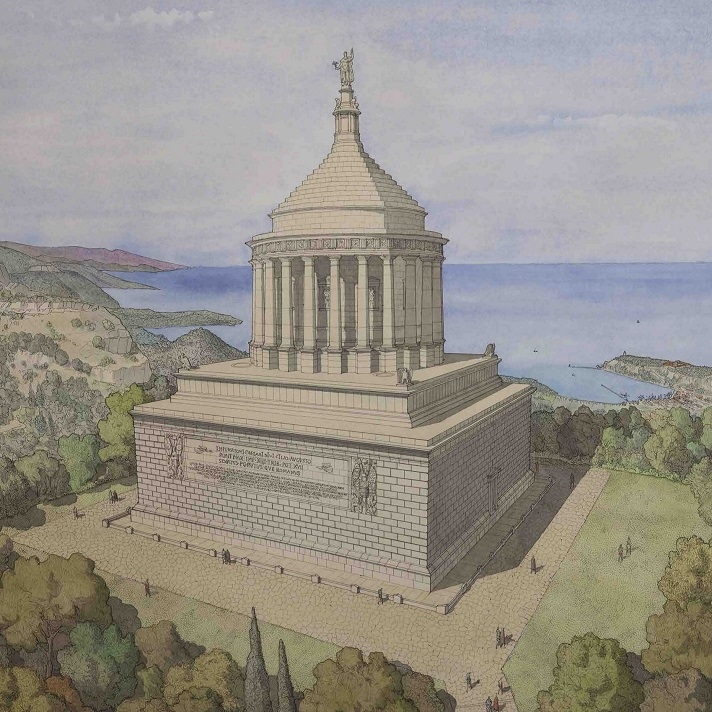
Then he heads up the small winding road to La Turbie to visit the massive ‘Augustus Trophy’ (Tropaeum Alpium). Dominating the landscape for miles around, this monument was built between AD 14 and 27 to commemorate the subjugation of the last Gallic alpine tribes by the Romans.

It probably looked like this when first built.

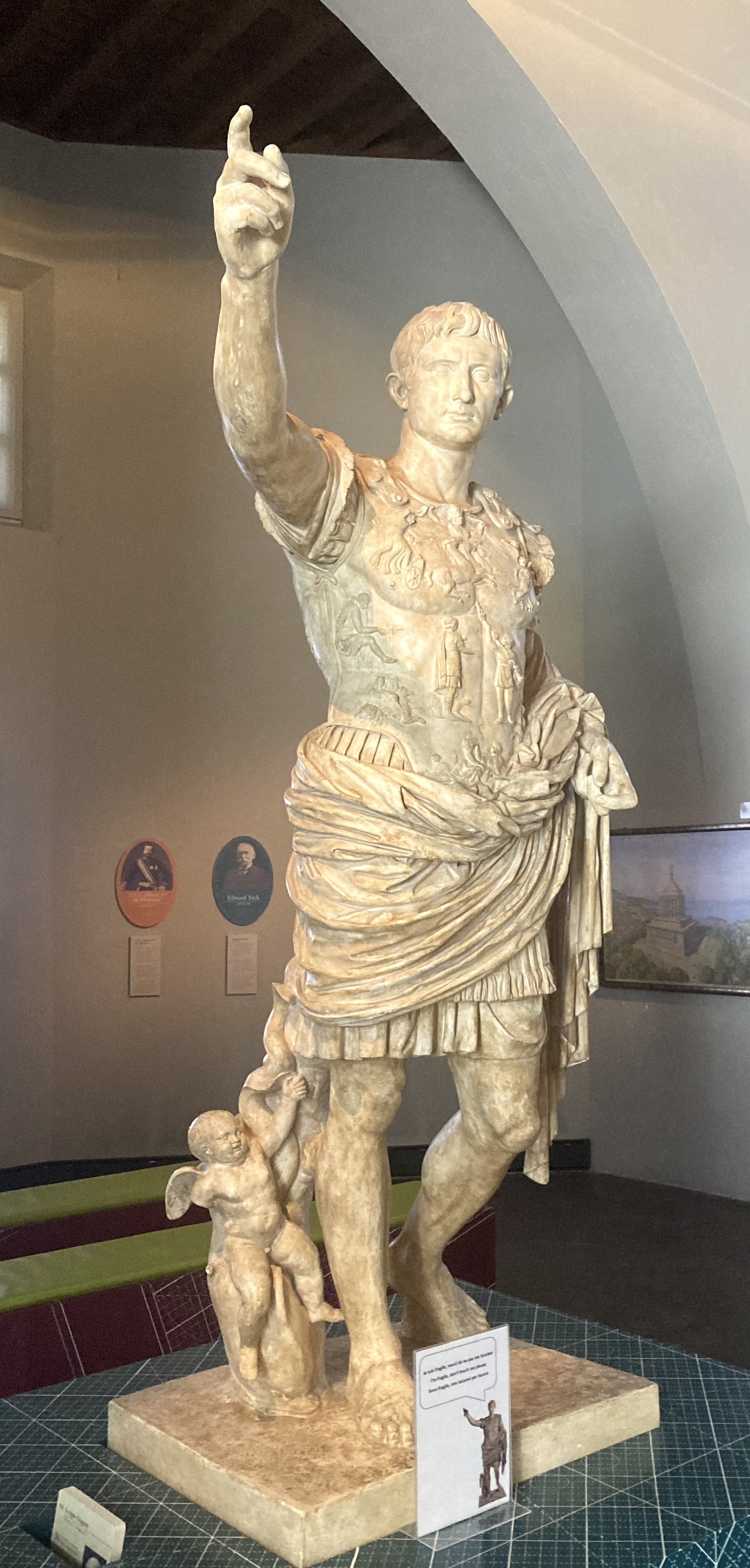
A fine statue of Augustus, which was probably on the top of the monument, is now housed in a small museum.

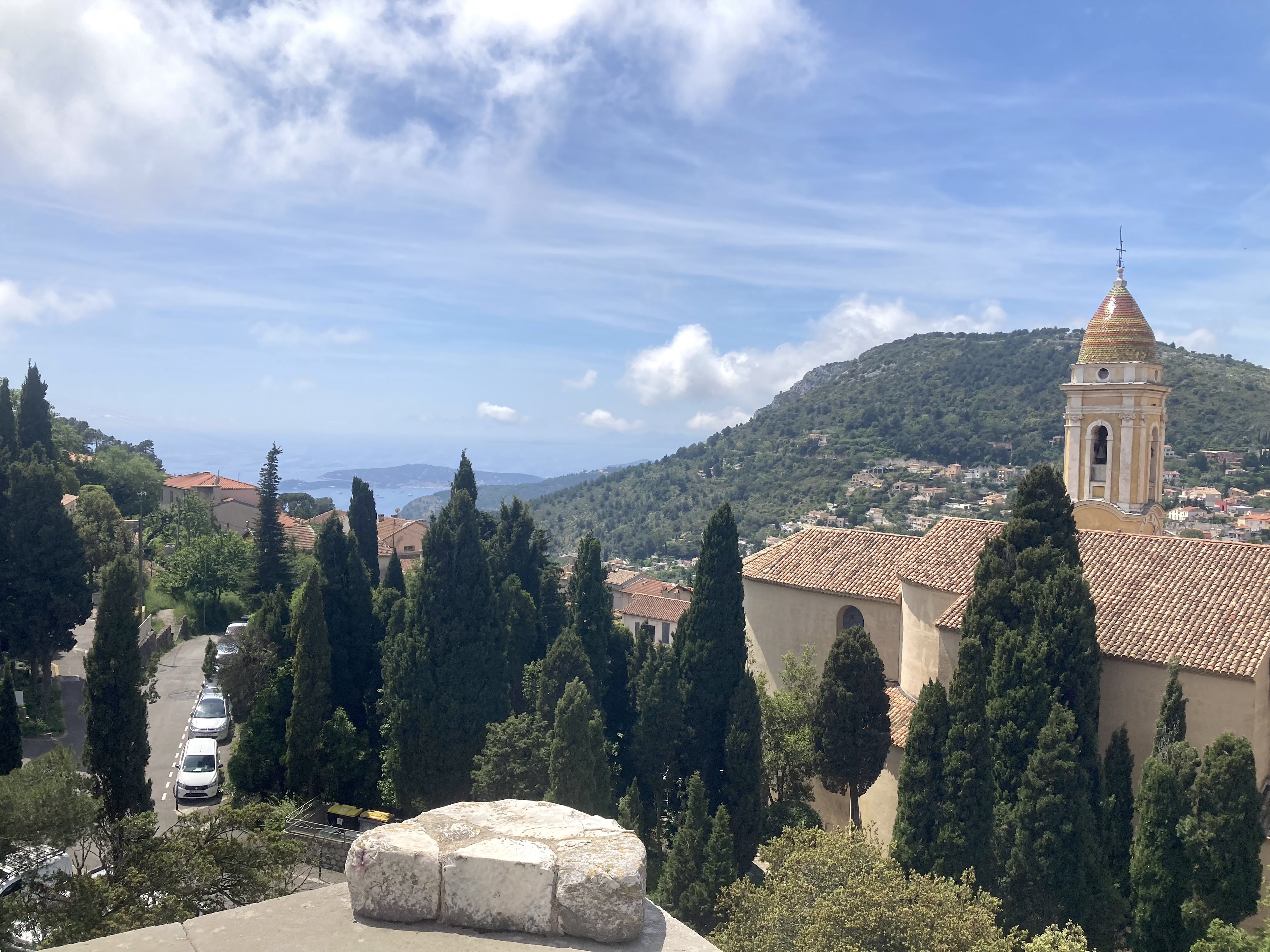
The views from the top are stunning.

Saying goodbye to Augustus,  DonQui dives on along the Côte d’Azur to Arles where he shall be resting and exploring for the next couple of days.

Romans and Juliet

Famous around the world as the setting for Shakespeare’s Romeo and Juliet, Verona is a wonderful place to spend a couple of days. Once you get through the ghastly industrial and commercial sprawl that blights the surroundings of most Italian cities — it is really stunningly beautiful.

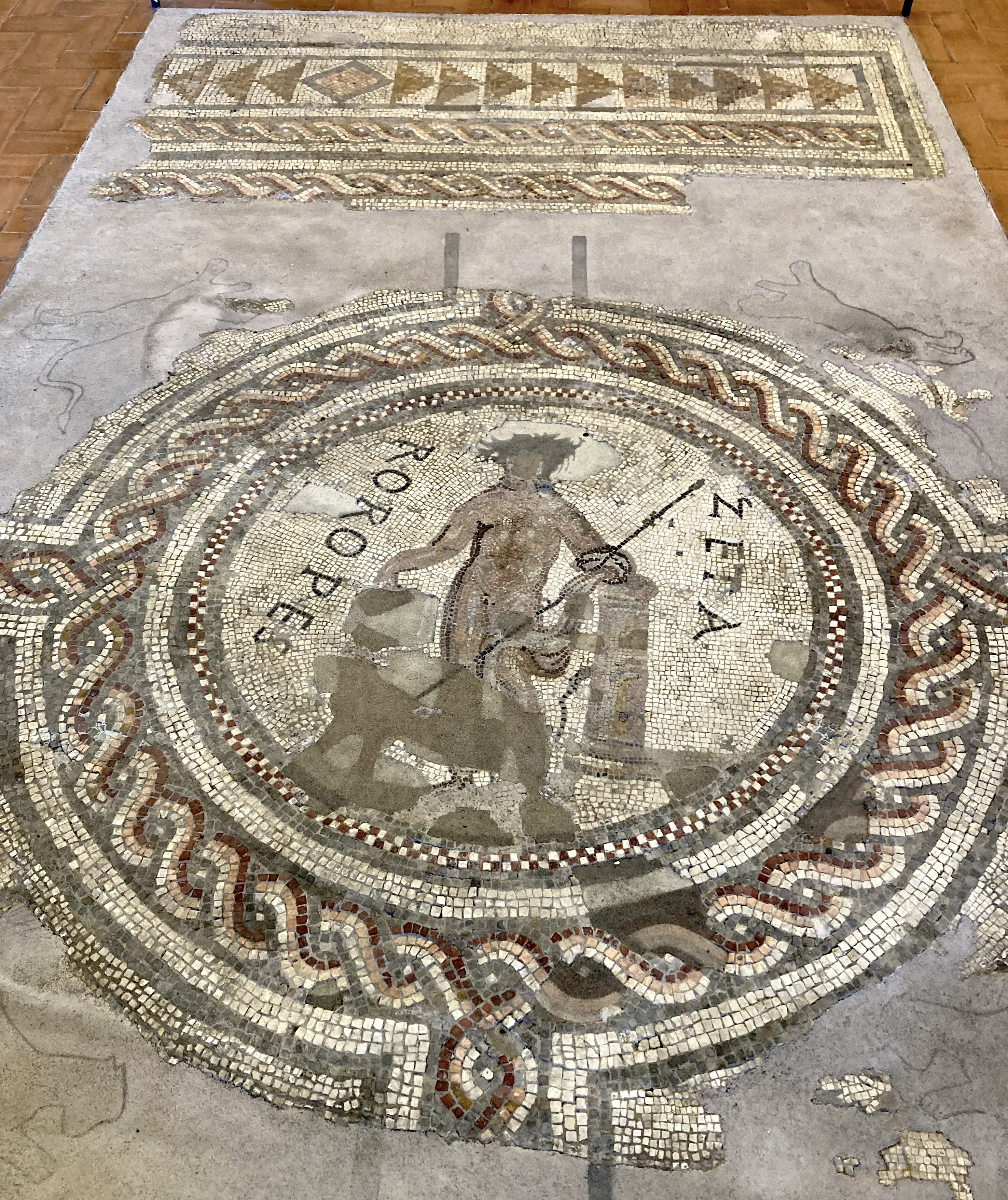
DonQui is a bit of a sucker for Roman stuff and Verona has some very good Roman stuff. So he hightails it over to the Roman amphitheatre and museum to get there just as the doors open. The amphitheatre is impressive but little museum does not have much of note apart from this nearly intact floor mosaic featuring Baccus — DonQui’s favourite deity by far.
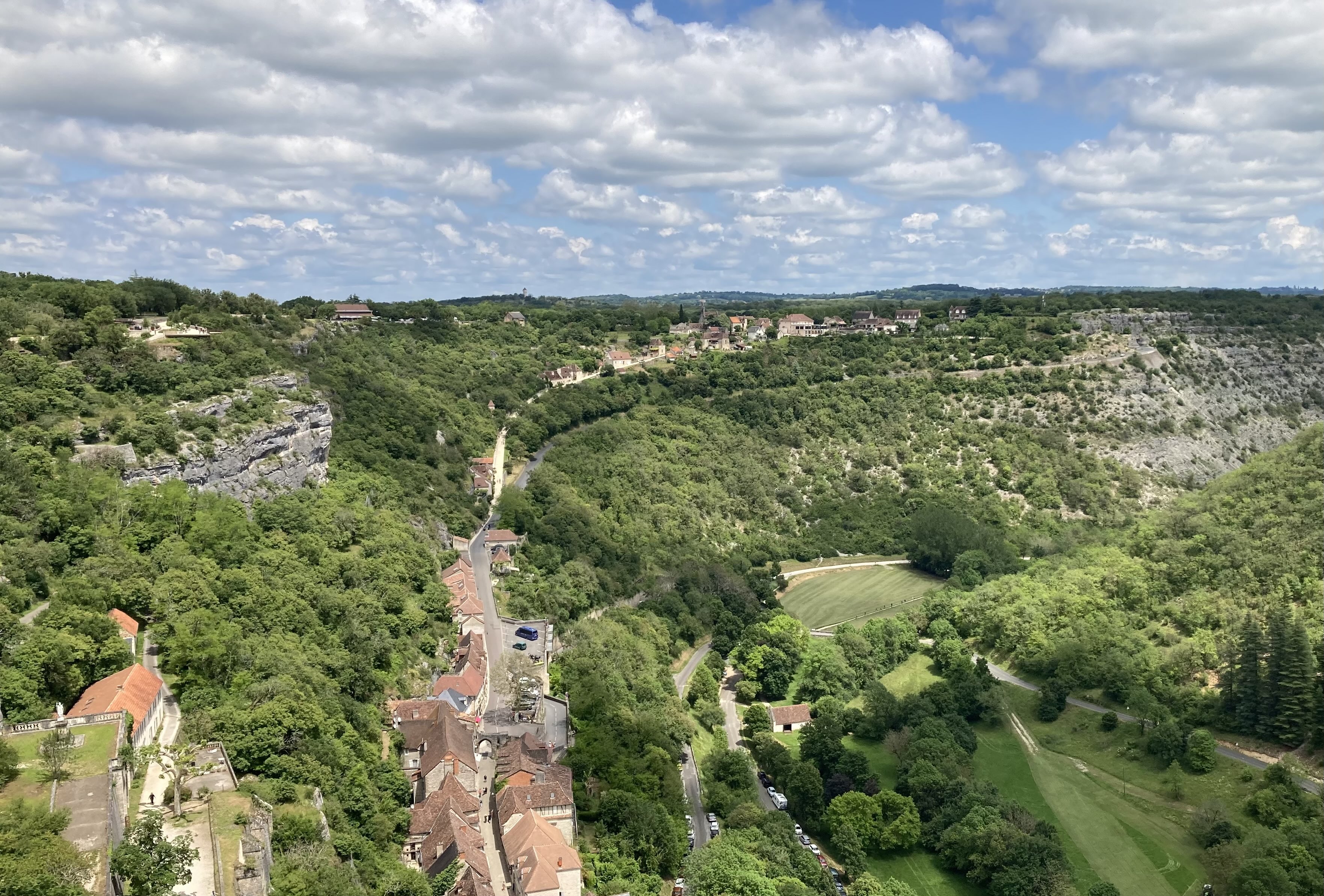
At the other end of the old city is a nearly intact Roman arena. Both the amphitheatre and arena are still in use — hosting regular concerts.

The old city is compact and mostly pedestrianised. DonQui spends the better part of a very pleasant day trotting around the place and taking in the atmosphere. 

Around midday the town has pretty well filled up with tourists (presumably day trippers as there were very few of them in the morning). So he takes shelter in a little bottega around the corner from the Roman arena to pay homage to Baccus. Here he spends a delightful hour with Bruno learning about the wines of Verona’s Valpolicella region.

Of course DonQui tastes some too — working his way from the relatively light twice-fermented Ripasso, up through the heady full bodied Amarone made from partially dried grapes, to the most ancient of the Valpolicella wines — the sweet Recioto which Bruno recommends having with cheese. Before getting into the Valpolicella DonQui also has a taste of a delightfully fresh and minerally white Lugano from the shores of nearby Lake Garda. Bruno explains that the retreating sea which created Lake Garda left salt deposits in the clay which gives Lugano wines their unique taste.

On less steady hooves than before, DonQui explores the delightful streets and squares a little longer.

Although not a great fan of churches he is most impressed with the 13th century church of San Pietro the Martyr.

He particularly admires the fantastic medieval art from the 14th and 15th centuries.

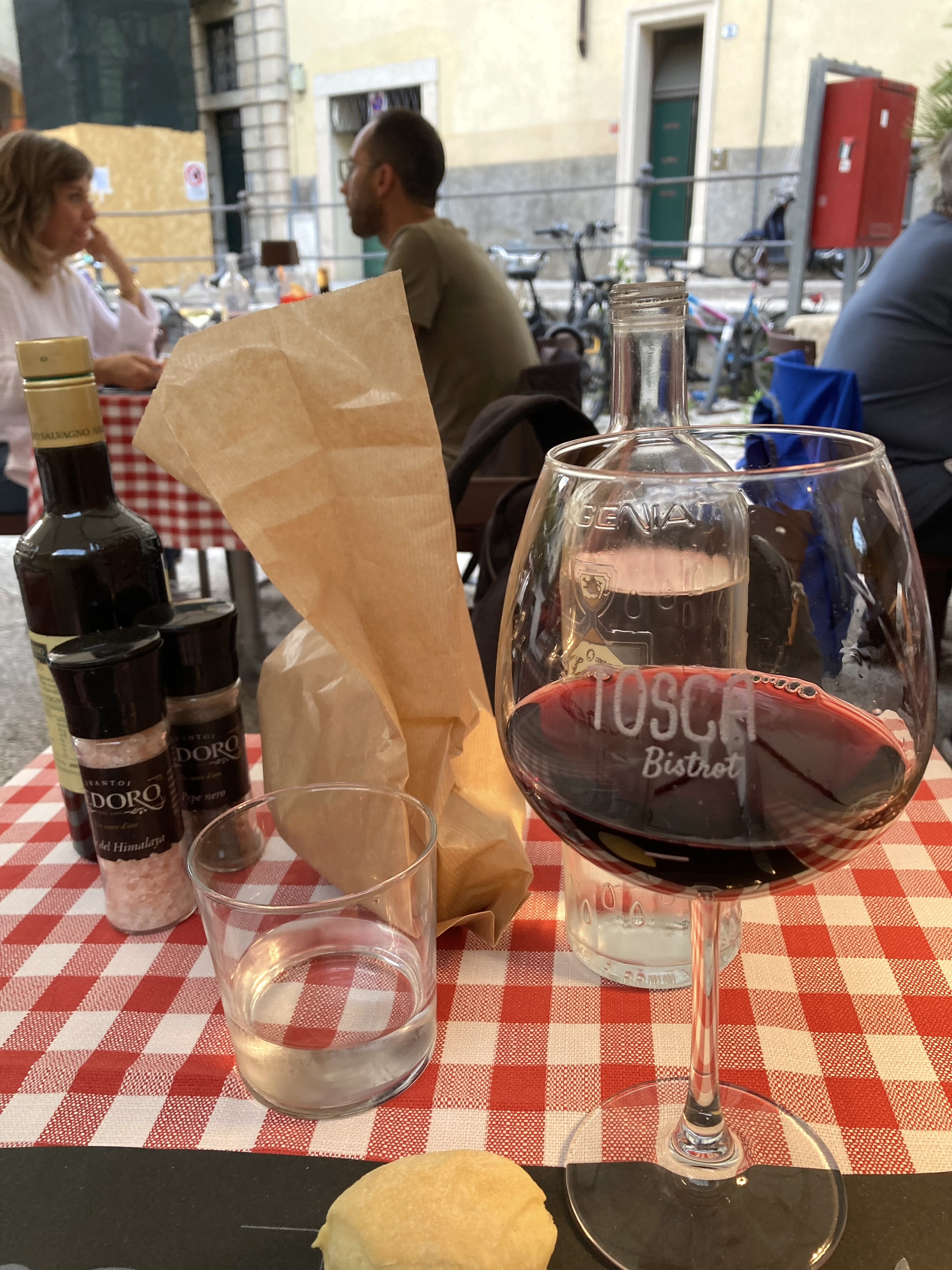
After a bit of a rest he heads out in the evening to taste some of the local specialties at the delightful Tosca Bistro.

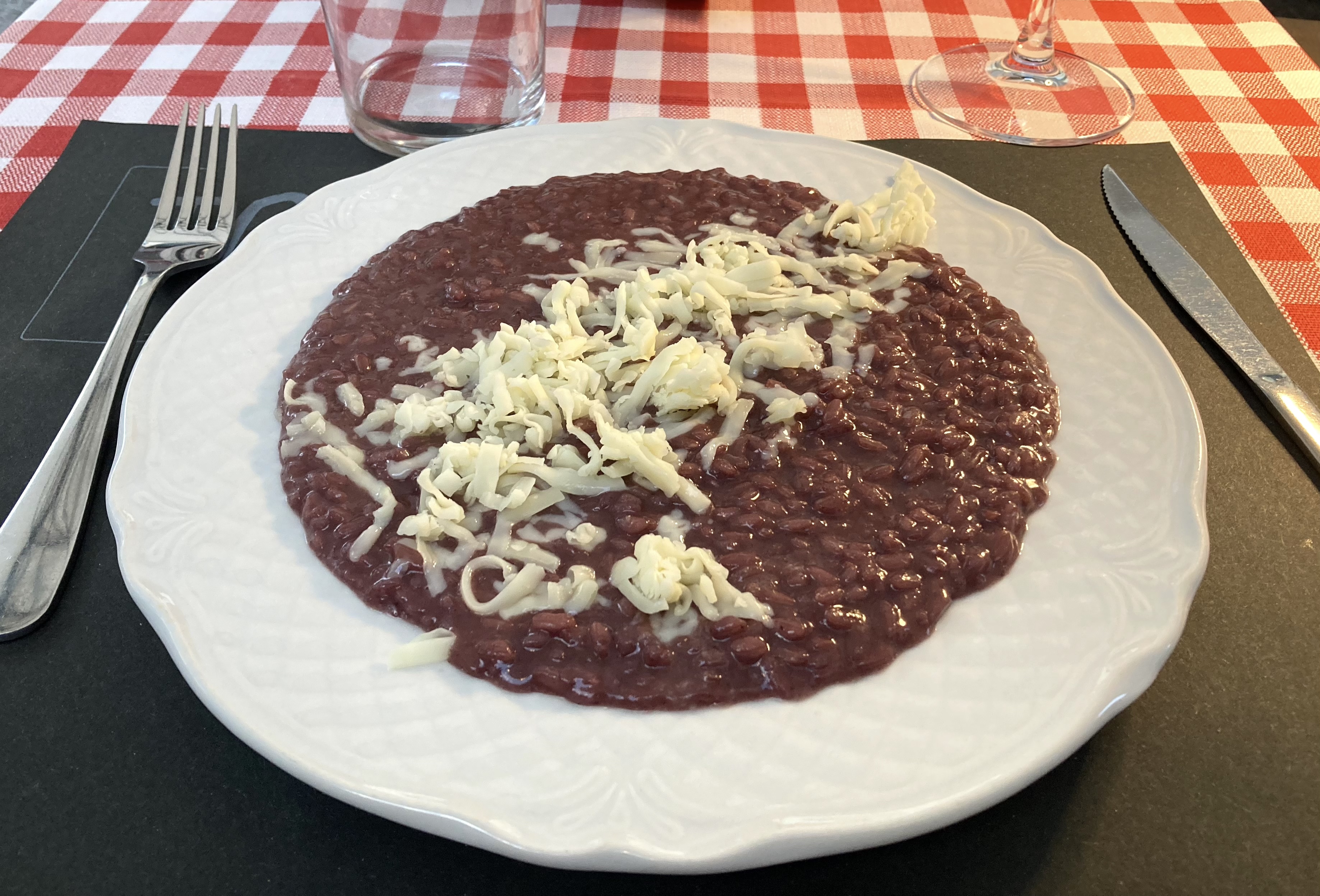
Here he samples an excellent risotto with Amarone, and horse meat stew with polenta. Both washed down with a glass of rich Amarone wine.

Tradition has it that the Veronese got a taste for eating horse after the battle between Theodoric and Odoacer in AD 489 which left large numbers of dead horses on the battlefield to provide an unexpected feast for the locals. The stew is rich, full of flavour and utterly delicious — it is something he will never be able to have in the UK.

Before resuming his journey the following morning, DonQui visits the reconstructed house of the Capuleti — better know as ‘Juliet’s house’ as the Shakespearian heroine was from the Capuleti family (anglicised to Capulet by the bard). 

By arriving just after opening he is able to beat the hordes of tourists who were choking the place the previous afternoon. It is said that if you touch the statue of Juliet in the courtyard you will be lucky in love. DonQui does not bother as he is already lucky in that department.

Over the Alps and Far Away

DonQui is setting off to cross the Alps into Italy. He has done this before and it always feels like quite an adventure passing through the magnificent natural barrier that separates Italy from Northern Europe. His route passes through a bit of Austria then into Switzerland. This means he has to purchase road tax vignettes for both Austria and Switzerland which is mildly annoying especially as he will only be in Austria for ½ hour or so. At least Austria offers a cut price 10 day vignette!

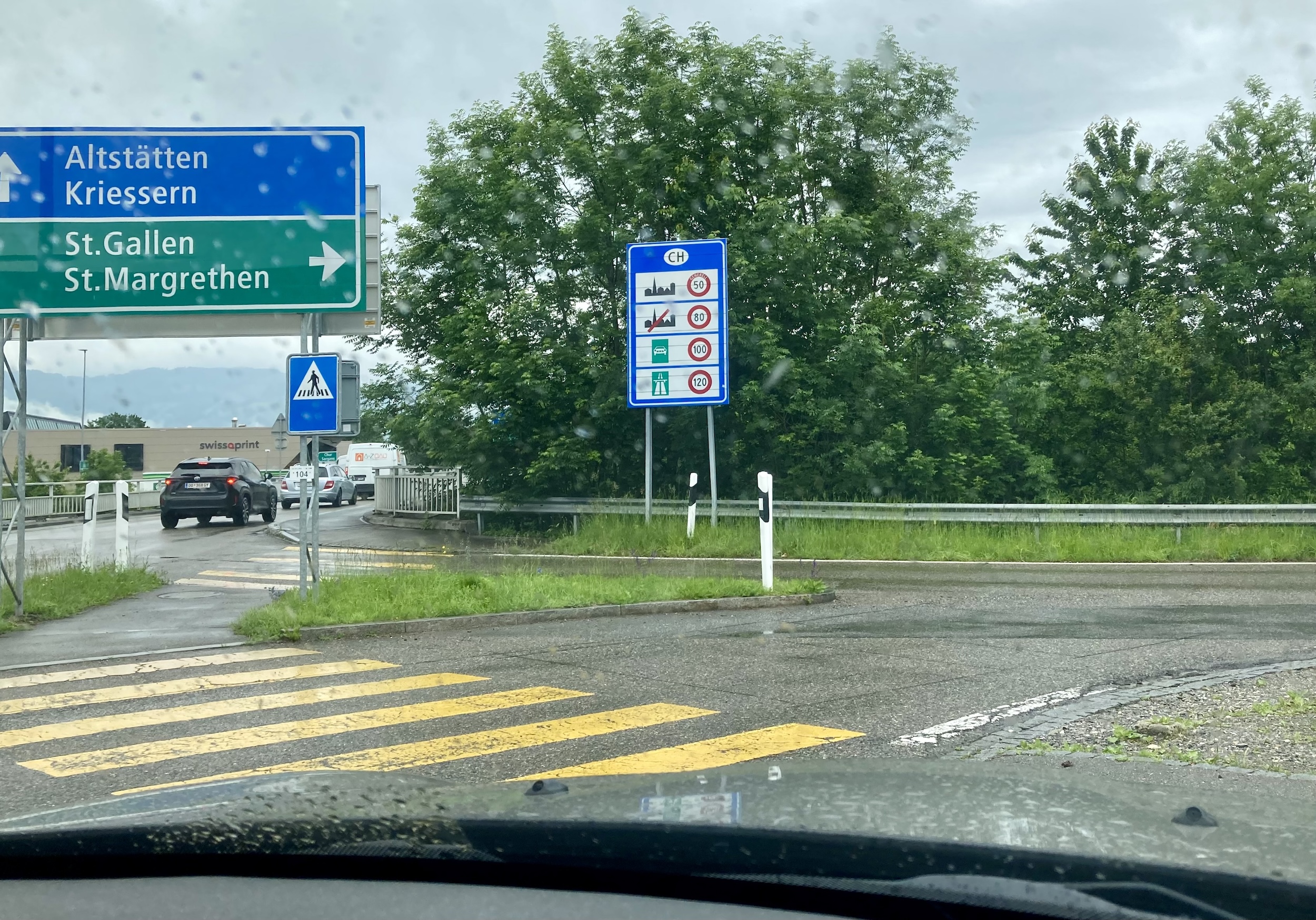
His plans nearly come asunder in the no-mans land between Austria and Switzerland. As Switzerland is not in the EU there are border controls.

DonQui shows his passport to the efficient Swiss border police. Then they ask for his car papers. The papers don’t seem to satisfy them so they direct him to pull over to the side.  They want the ‘brown car ownership form’. Not having such a form nor ever having heard of one, DonQui does his best to show everything else he has including car insurance certificate, driving license and proof of having paid the Swiss road tax. After much toing and froing, furrowed brows and consultation with head office they finally let DonQui through after he tells them he is only transiting through Switzerland into Italy.

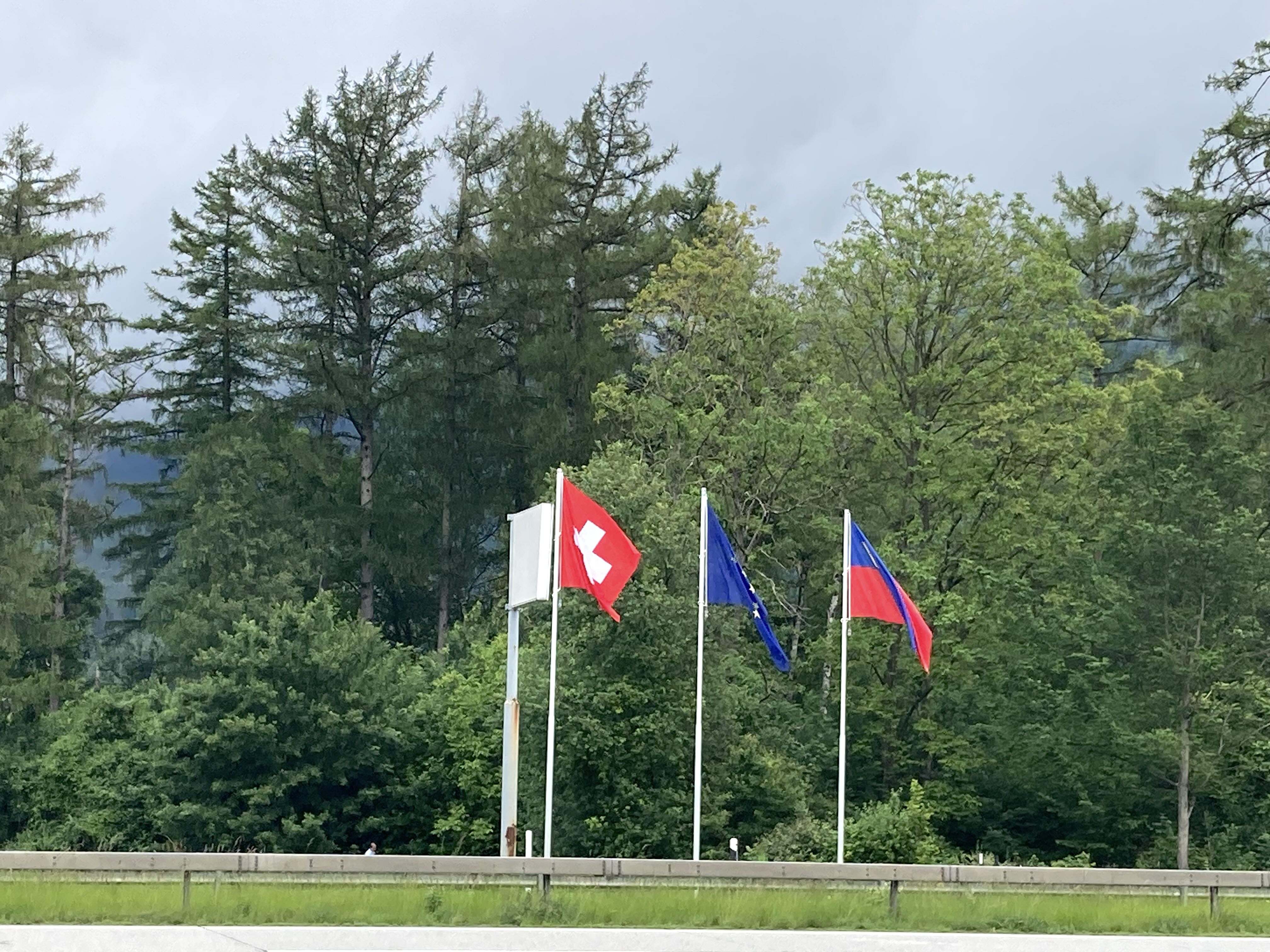
More than a little relieved DonQui is on his way again. He makes a brief pit stop in Liechtenstein just for the fun of it. 

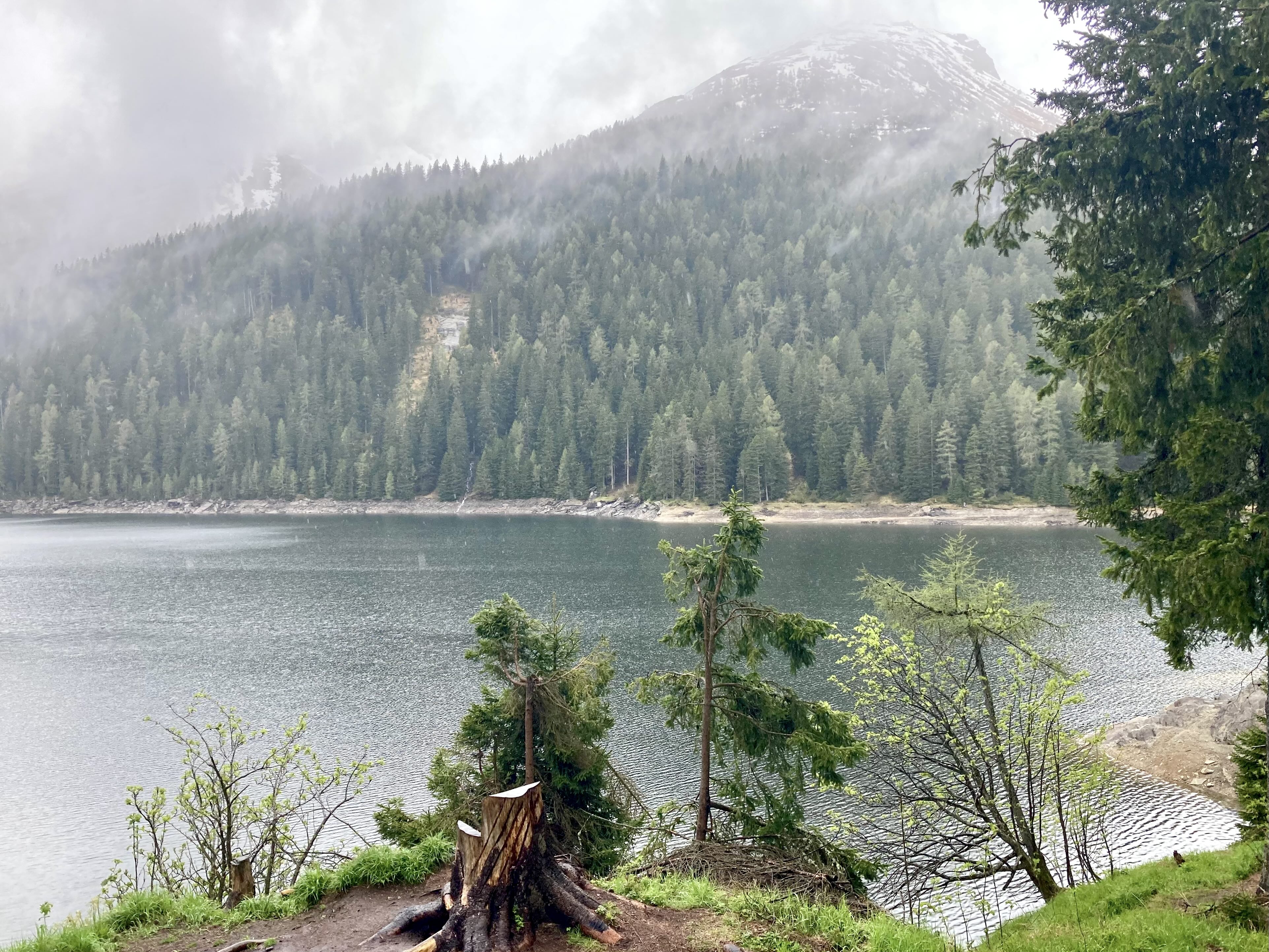
Driving through magnificent Alpine scenery he is heading towards the San Bernardino Pass at over 2000m above sea level. 

The pass marks the Italo-German language frontier. Although still in Switzerland, once on the other side, all signs are in Italian rather than German as they had been before. Then the road makes a rapid descent towards the border.

As he approaches the Italian frontier DonQui has a nervous thought. What if the Italian authorities also want this mysterious ‘brown form’ and don’t let him in? Will he then be stuck in Switzerland? He need not have worried. The friendly, if perhaps not as efficient, Italian border police give him a smile and wave him on his way with no fuss at all.

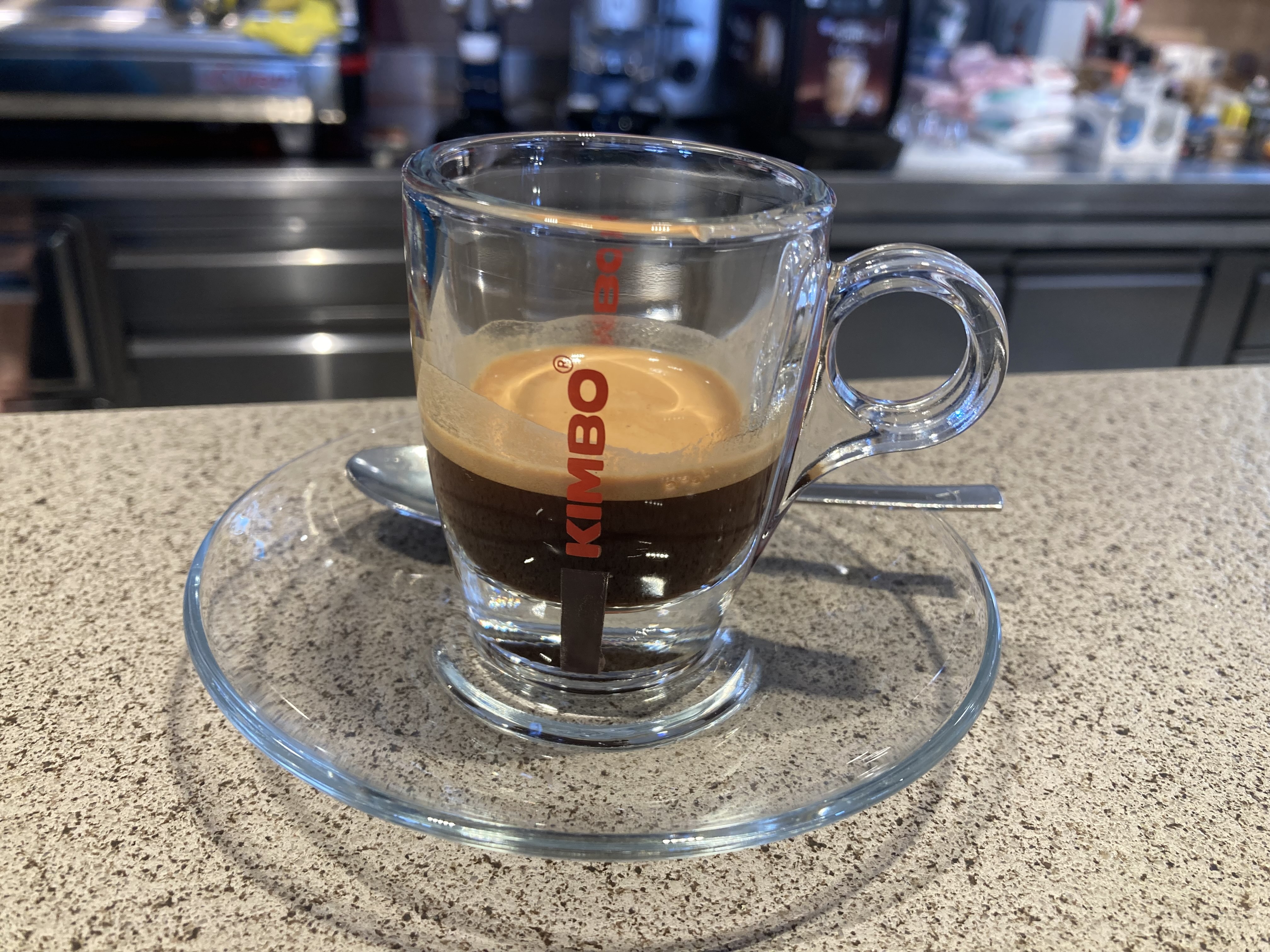
It takes DonQui about four hours to pass through five countries: from Germany, through Austria, Liechtenstein, and Switzerland into Italy. There he takes a much needed break for a proper Italian coffee — a delicious shot of thick, syrupy, pure caffeine. It is a good job he does, as the next 3 hours (which should have taken 2) are along the Autostrade around Milan, choked with lorries and moving at a snail’s pace. To top it off the heavens open up with a torrential downpour!

Feeling a little bedraggled DonQui is delighted to finally arrive at his pleasant lodging in Verona. To further improve his mood the weather clears. So he resolves to take an aperitivo on the balcony of his apartment.