The Midi to Périgord

With the arrival of June, DonQui now begins to slowly wind his way home to the Misty Isles in the far northwest.

He first heads along the Mediterranean coast towards the Spanish border, taking a mid morning coffee stop at Aigues-Mortes. The name of the town (stagnant waters) comes from the surrounding marshes at the mouth of the Rhône. 
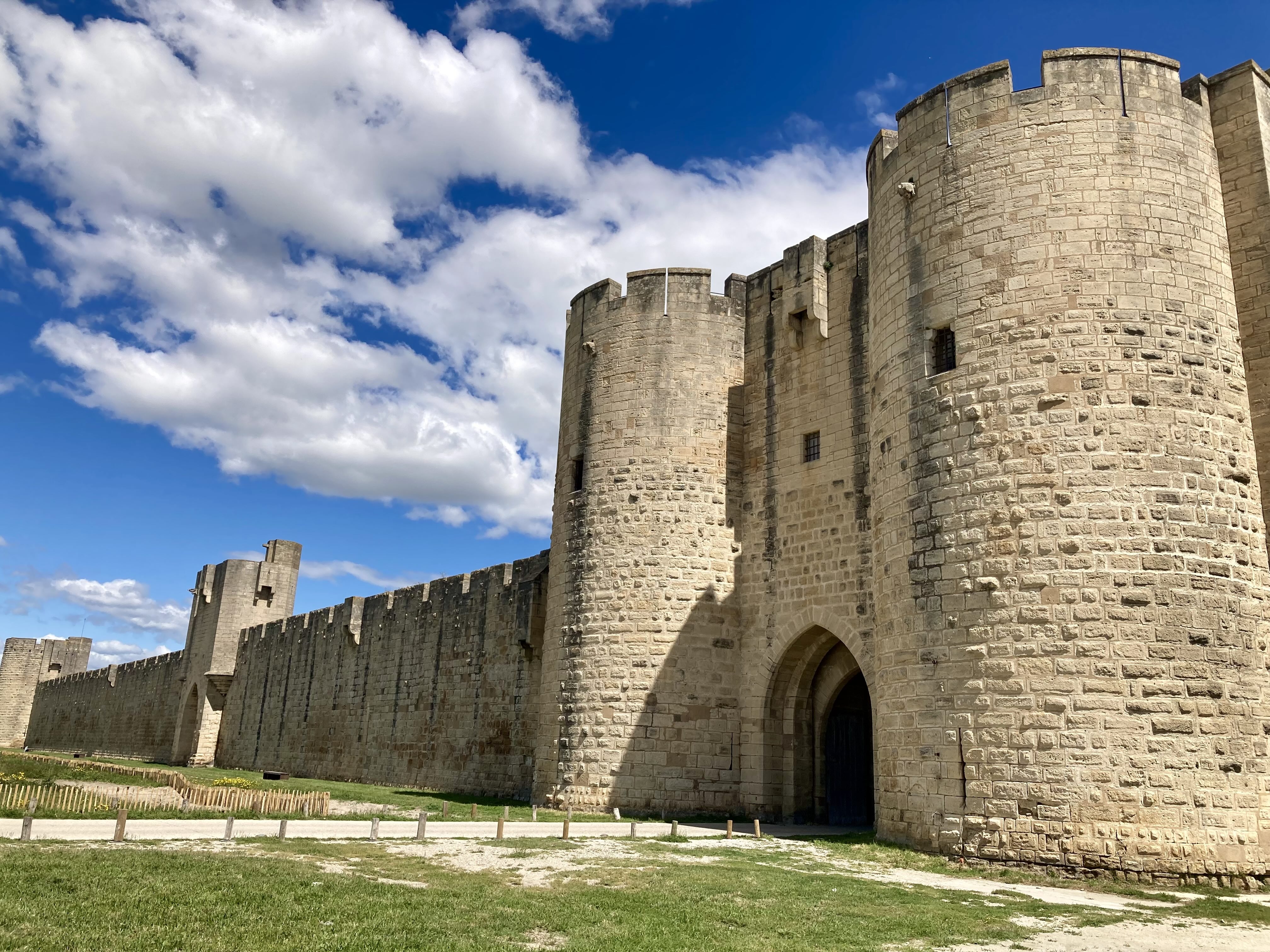
It is a magnificent fortified town which came to prominence in 1240 when King Louis IX developed it into a maritime base in order to rid France of its dependency on the Italian states for access to the Mediterranean. At that time Aigues-Mortes became France’s only port on the Med as even Marseilles belonged to the Kingdom of Naples then.

It was from here that Louis IX launched the ill fated seventh and eighth crusades. In the first of these, against Egypt, Louis was captured and ransomed. In the second, against Tunis, he died from fever. Despite not having slaughtered quite as many people as the Pope might have wished, he did get a sainthood out of it.

DonQui passes the magnificent medieval city of Carcassonne. It may surprise readers that DonQui does not stop here for a bit of an explore. Even he, however, can take only so many medieval cites in one day and he has been to Carcassonne before. For those that have not been there, DonQui highly recommends a visit.

DonQui breaks his journey for an overnight stop in Toulouse. Once the capital of the Visigothic Kingdom it is now the centre of the French Aerospace industry. It feels like a lively, vibrant city — a good place to stop but not necessarily a place to go out of one’s way to visit.

DonQui was going to go easy on the food but then he stumbles across the Restaurant au Gascon down a small back street. Feeling his inner d’Artagnan, and tempted by the 3 course menu for only €21, he goes inside — emerging a couple of satisfying hours later.

The highlight of his meal is a delicious cassoulet — which is a speciality of this region. Cooked with confit duck leg and Toulouse sausage, it elevates bangers and beans to a whole new level.

The following morning DonQui turns his car towards the north and drives on, noting with some dismay the falling temperatures as the miles pass by. He stops for a while at Cahors which has a magnificent 14th century towered bridge.
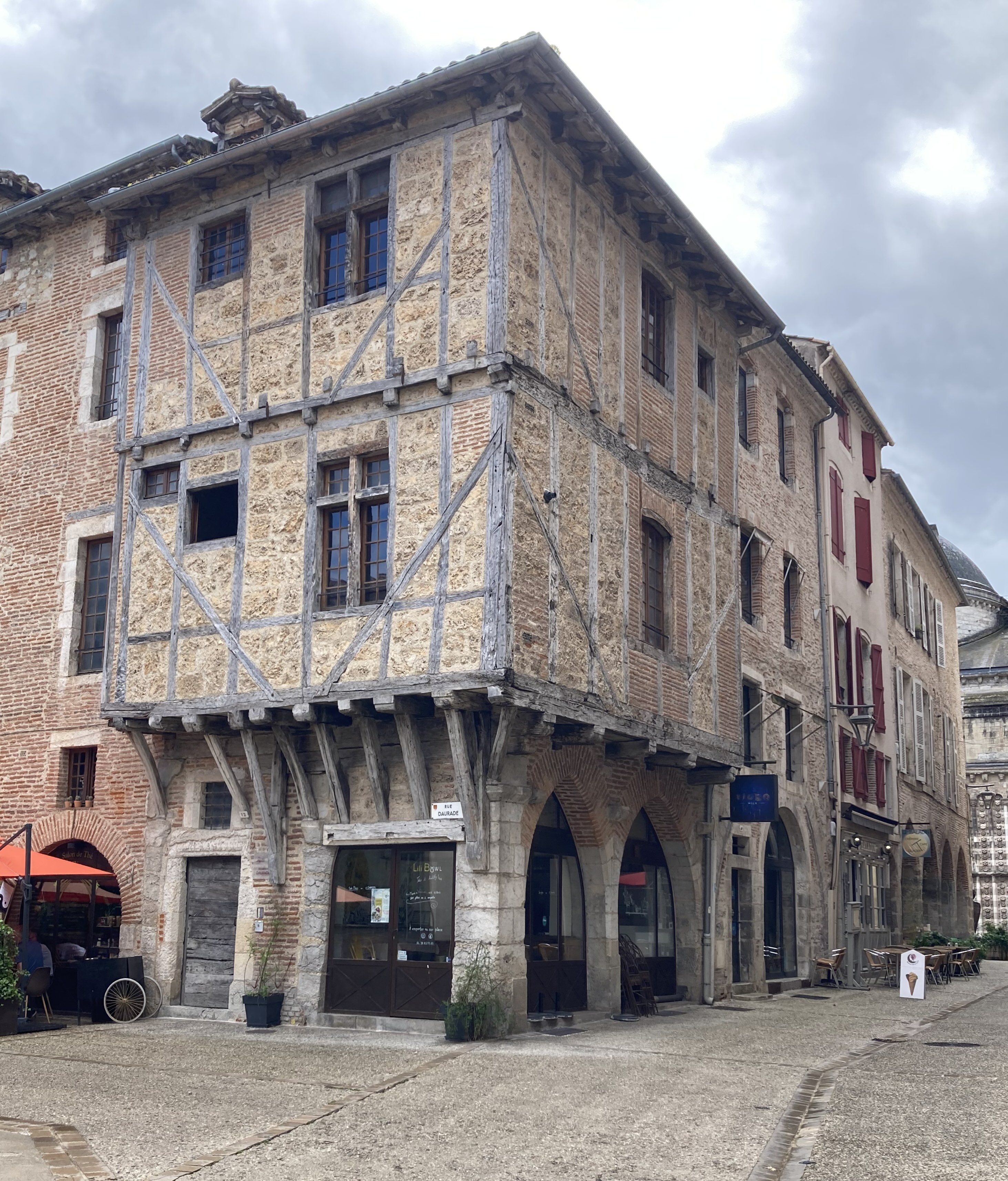
Not particularly touristy, Cahors has some evocative streets with lots of interesting medieval architecture that has not yet been Disneyfied. It known for its dark red wines made with Malbec grapes. And yes, you guessed it, DonQui picks up a couple of bottles. 

Moving on into the Périgord,  DonQui holes up in a small gîte deep in the countryside and far from the maddening crowd. This is a region of France DonQui has never been to before. He looks forward to exploring it, 
Sojourn in Arles

DonQui has stayed in Arles before and loved the city. So he is going to revisit for a couple of days before heading to the Mediterranean coast.

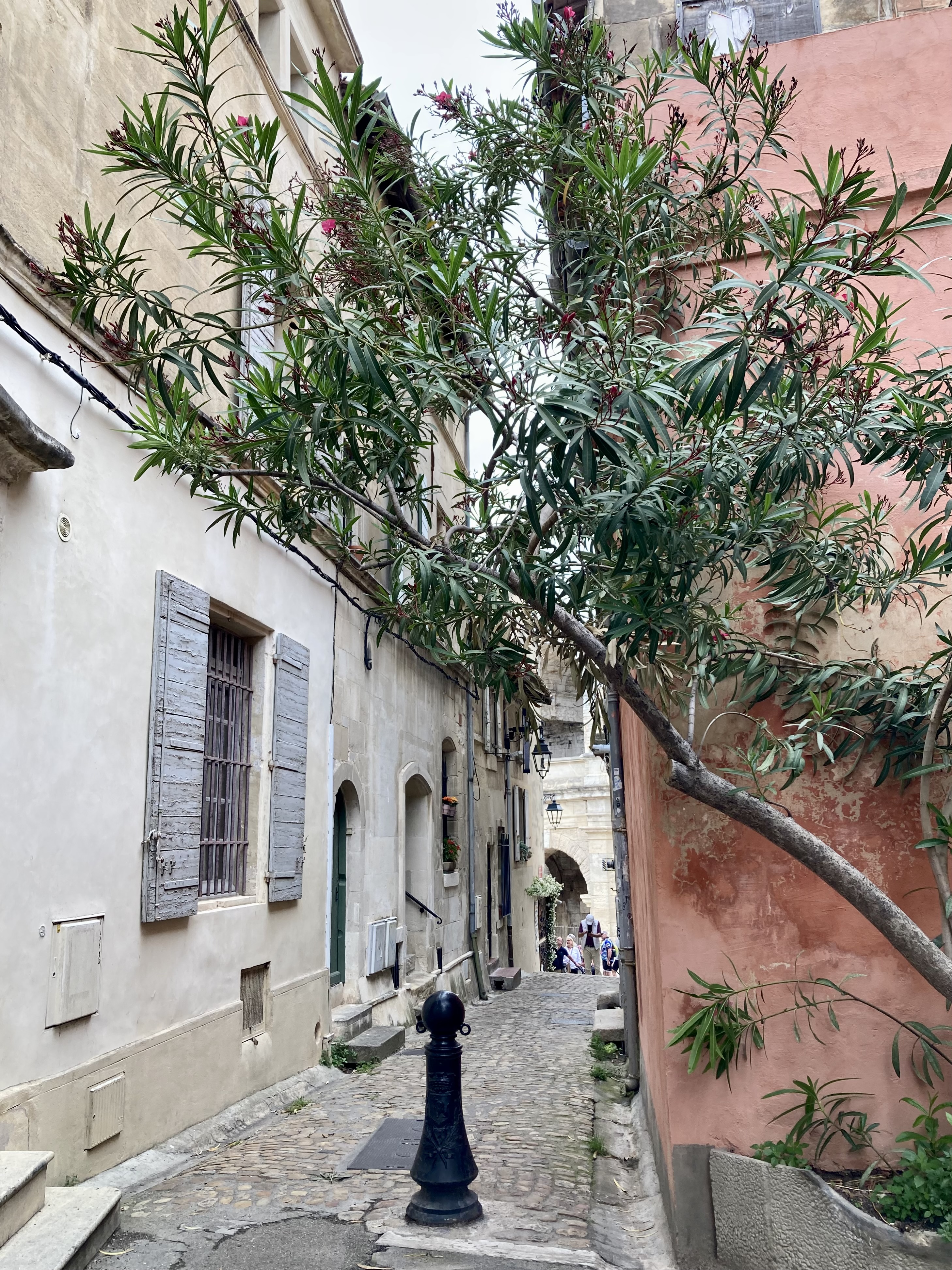
He loves simply wandering around the streets without any particular plan just to see what is around the next corner.

And Arles is an eminently walkable city. At this time of year (May) it is not overrun with tourists apart from a few small gaggles temporarily let off their cruise ships for good behaviour.

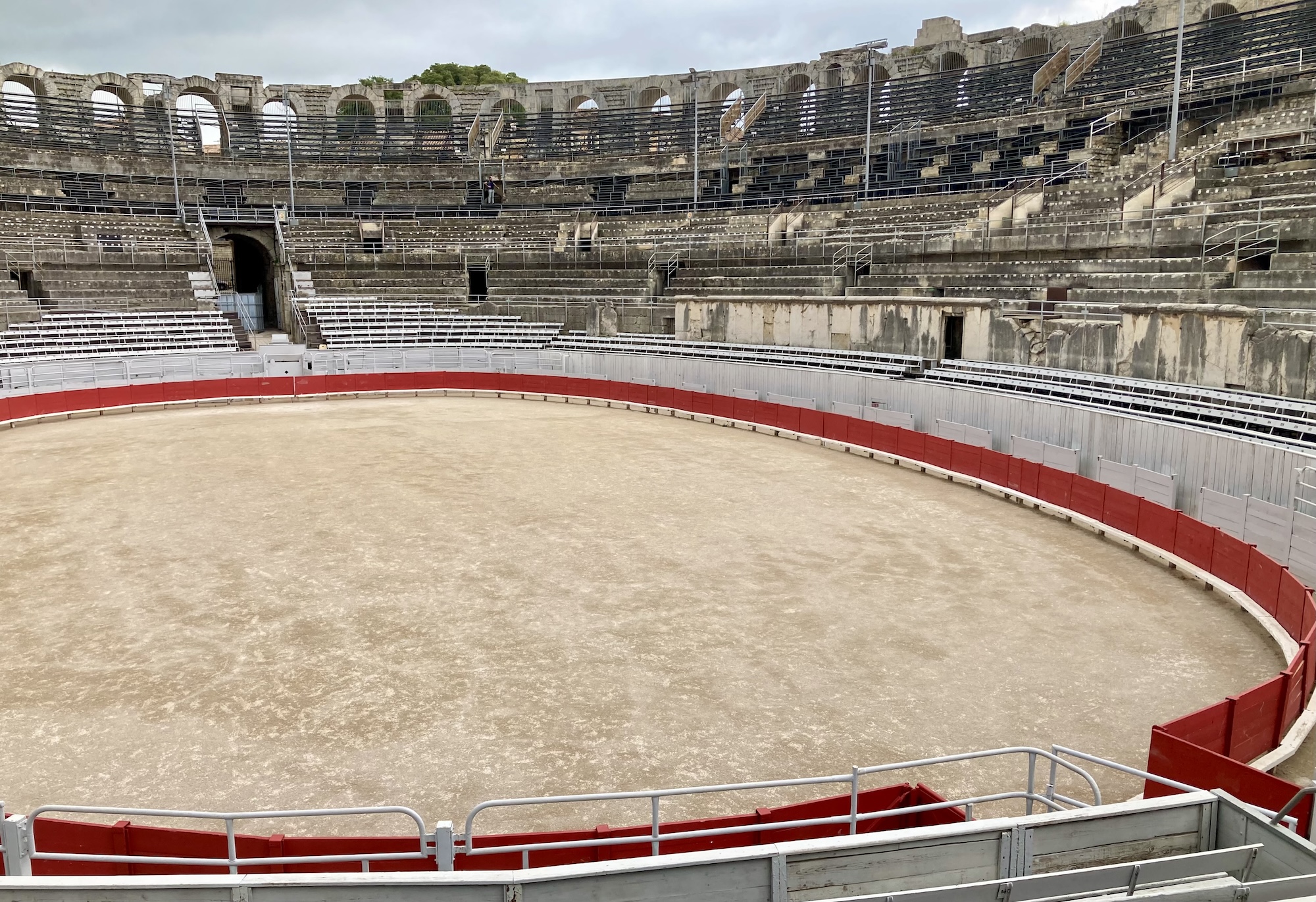
An important Gallo-Roman town and capital of Roman Gaul in the 5th C AD, there is plenty of good Roman stuff for DonQui to enjoy. The Roman arena served as walls of the city in the middle ages with most of the town (much reduced after the Roman era) being crammed inside it.

The arena was cleared and partially restored in the early 20th century and now once again functions as a place of entertainment — although without  gladiatorial combat as far as DonQui can ascertain.

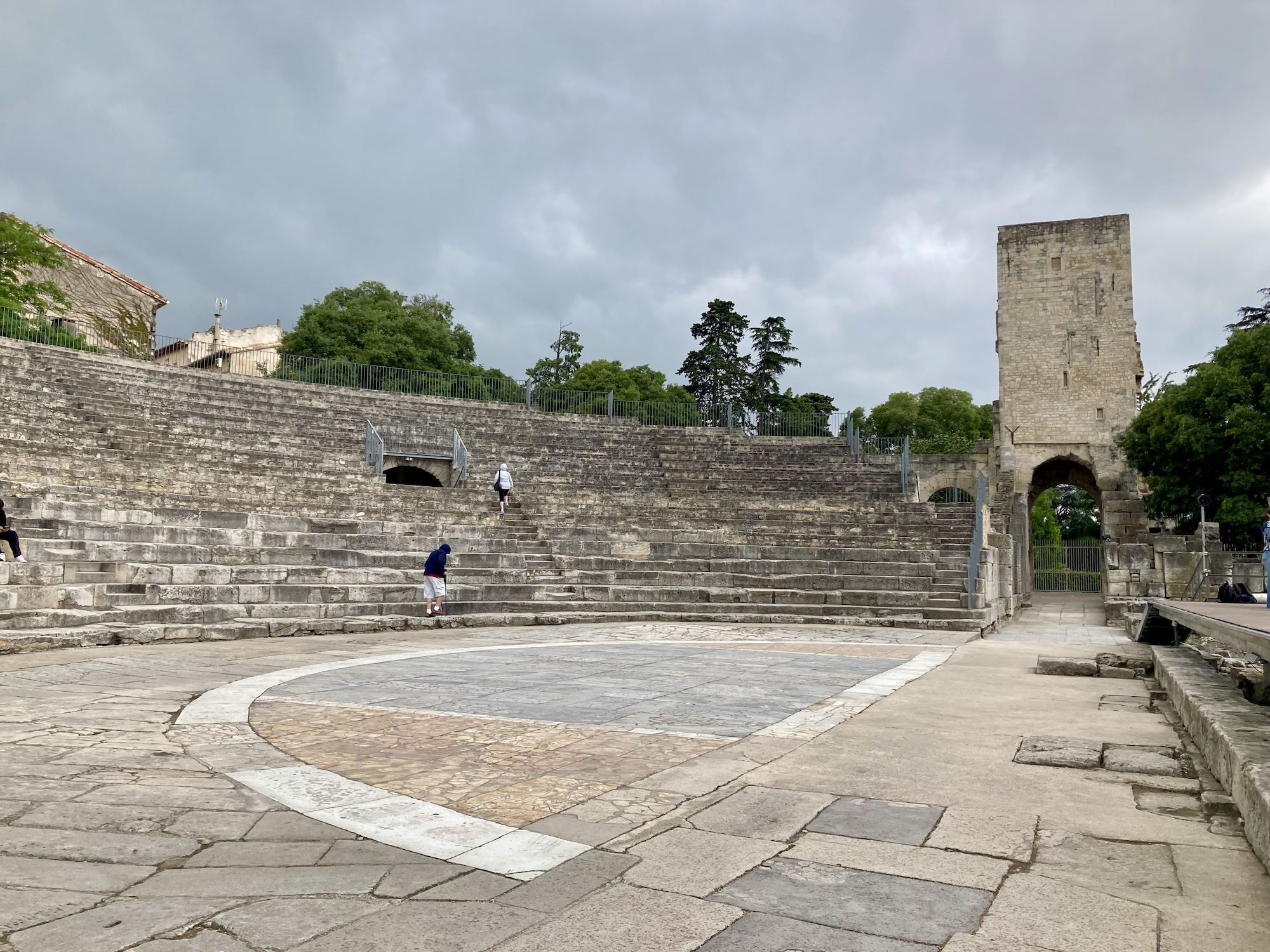
The well-preserved Roman amphitheatre is also still in use for plays and concerts.

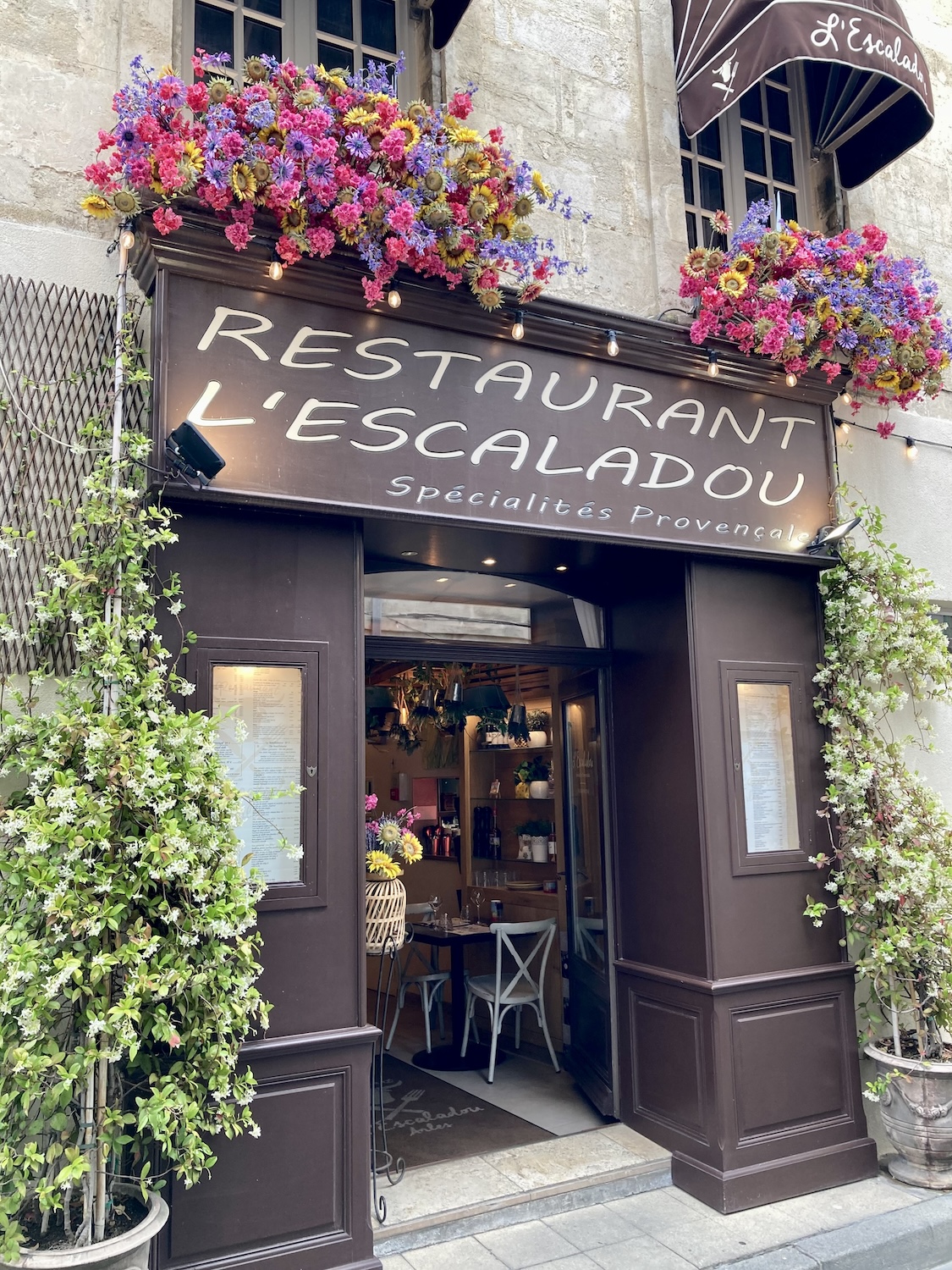
After a good trot around the place, DonQui pauses for a little sustenance at the delightful Restaurant Escaladou, just around the corner from the Roman arena.

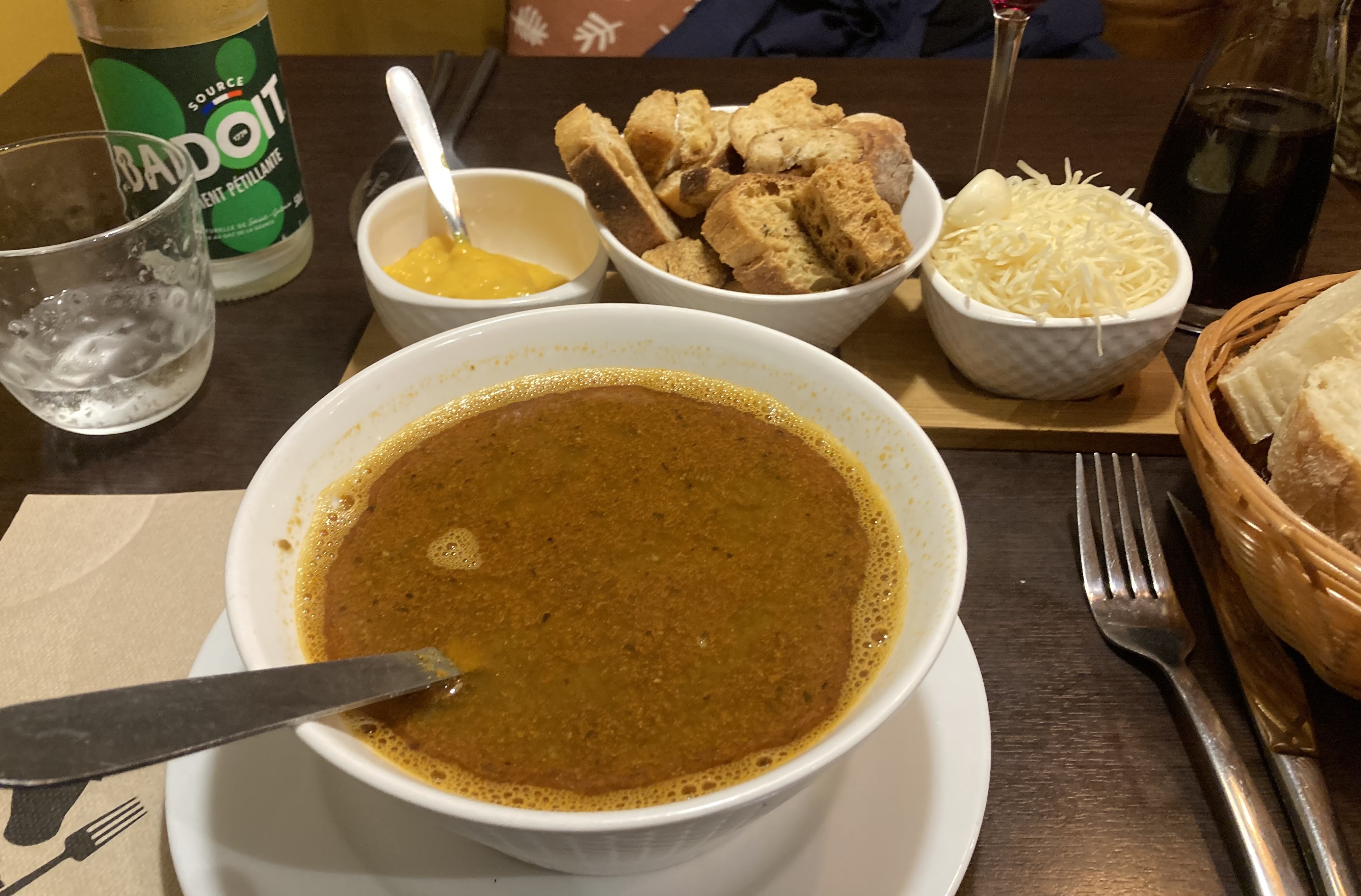
When abroad DonQui likes to sample local dishes rather than something he might have at home. In this case his meal starts with this delicious Provençal fish soup complete with croutons, cheese and rouille (a sort of aioli made with egg yolks). It is followed by a traditional stew of Camargue wild bull (gardiane de taureau)— well, partially wild as although roaming freely through the salt marshes of the Camargue the herds are looked after by humans. The slow-cooked meat is lean, tender and flavoursome.

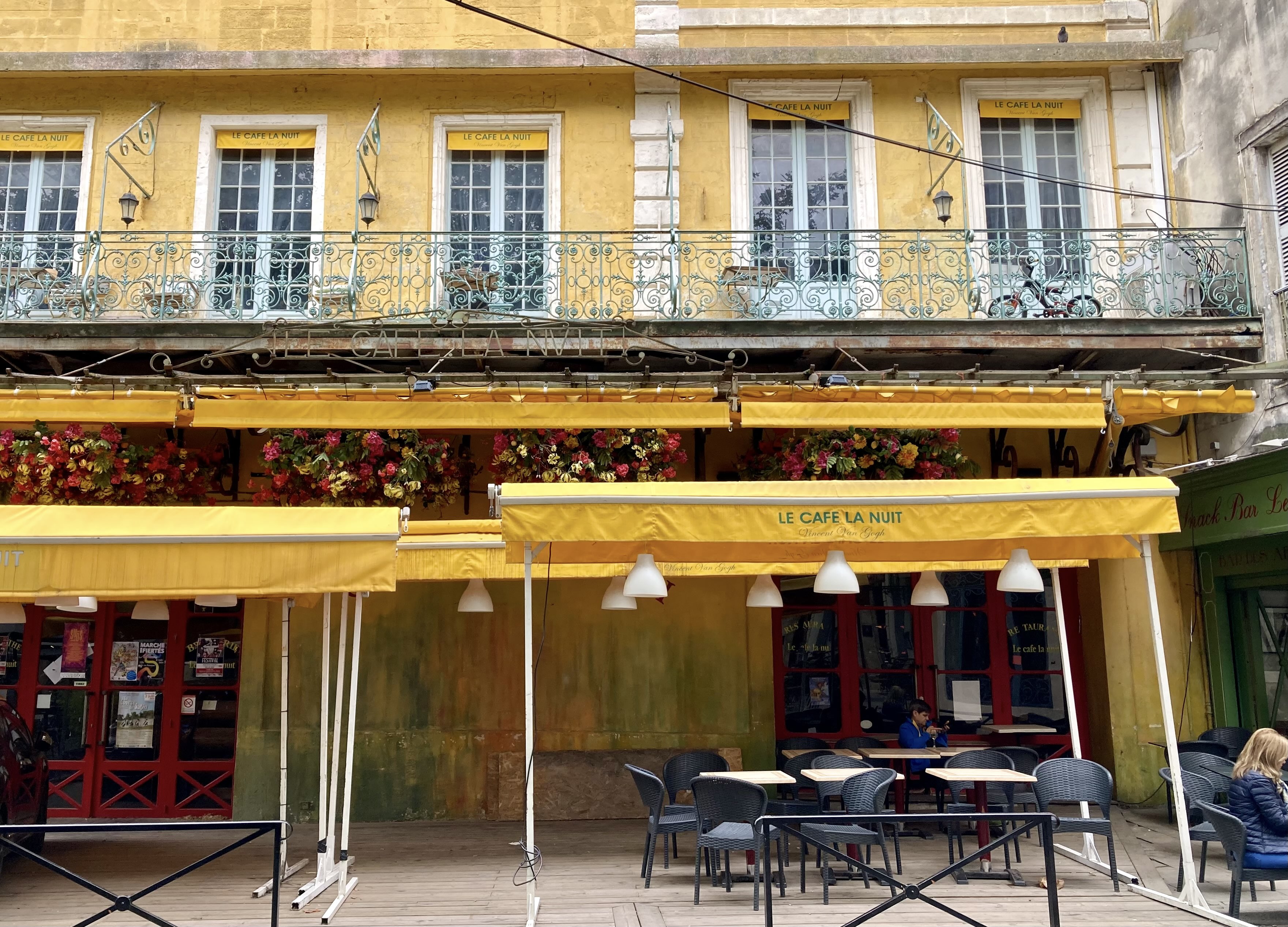
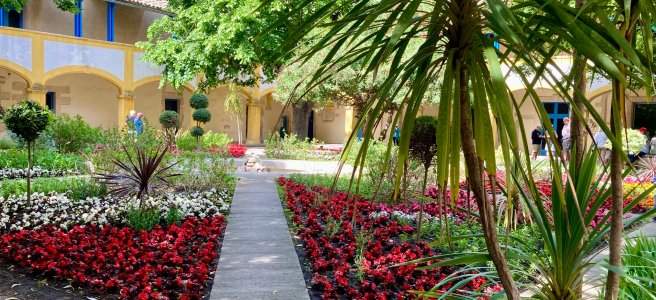
Arles was immortalised by Vincent Van Gogh who stayed here to paint some of his most famous works (1888–1889). 

There are couple of places that have been maintained more or less as they were when he painted them.

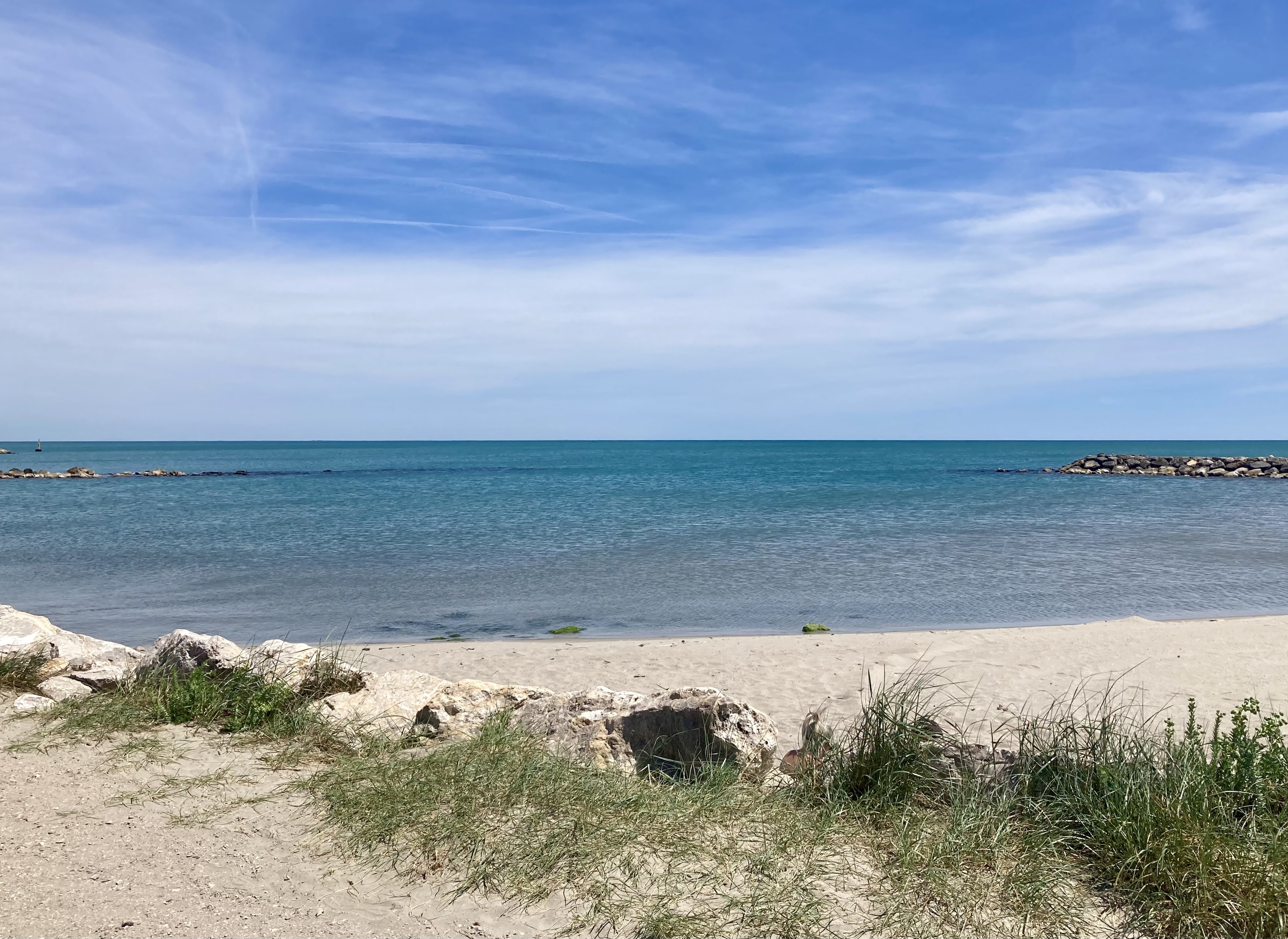
With the weather warming up to a pleasant 27º DonQui now heads to the sea to cool off and relax for a few days.

Romans and Juliet

Famous around the world as the setting for Shakespeare’s Romeo and Juliet, Verona is a wonderful place to spend a couple of days. Once you get through the ghastly industrial and commercial sprawl that blights the surroundings of most Italian cities — it is really stunningly beautiful.

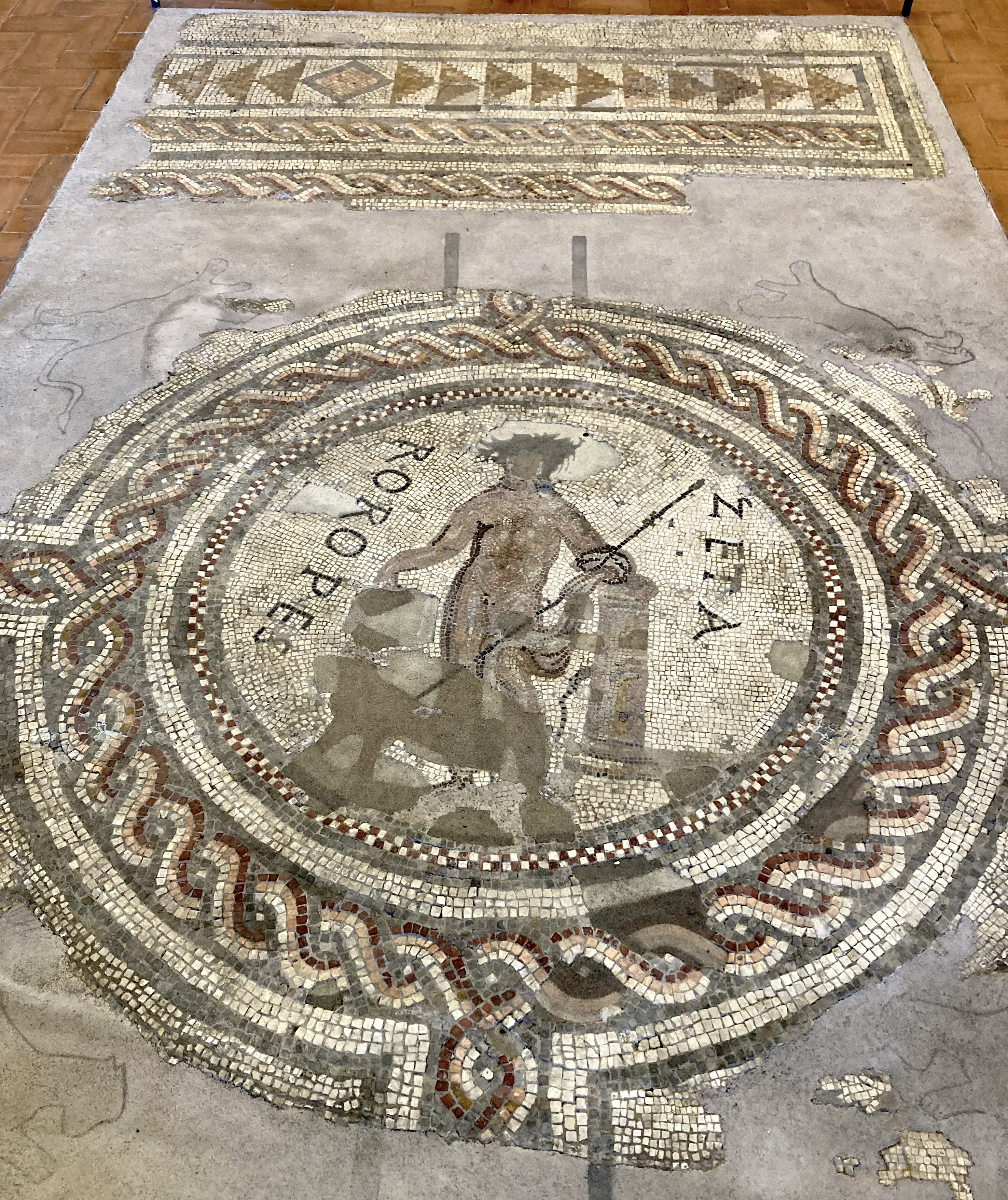
DonQui is a bit of a sucker for Roman stuff and Verona has some very good Roman stuff. So he hightails it over to the Roman amphitheatre and museum to get there just as the doors open. The amphitheatre is impressive but little museum does not have much of note apart from this nearly intact floor mosaic featuring Baccus — DonQui’s favourite deity by far.

At the other end of the old city is a nearly intact Roman arena. Both the amphitheatre and arena are still in use — hosting regular concerts.

The old city is compact and mostly pedestrianised. DonQui spends the better part of a very pleasant day trotting around the place and taking in the atmosphere. 

Around midday the town has pretty well filled up with tourists (presumably day trippers as there were very few of them in the morning). So he takes shelter in a little bottega around the corner from the Roman arena to pay homage to Baccus. Here he spends a delightful hour with Bruno learning about the wines of Verona’s Valpolicella region.

Of course DonQui tastes some too — working his way from the relatively light twice-fermented Ripasso, up through the heady full bodied Amarone made from partially dried grapes, to the most ancient of the Valpolicella wines — the sweet Recioto which Bruno recommends having with cheese. Before getting into the Valpolicella DonQui also has a taste of a delightfully fresh and minerally white Lugano from the shores of nearby Lake Garda. Bruno explains that the retreating sea which created Lake Garda left salt deposits in the clay which gives Lugano wines their unique taste.

On less steady hooves than before, DonQui explores the delightful streets and squares a little longer.

Although not a great fan of churches he is most impressed with the 13th century church of San Pietro the Martyr.

He particularly admires the fantastic medieval art from the 14th and 15th centuries.

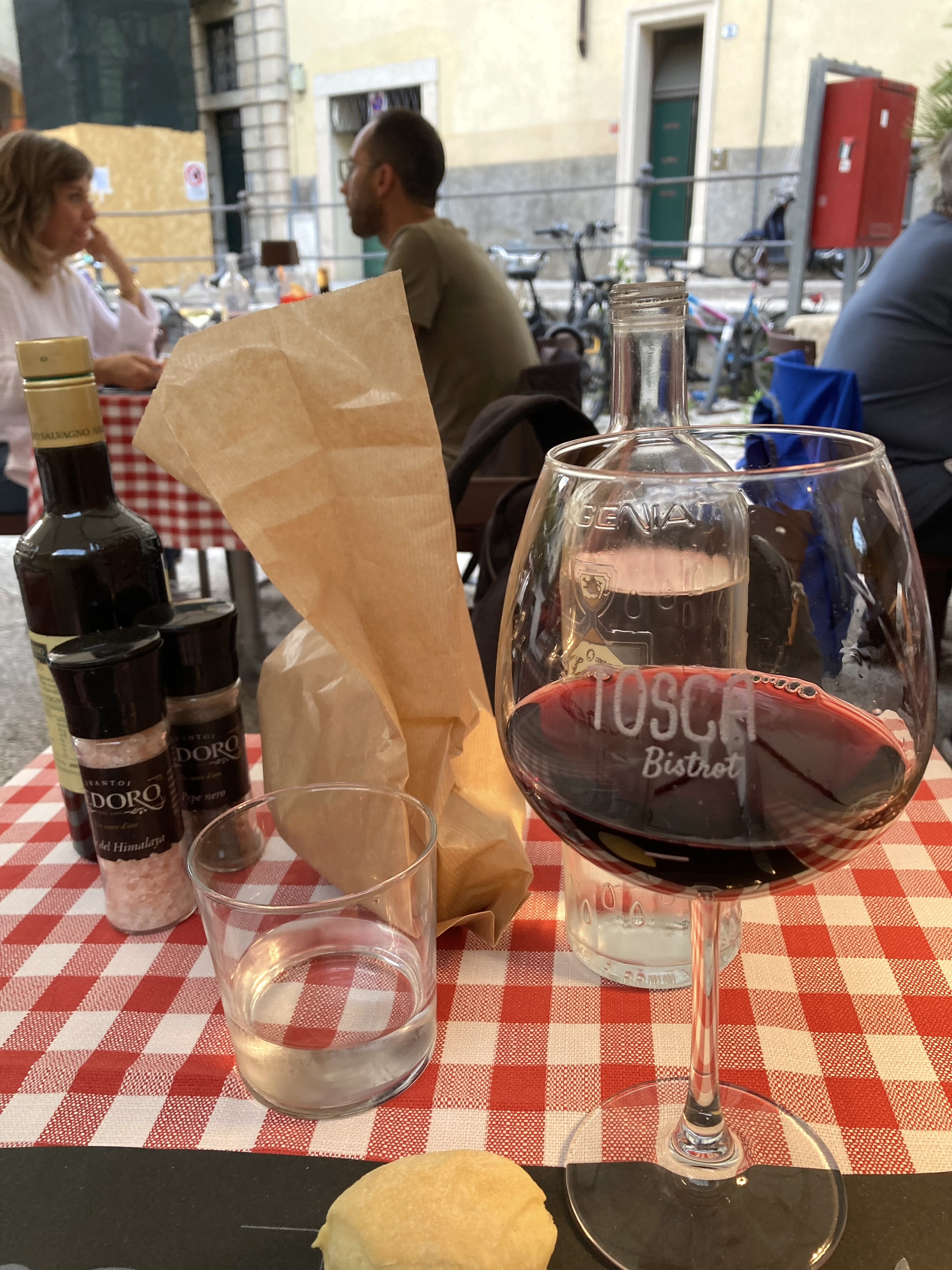
After a bit of a rest he heads out in the evening to taste some of the local specialties at the delightful Tosca Bistro.

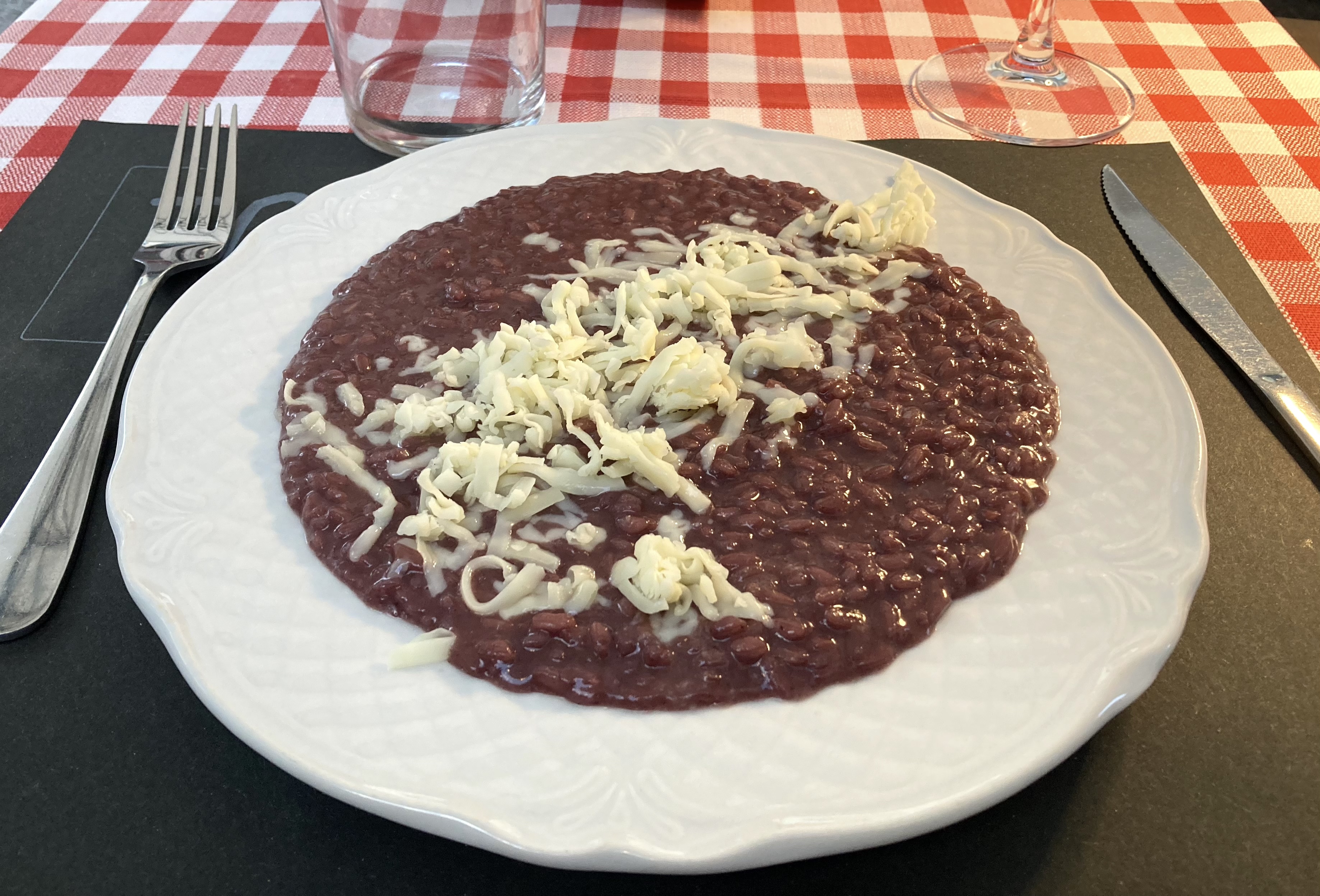
Here he samples an excellent risotto with Amarone, and horse meat stew with polenta. Both washed down with a glass of rich Amarone wine.

Tradition has it that the Veronese got a taste for eating horse after the battle between Theodoric and Odoacer in AD 489 which left large numbers of dead horses on the battlefield to provide an unexpected feast for the locals. The stew is rich, full of flavour and utterly delicious — it is something he will never be able to have in the UK.

Before resuming his journey the following morning, DonQui visits the reconstructed house of the Capuleti — better know as ‘Juliet’s house’ as the Shakespearian heroine was from the Capuleti family (anglicised to Capulet by the bard). 

By arriving just after opening he is able to beat the hordes of tourists who were choking the place the previous afternoon. It is said that if you touch the statue of Juliet in the courtyard you will be lucky in love. DonQui does not bother as he is already lucky in that department.

Fine dining in Alsace

Eating well in Alsace is not difficult. There is very little about Alsatian cuisine than DonQui does not love. On this trip he decides he will try some of the best. He has managed to secure reservations at two of the top restaurants in the region: Au Crocodile in Strasbourg and L’Auberge de l’Ill in Illhaeusern just off the Route des Vins about half way between Strasbourg and Colmar.

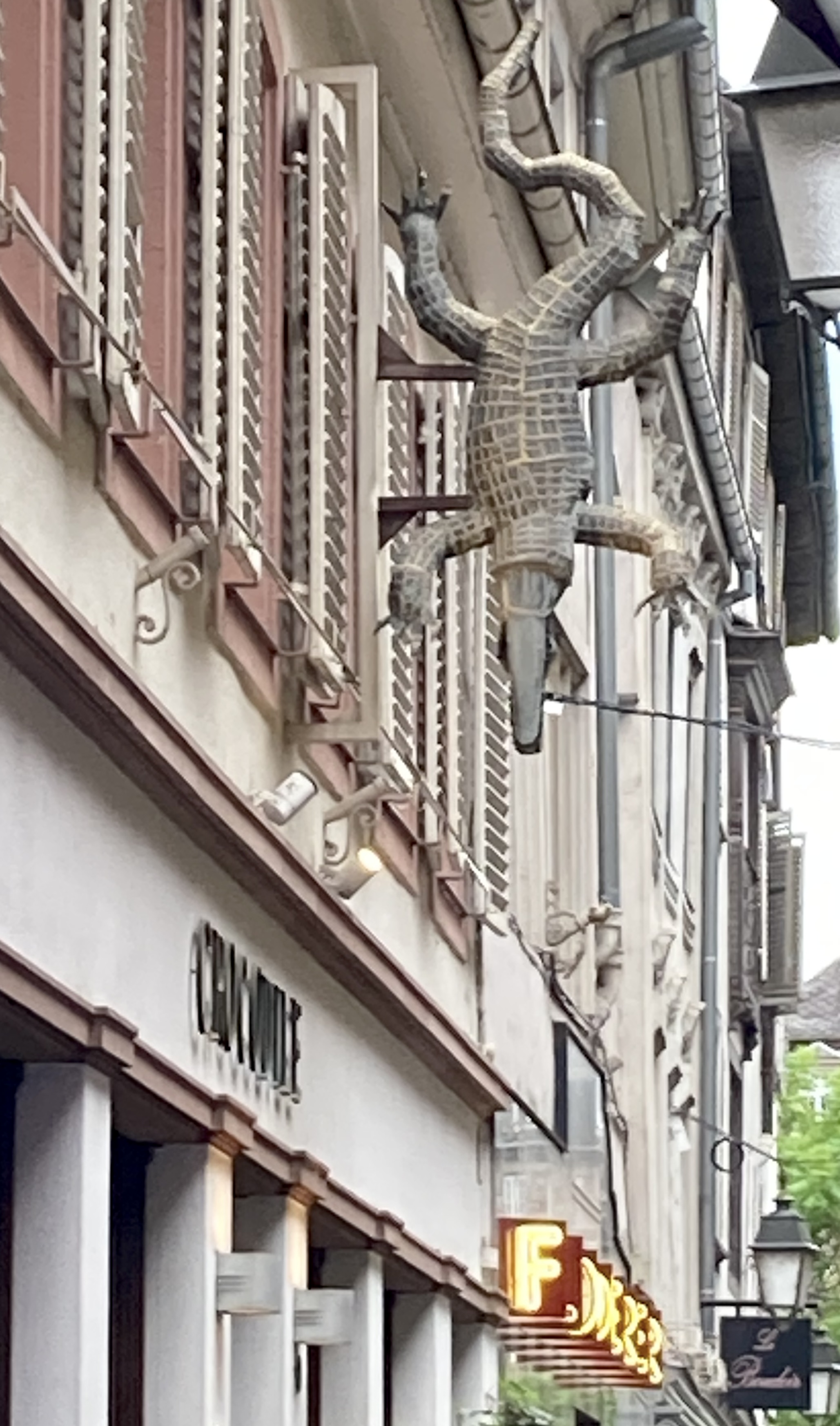
Au Crocodile gets its name from a stuffed crocodile brought back from Egypt by Captain Ackermann, one of Napoleon’s officers. It became a restaurant in 1840 and the original crocodile is still there on display.

Taking his seat DonQui is most impressed by the ambiance. There is an intimate feel the the restaurant and a sense of its history with the painting of 1840s Strasbourg dominating the dining room. The waiters are very knowledgeable and professional.

Feeling adventurous, DonQui opts for the chef’s ‘discovery menu’: starter, fish course, meat course and desert. It is less expensive than 3 courses à la carte but it is what the chef has decided with no indication of what that is. Even the waiters say they do not know the menu. So DonQui must trust the chef’s expertise.

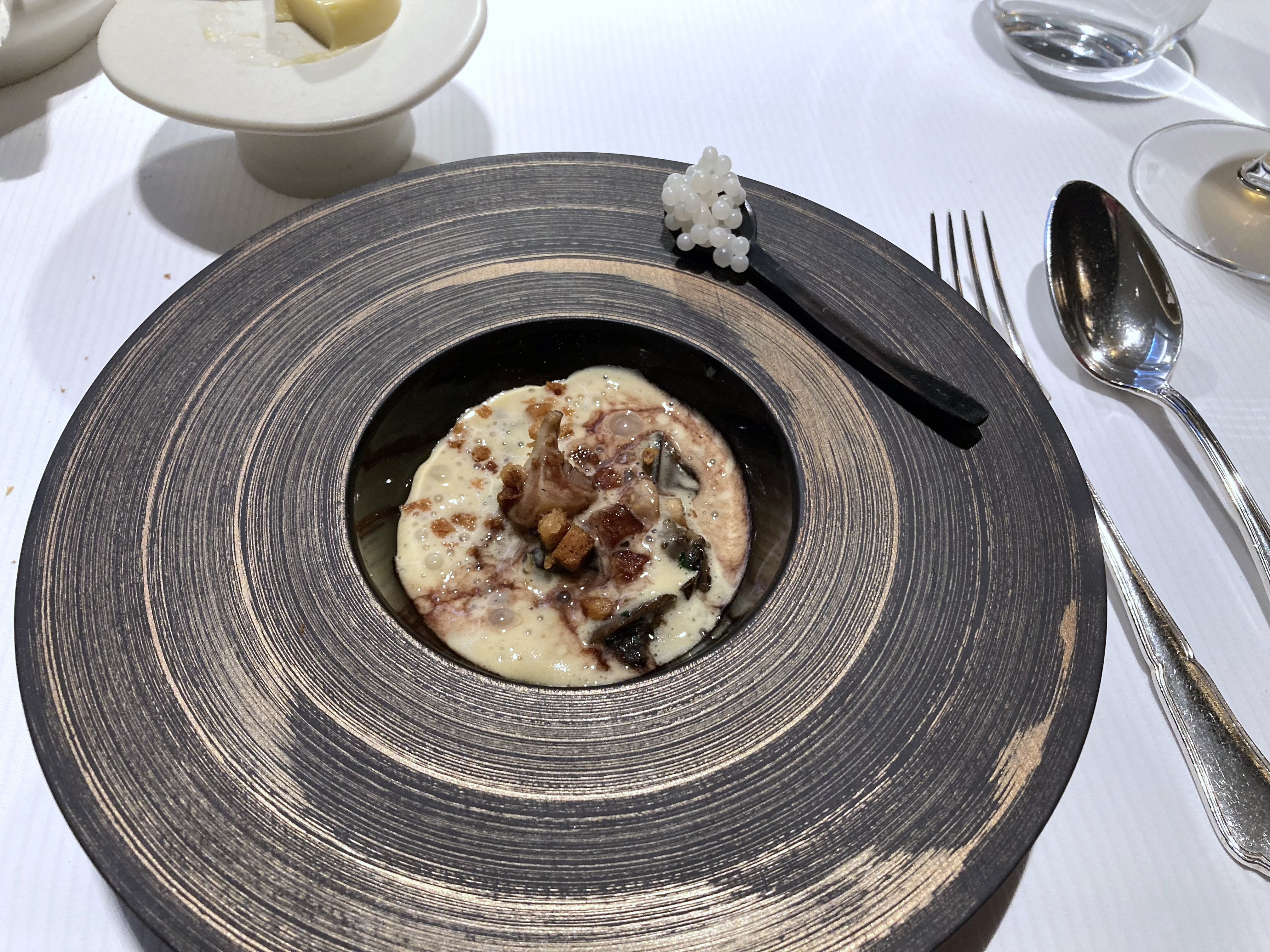
The absolute highlight of the meal is the starter of snails cooked with speck in a sabayon sauce with cheese — and snail caviar on the side. The flavours are perfectly balanced and the snail caviar an interesting addition. It is far less salty than the more usual fish caviar.

A close second is the pollock with spring vegetables and wild garlic mousse. It is the wild garlic mousse that really makes it. DonQui has some wild garlic in his garden and will attempt to do something similar next year (it being too late in the season by the time he gets home). He is advised by the knowledgeable waiter to pick the wild garlic before the flowers come out.

Being a bit of a cheese lover DonQui cannot resist sampling a selection of cheeses before moving on to desert. The star of the cheeses is the local Munster, kept under a glass dome — no doubt to prevent the pungent aroma from permeating the dining room.

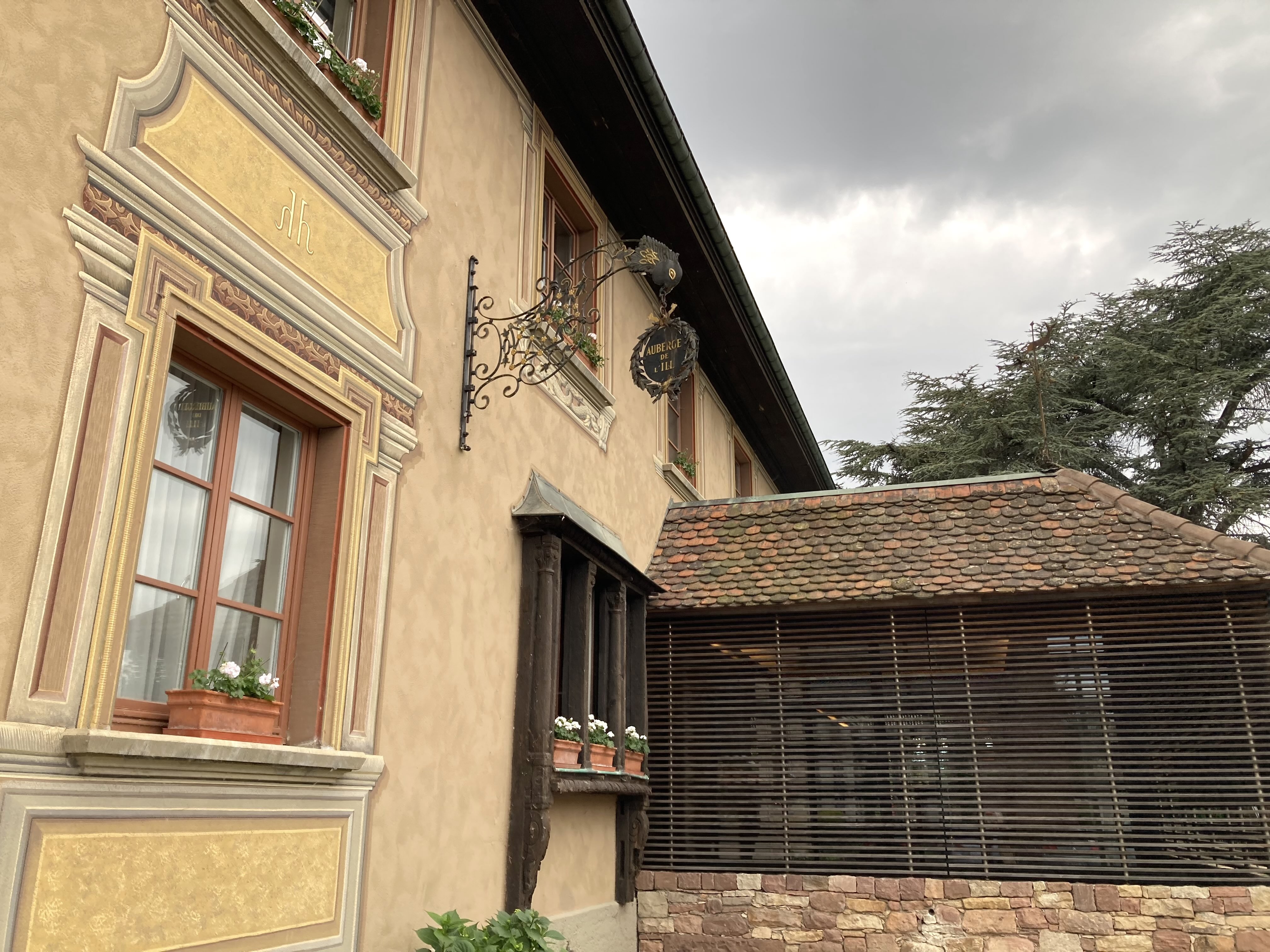
L’Auberge de l’Ill has more of a country feel which is appropriate given that it is out in the countryside far from urban development. This time DonQui orders à la carte.

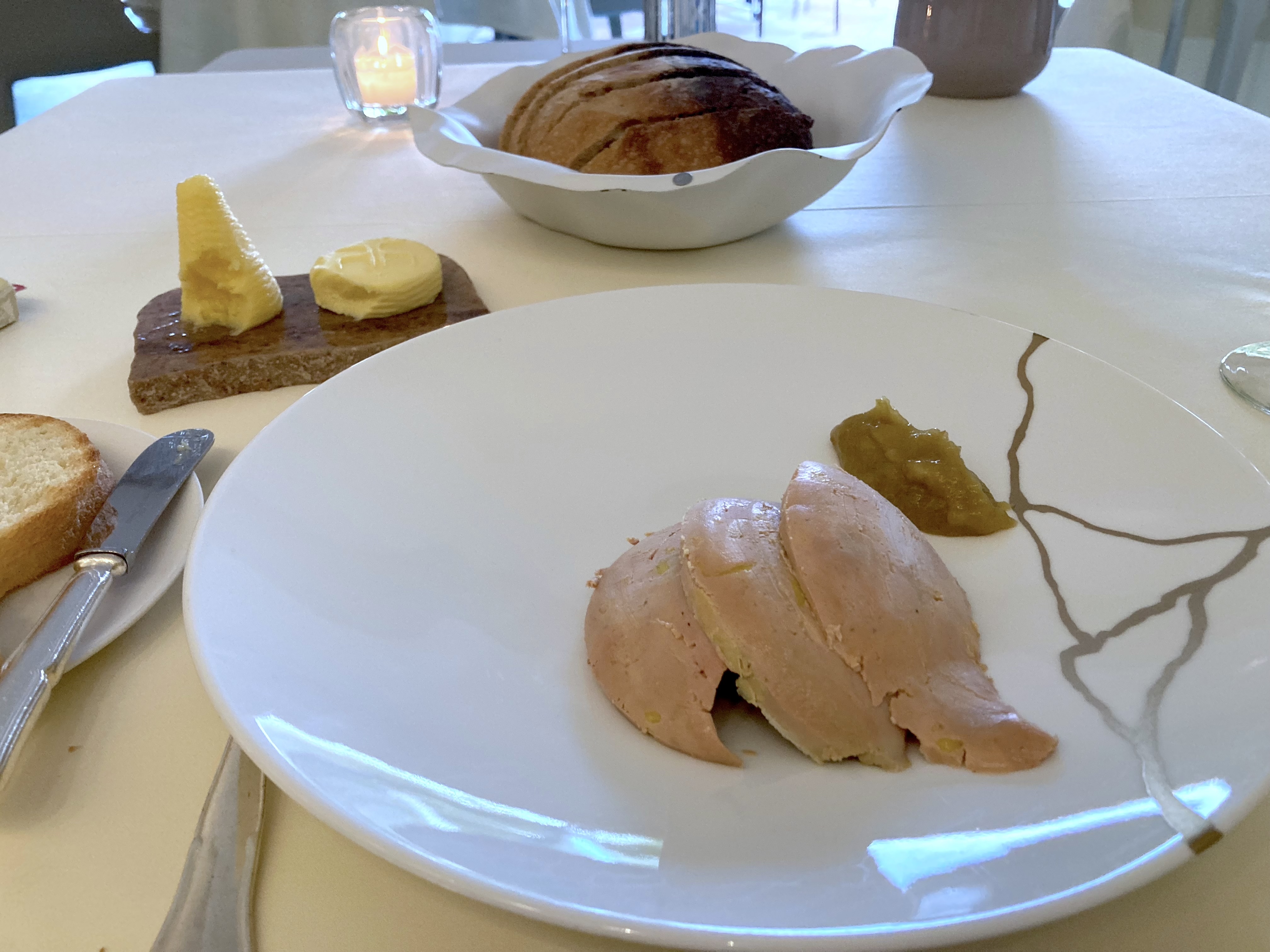
The homemade terrine de foie gras is absolutely delicious.

As is the filet de veau main course.

Then comes flambéed crepes filled with cream and sour cherries. If that is not calorific enough there is also a side of ice cream! DonQui washes this down with a fine calvados.

Both restaurants provide excellent classic dishes without fuss and without trying to be too clever or ‘chefy’. DonQui finds each dish executed to perfection by confident chefs who have no need to show off.

So if he could only choose one, which would it be? It is a difficult choice because the food at both is wonderful. If he had to make a choice, DonQui would probably go for Au Crocodile because of the ambiance and highly professional service. Incidentally the price of his meal at Au Crocodile was less than at L’Auberge de l’Ill.

A Phenomenal Repast

Don Qui has been blessed with more than a few pretty decent repasts in his life. Every once in a while one or two have been truly phenomenal. A recent lunch with Duchess at Ikoyi London was one such occasion.

Located in a brutalist building (180 The Strand, at the corner of Surrey St) there is little on the outside to give DonQui any clue of the delights to be found on the inside. 

Ikoyi takes its name from an affluent Lagos suburb but, although influenced by Nigerian spicing, this is a throughly modern British restaurant. Its ever changing set menu is based on seasonal British produce enhanced by West African spices. The interior is comfortably informal with an open kitchen where DonQui is able to observe the chefs preparing his food with a calm, quiet, professionalism — no Gordon Ramsey-like shouty, stress going on here. The front of house team are all friendly, helpful and very knowledgable.
DonQui is more than a little fond of a long leisurely lunch and this is exactly what he gets over the next 3 hours.  Some high-end restaurants seem to go out of their way to show how clever they are rather than concentrating on good honest food. Not so Ikoyi. Here each dish showcases the taste of fresh seasonal produce. The sauces and subtle spicing perfectly enhances the flavours without overpowering or disguising the key ingredients.

Each of the many dishes are utterly delectable, from the opening gola pepper chicken broth through to the excellent Jamaican Blue Mountain coffee at the end (Da Hong Pao tea for Duchess).

The menu is only provided at the end of the meal (see below). As each dish is presented, DonQui’s waiter gives a detailed description.

DonQui does not opt for the wine pairing but helpful waiter gives him very good advice on choosing his wines by the glass.

Is there a favourite dish?

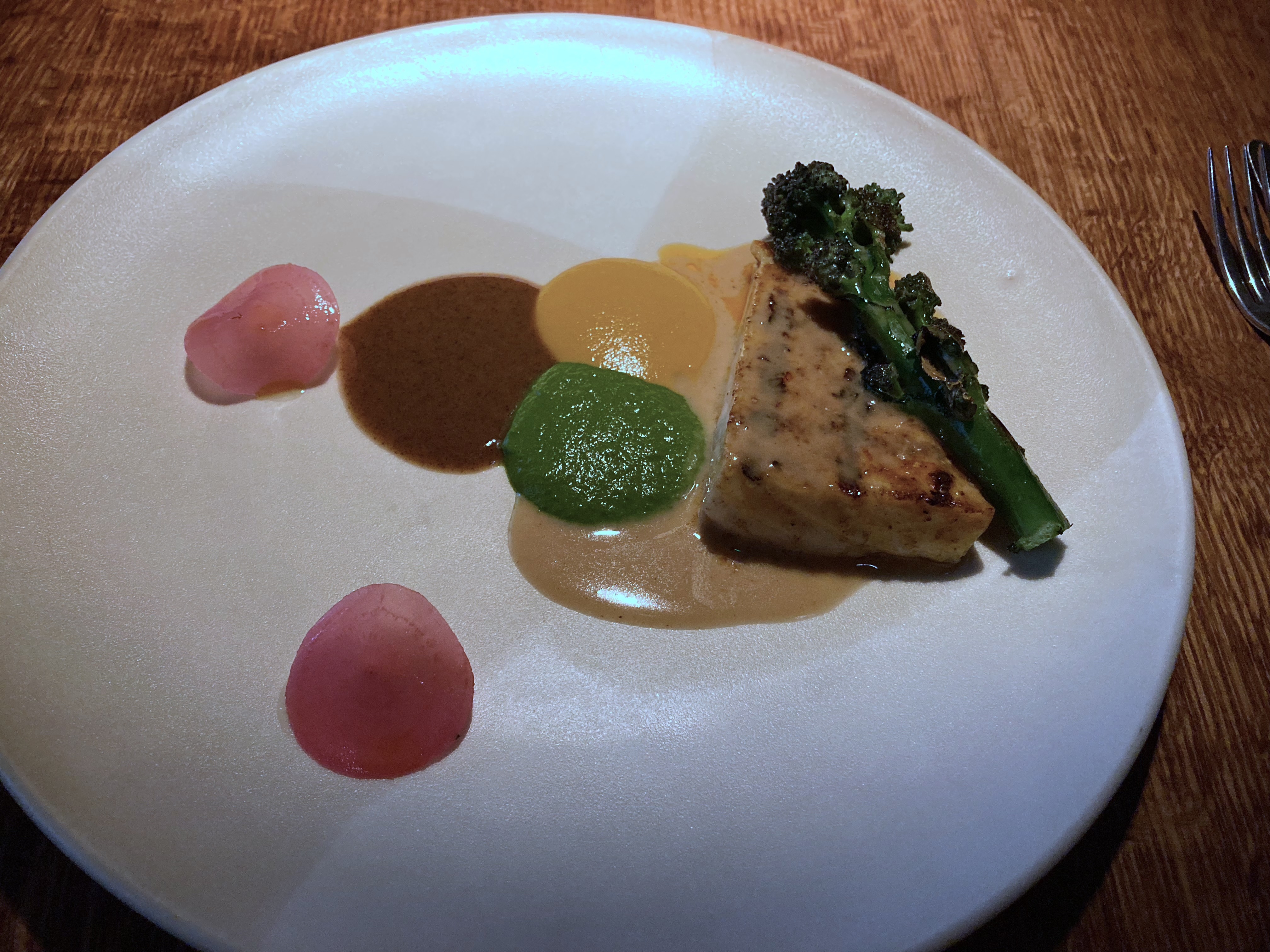
That is hard for DonQui to say. Each dish was so good that he finds it hard to pick a favourite. If pushed he would probably have to go for the dry-aged turbot with tender stem broccoli and an array of delectable sauces.

All diners eat from the same set menu which changes daily dependent on the best produce available. The portions are perfectly sized, with minimal carbohydrates. This allows DonQui to feel perfectly satisfied and not bloated at the end of 10 delightful courses. Allergies and aversions are asked for in advance but vegans and others with similar culinary neuroses would do best to go elsewhere.

Unfortunately Ikoyi is not a place you can just walk into with the hope of getting a table on the day. With two well deserved Michelin stars it is booked up well in advance. Bookings can be made up to two months ahead with new bookings opening on the first of each month. The price is also eyewateringly high although DonQui feels that every penny was very well spent for such a fabulous experience. If he can gather enough shekels together he would very much like to dine there again.

DonQui cooks Thai

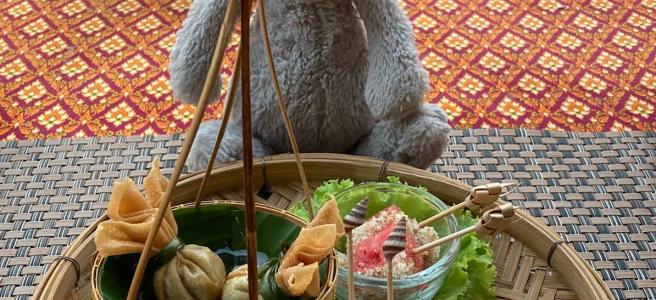
DonQui Oaty is rather fond of Thai cuisine and he tastes some excellent dishes whilst in Bangkok — not least the set menu dinner at Chakrabongse Villas.

Wandering through the picturesque Tha Tien waterfront market, DonQui stumbles across the delightful Rongos restaurant. The name means House of Flavours and that is indeed what it is.

Here he samples morning glory (water spinach)— a favourite Thai vegetable — in this case in a tempura batter with tamarind and coconut dressing.

This is followed by fried rice with salted egg and grilled prawns. Both dishes are utterly delectable.

Michelin listed Rongos is very small and very popular — often booked up days in advance. DonQui is lucky to get a place on spec thanks to arriving when they open with enough time for him to have his meal and watch the sunset over the river before the booked diners arrive to take his table.

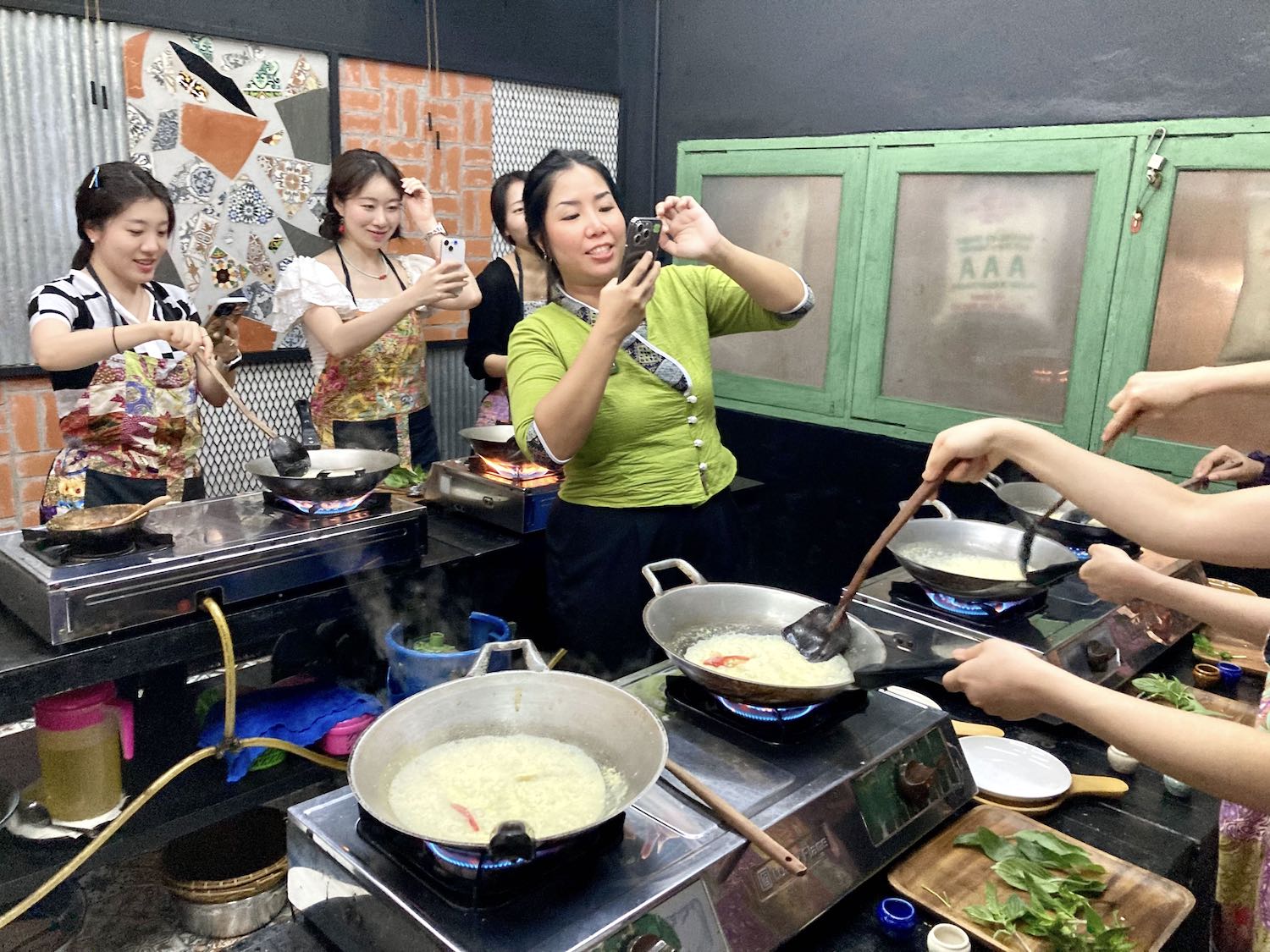
Keen to improve his own cookery skills, DonQui books himself in on a course at Silom Thai Cooking School. Here he learns all about the key ingredients of Thai cuisine. Not all of these will be easy to get back home, so he will have to think about substitutes or make an occasional trip to London’s Asian markets.

He is not entirely unhappy to find that he is the only westerner, only male, and only donkey on the course. 

DonQui learns how to make Tom Yum Goong — a sweet and sour soup with great depth of flavour. It is very quickly cooked up in a wok with coconut milk which he makes himself by hand-squeezing freshly grated coconut. 

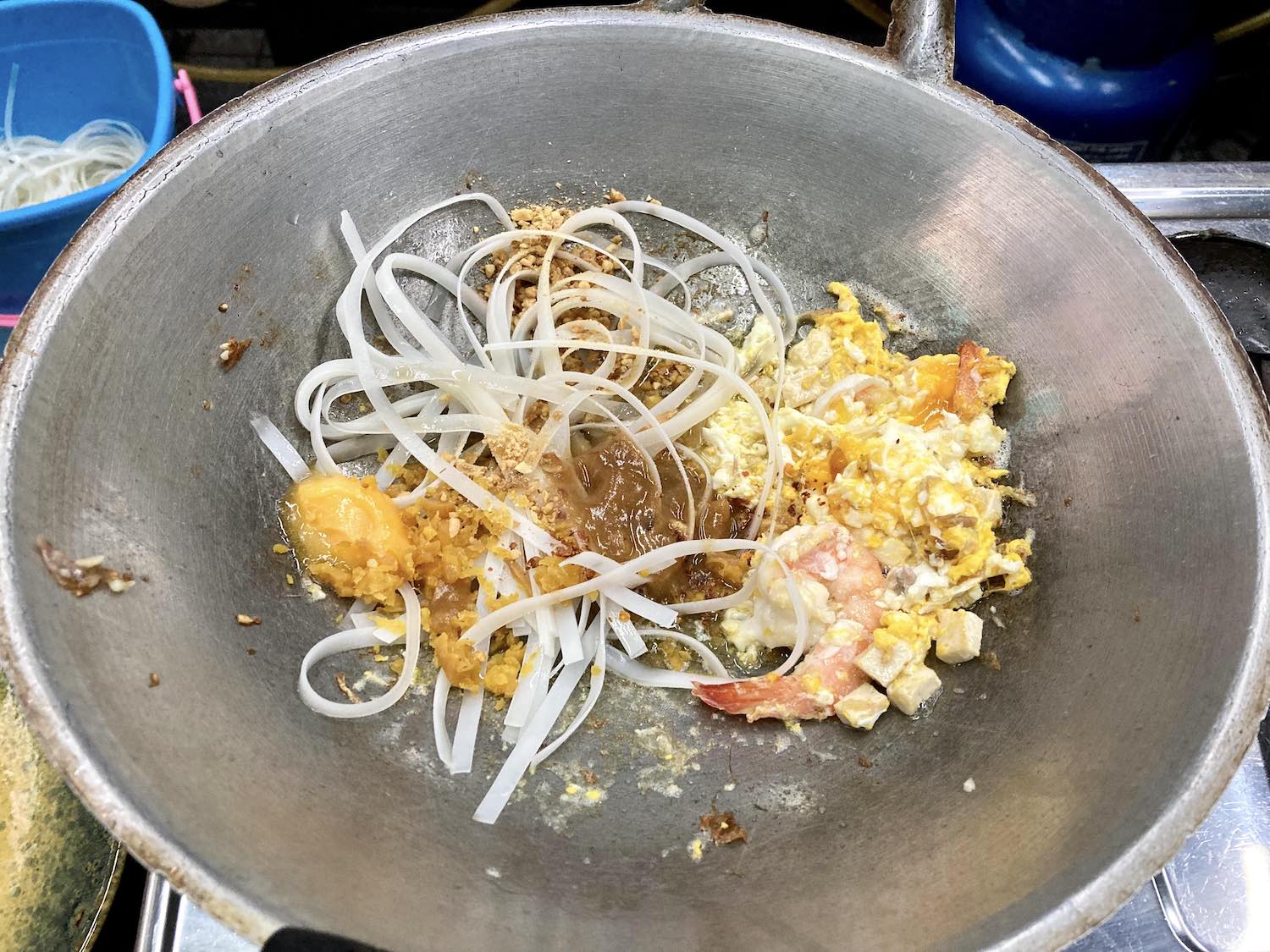
He also cooks up a pretty good Pad Thai, learning to vary the cutting of the hot bird’s eye chillies depending on how spicy he wants it. If he wants it fiery — cut the chillies and then crush them with the flat of the knife blade. For pretty hot — cut them fine, and for a milder version (but still with some heat) cut them into relatively large pieces.

And here is his completed dish.

His is quite proud of his green curry with chicken and round Thai eggplant. He makes the paste by hand with a mortar and pestle, the green colour base coming from a dozen long green spur chillies (crushed into the paste). Spur chillies are quite mild. A red curry is made using red spur chillies (also relatively mild). As a rule of thumb DonQui’s instructor says that larger chillies are milder than small ones.

The delectable mango sticky rice is mostly prepared by the staff although the various steps are clearly explained and demonstrated. DonQui will try this at home.

All of the recipes are pretty simple and very quick to cook — almost always in a wok on high heat. Armed with an illustrated recipe book DonQui can hone his skills when he gets home.

From Jungle to Desert

After two weeks in Ecuador, DonQui sets off on the third leg of his around the world trip. Next stop Southern California. 

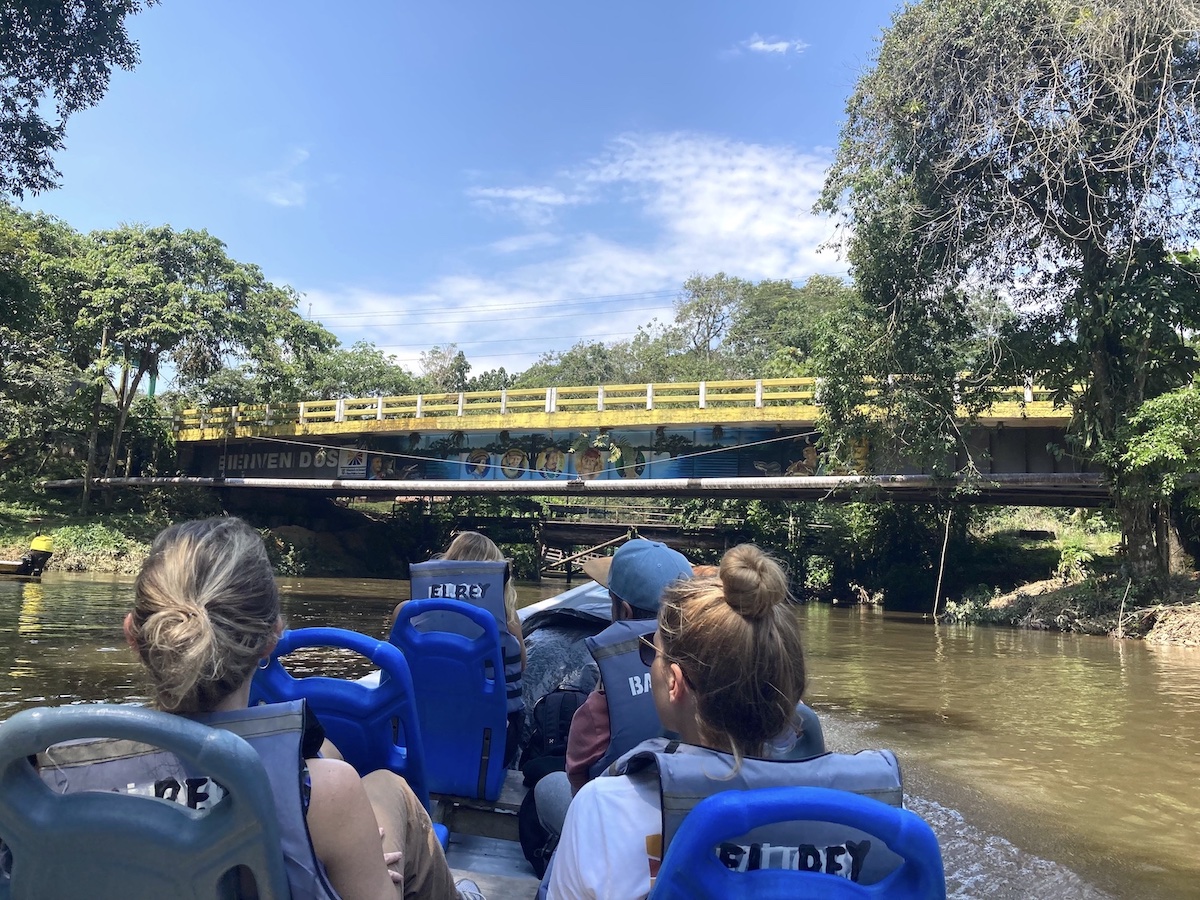
It is a long two day journey: canoe back up the Cuyabeno, car to Coca where he stays overnight, and then three flights in quick succession — Coca to Quito, Quito to Miami, and then on to Los Angeles. He only just makes the connection in Miami thanks to long queues at security and US immigration.

Hiring a car in LA, DonQui drives off towards the Mojave desert.

His first destination is Sacred Sands at the entrance to Joshua Tree National Park

DonQui is more than pleased with his accommodation which is quite a contrast to roughing it in Amazonia.

Joshua Tree National Park is breathtakingly beautiful.

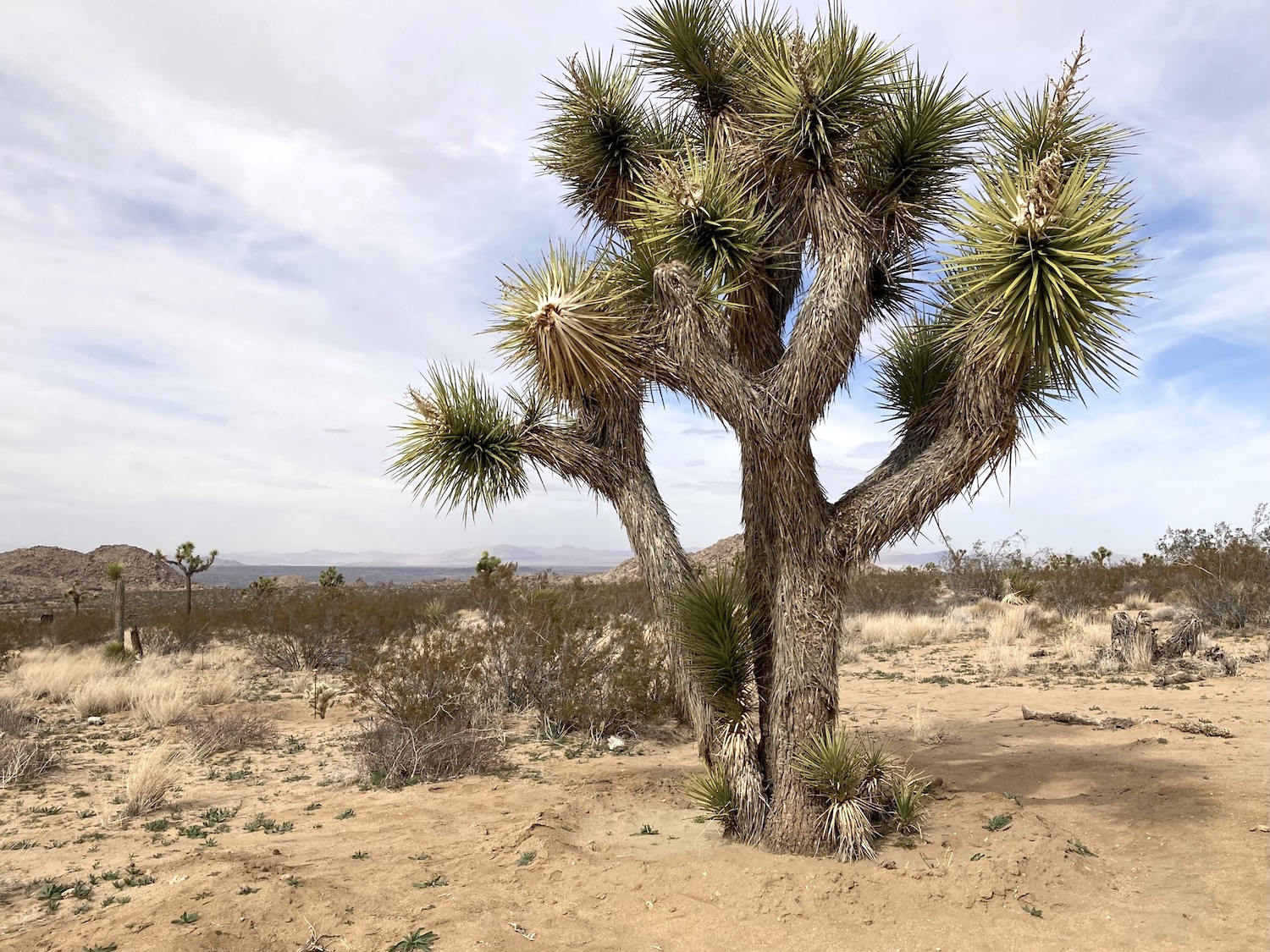
The iconic joshua trees look like a cross between a cactus and palm tree. They are in fact yuccas, which DonQui learns are somewhat bizarrely related to asparagus.

The rock formations dotted across the desert landscape are as impressive as the trees…

… none more so than the other-worldly skull rock.

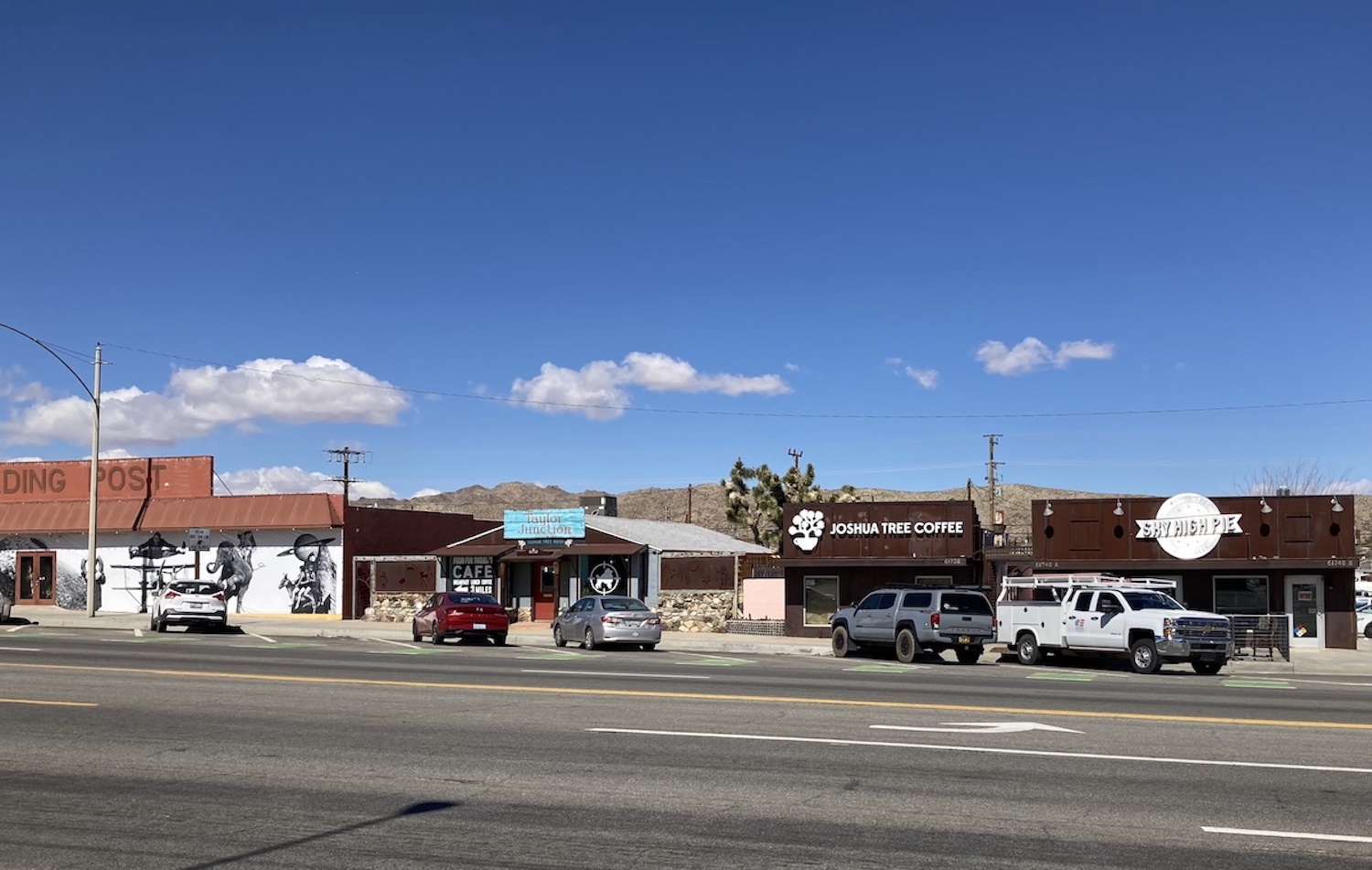
The small town of Joshua Tree is very pleasant with an artsy, alternative vibe. DonQui finds souvenir shops selling crystals and incense underneath posters advertising spiritual retreats, yoga, sound healings and other sorts of new agey stuff.

The entrance to the Joshua Tree Saloon looks as if a bus load of hippies pulled up several decades ago and stayed. Quite probably they did.

Inside the saloon DonQui feels as if he has entered a movie set with a couple of characters from central casting making good use of the pool table.

DonQui settles in for a couple of hours to watch the locals and enjoy some very good food and beer.

DonQui had expected the desert nights to be cold but his arrival is timed with an unseasonal cold snap with high winds. As he leaves the saloon he is more than a little shocked to find it is snowing. This is not exactly what he had been expecting.

Overnight in San José, Costa Rica

On his way to Tortuguero on Costa Rica’s Atlantic coast, DonQui Oaty decides to break his journey in the Costa Rican capital. It seems more restful after a long international flight to spend the night in San José before hopping on a domestic flight to the coast

san_jose_costa_rica1.jpg
San José is not the most attractive of cities

At first glance San José doesn’t seem to have much to offer. DonQui notes the urban sprawl, dusty streets and dull architecture. He is fairly certain that those that know the city will tell him that there is much to see and do. But it is a Sunday afternoon, not much is happening and the restful atmosphere of the low-rise Hotel Colonial invites DonQui to take a siesta rather than go out to explore Costa Rica’s capital.

hotel colonial.jpg
DonQui stays at the very pleasant Hotel Colonial

With its pleasant neo-colonial architecture, large spacious room and friendly staff, the Hotel Colonial is a great place to stay. It is right in the centre of town close to the Jade museum which would have been handy had DonQui decided to explore.

pool.jpg
The hotel courtyard

Instead, after his siesta, he has a coffee and plays a game of cards with Duchess in the pleasant courtyard by the small pool.

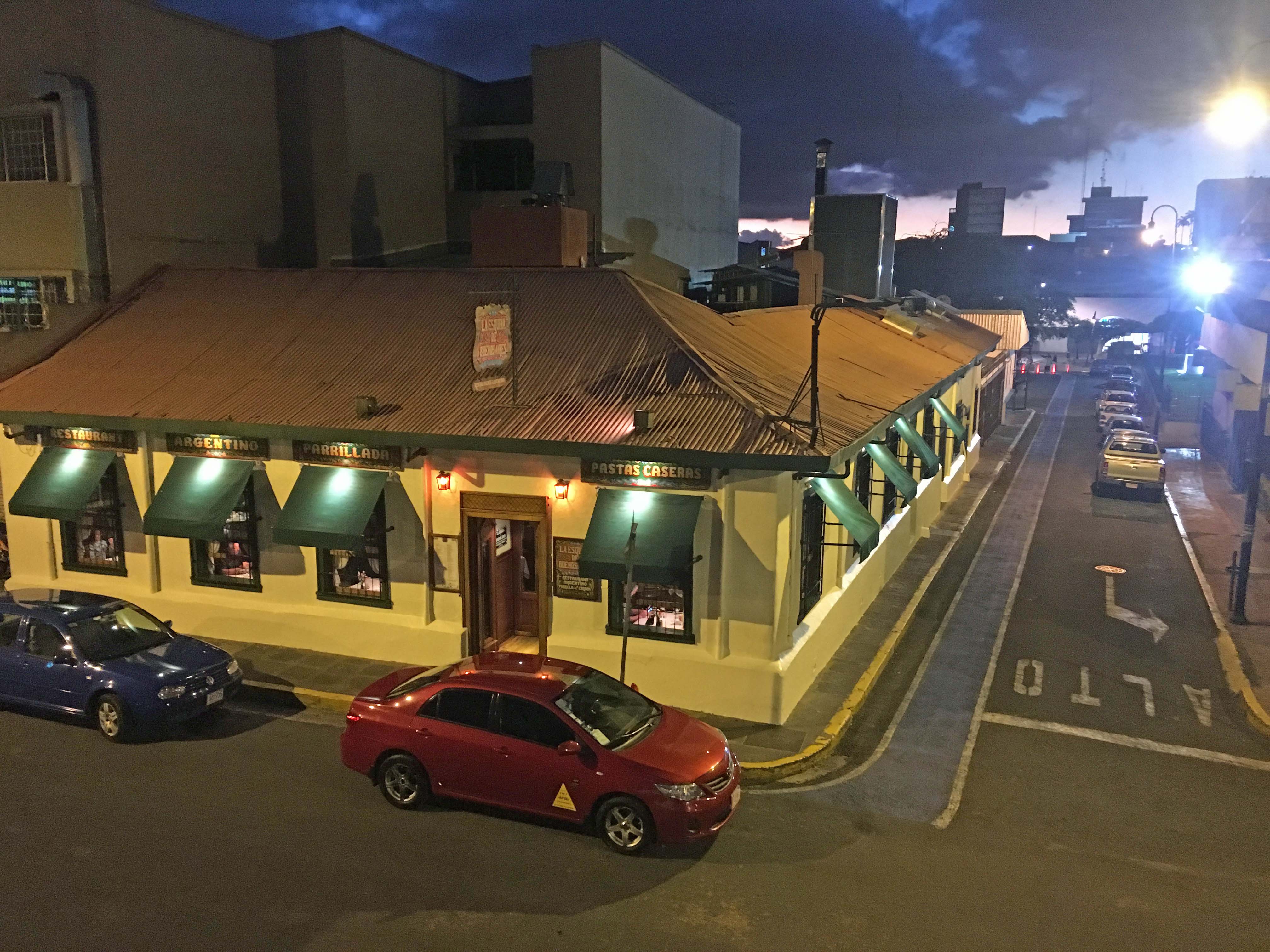
Esquina de Buenos Aires.jpg
Esquina de Buenos Aires Restaurant

The Esquina de Buenos Aires restaurant is right across the street from the Hotel Colonial. DonQui has learned that it has an excellent reputation and is hugely popular. He is, therefore, thankful he had the foresight to make a reservation as the place is hopping when he gets there for dinner and he would not have had a chance of a table without it.

IMG_4977 b&w.jpg
DonQui imagines he is in a classic black and white film

DonQui immediately sees why the restaurant is so popular. It oozes with atmosphere. The wood panelling, ceiling fans, posters from classic Argentinian films and old photos of Argentinian celebrities, make DonQui feel at though he has been transported into classic black and white film set in old Buenos Aires. All that is missing are two gentlemen in fedoras smoking cigars in a corner as they plan some dangerous adventure.

IMG_4974.JPG
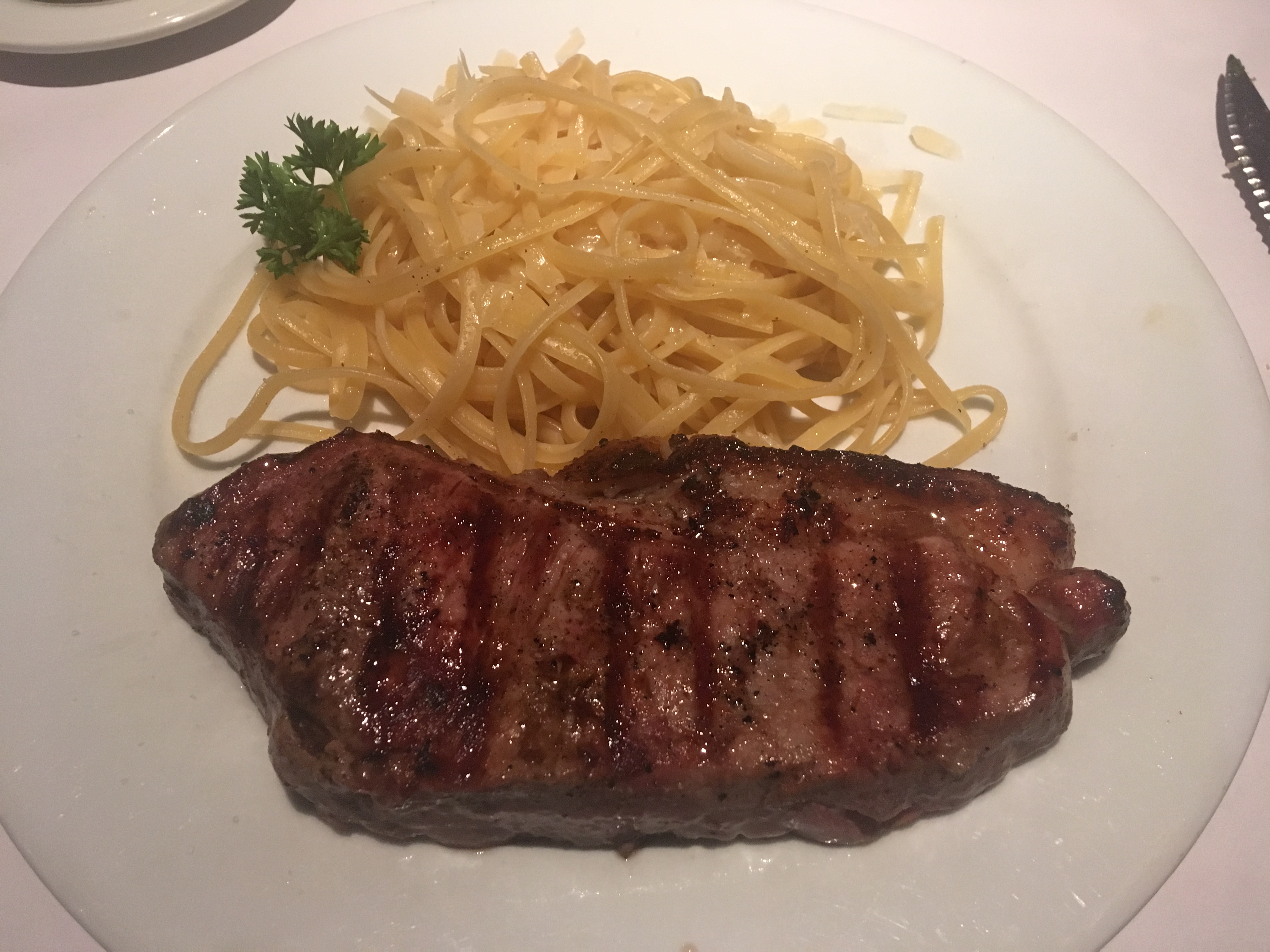
The ‘mini’ striploin is plenty big enough

The food, drink and service are as good as the atmosphere. It being an Argentinian restaurant, beef steak is the thing to have. DonQui’s Bife de Chorizo (striploin) is superb and he is glad he ordered the ‘mini’ portion as at 250g of beef it is more than enough. The full portion is a whopping 400g!

flambeed banana pancakes.jpg
Banana crepes flambéed in rum

There is more than steak on the menu. Duchess’ sopa de zapallo y choclo (pumpkin and sweetcorn soup) is delicious as are the rum flambéed bannana crepes that DonQui has for desert. The house red wine, a Pequeña Vasija is excellent. Prices are a little on the steep side for Costa Rica but quite reasonable by European/North American standards. Reservations are essential.

rice and beans

Certainly, DonQui could have been more energetic to make more of his short overnight stay in San José. Nonetheless he thoroughly enjoys himself. He feels perfectly relaxed as he eats his breakfast of gallo pinto (rice and beans) with egg and sweet fried plantain the next morning. He is now ready for a proper adventure.


Casamia, Bristol

After enjoying his day at Jekka’s Herb Farm, Duchess treats DonQui to a meal at Michelin-starred Casamia — Bristol’s finest restaurant. Many of the herbs they use are sourced from Jekka’s farm.

casamia-general.jpg
The entrance to Casamia

After the slightly disappointing experience at the Black Swan in Yorkshire, DonQui wonders if the multi-course tasting menu at Casamia will also be a little over-fussy. He need not have worried. The meal is utterly exquisite — each small dish of the 12 course menu is a wonderful gastronomic experience in its own right and the courses build beautifully.

kitchen.jpg
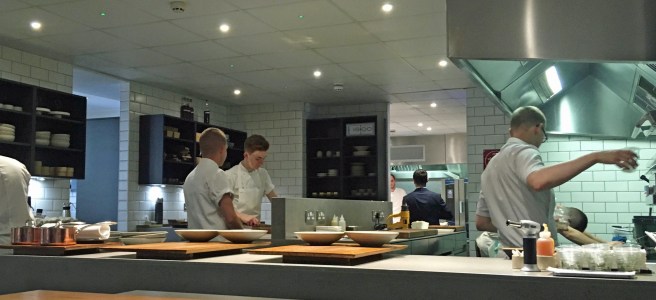
The open kitchen

Tucked away on a pedestrianised road beside the Bathurst Basin water, the contemporary styled restaurant has room for only 35 diners, creating a nice intimate atmosphere with the tables spaced well enough apart that there is no crowding. On arrival Duchess and DonQui are treated to a quick tour of the huge open kitchen where the enthusiastic young cooks prepare the dishes. 

We are given no menu in advance. Instead we are advised to sit back and enjoy the journey. Every dish is brought to our table by one of the enthusiastic cooks who helped prepare it. They give detailed explanations and are happy to answer questions. The pride in their creations is palpable. 

parmesan tart 1.jpg
Parmesan tartlet

The meal begins on a high note with an incredible parmesan tartlet. The ultra-fine crisp pastry filled with a parmesan cheese mouse and topped with grated parmesan is a taste explosion with beautifully contrasting textures. It is one of the most wonderful things DonQui had ever eaten.

prawn.jpg
Prawn on lava

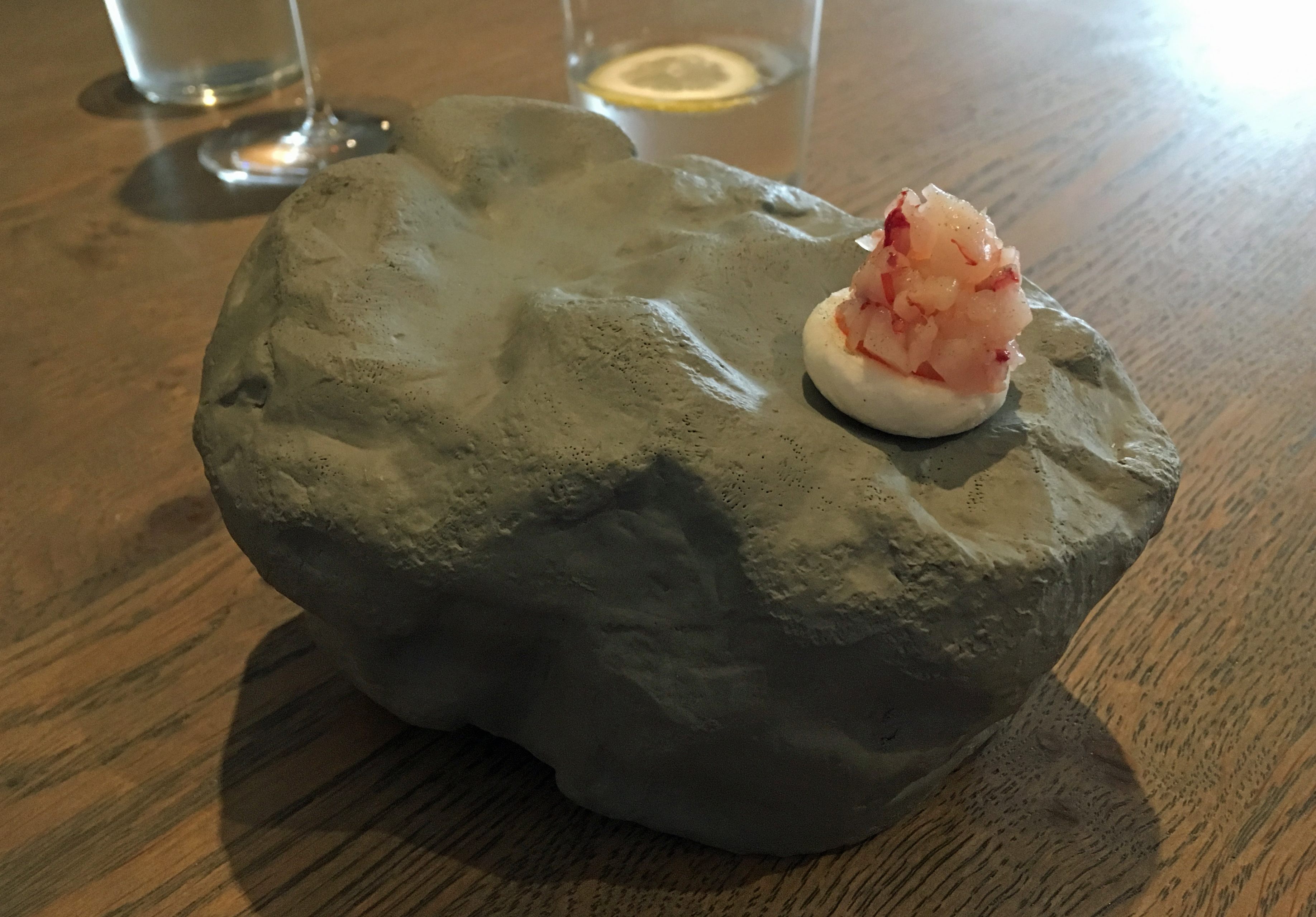
Hot on its heals came a fabulous dish of Canary Islands prawn served on a lava rock evoking the islands’ volcanic state.

salad.jpg
A tiny but delicious salad

The dishes are very small — tiny even, but with 12 courses to get though this is a good thing. Every dish is exquisite and DonQui finds it hard to find the words to do justice to the tastes. In addition to the parmesan tart a couple of other dishes stand out.

trout.jpg
Trout with served with hot charcoal

The brown trout served with a white-hot piece of charcoal on top still cooking the fish is not just a piece of showmanship. The lingering taste of charcoal infuses the fish with its flavour and the crispy skin is served on the side, much like a piece of pork crackling. The monkfish tail with a champagne sabayon is also quite delectable and definitely one of the stand-out dishes. It is helped by the fact that DonQui opted for the wine pairing and a glass of the champagne which was used in the sauce is served alongside it.

A wonderful sourdough bread with tangy cultured butter is served as a separate course after the salad and before the two fish dishes. DonQui remarks to the chef that he is not a fan of bread being served before the meal. Inevitably he is hungry then and eats far too much of it. The chef replies that the bread is so good that it deserves to be served as a course in its own right. He is correct and it helps that the previous dishes have knocked the edge off DonQui’s hunger. 

duck.jpg
Duck breast

The meat courses are based on duck with a flavourful consommé preceding a beautifully cooked piece of breast with a crisp, spicy-herb skin and a rich sauce.

wine.jpg
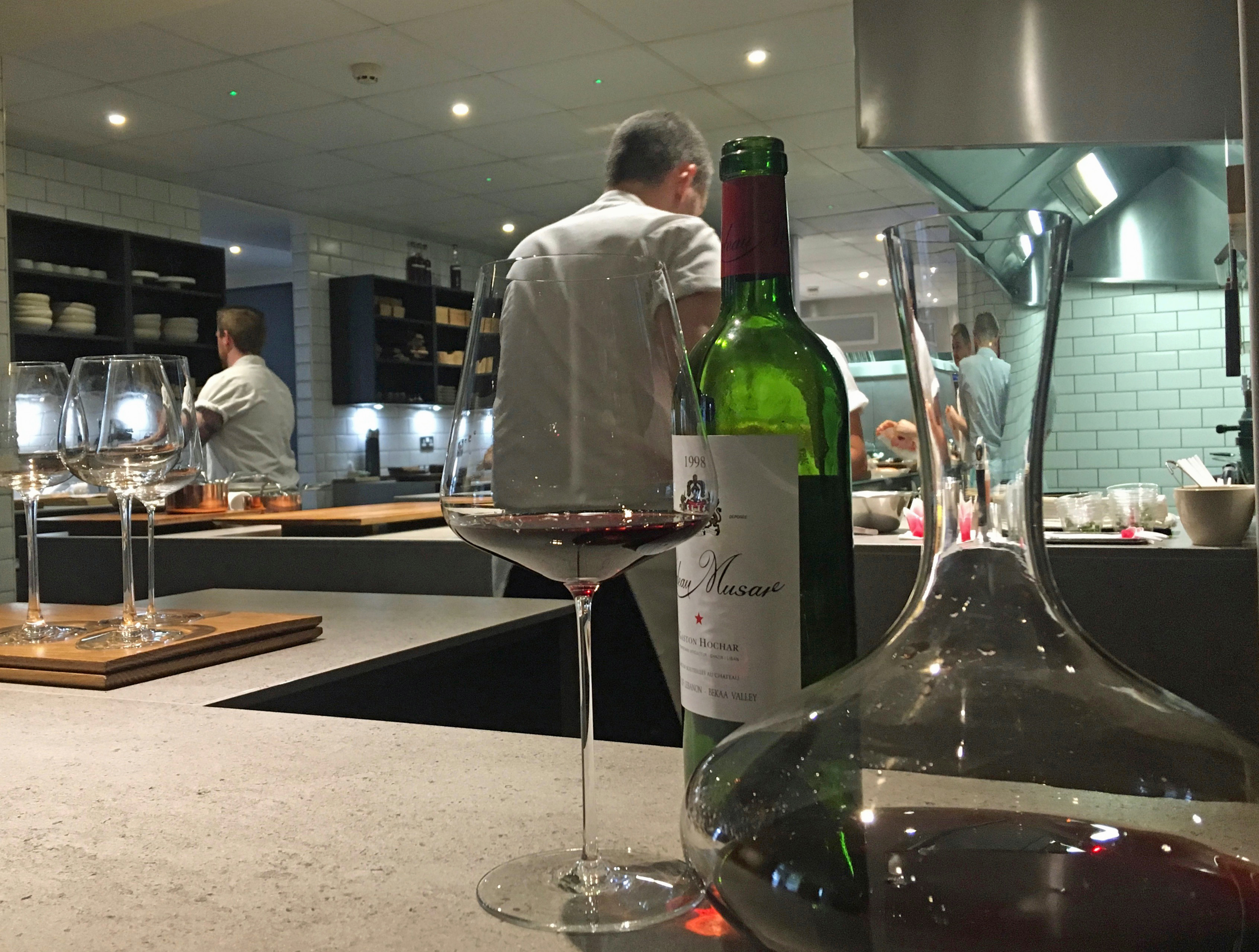
The red wine is breathing

DonQui is very glad that he chose the ‘wine flight’ as Cassamia calls it. In doing so each of his dishes is accompanied by a different wine, few of which are familiar to DonQui. Amongst the most notable are the Equinocio Branco from Southern Portugal which goes very well with the opening courses and the French Uroulat Jurançon desert wine.

passion fruit.jpg
Passion fruit desert with Jurançon wine

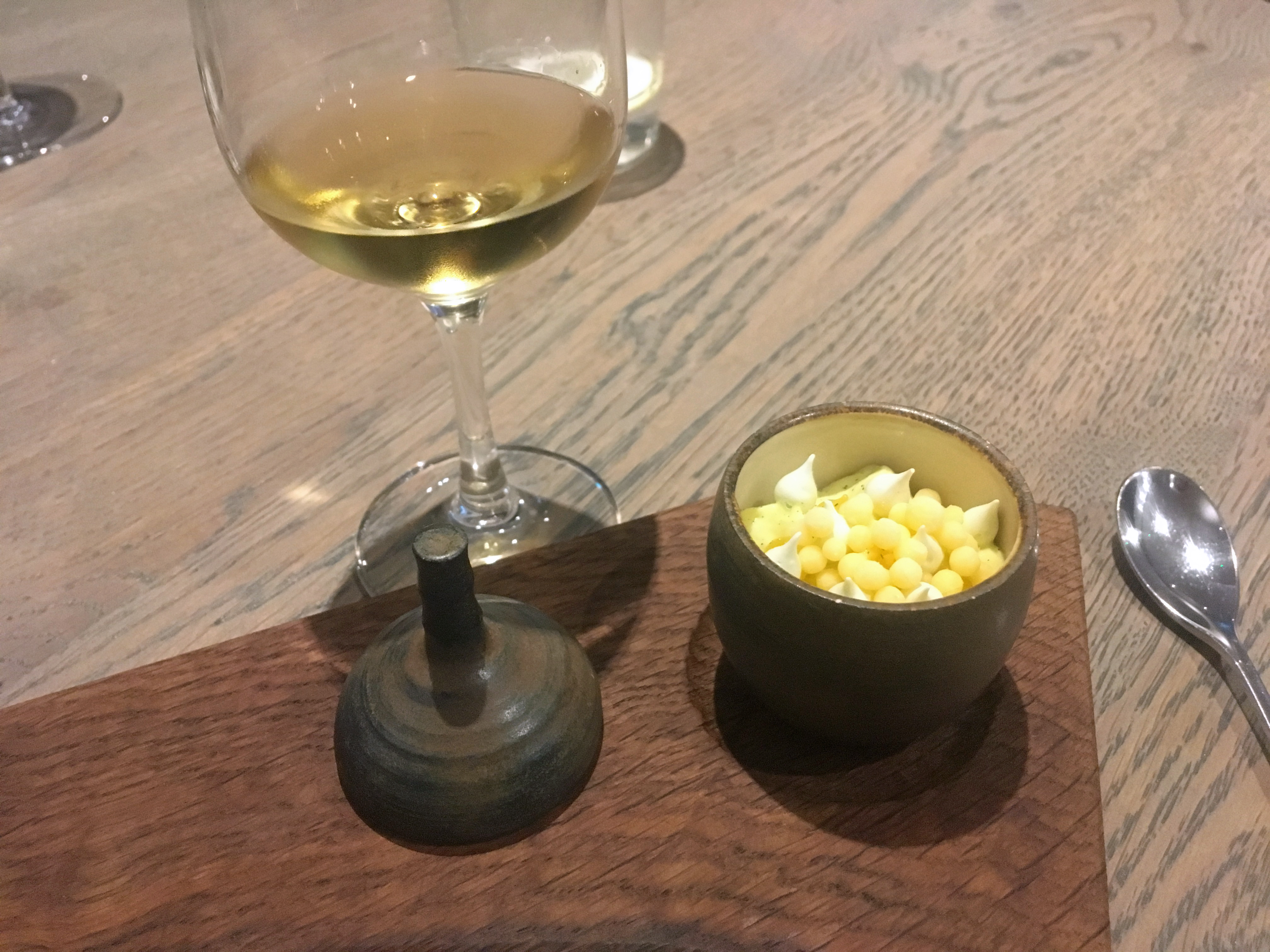
The deserts are as sublime as the savoury courses. There are several of them including a passion fruit concoction served in an elegant ceramic pot as well as a mix of strawberry based sweets. Perhaps the most unusually interesting is the tiny porcini mushroom fudge served at the end of the meal — the earthiness of mushroom unexpectedly and beautifully combining with the sweetness of the fudge.

strawberry.jpg
Strawberry second desert

This is probably the best meal DonQui has had in a long time. Given the restaurant’s reputation and its small size, bookings need to be made well in advance. 

Good food in Belgium

DonQui is off to Brussels for a few days in search of good food and beer. This shouldn’t be too hard as the Belgians take their food and beer very seriously indeed.

The problem is that there are so many options it can be difficult to decide where to go. Most of the top rated restaurants seem to serve up what has come to be known as Modern European — often small dishes topped off with some foam, a squirt or two of sauce, and a scattering of edible flowers or pea shoots. This is not what DonQui wants. He is looking for traditional Belgian fare washed down by a strong abby-brewed beer. 

IMG_2222.jpg
Brasserie de la Ville

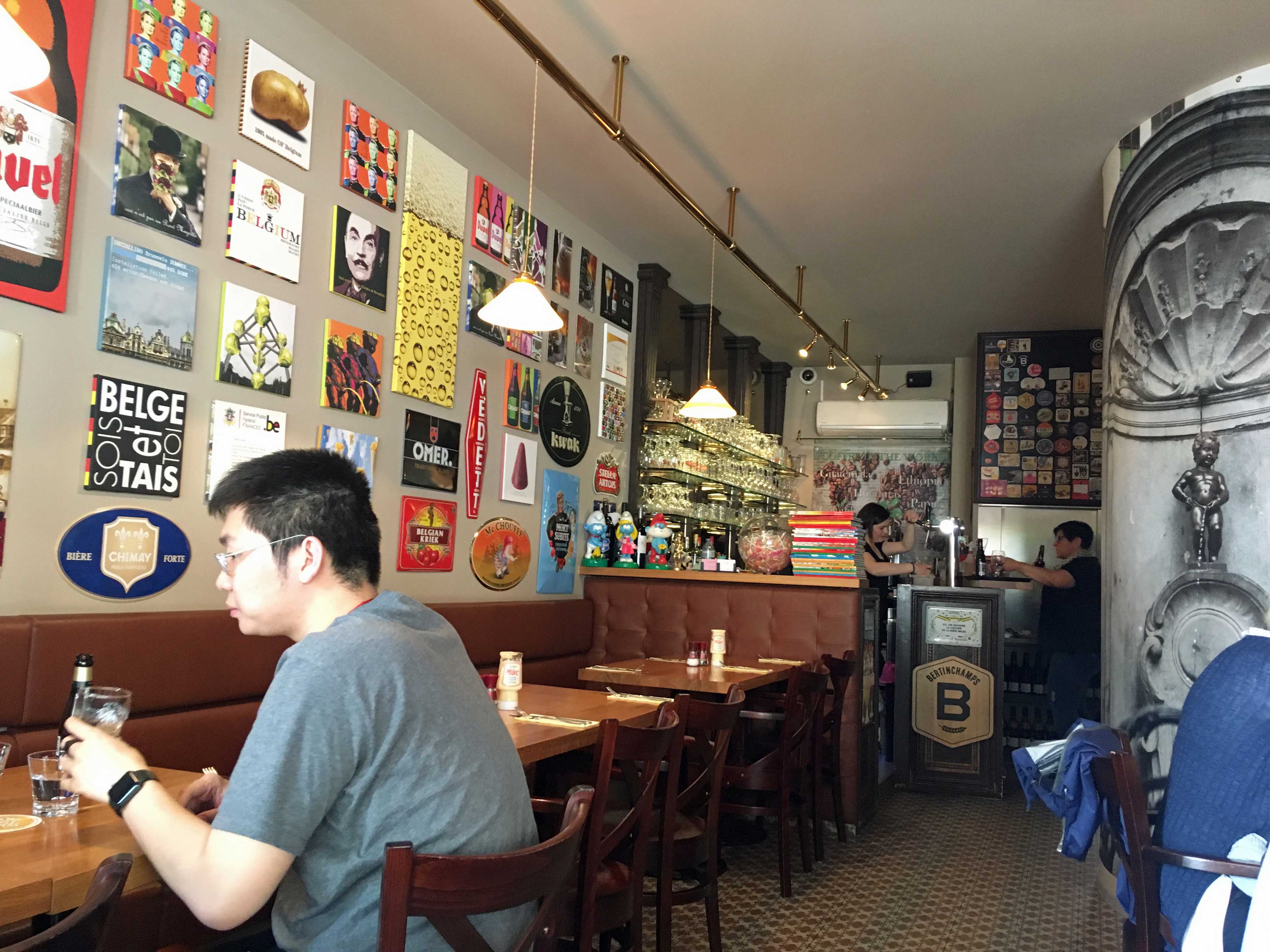
After a bit of research DonQui stumbles on a little gem offering exactly what he is looking for. Although just off the Grand Place, the small Brasserie de la Ville (Rue de chapeliers 14) remains resolutely traditional in an area swarming with places mostly catering to tourists in a party mood.

IMG_2212.jpg
A calm, relaxed, atmosphere 

The atmosphere is relaxed and unpretentious with the quirky decorations adding character.

IMG_2215.jpg
A bit of a Tintin theme

There is a strong Tintin theme going on — even the menus are inserted into Tintin comics. 

IMG_2216.jpg
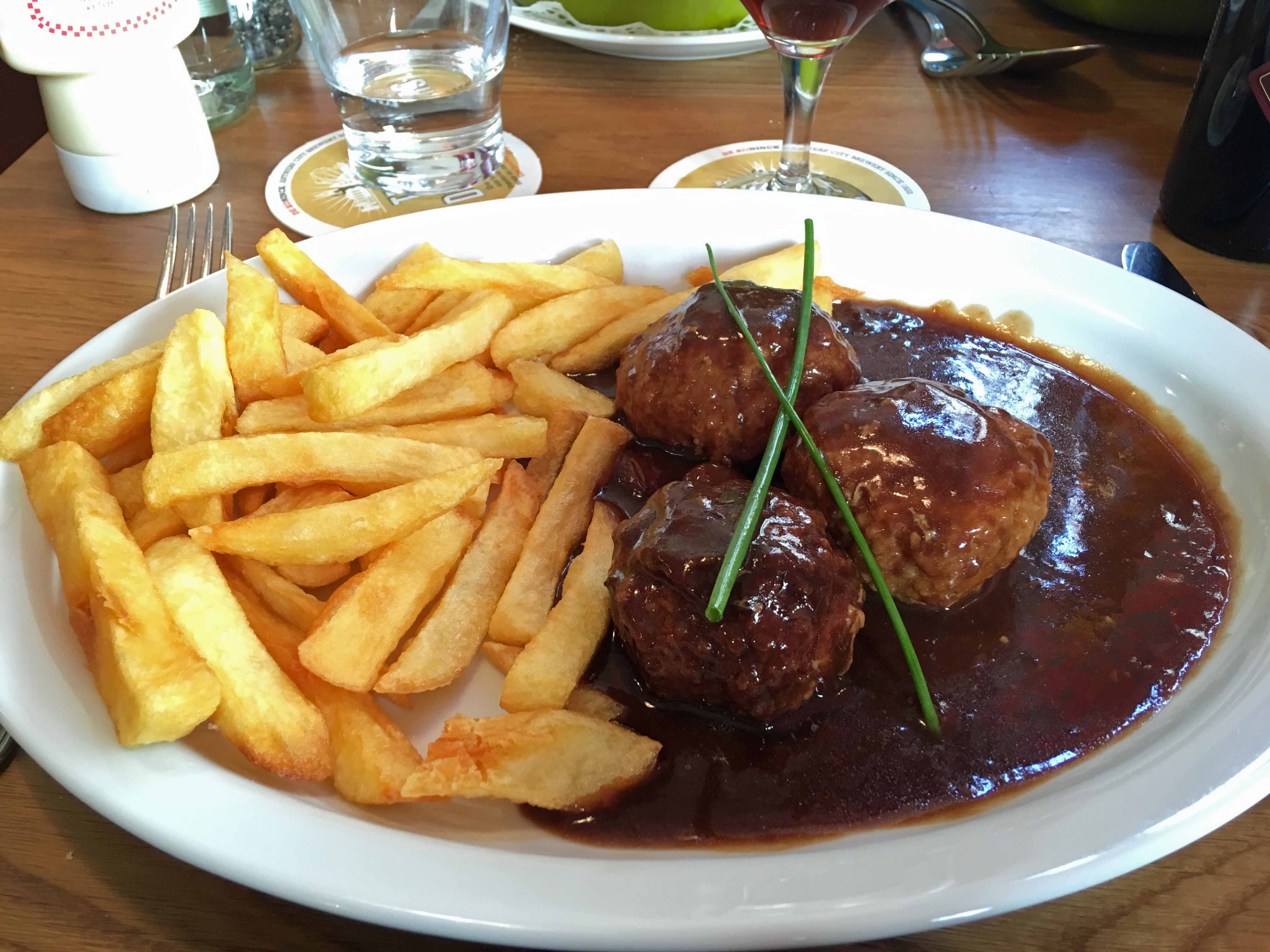
Les boulettes à la Liègeoise with pommes frites

After a delightful starter of scampis à l’ail (prawns in garlic sauce), DonQui goes for Les boulettes à la Liègeoise (meatballs in Liège syrup).  Liège syrup is made from highly concentrated apple and pear juice. DonQui has a bit of a penchant for sweet-savoury combinations. He thinks the combination of the slightly sweet, rich, brown sauce with the beutifully lean meatballs is utterly delicious.

Then there are the frites. The Belgians lay claim to having invented chips (French fries) and have perfected the way of making them. Soft on the inside, crispy on the outside and salted immediately on coming out of the fryer, Belgian pommes frites are, in DonQui’s opinion,  the best in the world. The frites at the Brasserie de la Ville are just about perfect.

IMG_2220.jpg
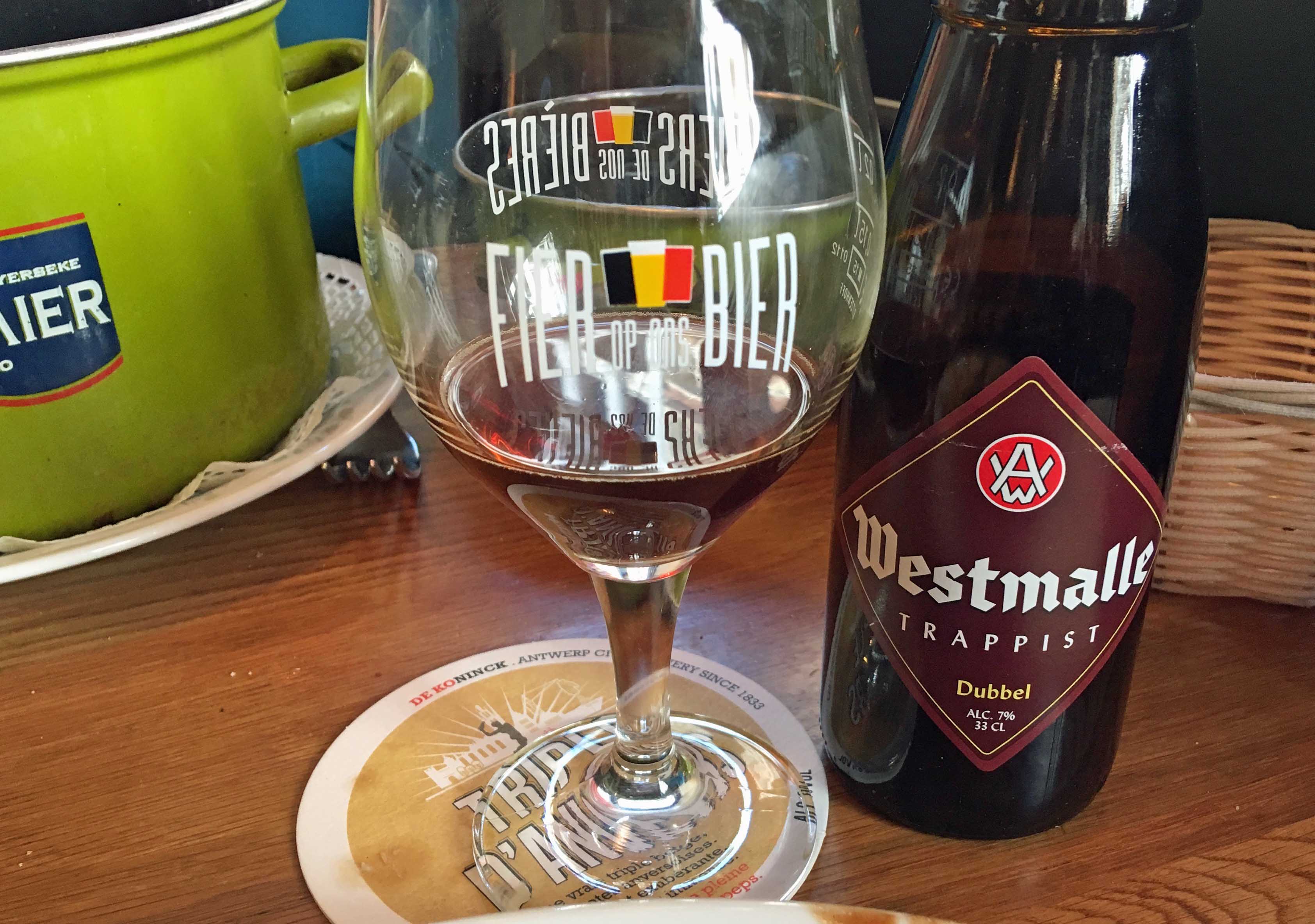
DonQui’s Westmalle Dubbel

Don’t look for an extensive wine list — this is a brasserie after all. In Belgium, beer is the drink of choice with several wonderful brews on-tap and many more in the bottle. DonQui enjoys a Dubbel, brewed in the Trappist abbey at Westmalle.  With 7% alcohol this rich brown ale is for sipping and savouring rather than for quenching a thirst. It goes perfectly with his meatballs — far better than any wine would do. 

IMG_2218.jpg
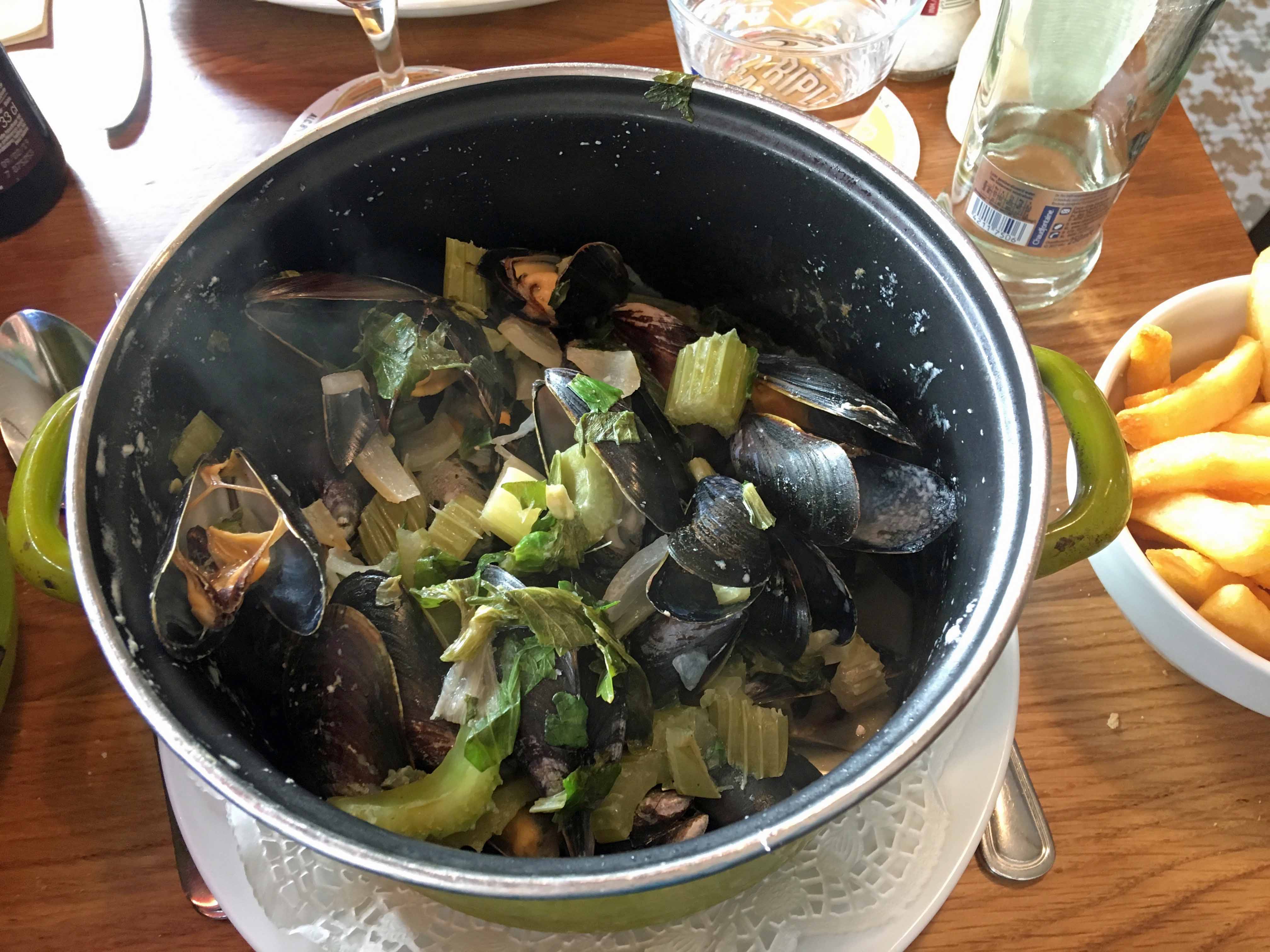
Duchess’ moules-frites

As DonQui is tucking into his wonderful meatballs, Duchess throughly enjoys a classic moules-frites (mussels and fries). She was less impressed with her onion soup starter which she thought was a bit lacklustre. 

Everything else is fabulous, including the helpful, enthusiastic and multi-lingual staff.

IMG_2214.jpg
More touristy restaurants in the area

DonQui is rather sad to see the obvious tourist traps full to overflowing while this more or less traditional brasserie is only half full. He hopes that the Brasserie de la Ville will be able to hold its own against the swarm of identikit restaurants serving up variations of more or less the same thing.