On to Amazonia

Wishing to explore Ecuadorian Amazonia, DonQui is given two options to get there from Quito — a 12 hour coach journey or a 25 minute flight.

“You get some great views on the coach,” says the kindly lady from the excellent Quinana Tours in Quito.

Regular readers will not be surprised to learn that DonQui pays the extra money for the 25 minute flight to Coca (officially Puerto Francisco de Orellana but no one calls it that) followed by a 2 hour car journey to Lago Agrio (officially Nueva Loja but no one calls it that). 

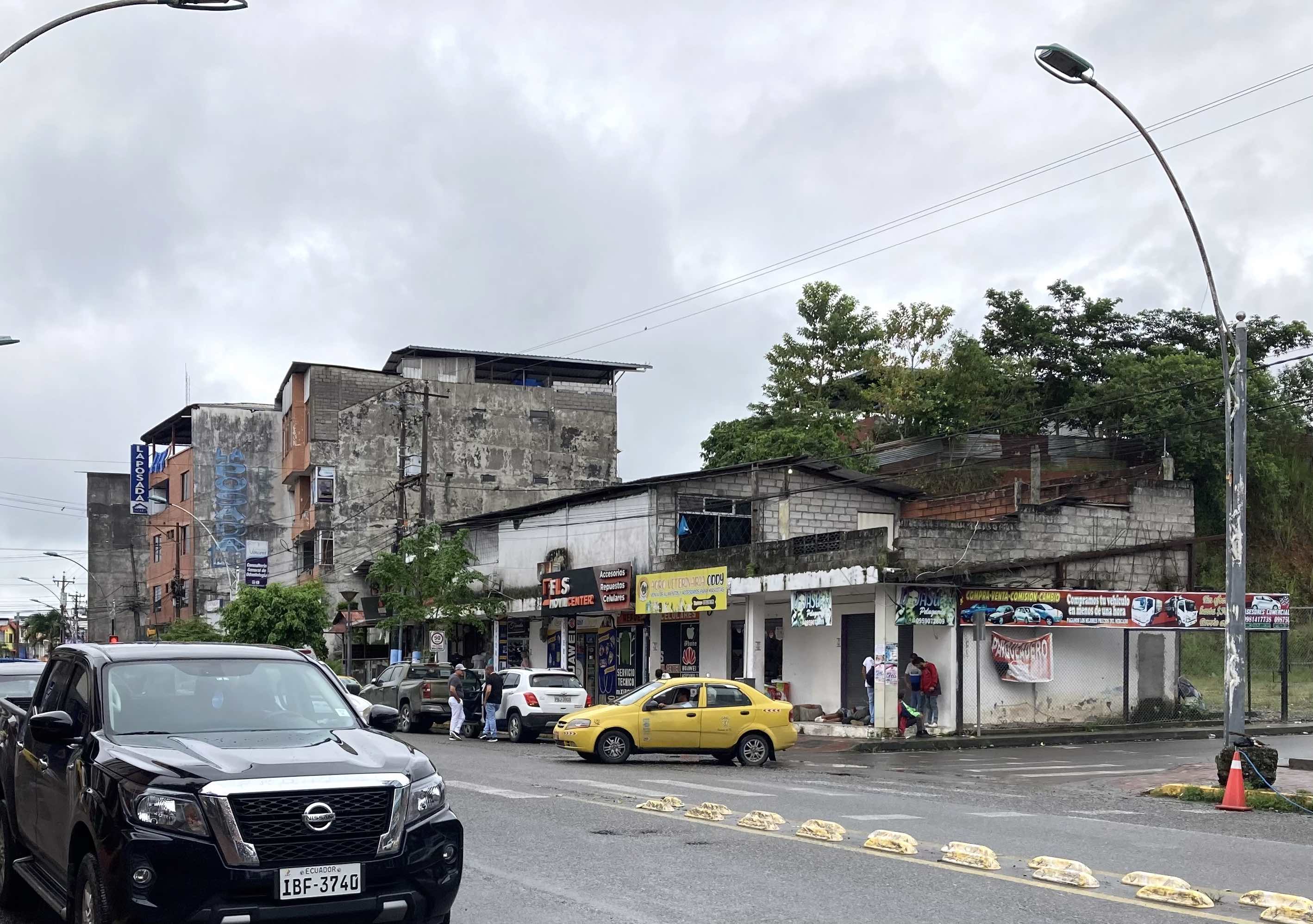
Lago Agrio is a gritty, ramshackle frontier town carved out of the Amazon rainforest in the 1960s by Texaco as a base for oil exploration. Close to the Columbian border it is an infamously dangerous, polluted, unattractive place, filled with oil workers, Columbian drug traffickers and impoverished looking locals.  It is, however, gateway to the fabulous Cuyabeno Nature Reserve. DonQui needs to spend a night there in a drab hotel in which most of the other occupants are dressed in red Halliburton branded boiler suits. He does not stray very far from the hotel.

Early next morning his driver takes DonQui on the 2 hour journey to the Cuyabeno Bridge — the meeting point for those wishing to head down the Cuyabeno river into the reserve.

Despite the insalubrious layover in Lago Agrio, DonQui is most pleased that he opted for the flight when he sees his bedraggled fellow travellers stagger off the overnight coach. As they gather their belongings for the canoe trip downriver there is universal agreement that the 12 hour coach trip was an absolute nightmare.

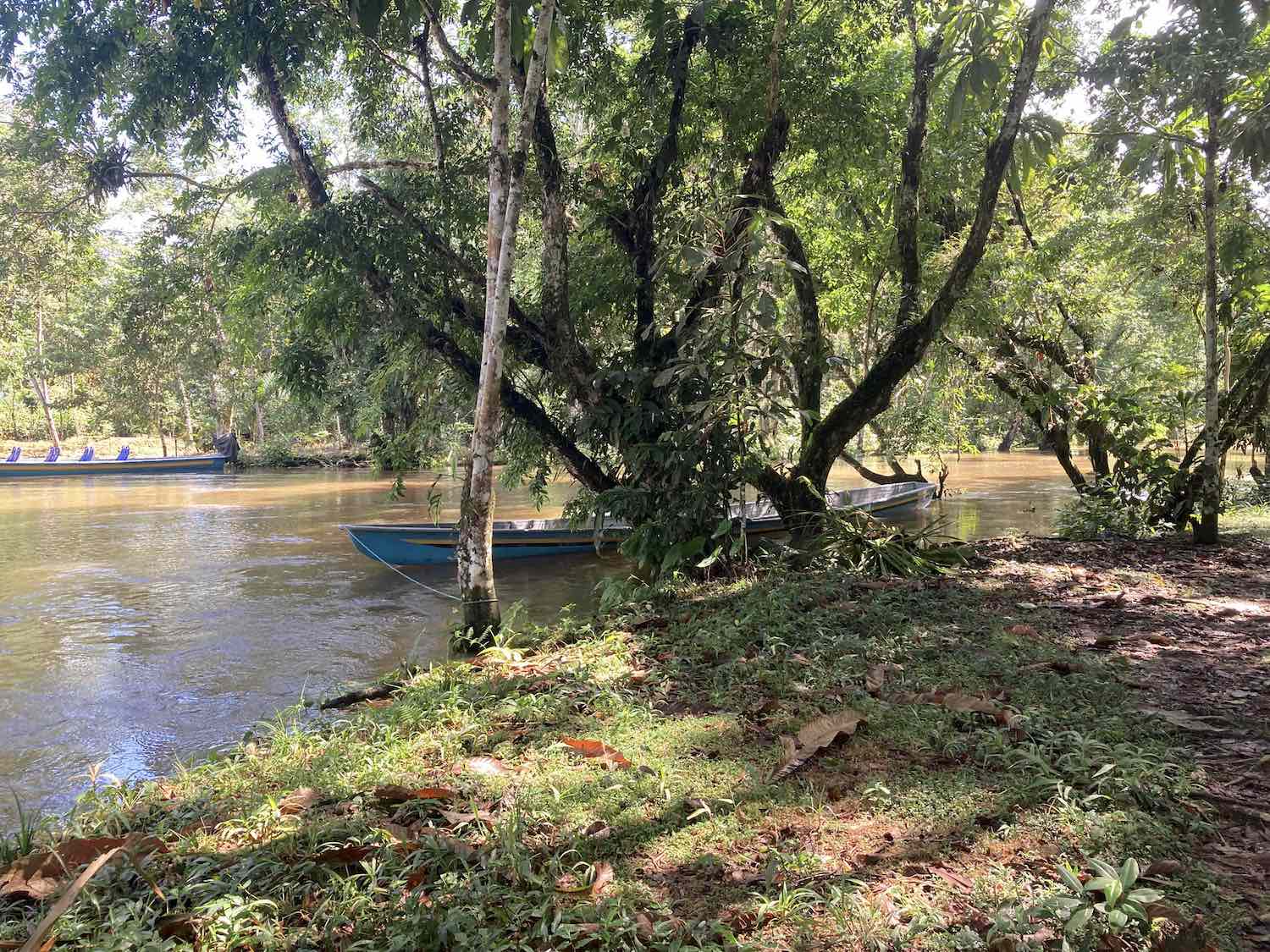
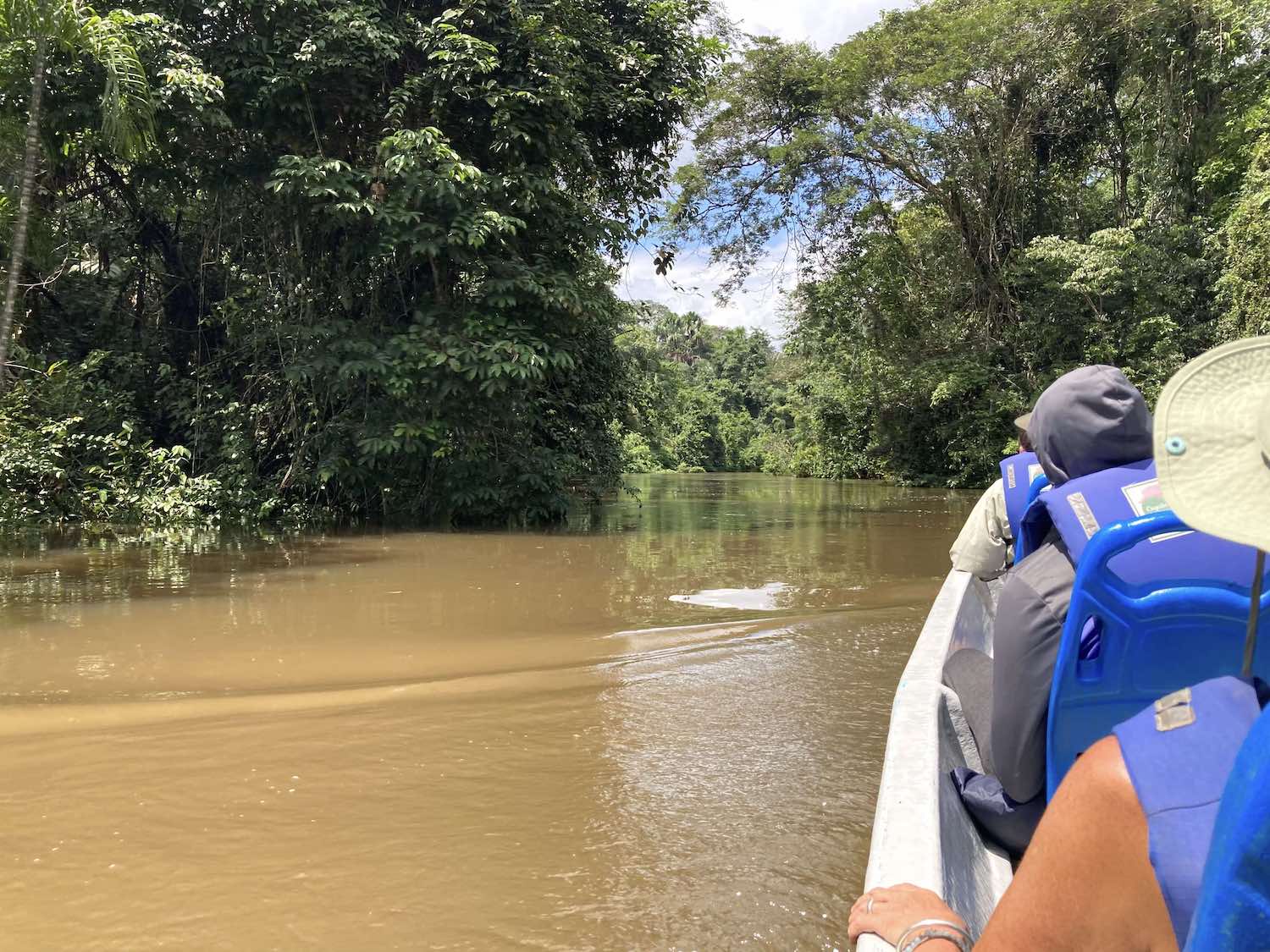
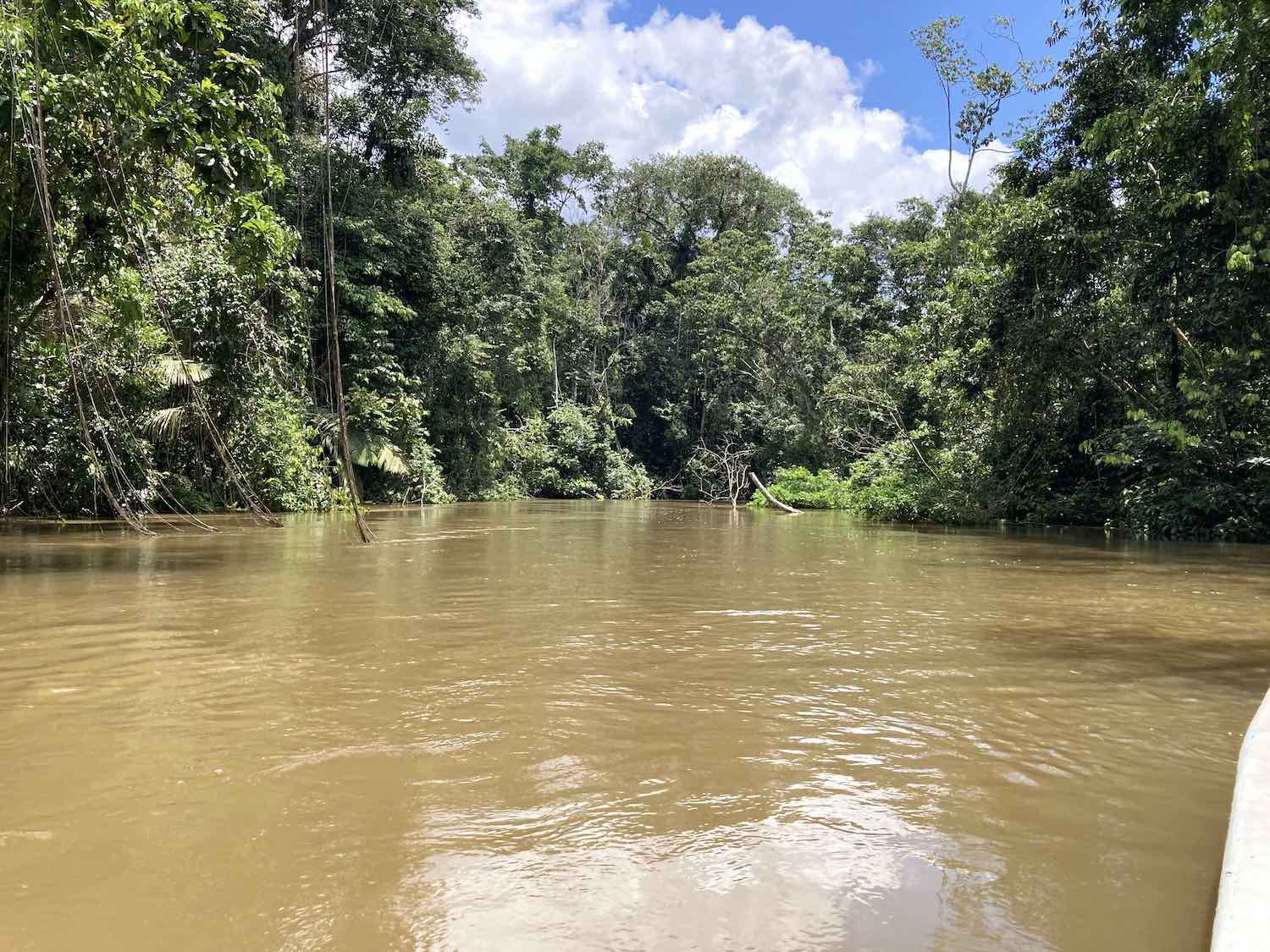
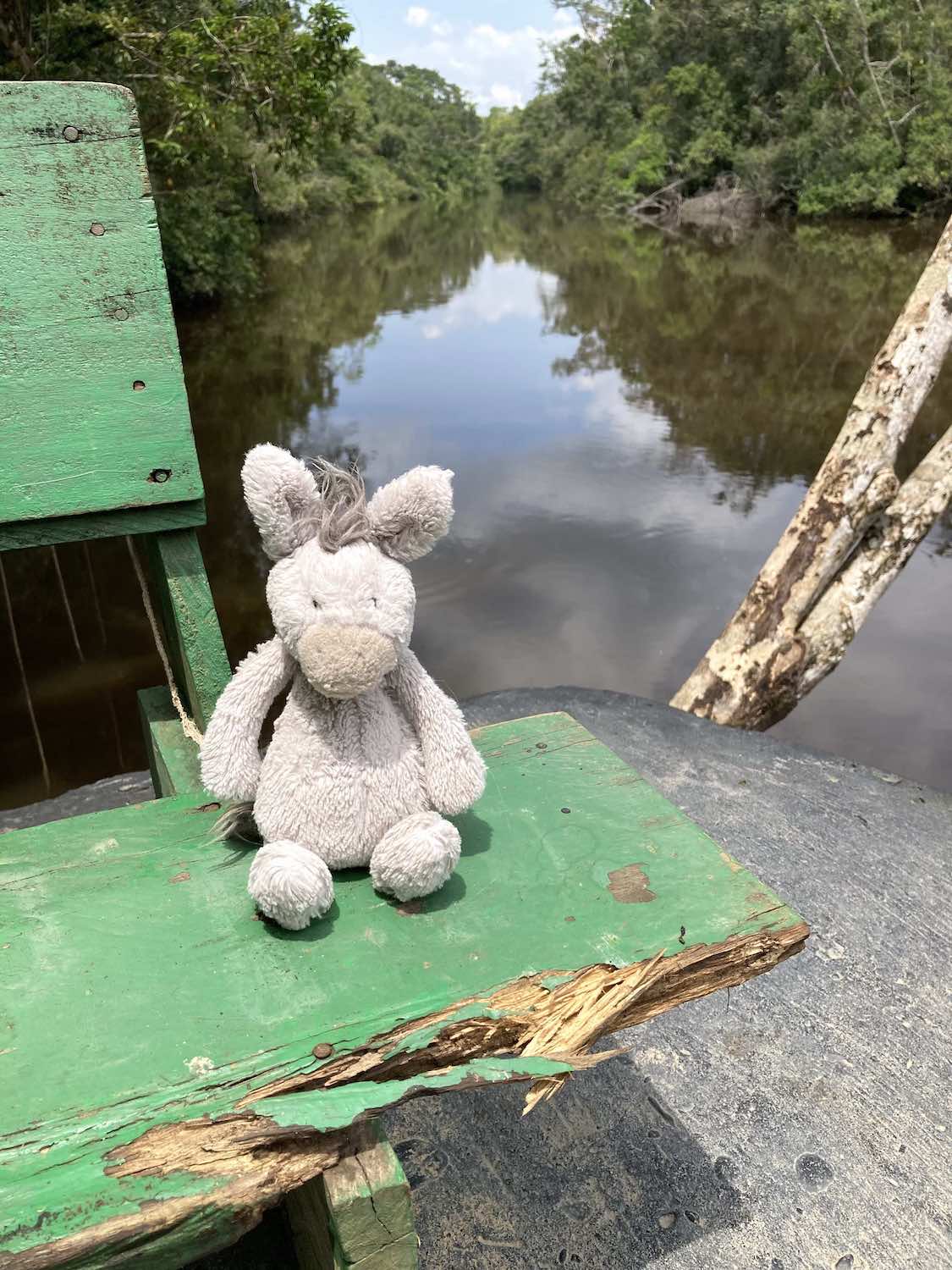
it is another two hours down the Cuyabeno by motorised canoe for DonQui, nine other passengers and an ebullient guide named Victor Hugo. 

The two hours stretch to three as the canoe stops whenever Victor Hugo spots monkeys, birds, snakes and the occasional sloth. His ability to spot wildlife whilst on the move is impressive. Even when the canoe is stationary DonQui often has a hard time to locate the animal or bird Victor is pointing out.

See if you can spot the bats clinging to the upright log in the water. It takes DonQui several minutes to do so from the canoe.

These colourful butterflies are quite a bit easier to see.

Finally the canoe pulls up at Dolphin lodge which will be DonQui’s base for the next few days of Amazonian exploration. 

The lodge is rustic but comfortable with only a dozen or so guests. Deep in the rainforest it is completely off grid with no wifi or phone signal and there is only a limited amount of electricity provided by the lodge’s solar panels. The sense of being away from everything suits DonQui perfectly. The food is pretty good considering the limited cooking facilities and the fact that absolutely everything has to be brought in by canoe. 

Grazing in the Galapagos

There are plenty of good watering holes and eateries in Puerto Ayora, Santa Cruz, where DonQui has based himself on the Galapagos. The food is good (especially seafood) but prices are very high. This is unsurprising given that almost everything, including water, has to be imported. Fish, coconut, bananas, plantain, and some chicken is local but vegetables are in very short supply. 

Quite a few places brew their own craft beer and it is rather good, although it costs around $10 a pint (Ecuador uses the US dollar).

One of DonQui’s favourite watering holes is The Rock brew-pub. It has some excellent beers and the food is also very good. In the evening local musicians play outside.

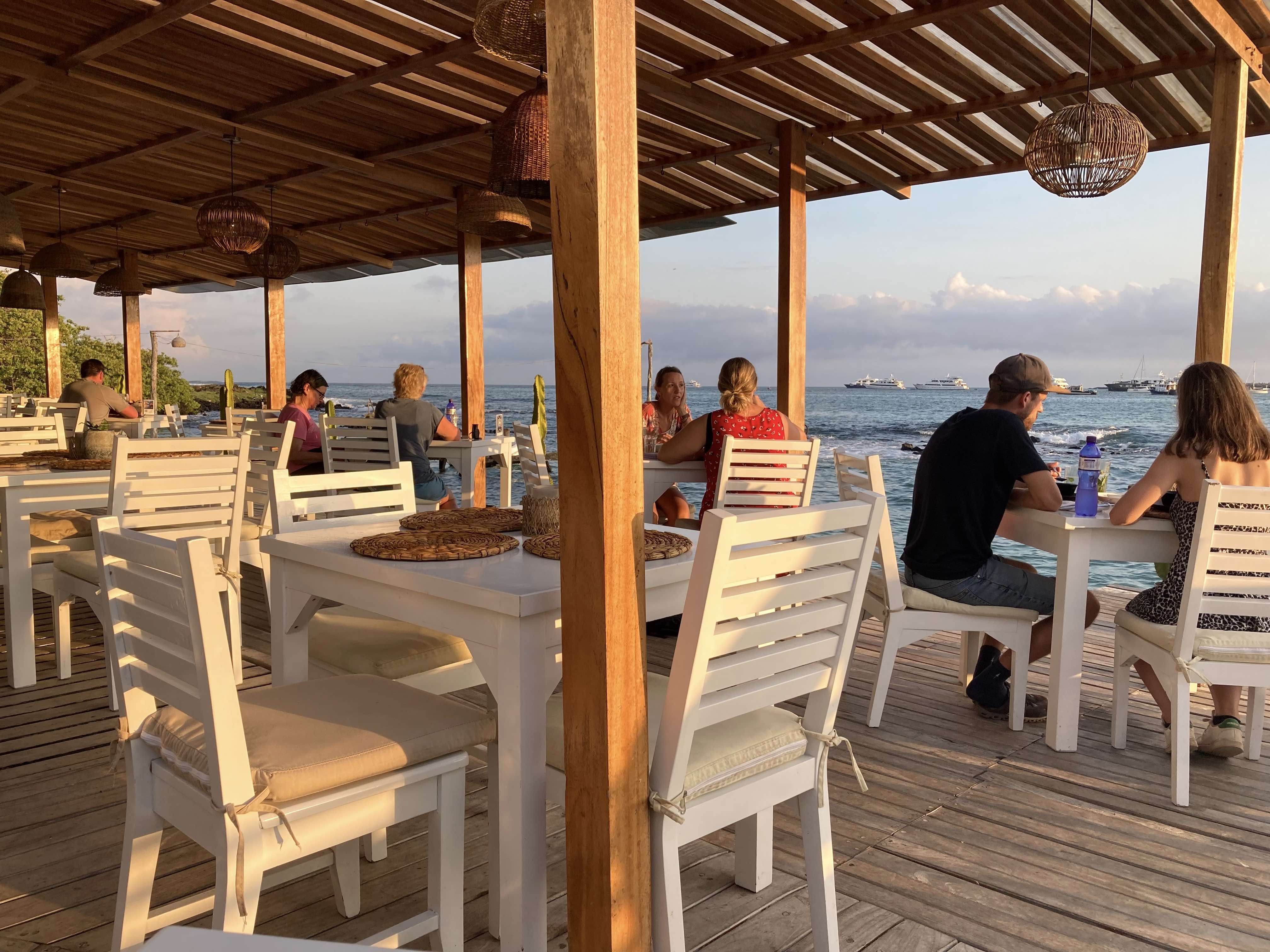
Restaurante Almar is a great place for a sundowner and it has excellent seafood. 

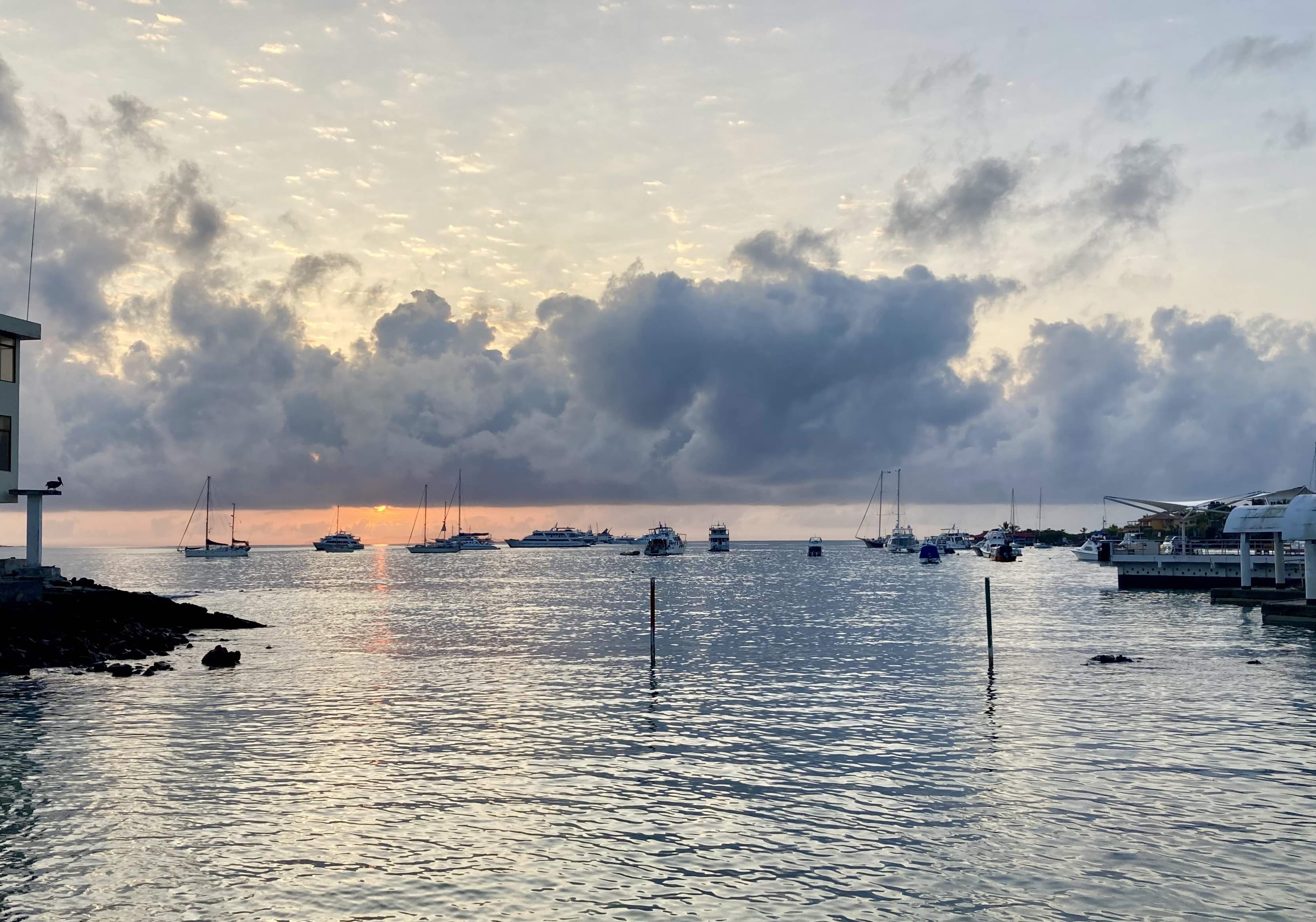
On his last day on Santa Cruz island DonQui takes a water taxi across the harbour.

There he treats himself to a bit of luxury at the Finch Bay Hotel. The bay is home to many species of Darwin finches — the birds famous for inspiring Charles Darwin’s On the Origin of Species.

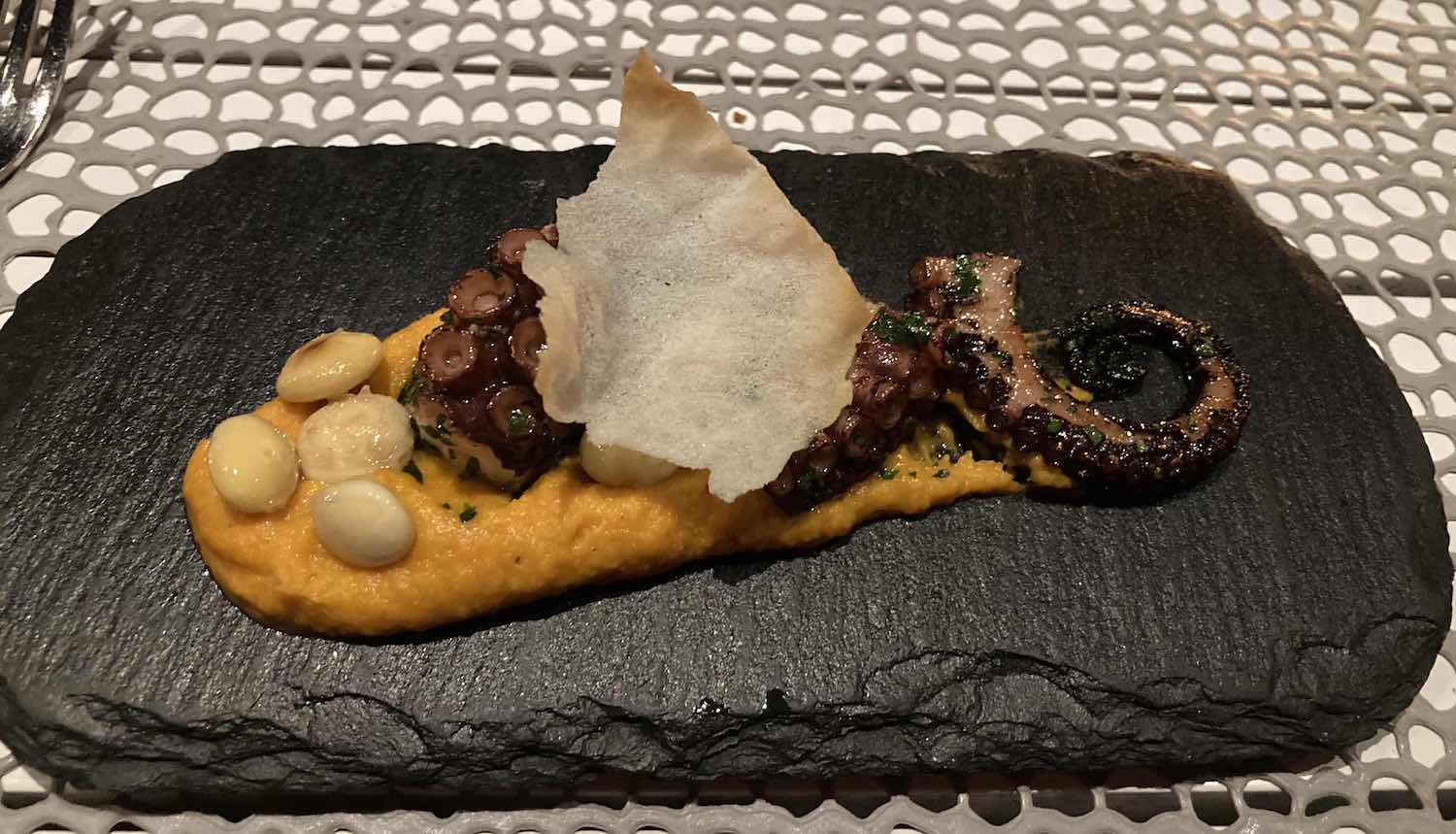
For supper DonQui opts for the tasting menu with paired wines. Although expensive it is not unduly so by Galapagos standards.  Although DonQui associates lemongrass with Thai food, it is grown in Ecuador and often used in many Ecuadorian dishes. The coconut shrimp and lemongrass soup is an absolute delight.

Each dish is superb, especially the fish and seafood.

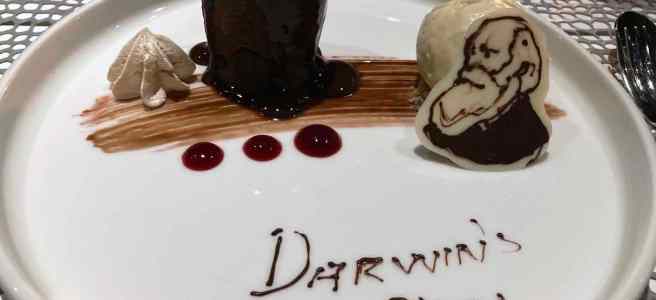
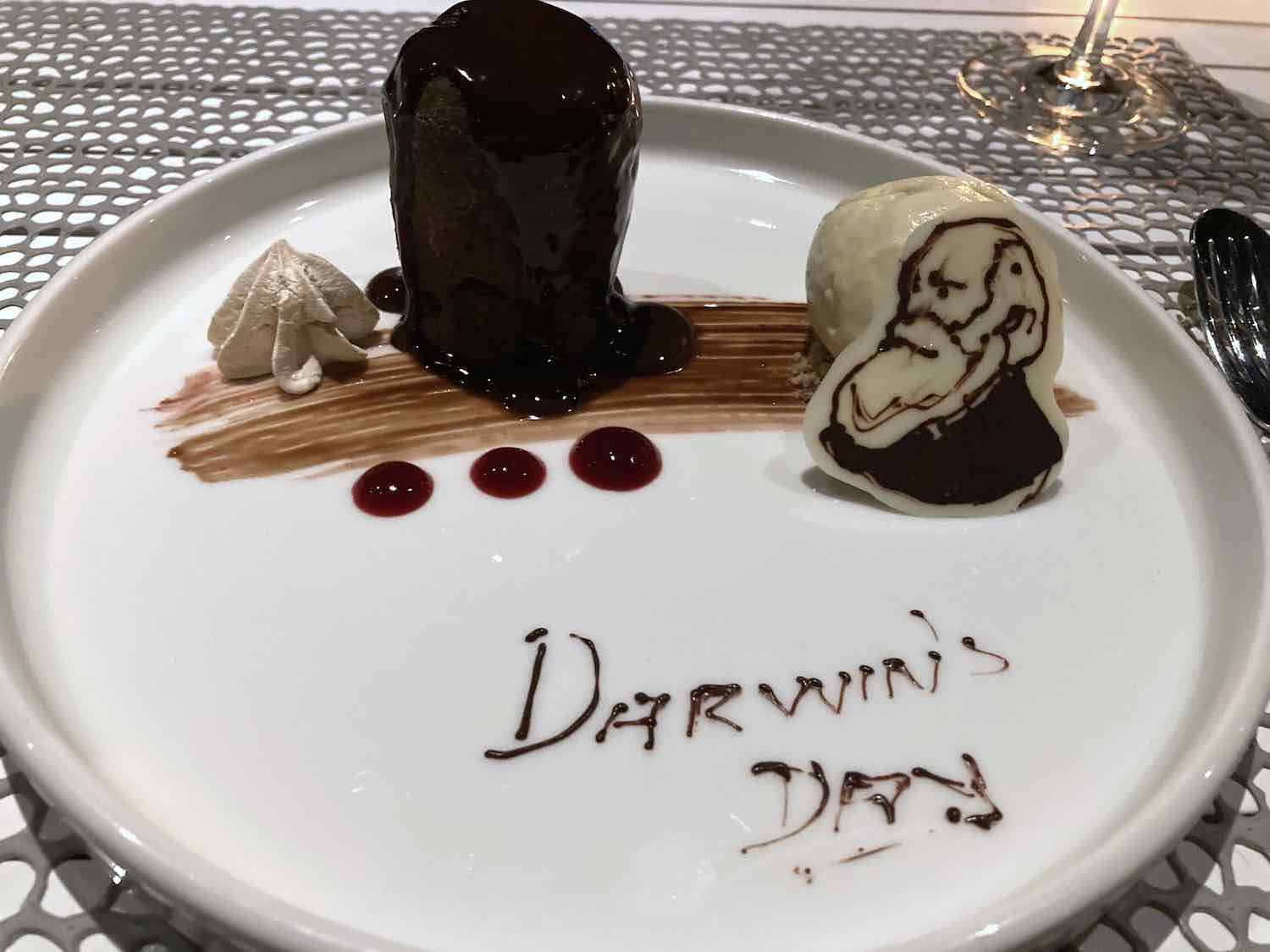
To finish is a delightful (and most appropriate) chocolate lava cake celebrating Charles’ Darwin’s birthday (12 February).

Now DonQui is at the airport on Baltra island for a flight back to the mainland. There is a pleasant VIP lounge which DonQui can access thanks to the ‘Dragon Pass’ which comes with his bank account. Apparently real dragons have free access to come and go as they please!

Island hopping

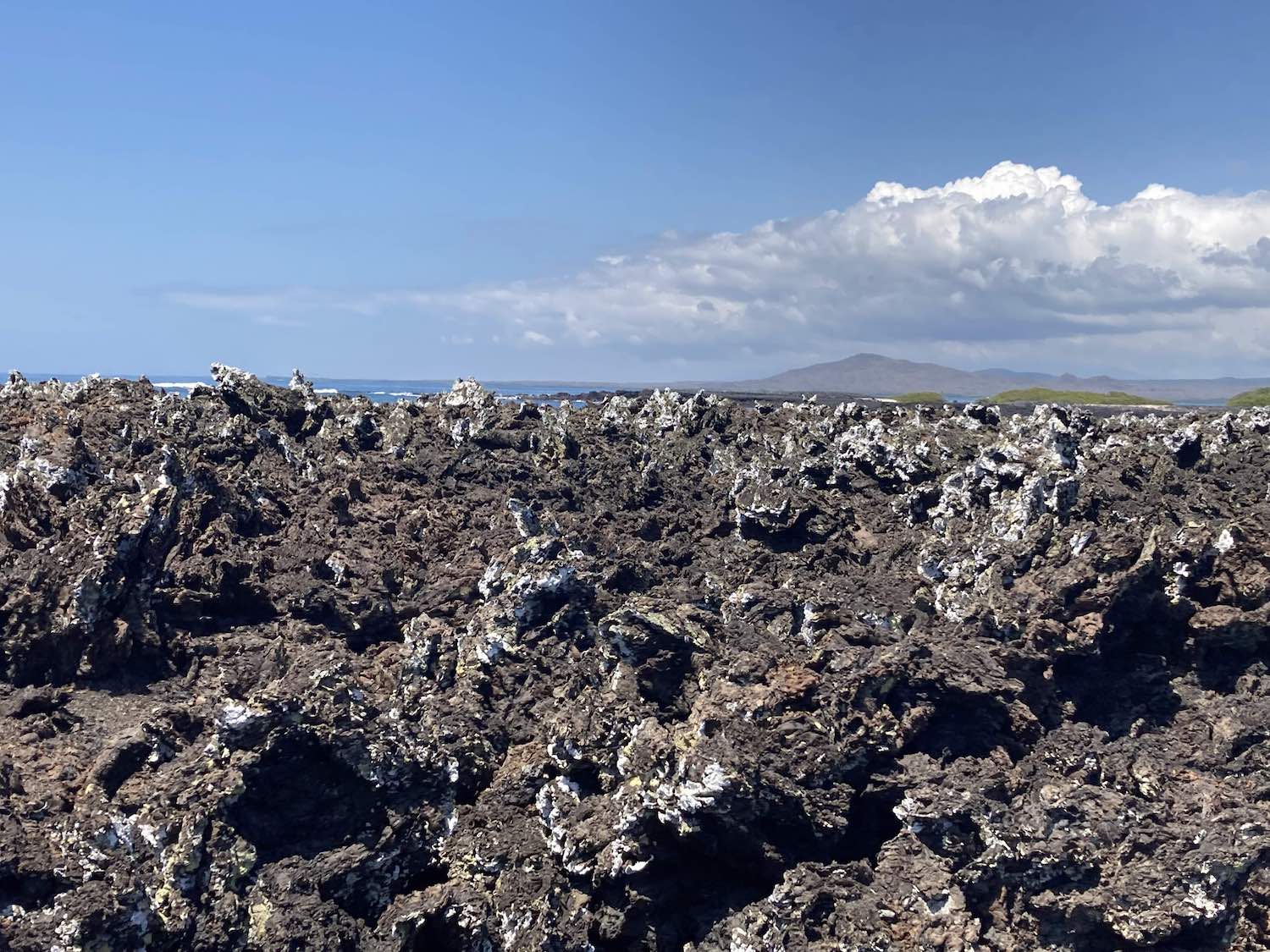
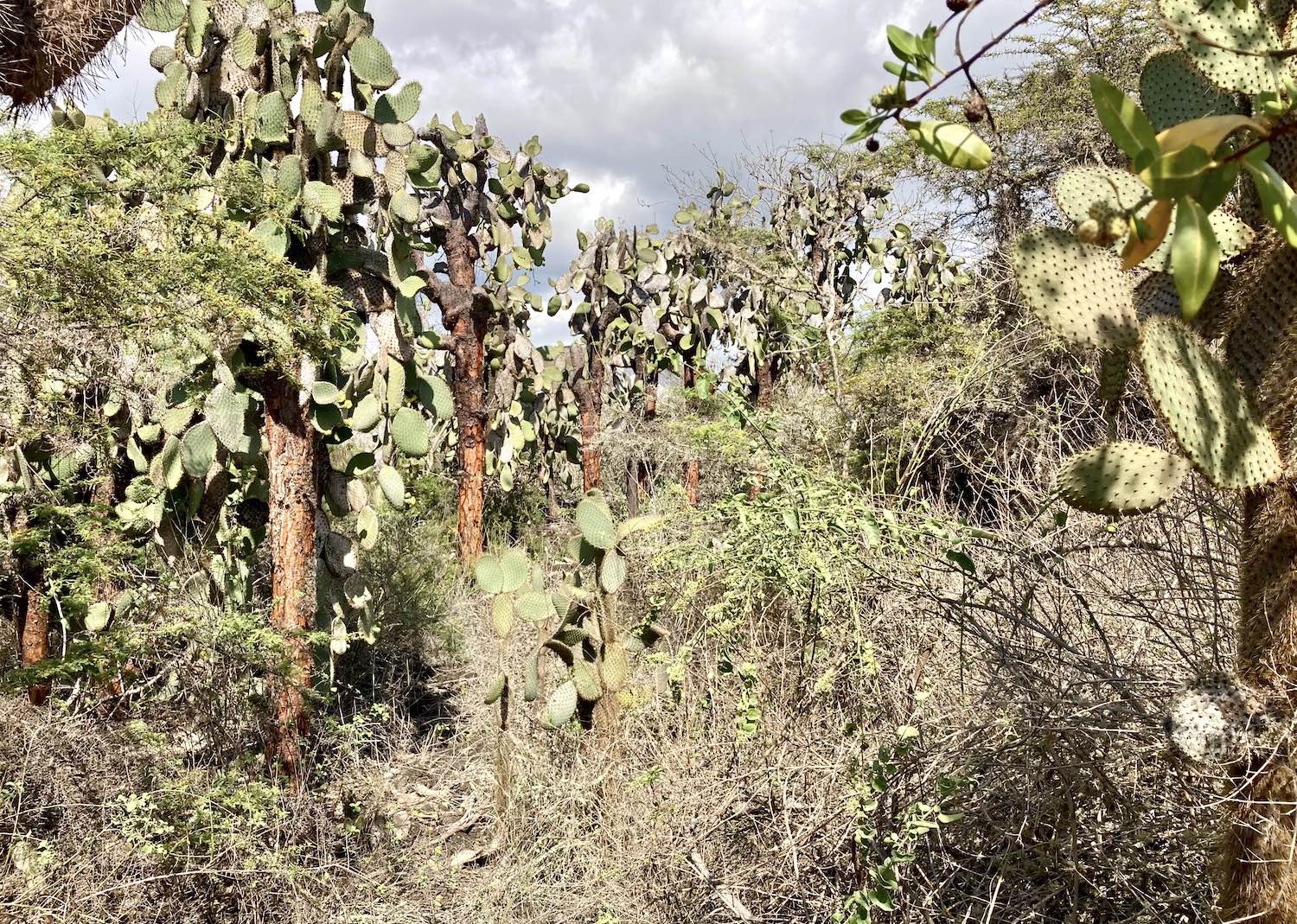
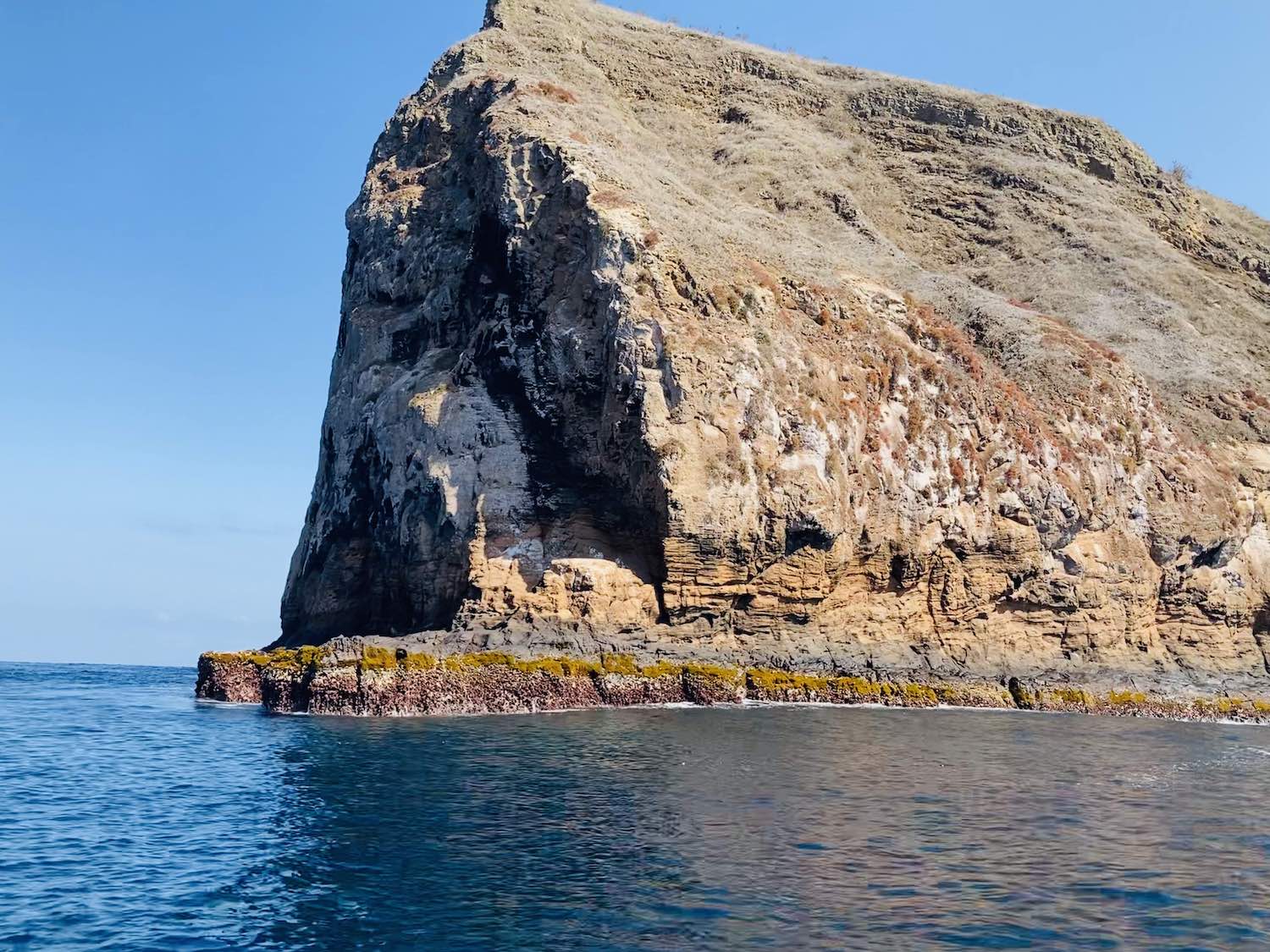
The Galapagos is an archipelago of barren volcanic islands. The equatorial sun burns down on them and there is very little shade.

With no fresh water the islands are not well suited to habitation by either donkeys or humans.

Most of them are uninhabited refuges for a remarkable array of wildlife with unique species that helped to form Charles Darwin’s conclusions about evolution.

To explore a few of the islands and to meet some of the remarkable native inhabitants DonQui needs to get on a boat. There are a wide choice of day trips available from Puerto Ayora and all require an early morning start. This takes some effort on DonQui’s part as he is not naturally an early riser.

A dingy or water taxi takes DonQui to his waiting vessel on each of his three day-excursions to Pinzón, Isabella and North Seymour. The boats are quite comfortable — especially the catamaran which takes him to North Seymour. The groups on board are very small, usually about 10-12 passengers — the number of visitors being strictly limited to avoid overcrowding and too much disturbance to the wildlife.

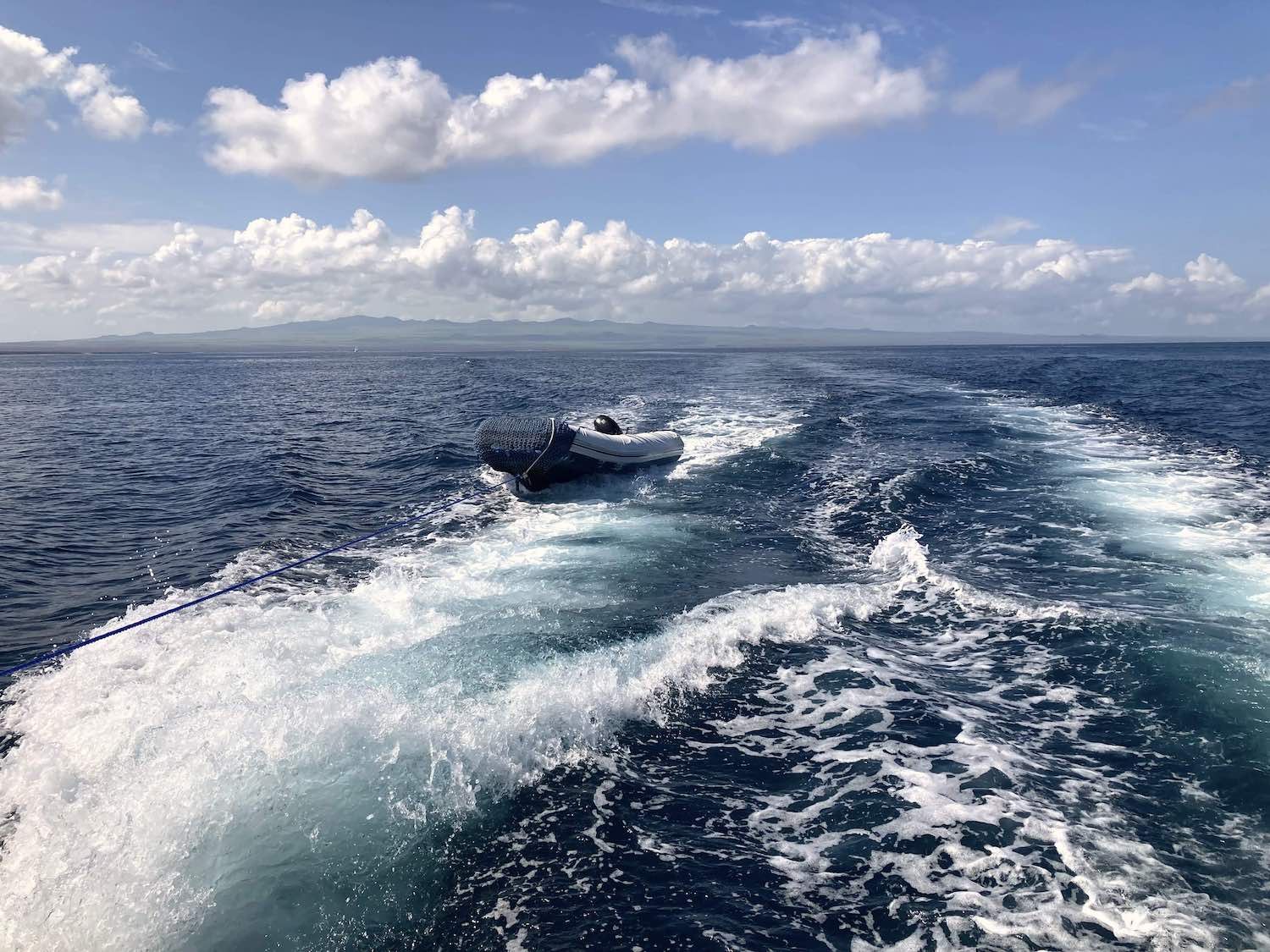
A dingy is towed along behind to assist with beach landings and to get to good snorkelling spots.

On his way to Pinzón DonQui is lucky to encounter some Dolphins who decided to playfully swim around the boat for several minutes.

… and on the way back from North Seymour a huge Tiger Shark escorts DonQui out of the shark’s territorial waters. DonQui thinks it best not to argue.

The various snorkelling stops are the best part of all the trips. The water is crystal clear so DonQui is able to observe a huge array of tropical fish. Off Pinzón a family of sea lions swim alongside. One comes right up to DonQui and nosily presses its snout at DonQui’s mask. Off North Seymour DonQui suddenly finds himself in the middle of a huge school of whitetip sharks — hundreds of them swimming all around him. It was quite breathtaking.

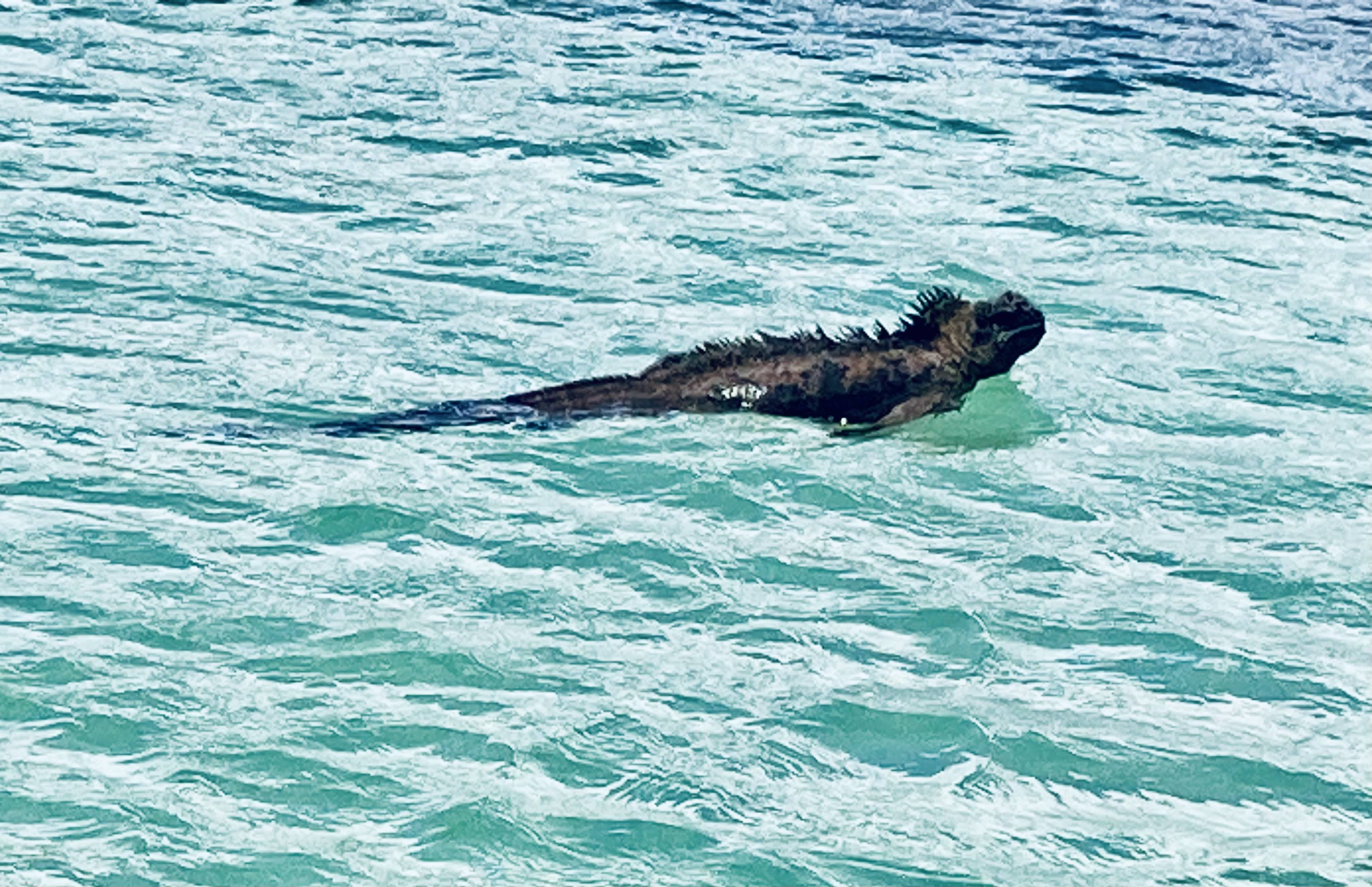
Whilst snorkelling he aslo encounters marine iguanas, sea turtles, barracuda and several species of rays. 

DonQui also meets many fascinating species of birds such as these iconic blue footed boobies. Nearby DonQui sees a Galapagos penguin swimming and diving for fish.

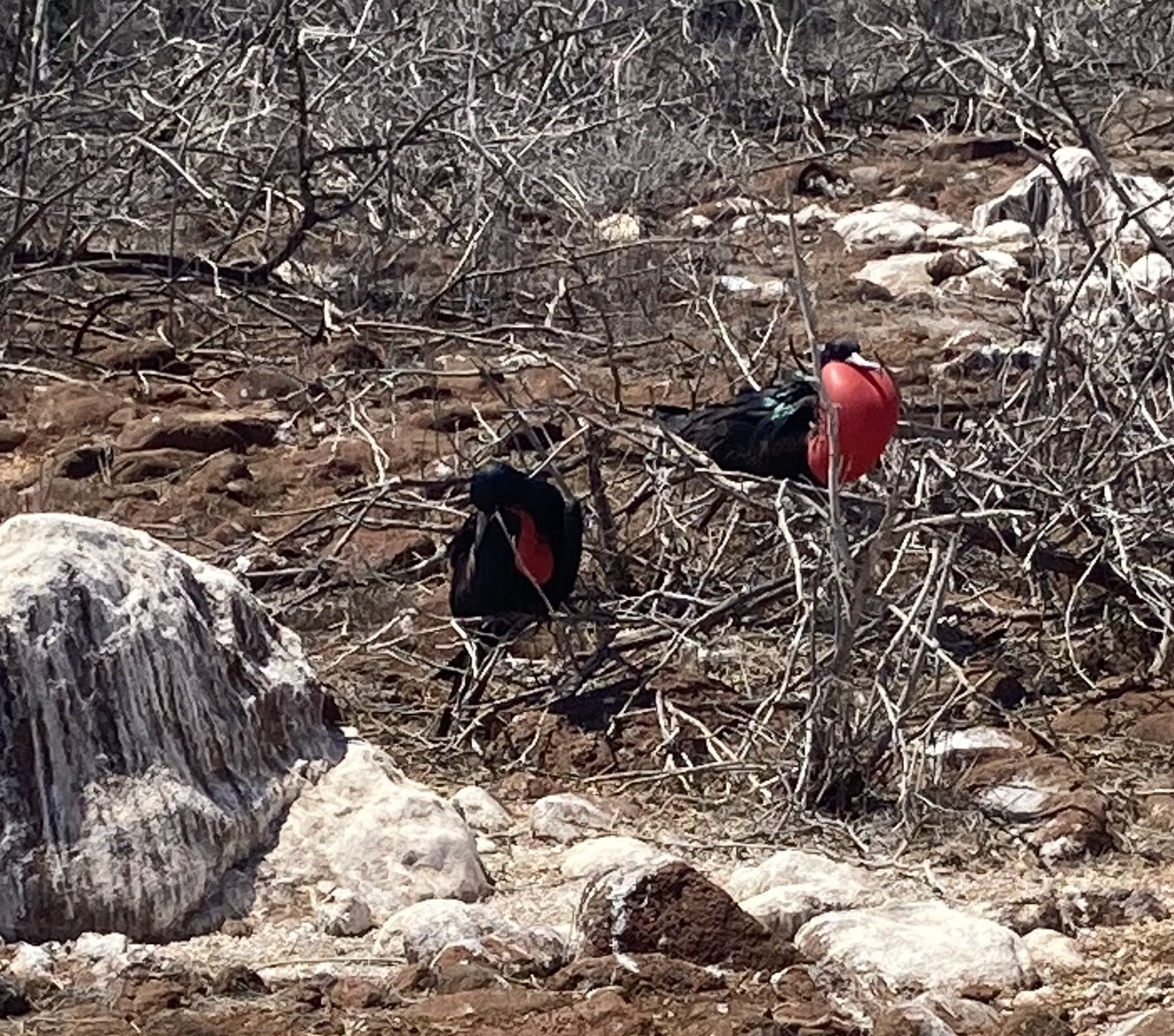
One of these male frigate birds is puffing up his red throat sack in the hope of attracting a mate. The other looks as if he couldn’t be bothered.

DonQui sees land iguanas everywhere.

And he also comes across a pair of giant tortoises doing their best to ensure the continuation of their species.

Six days on the Galapagos with three spent on the inhabited Santa Cruz and three day-excursions to other islands is just about enough. DonQui thinks it might have been an idea to have spent a bit longer so he could have gone to San Cristobal to spent a night there. However, he has seen more wildlife close up than he could possibly have hoped for. So he is just about ready for his next adventure

Galloping to Galapagos

When researching his ‘round the world’ trip DonQui learned that most people wishing to visit the Galapagos Islands take a cruise ship from the Ecuadorian coast. The prices are eye-watering and the thought of being stuck on a boat for several days with a bunch of strangers does not appeal. Then he discovers that there are plentiful inexpensive flights from Quito, taking only a couple of hours instead of three days. This seems like a much better proposition.

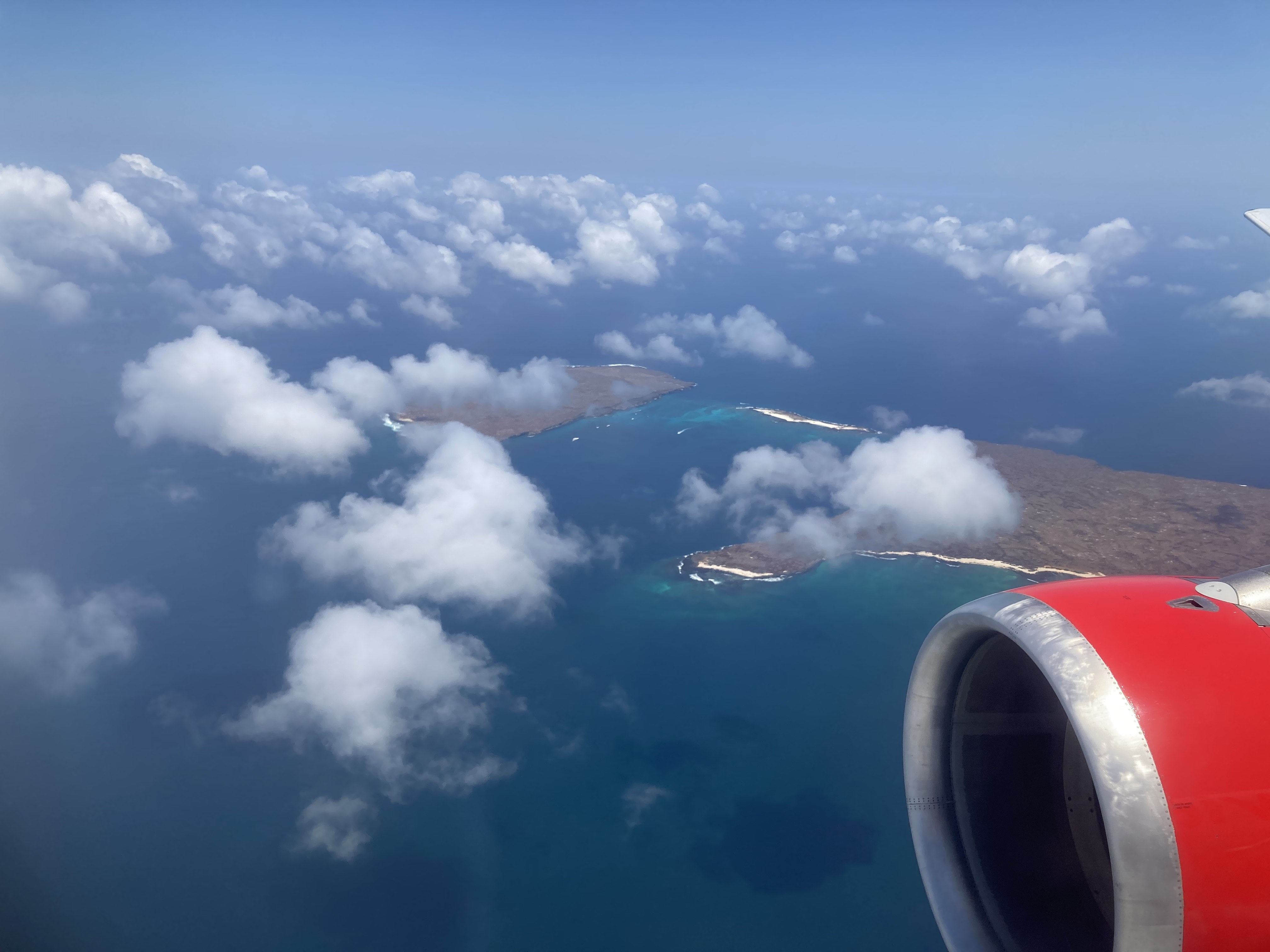
So he wings his way over the Pacific to land at Baltra airport — formally a US Naval base.

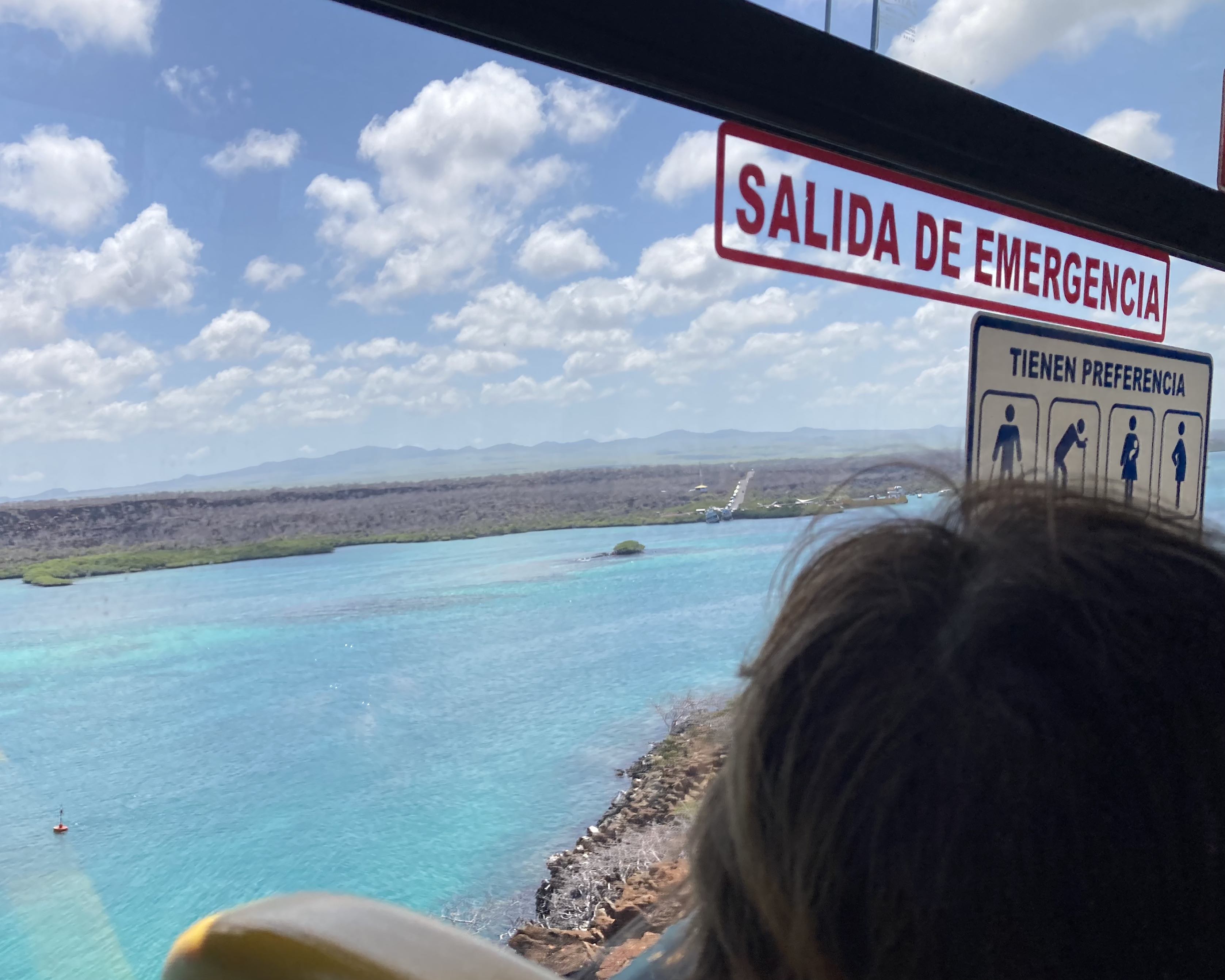
He passes several checks to fill in forms, pay various fees and to ensure he is not bringing in any organic material which would harm the wildlife. Then he takes the bus to the ferry which will transport him over the straight to Santa Cruz island. 

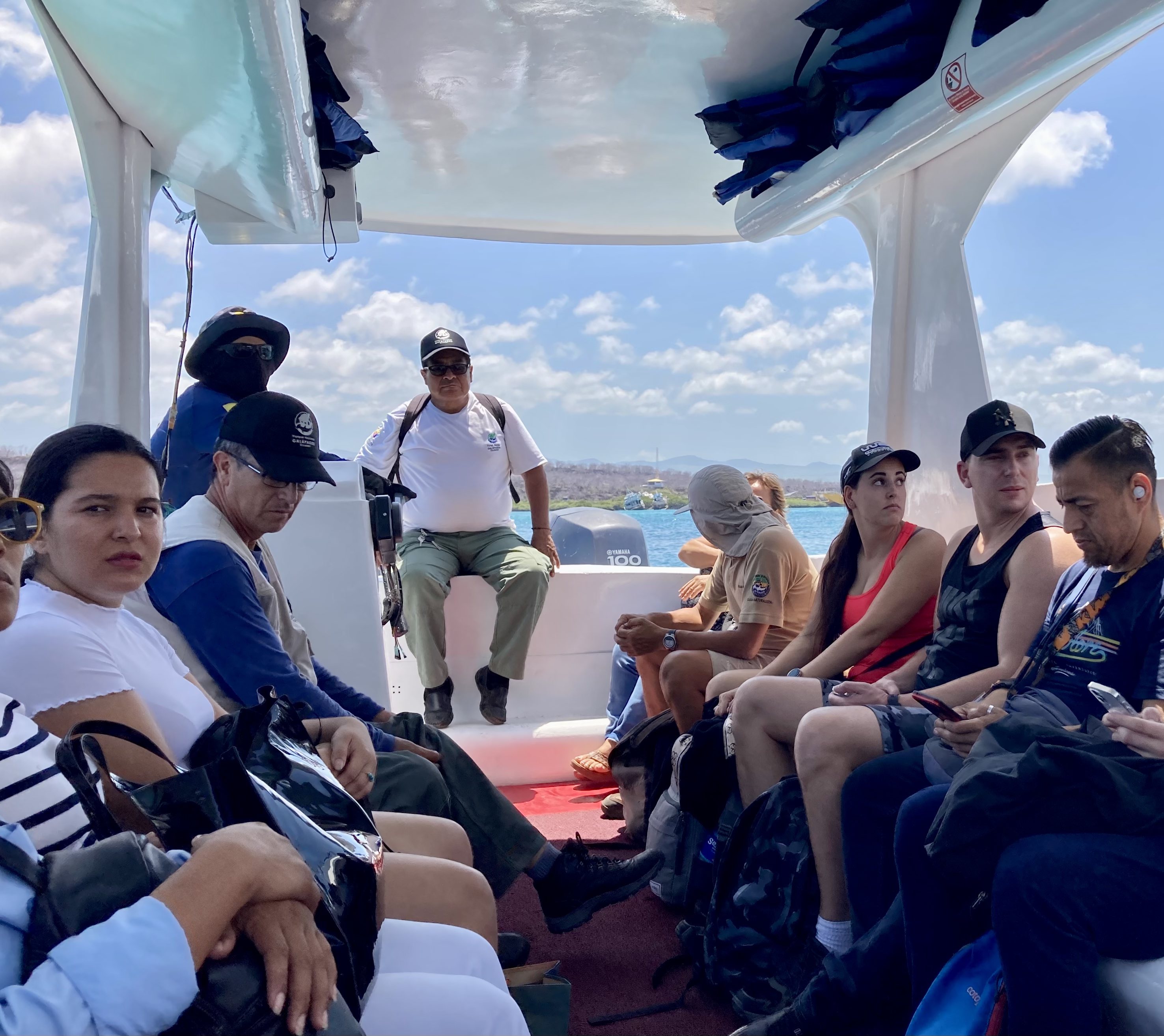
The ‘ferry’ crossing on a small boat is quite quick and has an atmospheric air of adventure to it. On landing he could then have waited for a bus but, being a creature who likes his comforts, DonQui opts for a taxi for the 40 minute drive through the barren landscape to Puerto Ayora where he will be basing himself.

Puerto Ayora is a pleasant low-rise, laid back, small tourist town. 

The locals seem very friendly.

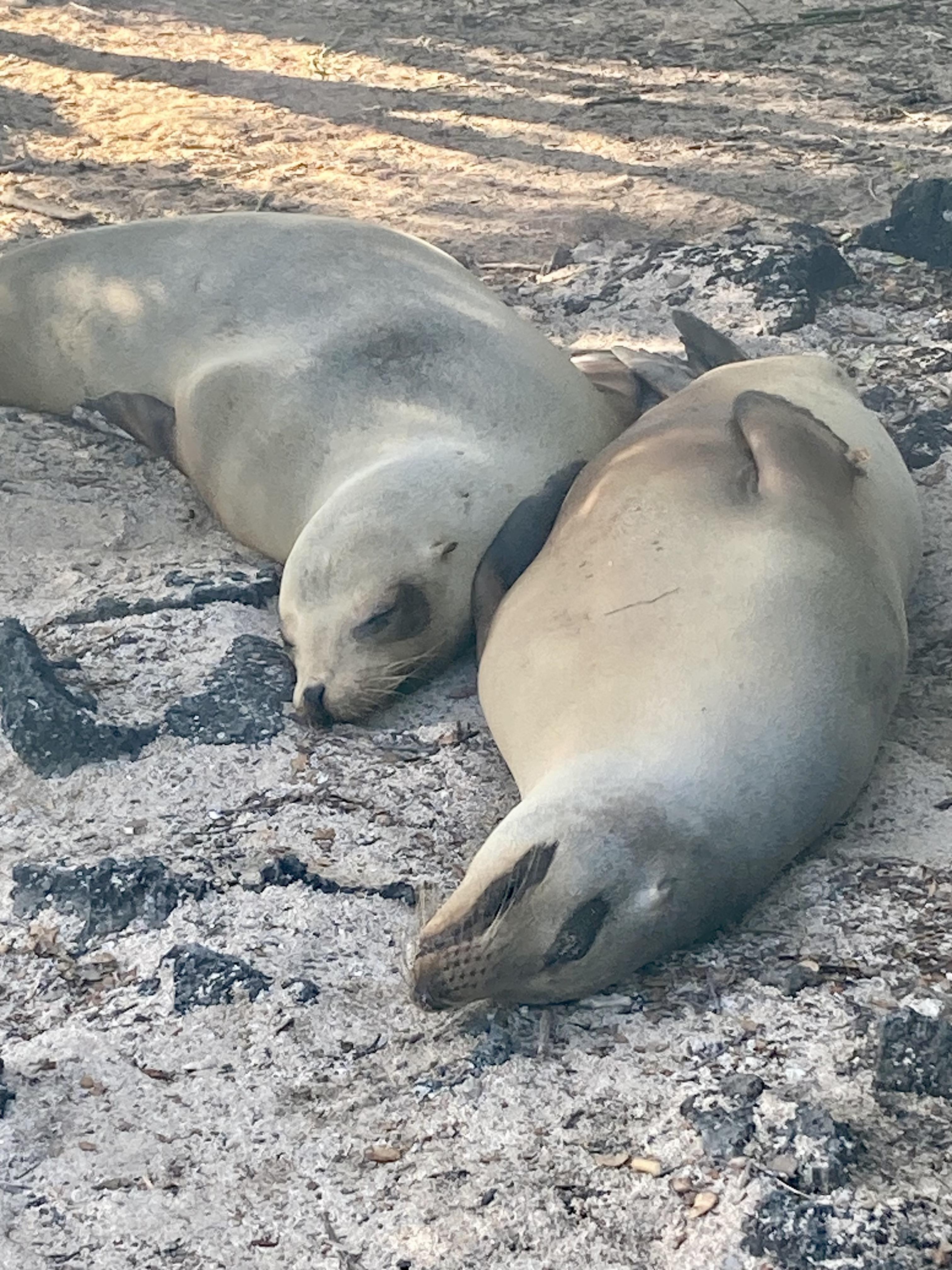
DonQui comes across a couple of the locals enjoying a late afternoon beach snooze just on the edge of town.

The lovely Morning Glory ‘boutique hostel’ is DonQui’s base for the next five days and he is more than happy with his choice. His hostess Ruth is very helpful in suggesting day excursions for DonQui to explore these unique islands and to come close to its wildlife.

Tomorrow he will begin exploring.

Fruit, Chocolate and Guinea Pig

Wherever he goes DonQui likes to sample the local cuisine. Ideally he is hoping to discover new foods and sample different tastes that he would not get at home. For him, this is one of the greatest joys of travelling.

To this end he has booked a morning food tour with the delightful Yadira. DonQui learns a lot about Ecuadorian food — especially the plentiful tropical fruits, most of which are completely unknown to him. Yadira is an extremely knowledgeable and friendly guide. On the walking tour with several delicious food stops she also explains some of Quito’s history to DonQui which helps give him perspective on the places he visits both on the tour and later.

Being a bit of a chocoholic the tasting at Yumbos Chocolate on San Fransisco Square is an absolute delight. DonQui learns much about their sustainable, fair trade production and the fact that Ecuador’s Arrriba cacao is considered to be the best in the world. Most of it is exported to Switzerland, Belgium and Germany to form the basis of those countries’ exquisite chocolates.

He buys a few bars to take back home with him.

The next day DonQui books a leisurely lunch at Inés restaurant.

The starter of Bola de verde (Plantain filled with pulled pork, carrots and peas with a peanut sauce) is both a visual and taste delight — probably the highlight of the meal as starters so often are.

This is followed by Brujo encocado (Scorpion fish with coconut sauce, yellow rice and caramelised coconut). The Scorpion fish is similar in texture to cod but slightly meatier and with a delightful delicate taste which goes so well with the coconut sauce.

Then DonQui tries smoked guinea pig croquettes. They are presented with no small amount of theatre on a bed of branches and leaves (their native habitat) in a glass bowl filled with smoke.

So what does guinea pig taste like? Well nothing like chicken. The meat is darkish and the taste and texture is perhaps a bit like a cross between duck and rabbit. DonQui would not go out of his way to seek it out again but he did enjoy it and was glad to have had the opportunity to sample something new and different.

Finishing off the meal is a delightful chocolate concoction with sweet corn cream, a touch of banana vinegar and caramelised corn (maize). As with everything else it is absolutely delicious.

It is not just fine dining that DonQui enjoys. He has also become quite partial to Empanadas — fried pasties stuffed with cheese or meat and the dough made from plantain flour.

Another favourite is humita — a pre-Columbian dish of fresh ground chocio (large kernel Andean maize) with cheese steamed in a corn husk.

A Dry Journey to the Middle of the Earth

Next stop on DonQui’s ‘round the world’ trip is Quito, capital of Ecuador. 

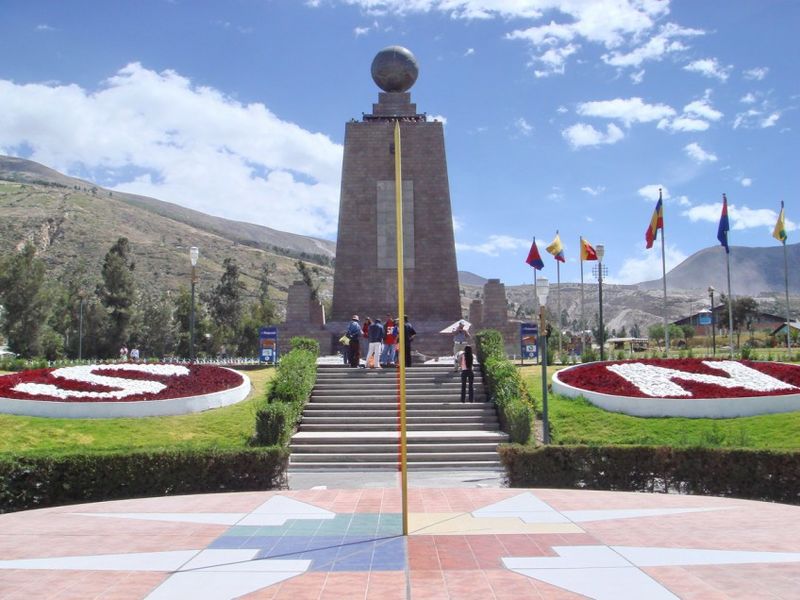
Quito is the only city on the world to more or less sit on the equator — its position marked by the Mitad del Mundo (middle of the world) monument. Unfortunately modern GPS readings show that the monument is a couple of hundred metres out of place! Although one of the closest places on the planet to the sun, the city’s location in the Andes at an altitude of 2800m gives a relatively mild temperature with frequent short afternoon thunderstorms blowing in from the surrounding mountains. 

Donqui has managed to find an excellent inexpensive apartment on airbnb in the old town with a fabulous view. It is close enough to the centre for him to walk everywhere and be where he wants to be in a matter of minutes.

The little package of coca leaves are a thoughtful gift from the host. They are said to help with altitude sickness as well as having other medicinal benefits. Donqui rather enjoys a tea he makes with them. Unfortunately thanks to the small cocaine content he is not allowed to bring some back to the UK. 

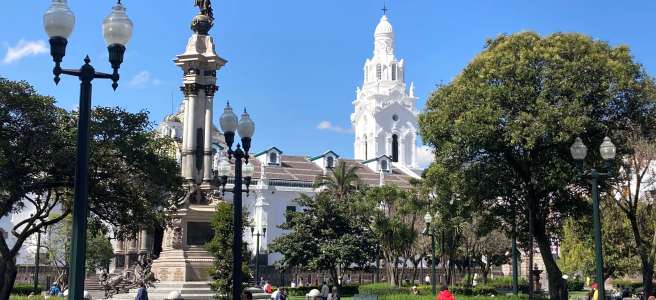
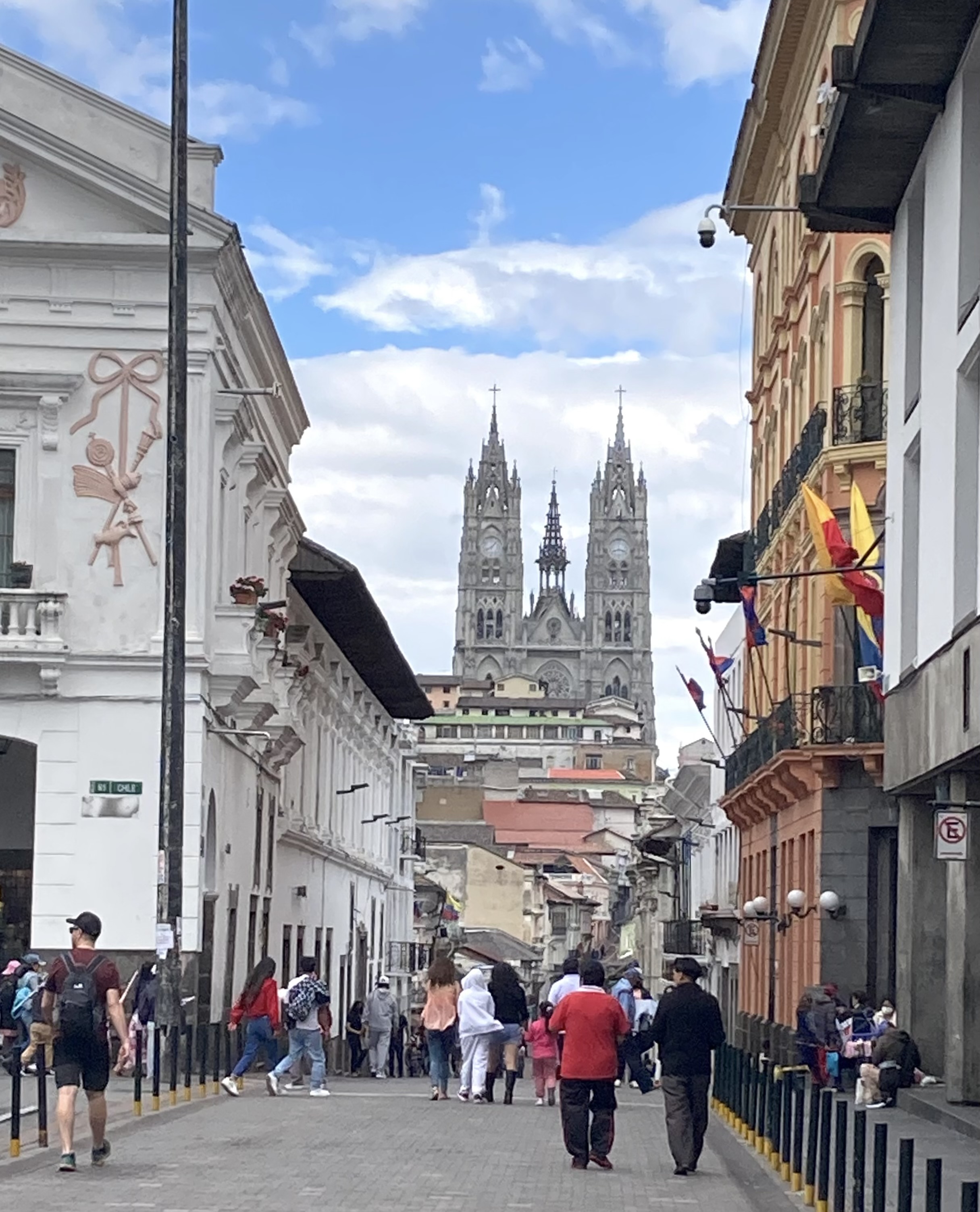
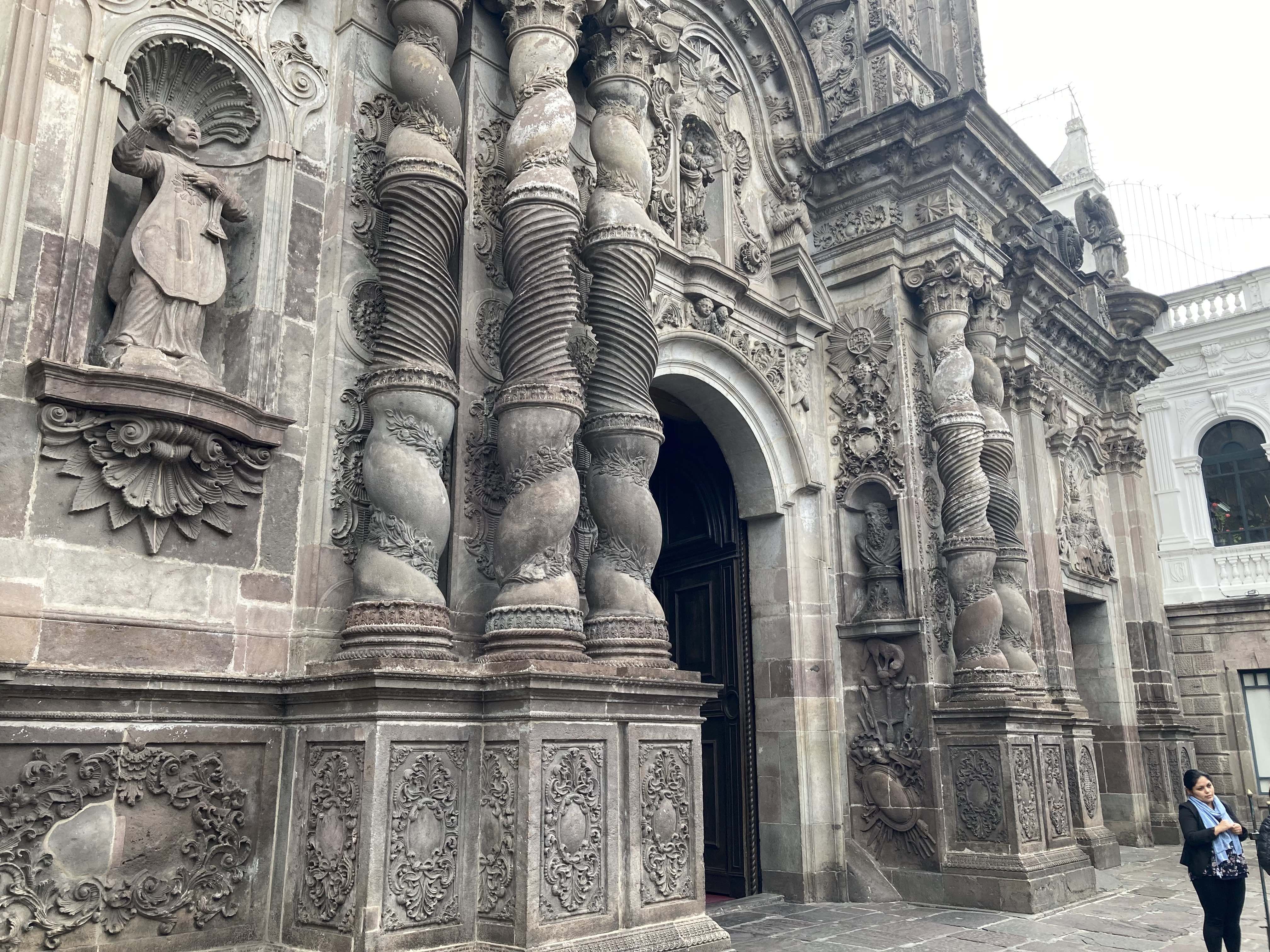
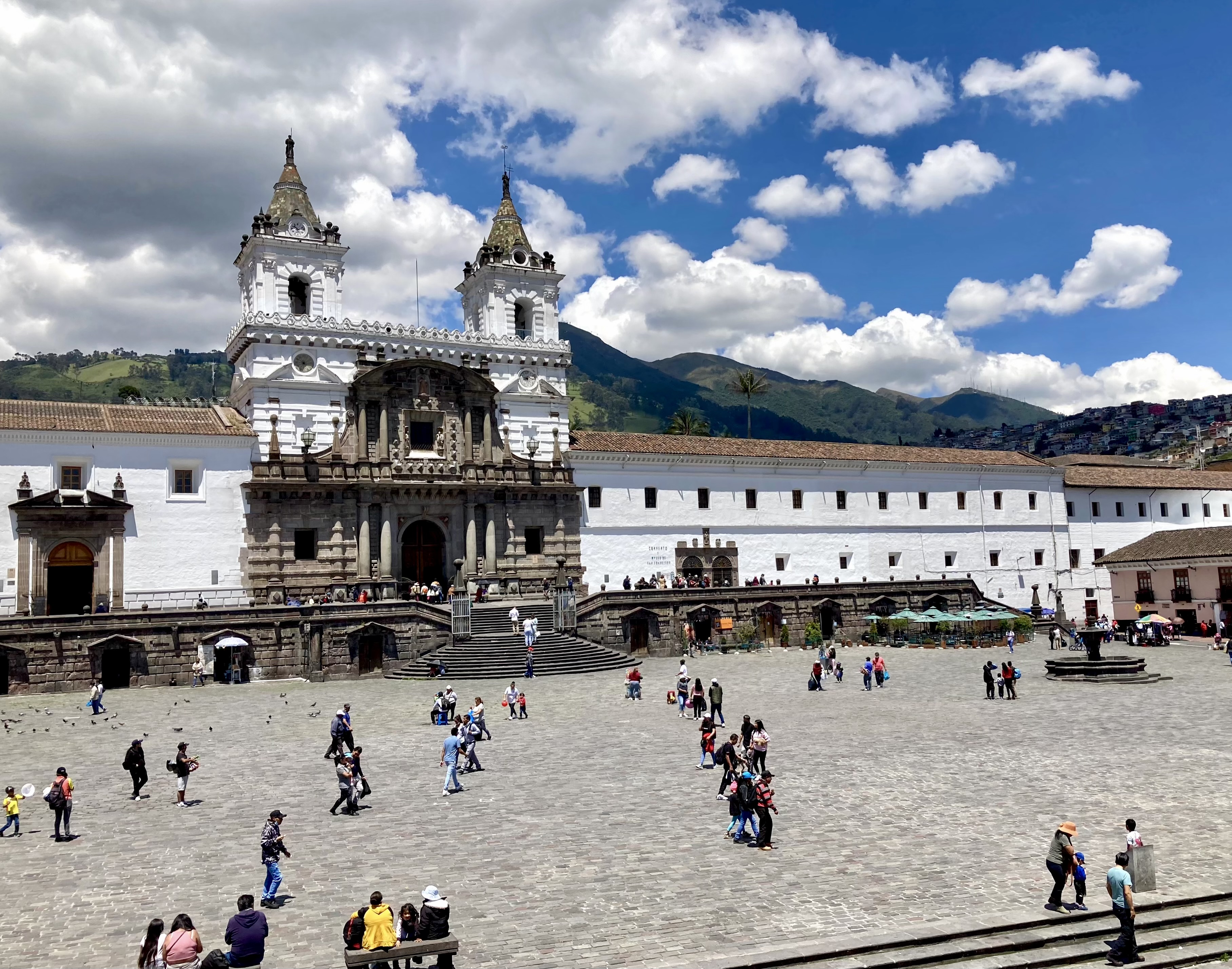
Wandering around the streets of the old city Donqui is amazed by the architecture…

There seems to be an over-the-top baroque church or colonial era palace around every corner.

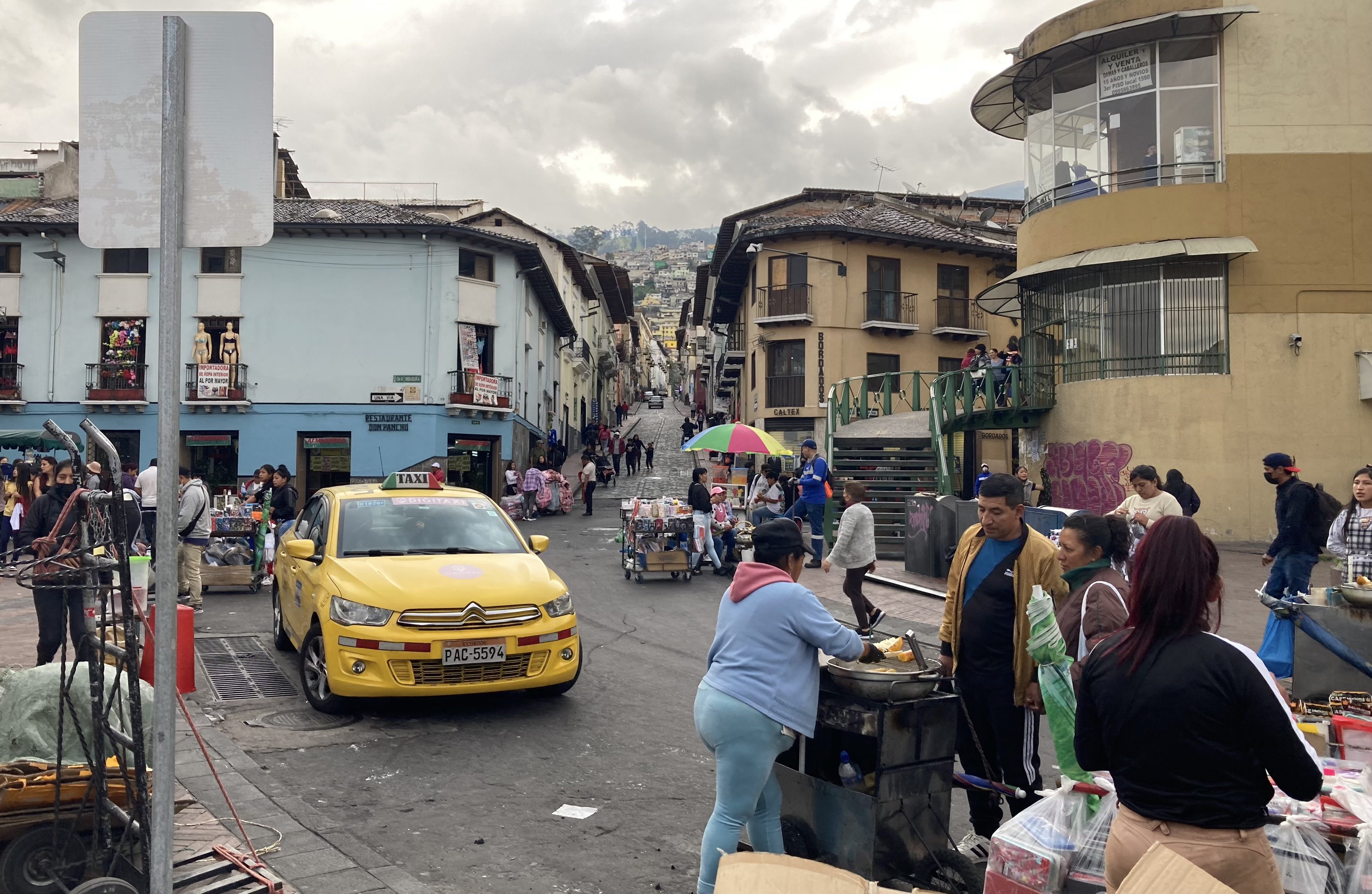
The streets team with life and street vendors are everywhere.

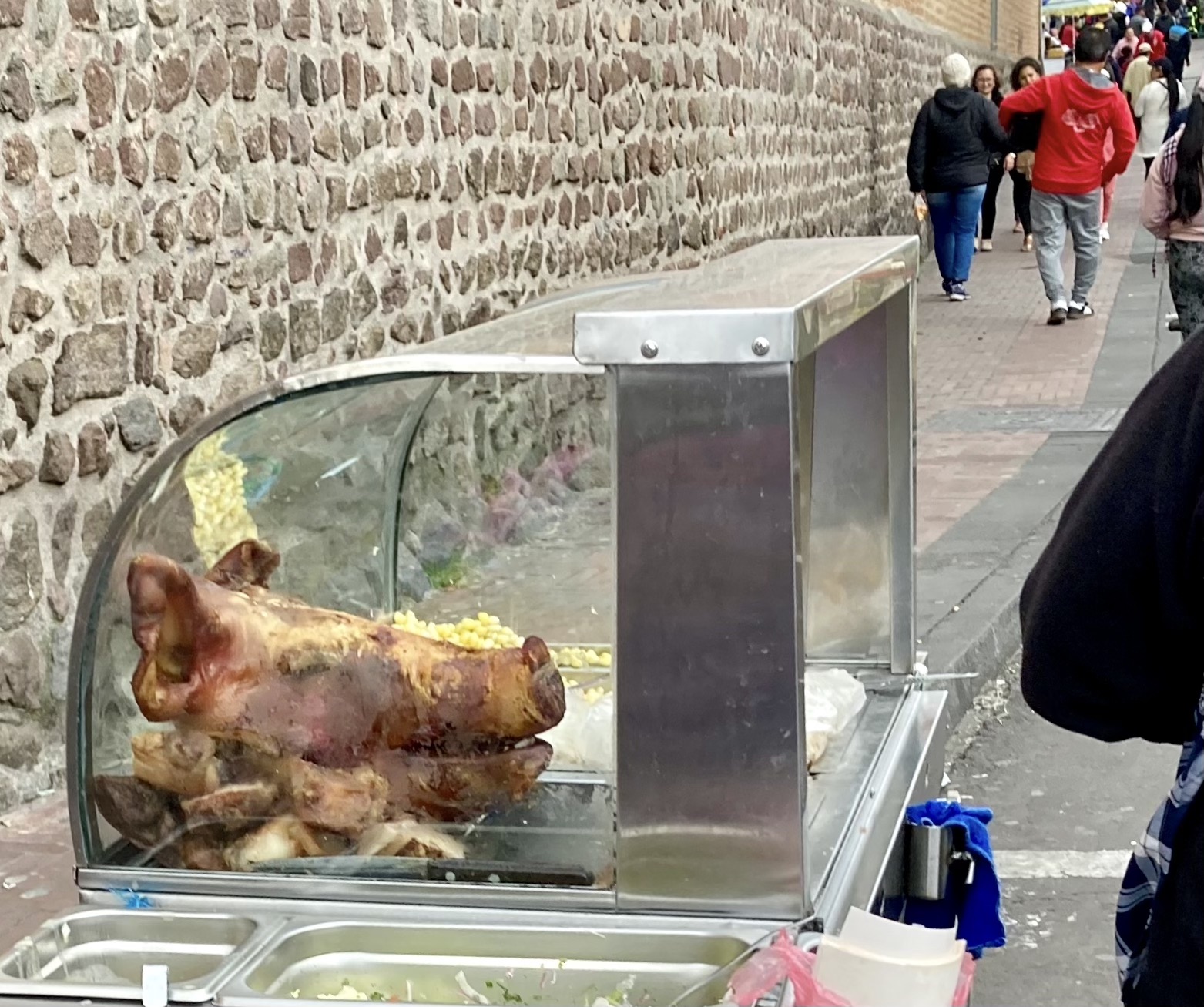
Donqui does not quite have the courage to sample a bit of the pig’s head although he does try some fried corn from another vendor and it is very good.

With monumental poor timing, DonQui has arrived on the weekend of an election (voting is compulsory in Ecuador). There is a slight festive air on the streets and police are everywhere. All this is fine but the real problem is that an election law bans the sale of alcohol for the entire length of DonQui’s stay in the capital. He hopes he will be able to make it. The coca tea is certainly helping.

Everyone DonQui meets is very friendly and helpful. The city feels safe to wander around (although he is warned not to do this after dark). Not many people speak much English but DonQui’s rusty Spanish is getting polished and Google Translate helps a lot.

On the edge of time

The first leg of DonQui’s trip around the world takes him, very briefly, to Tulum in Mexico.

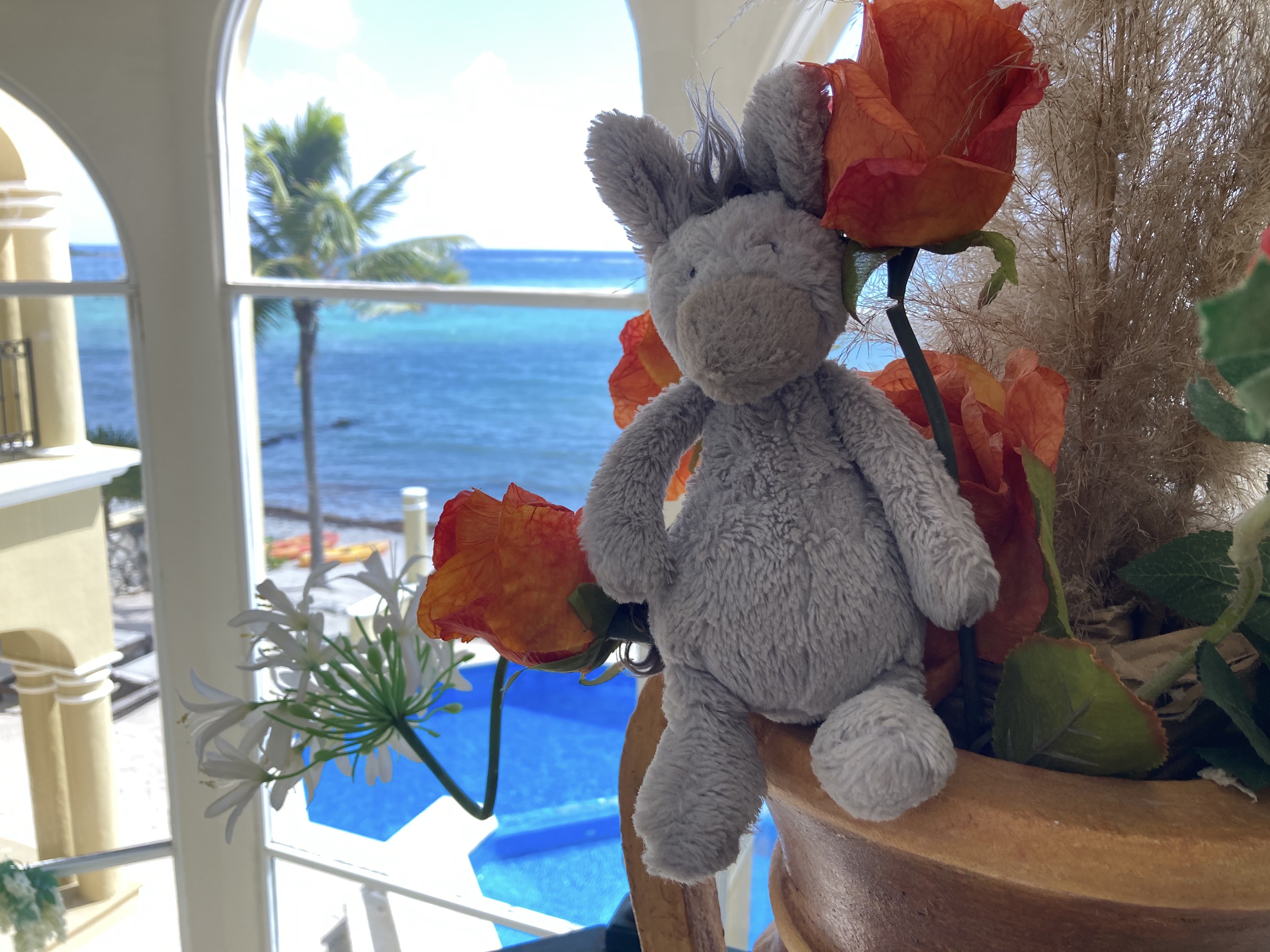
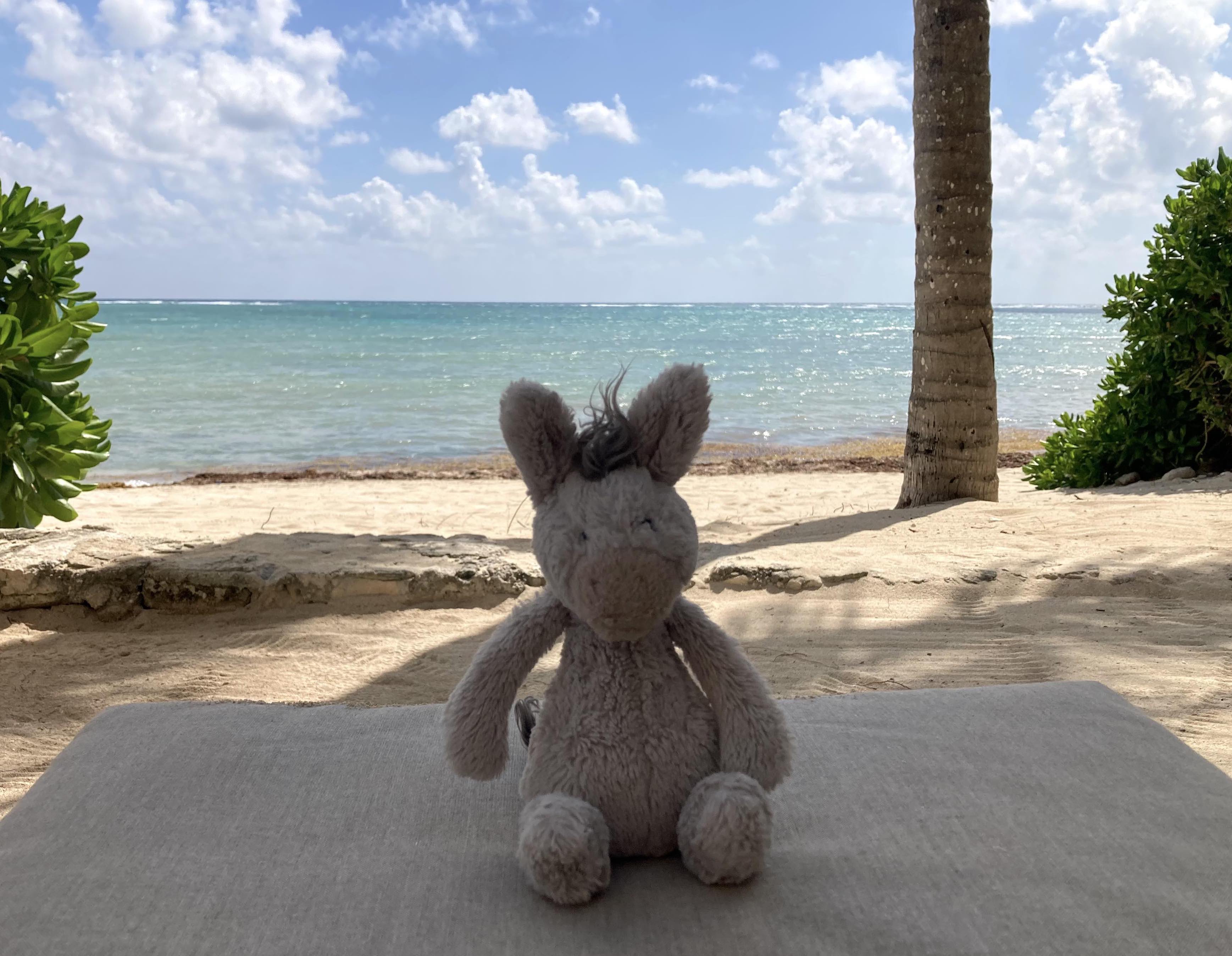
Although only here for a couple of days he is suitably impressed. It helps that (thanks to Duchess) he has secured an invitation to stay at beautiful Temple of Light on the beach at Tankah Bay.

There are plenty of good (if slightly pricey) eateries along the beach. Most offer international fare but Donqui is determined to sample some proper Mexican food, especially as his time here is limited.  He settles on Tz’onot Restaurante and peruses the menu.

He thinks long and hard about ordering the Chapulines (toasted grasshoppers) but chickens out.

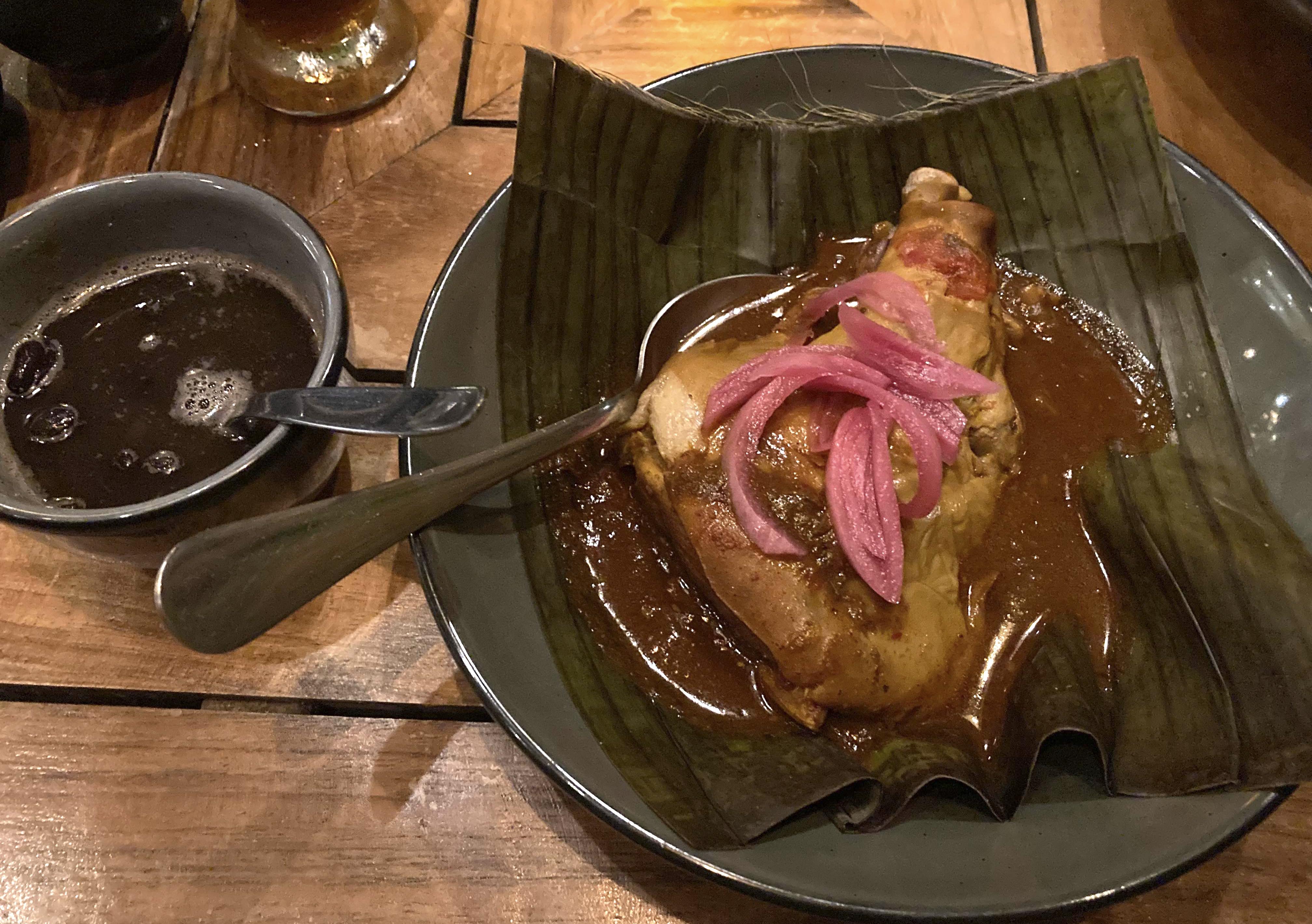
Instead he goes for the tamal to start…

…and Cochinita Pibil (slow roasted suckling pig marinated in bitter orange juice) to follow.

The tastes are quite unique and utterly delicious.  Yet Donqui feels a slight twinge of regret that he did not try the grasshoppers as he is unlikely to be able to sample them back home on the Suffolk coast.

Once a haven for hippies and backpackers, Tulum is now more than a little bit gentrified —  Instagram influencers pushing aside tie-dyed kids on a gap year experience. Donqui can still detect a bit of the laid back vibe amongst the divers exploring the Cenotes (underground rivers and sink holes) and the world’s second largest coral reef just off the coast. 

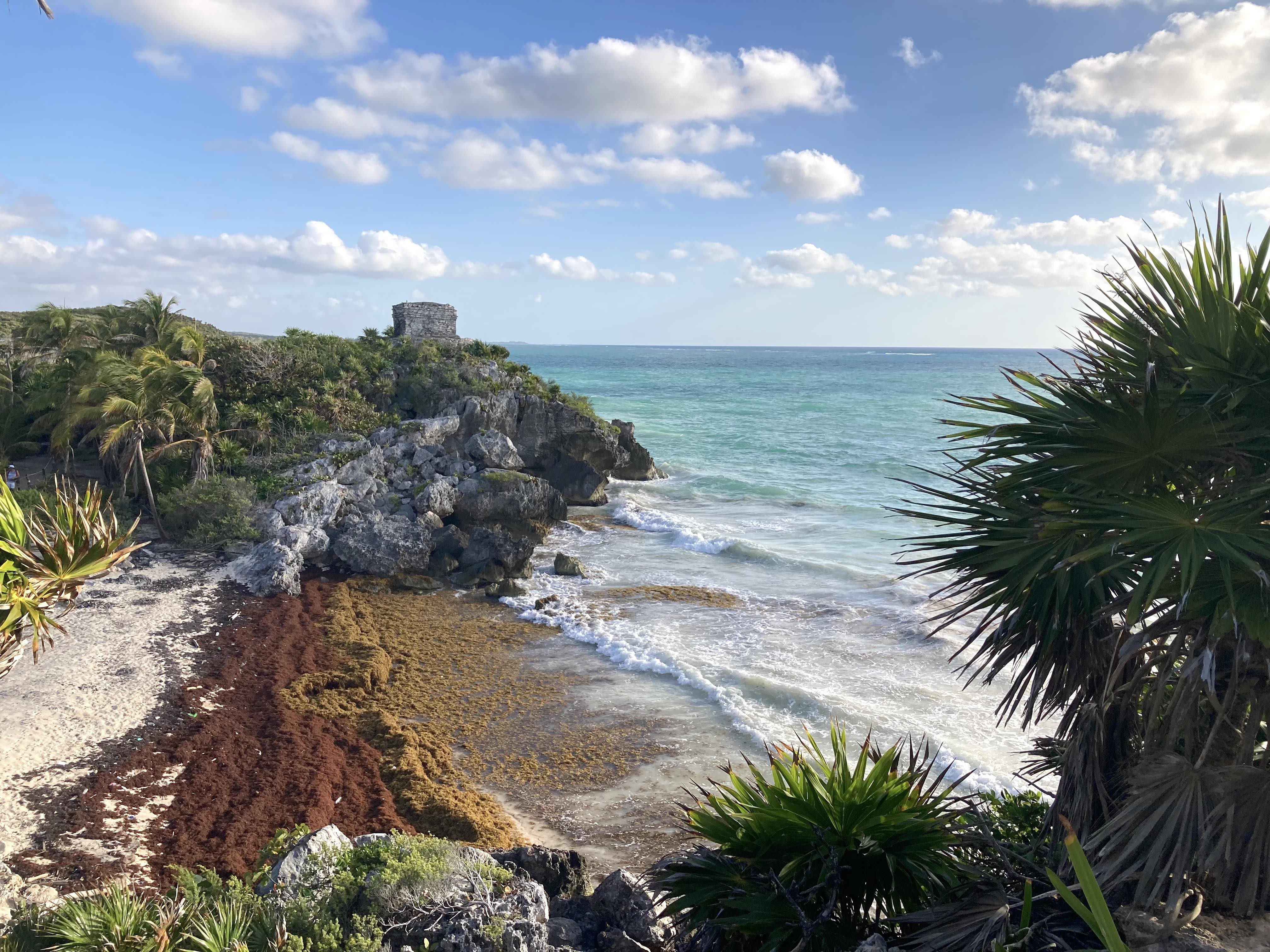
Despite gentrification Tulum remains an incredibly beautiful place. The tourist development is thankfully low-rise and the jungle-surrounded coast still retains a sense of adventure.

As his name implies, DonQui Oaty has a strong affinity with the past. He may not go off tilting at windmills in the hope of holding on to a lost sense of chivalry but he does like exploring old rocks. Tulum has some very good ones.

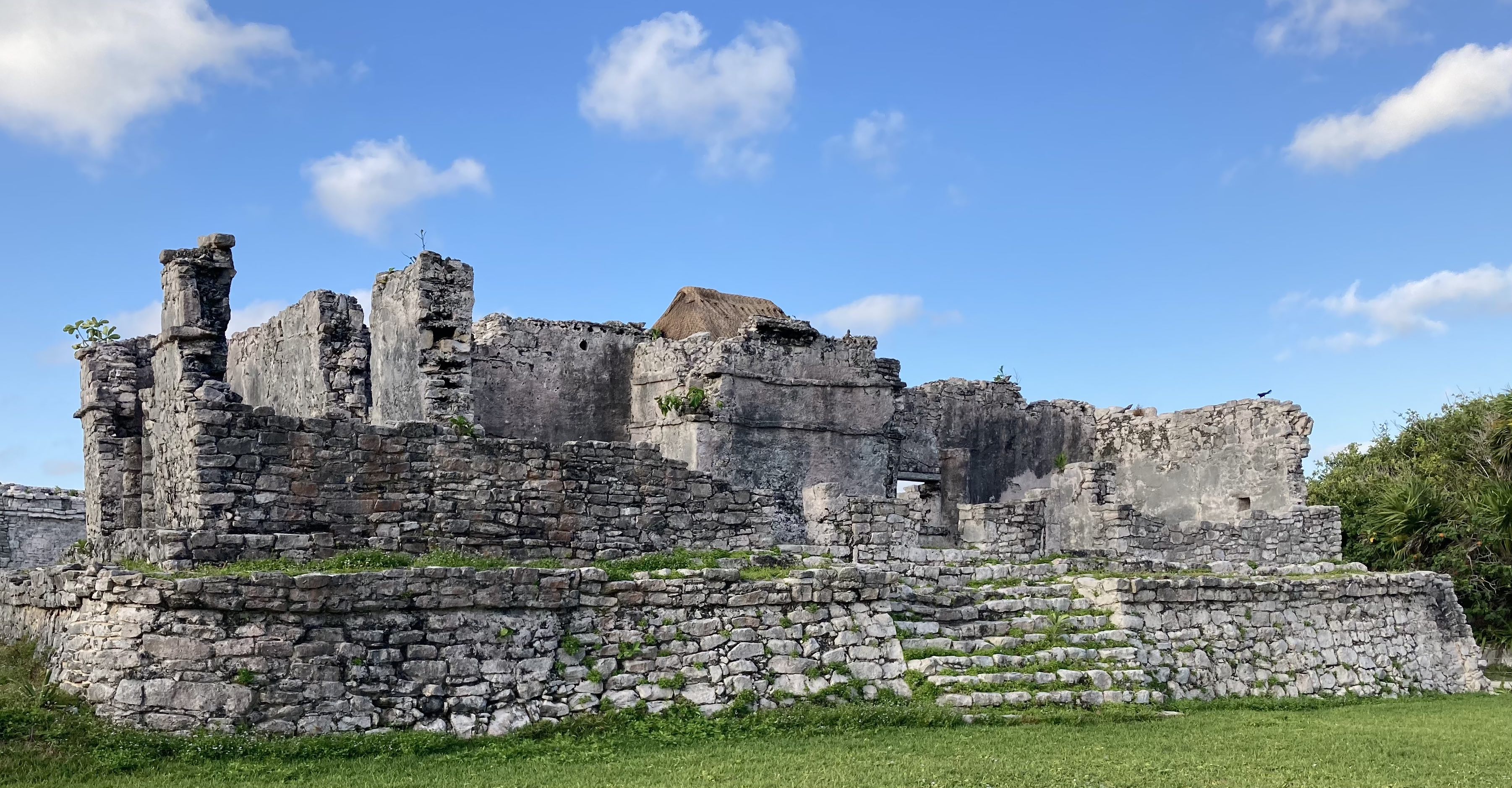
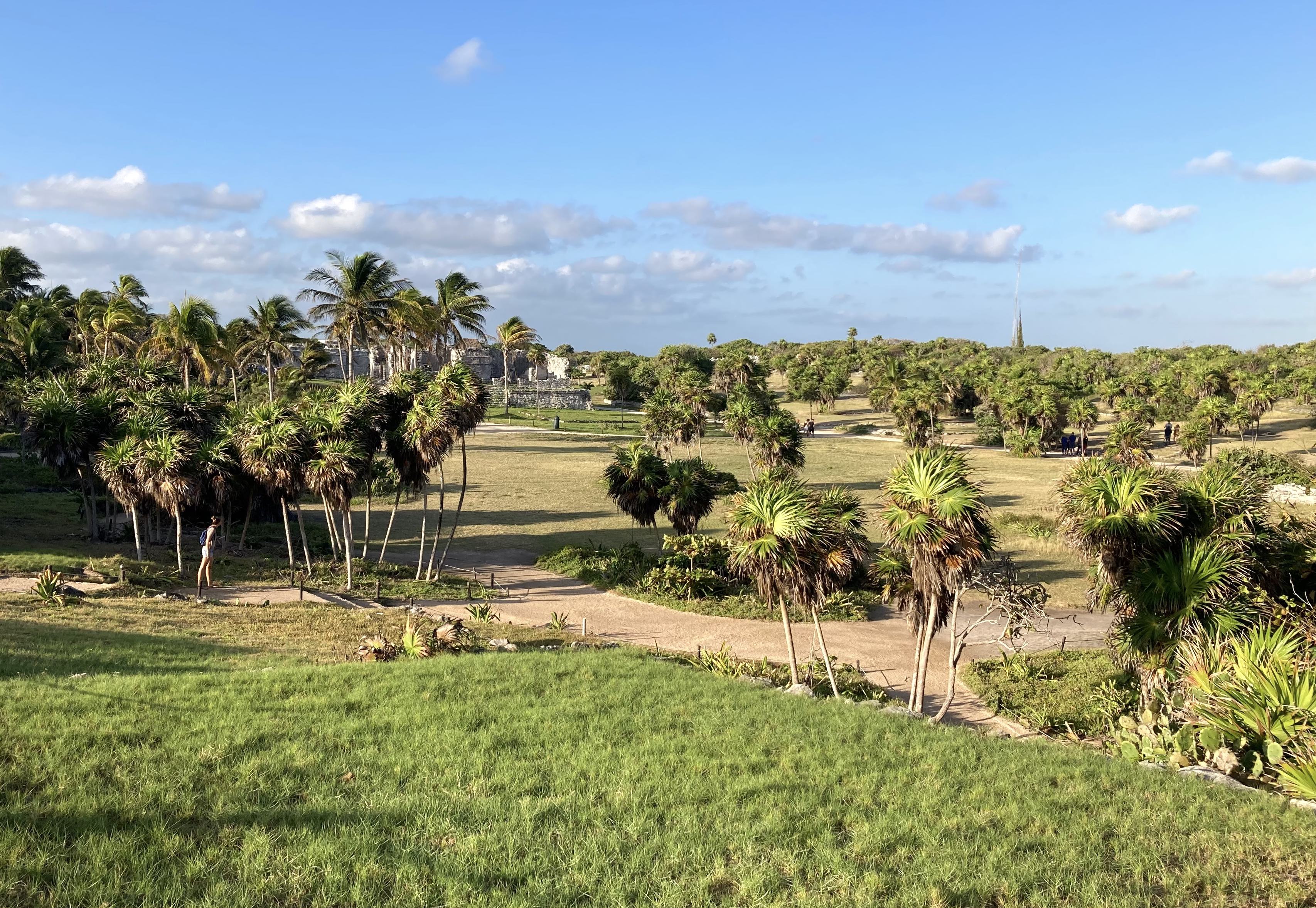
Mayan Tulum was a walled port city and the archeological park which preserves the ruins has plenty of impressive old rocks for DonQui to explore. 

He is very glad to get to the archeological park shortly after opening at 8am. The temperature is relatively cool and Donqui had the place almost to himself. By the time he leaves at around 9:30 a long stream of coaches are disgorging hundreds of new visitors.

Uncharacteristically DonQui is at a loss for words to describe his sense of wonder as he explores the Mayan ruins.  It feels almost like he is standing on the edge of time as he looks out over the Caribbean sea from the ruins of Mayan Tulum. It was here where the asteroid hit that killed off the dinosaurs and it was here where the Mayans would have seen the first Spanish ships approaching their coast heralding the destruction of their civilisation 

DonQui trots around the world

After an absence of several years our intrepid traveller DonQui Oaty is back and setting off on a grand new adventure.

Bags packed, he is sitting in the British Airways lounge waiting to set off on an Around the World Trip.

His first leg is to Miami, then on the Mexico, Ecuador, California, Indonesia, Hong Kong and quite possibly other places along the way.

Overnight in San José, Costa Rica

On his way to Tortuguero on Costa Rica’s Atlantic coast, DonQui Oaty decides to break his journey in the Costa Rican capital. It seems more restful after a long international flight to spend the night in San José before hopping on a domestic flight to the coast

san_jose_costa_rica1.jpg
San José is not the most attractive of cities

At first glance San José doesn’t seem to have much to offer. DonQui notes the urban sprawl, dusty streets and dull architecture. He is fairly certain that those that know the city will tell him that there is much to see and do. But it is a Sunday afternoon, not much is happening and the restful atmosphere of the low-rise Hotel Colonial invites DonQui to take a siesta rather than go out to explore Costa Rica’s capital.

hotel colonial.jpg
DonQui stays at the very pleasant Hotel Colonial

With its pleasant neo-colonial architecture, large spacious room and friendly staff, the Hotel Colonial is a great place to stay. It is right in the centre of town close to the Jade museum which would have been handy had DonQui decided to explore.

pool.jpg
The hotel courtyard

Instead, after his siesta, he has a coffee and plays a game of cards with Duchess in the pleasant courtyard by the small pool.

Esquina de Buenos Aires.jpg
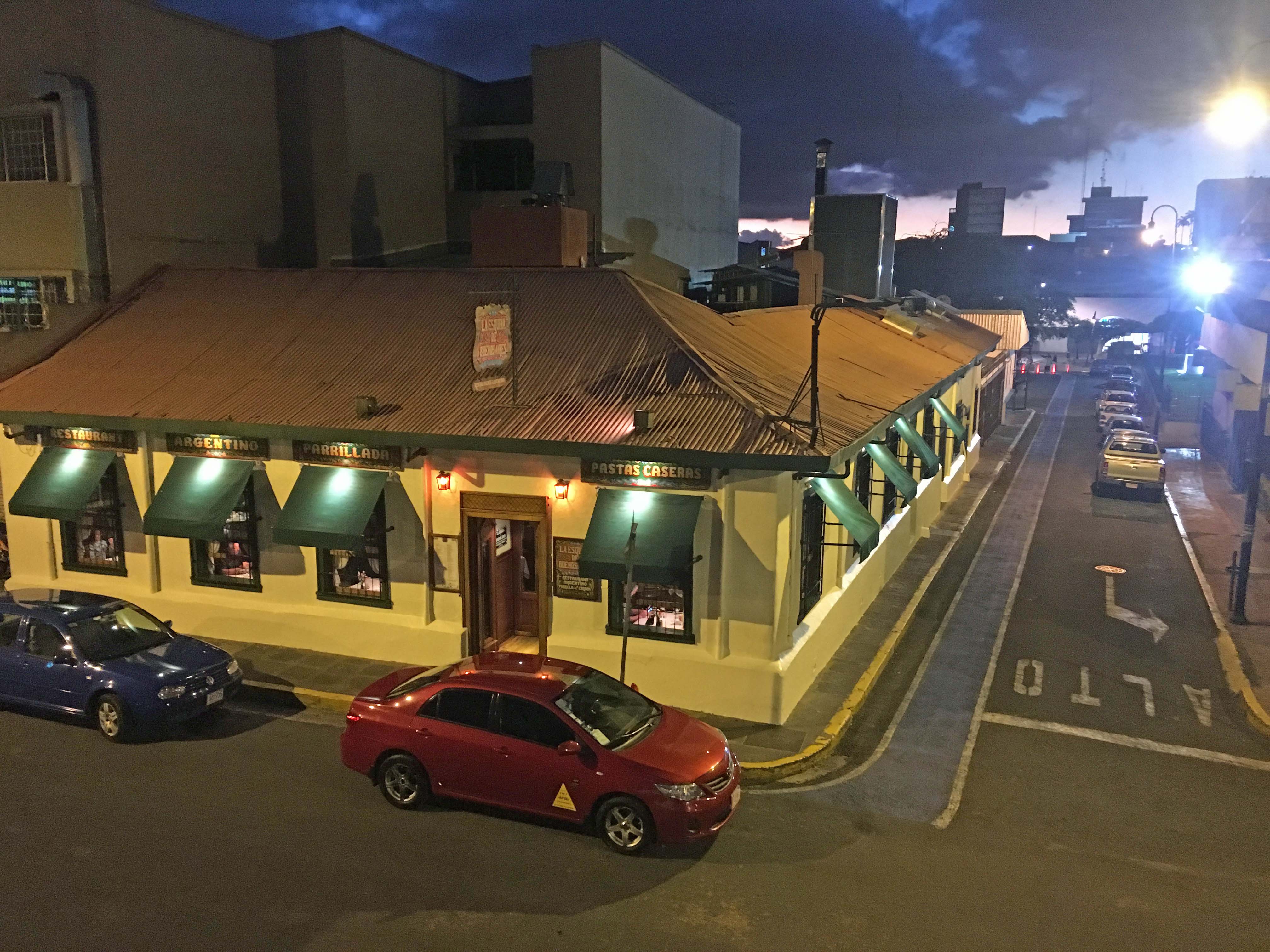
Esquina de Buenos Aires Restaurant

The Esquina de Buenos Aires restaurant is right across the street from the Hotel Colonial. DonQui has learned that it has an excellent reputation and is hugely popular. He is, therefore, thankful he had the foresight to make a reservation as the place is hopping when he gets there for dinner and he would not have had a chance of a table without it.

IMG_4977 b&w.jpg
DonQui imagines he is in a classic black and white film

DonQui immediately sees why the restaurant is so popular. It oozes with atmosphere. The wood panelling, ceiling fans, posters from classic Argentinian films and old photos of Argentinian celebrities, make DonQui feel at though he has been transported into classic black and white film set in old Buenos Aires. All that is missing are two gentlemen in fedoras smoking cigars in a corner as they plan some dangerous adventure.
IMG_4974.JPG
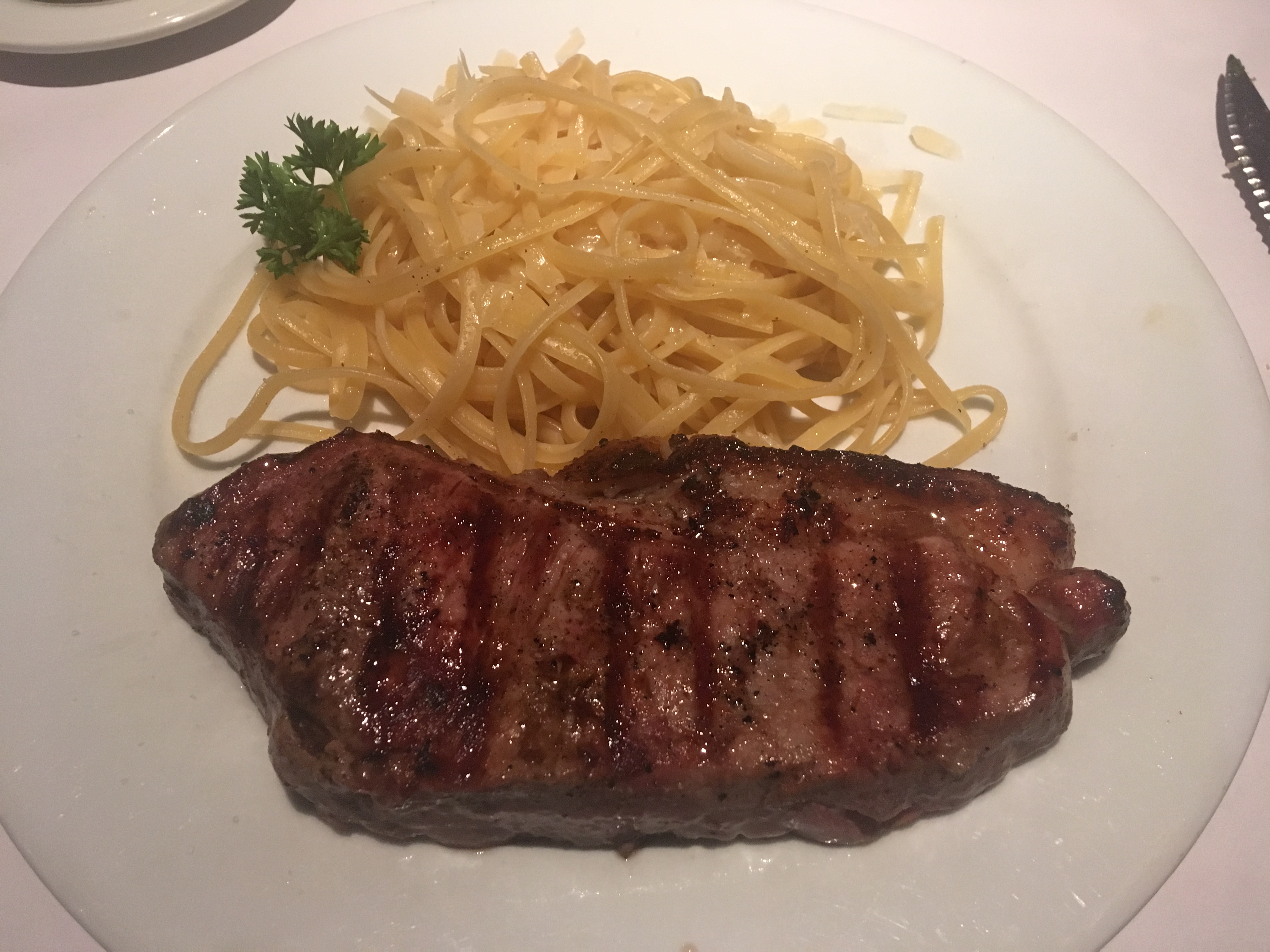
The ‘mini’ striploin is plenty big enough

The food, drink and service are as good as the atmosphere. It being an Argentinian restaurant, beef steak is the thing to have. DonQui’s Bife de Chorizo (striploin) is superb and he is glad he ordered the ‘mini’ portion as at 250g of beef it is more than enough. The full portion is a whopping 400g!
flambeed banana pancakes.jpg
Banana crepes flambéed in rum

There is more than steak on the menu. Duchess’ sopa de zapallo y choclo (pumpkin and sweetcorn soup) is delicious as are the rum flambéed bannana crepes that DonQui has for desert. The house red wine, a Pequeña Vasija is excellent. Prices are a little on the steep side for Costa Rica but quite reasonable by European/North American standards. Reservations are essential.

rice and beans

Certainly, DonQui could have been more energetic to make more of his short overnight stay in San José. Nonetheless he thoroughly enjoys himself. He feels perfectly relaxed as he eats his breakfast of gallo pinto (rice and beans) with egg and sweet fried plantain the next morning. He is now ready for a proper adventure.