Back on the Ecuadorian mainland, DonQui is spending a couple of days in the Mindo cloud forest.
As the name suggests there is… well… lots of lush forest high up in the Andes so as to be more or less permanently in the clouds. When it is not actually raining there is an almost constant light drizzle. It is quite a climatic change from the hot, dry Galapagos.
Feeling quite intrepid DonQui sets off along a narrow path to explore the forest.
He trots down to the Mindo river and then on to the small town of the same name.
Mindo is a very pleasant place fully geared up for tourists but there are very few of them around. DonQui stops off for a coffee (which is grown in this area) and then heads off in search of wildlife.
This crested guan is not in the least camera shy — indeed he is a bit of a poser.
The cloud forest is famous for its many species of humming birds and they are everywhere. Many places have set out feeders to attract them.
While watching the humming birds DonQui also sees an agouti happily enjoying its midday meal.
Tomorrow DonQui leaves the cloud forest and heads off into Amazonia.
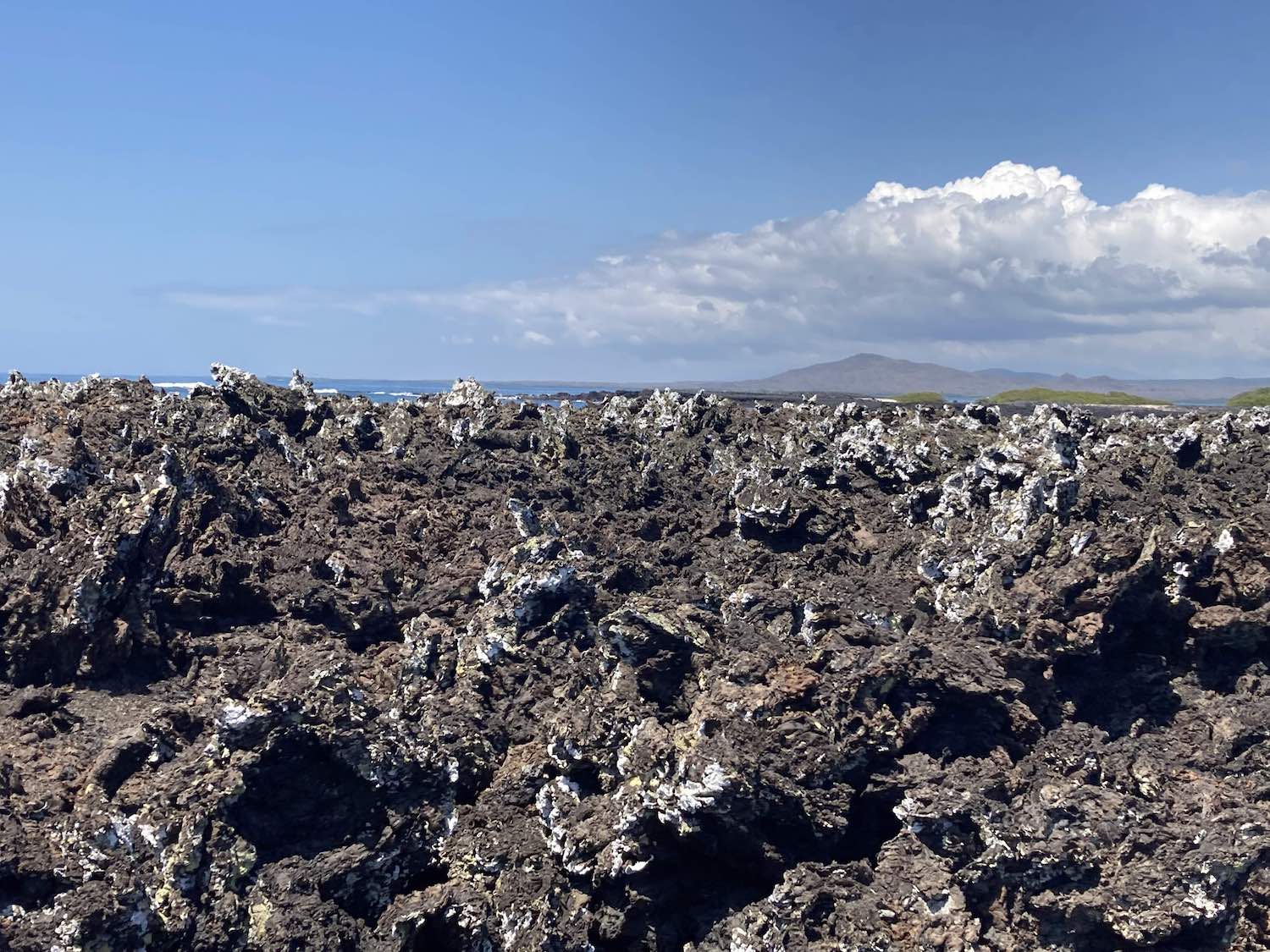
The Galapagos is an archipelago of barren volcanic islands. The equatorial sun burns down on them and there is very little shade.
With no fresh water the islands are not well suited to habitation by either donkeys or humans.
Most of them are uninhabited refuges for a remarkable array of wildlife with unique species that helped to form Charles Darwin’s conclusions about evolution.
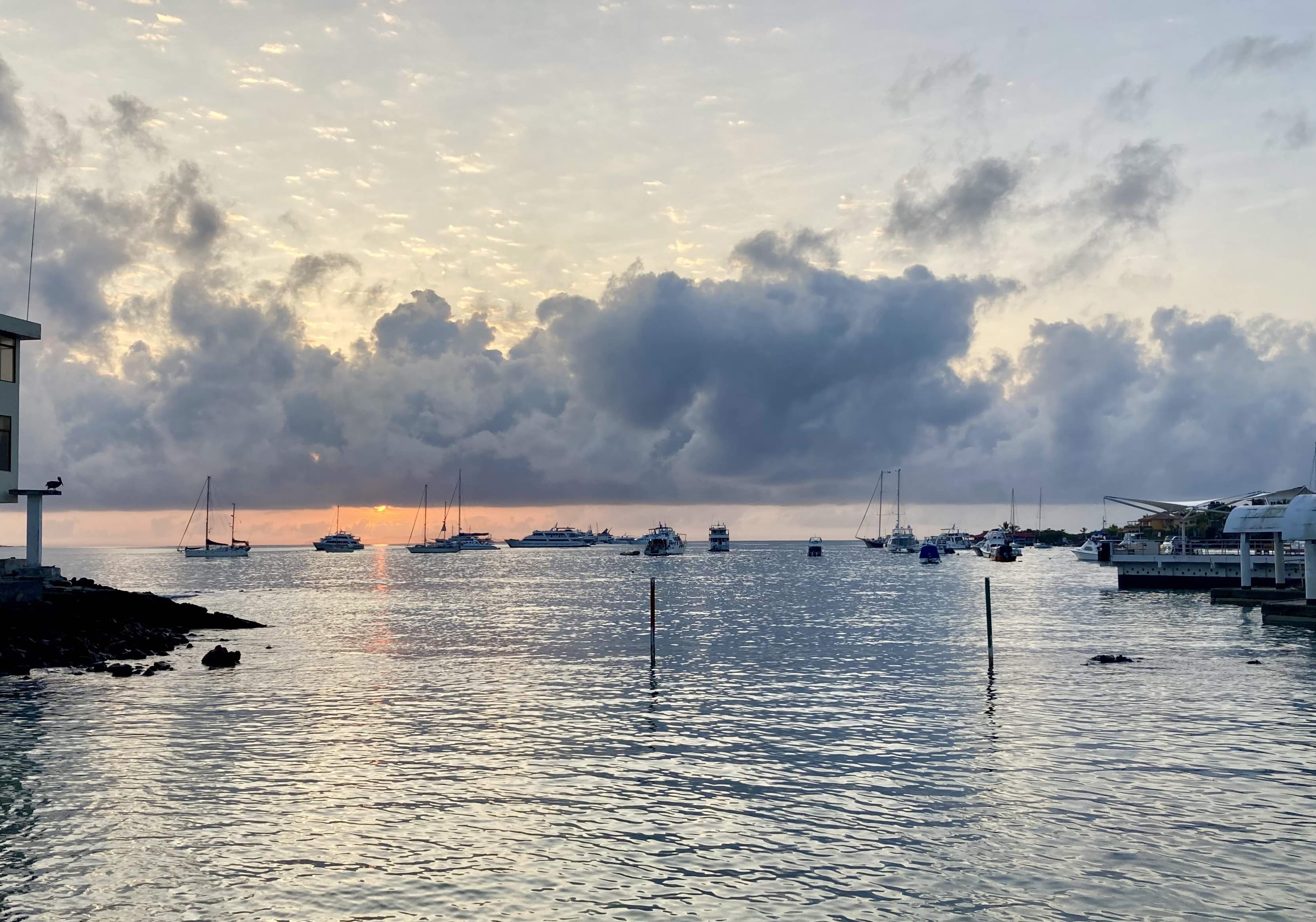
To explore a few of the islands and to meet some of the remarkable native inhabitants DonQui needs to get on a boat. There are a wide choice of day trips available from Puerto Ayora and all require an early morning start. This takes some effort on DonQui’s part as he is not naturally an early riser.
A dingy or water taxi takes DonQui to his waiting vessel on each of his three day-excursions to Pinzón, Isabella and North Seymour. The boats are quite comfortable — especially the catamaran which takes him to North Seymour. The groups on board are very small, usually about 10-12 passengers — the number of visitors being strictly limited to avoid overcrowding and too much disturbance to the wildlife.
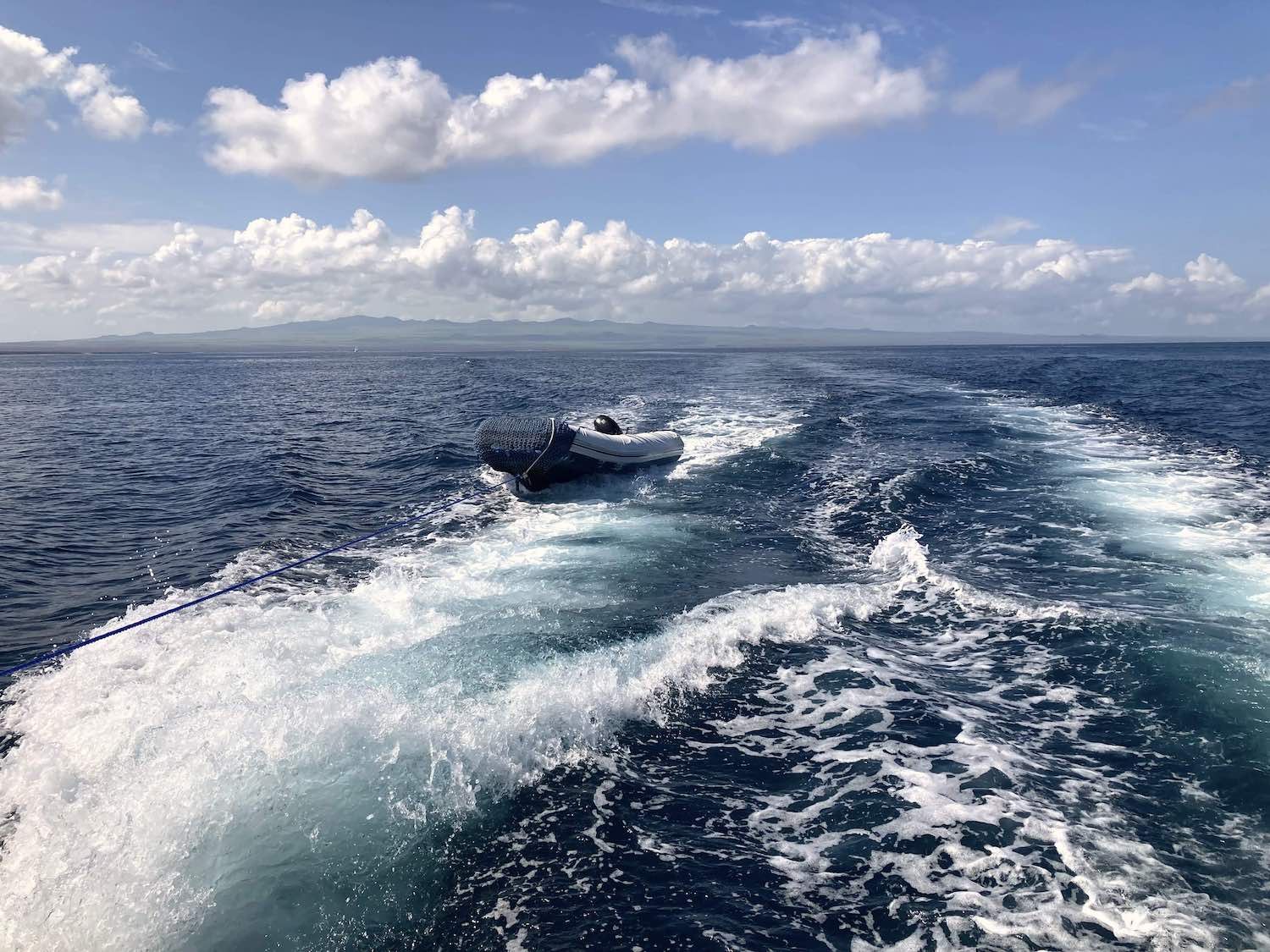
A dingy is towed along behind to assist with beach landings and to get to good snorkelling spots.
On his way to Pinzón DonQui is lucky to encounter some Dolphins who decided to playfully swim around the boat for several minutes.
… and on the way back from North Seymour a huge Tiger Shark escorts DonQui out of the shark’s territorial waters. DonQui thinks it best not to argue.
The various snorkelling stops are the best part of all the trips. The water is crystal clear so DonQui is able to observe a huge array of tropical fish. Off Pinzón a family of sea lions swim alongside. One comes right up to DonQui and nosily presses its snout at DonQui’s mask. Off North Seymour DonQui suddenly finds himself in the middle of a huge school of whitetip sharks — hundreds of them swimming all around him. It was quite breathtaking.
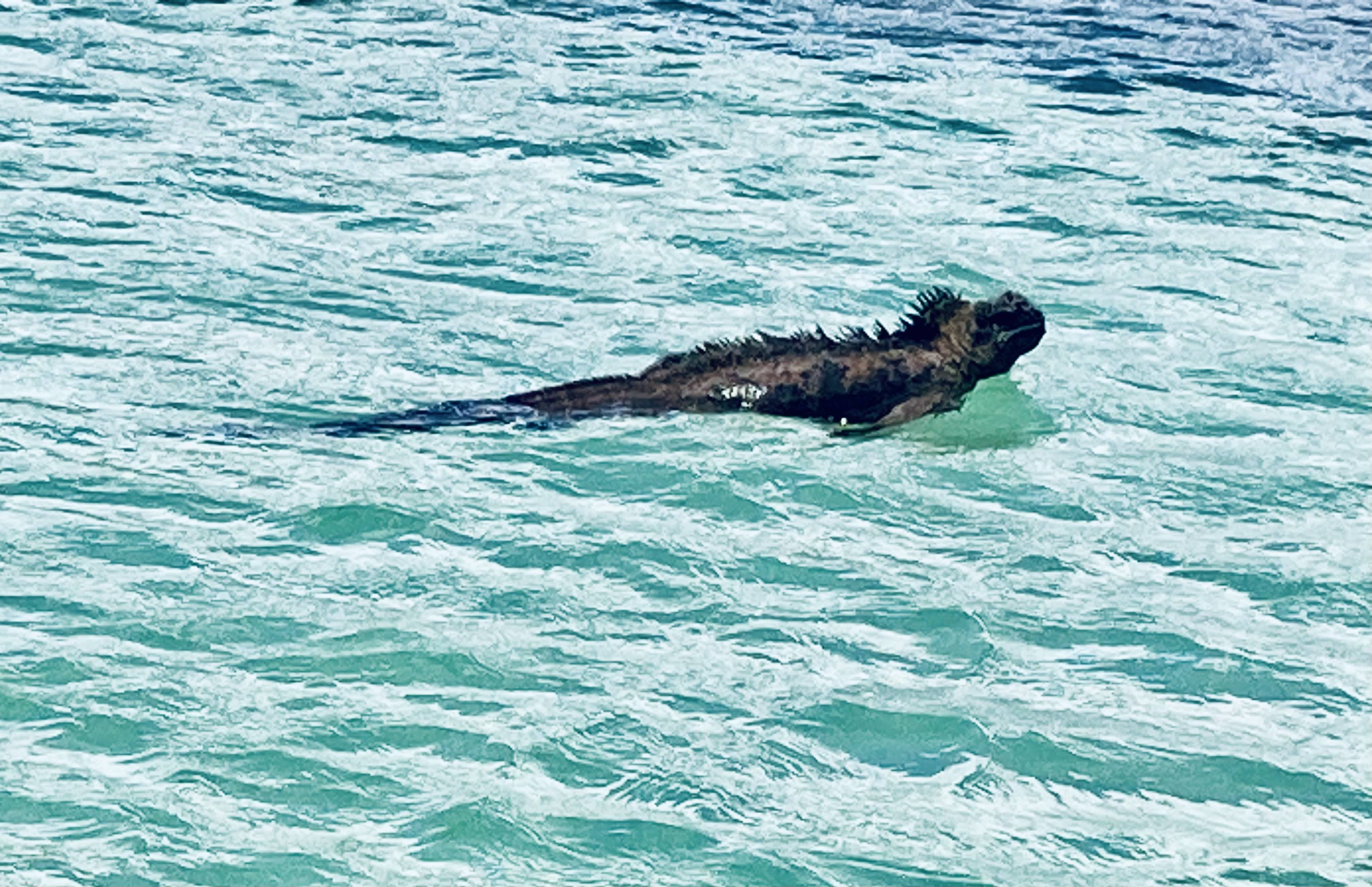
Whilst snorkelling he aslo encounters marine iguanas, sea turtles, barracuda and several species of rays.
DonQui also meets many fascinating species of birds such as these iconic blue footed boobies. Nearby DonQui sees a Galapagos penguin swimming and diving for fish.
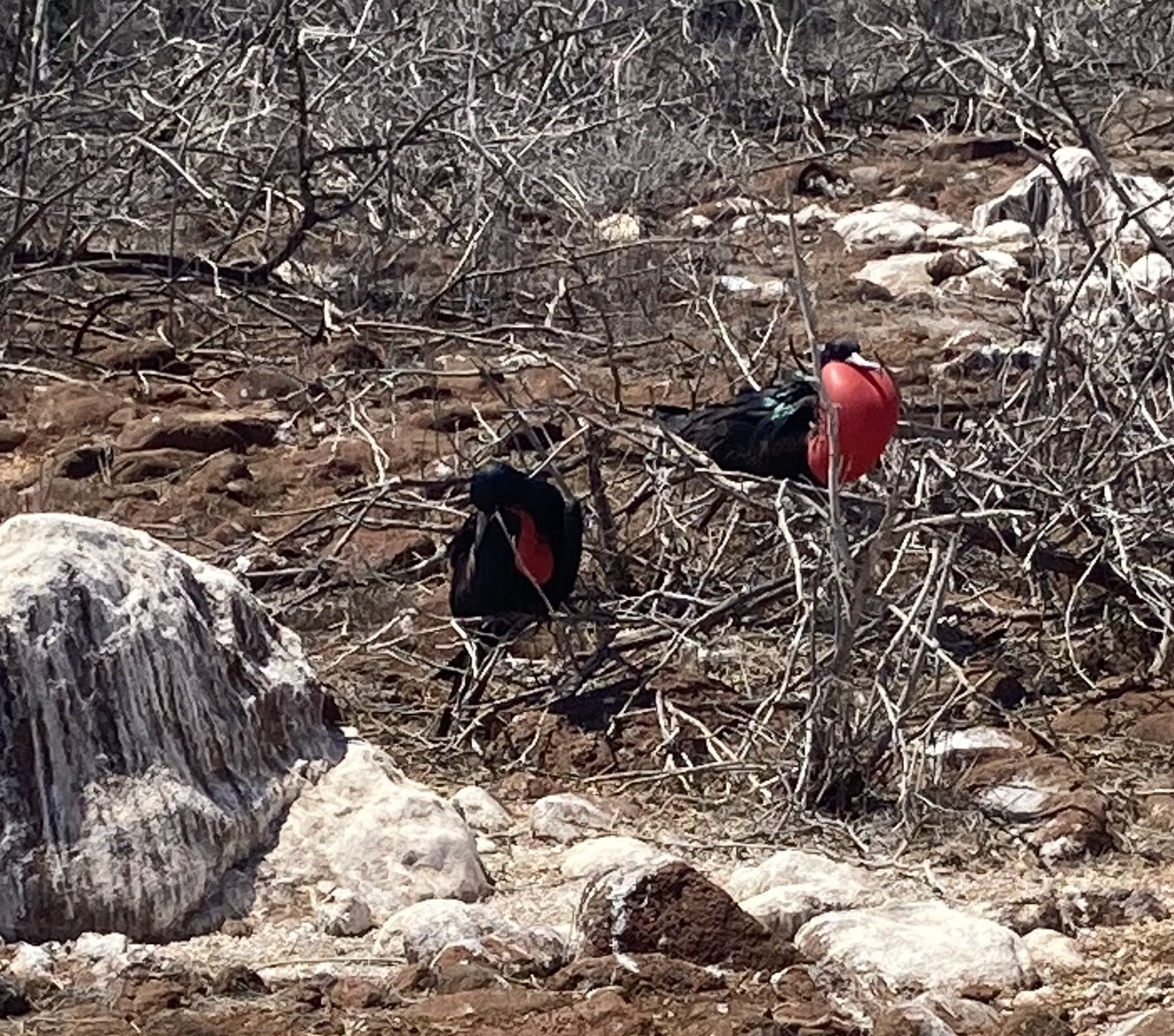
One of these male frigate birds is puffing up his red throat sack in the hope of attracting a mate. The other looks as if he couldn’t be bothered.
DonQui sees land iguanas everywhere.
And he also comes across a pair of giant tortoises doing their best to ensure the continuation of their species.
Six days on the Galapagos with three spent on the inhabited Santa Cruz and three day-excursions to other islands is just about enough. DonQui thinks it might have been an idea to have spent a bit longer so he could have gone to San Cristobal to spent a night there. However, he has seen more wildlife close up than he could possibly have hoped for. So he is just about ready for his next adventure
Tortuguero (Land of the Turtles) National Park is a remote nature reserve on Costa Rica’s Caribbean coast. There are no roads here, access is by boat or plane only.
The airstrip is across the river from where DonQui is staying
DonQui arrives by plane, a small Cessna that lands on a jungle airstrip opposite the Tortuga Lodge and Gardens where he will be staying for a few days.
The verandah is a perfect place to relax
DonQui’s intention is to relax and enjoy the nature surrounding him. The verandah of his ‘cabin’ is the perfect place to do this. There is no glass on the windows — only mosquito netting. This way the sounds of the rainforest are always present.
DonQui enjoys he hammock
The hammock is a particularly good way to relax and to take in the sights, sounds and smells of the surrounding forest.
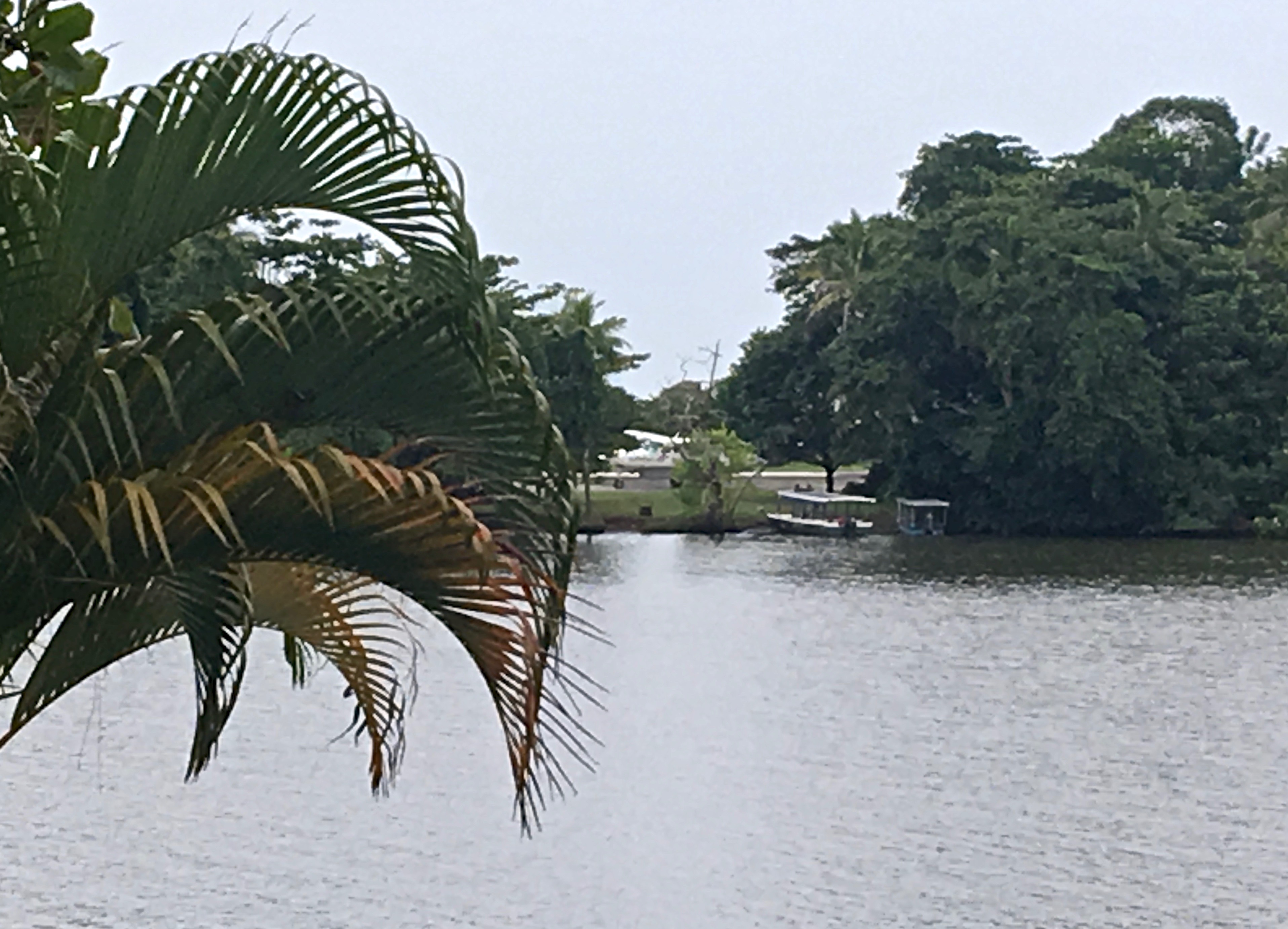
Water and rainforest are the heart of Tortuguero
The Tortuguero river flowing by the lodge invites further investigation.
Tortuguero Village
A short boat ride along the river brings DonQui to Tortuguero Village. Founded in the 1930s to mill the timber from the surrounding forest the village now makes its income from tourism. Back-packers, ecologists and adventures come here to experience the vast natural beauty of the region.
DonQui enjoyed a beer at this bar overlooking the river
The village has a Caribbean vibe as many of the modern inhabitants have come from Jamaica and other Caribbean islands.
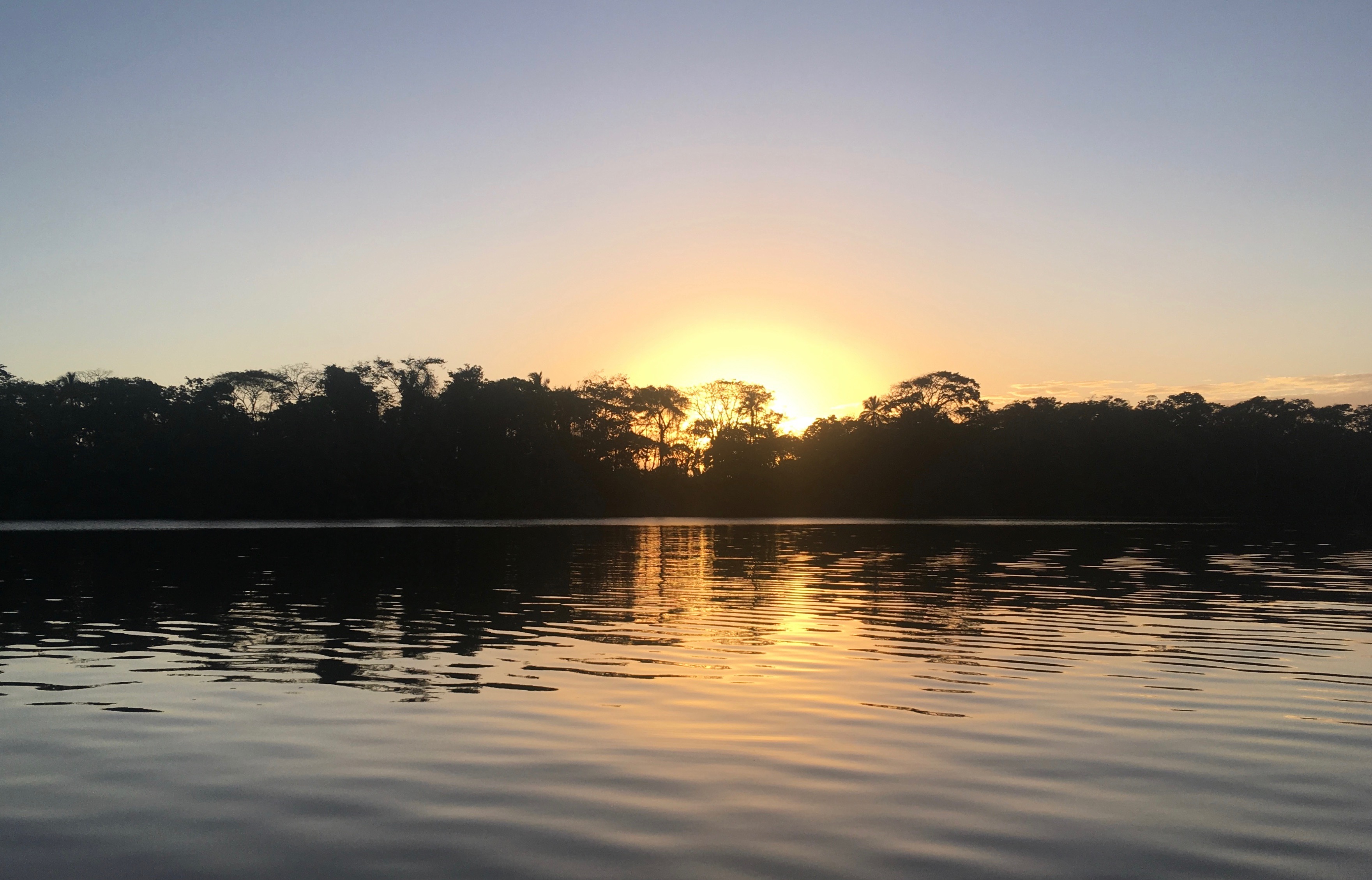
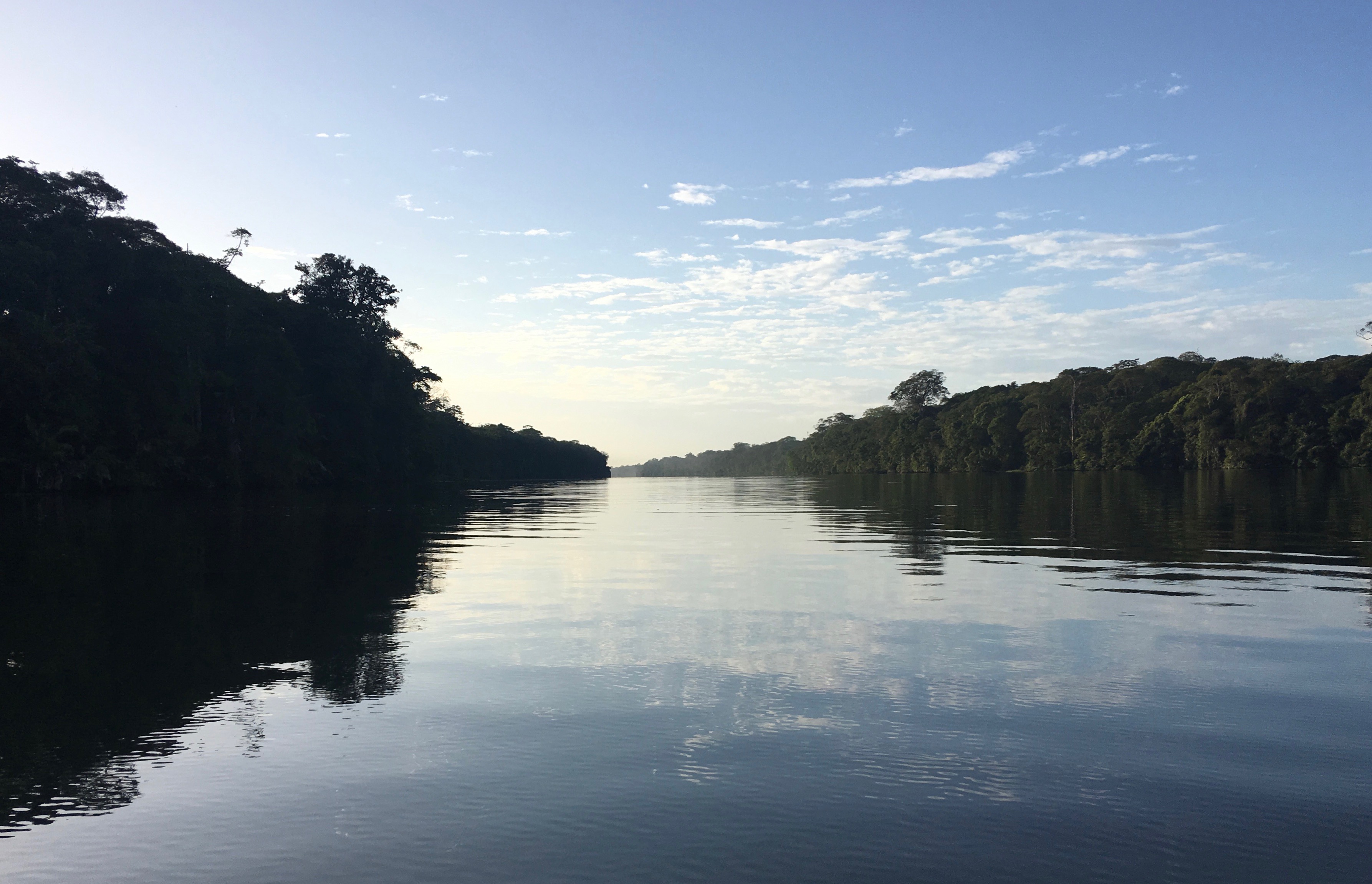
Sunrise over the Tortuguero river
The true beauty of the area can only be explored by boat. So it is that DonQui sets off at crack of dawn to experience the sights and sounds of the rainforest.
A boat trip into the rainforest
It is hard for DonQui to express in a few words the great beauty, rich vegetation and abundant wildlife he experienced in the couple of hours he spent exploring the area under the guidance of a highly knowledgeable local guide.
Into the rainforest
The vegetation alone was worth it but the sights and sounds of the birds, reptiles and animals made it even more special.
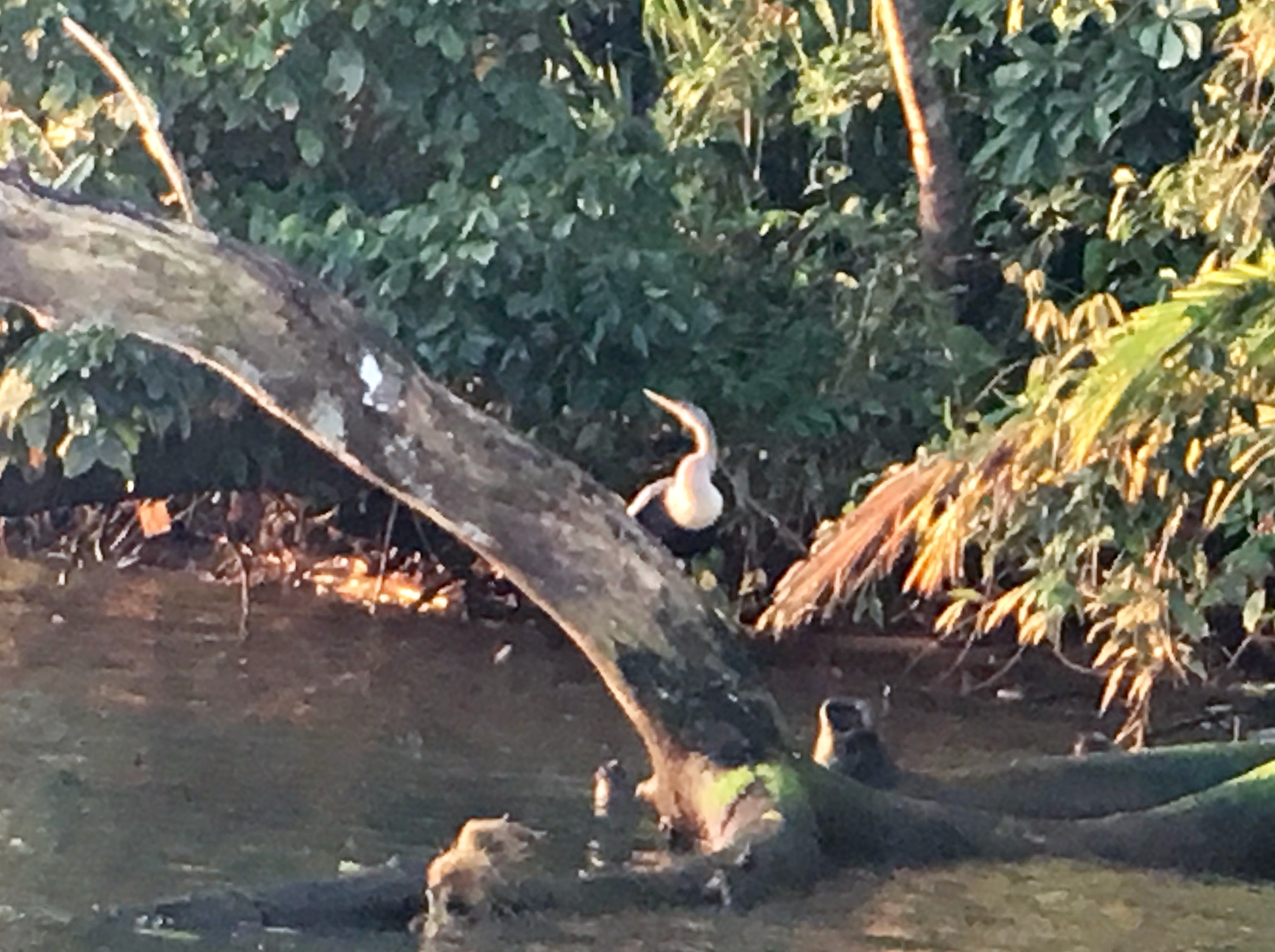
The birds are abundant and variedA cayman pokes his eye above the water
DonQui sees a huge variety of wildlife including howler and spider monkeys, turtles, a three toed sloth, caymans, herons snd many other birds
One of the many intriguing waterways to explore
Water is the best way to explore but behind the Tortuga Lodge there are a number of trails that invite exploration.
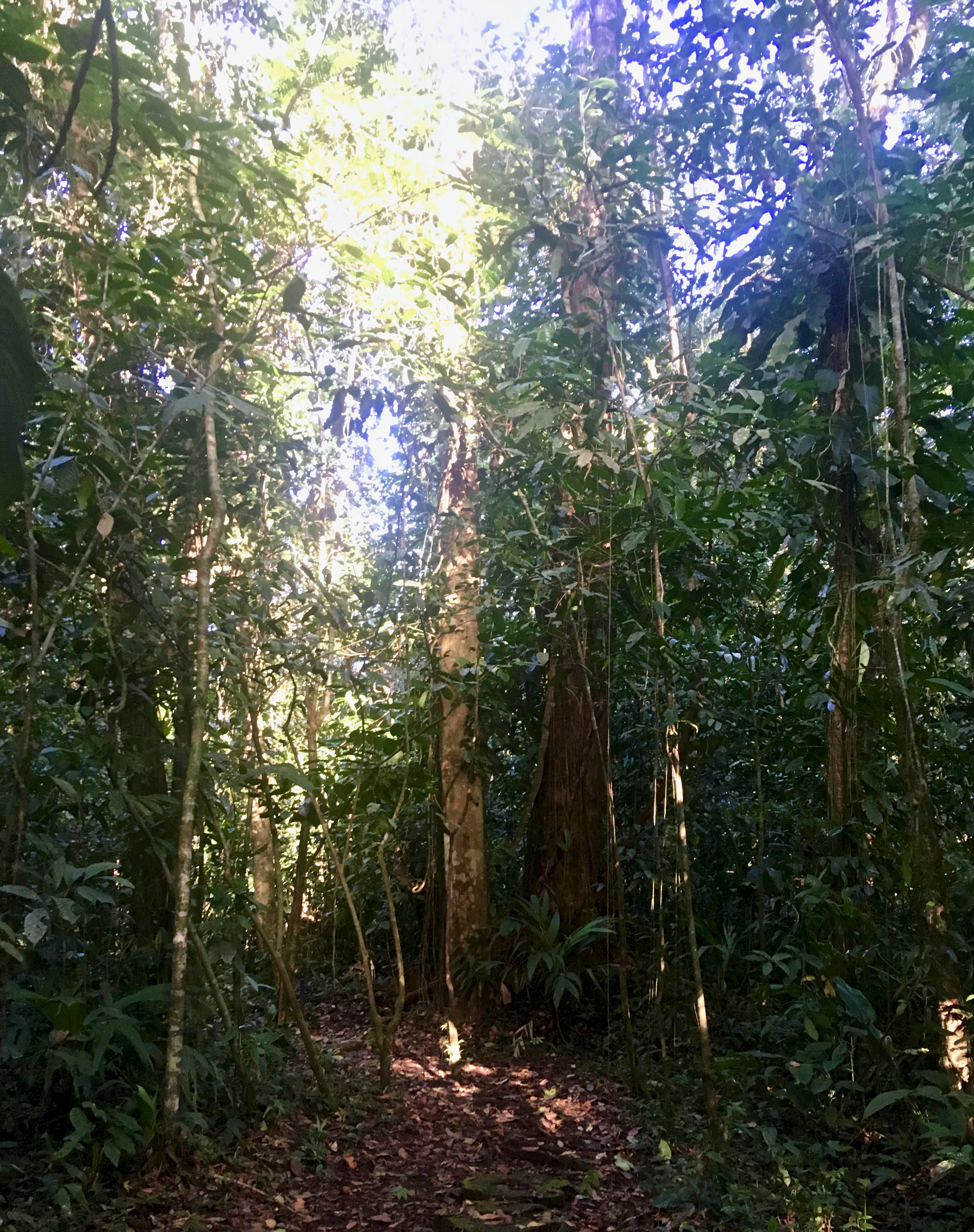
A trail through the forest
A walk along the forest trail is muddy. There is a clue in the name of ‘rainforest’. It rains a lot and the ground is always soggy even after several days without rain. DonQui does not see as much wildlife on his walk as he does on his boat tour but the atmosphere is hard to beat. He can hear howler monkeys in the distance and sees a number of colourful frogs.
The trees are filled with birdlife
The grounds around the lodge are incredibly beautiful. Toucans, parrots and monkeys are often seen.
An Iguana sunning himself by the river.
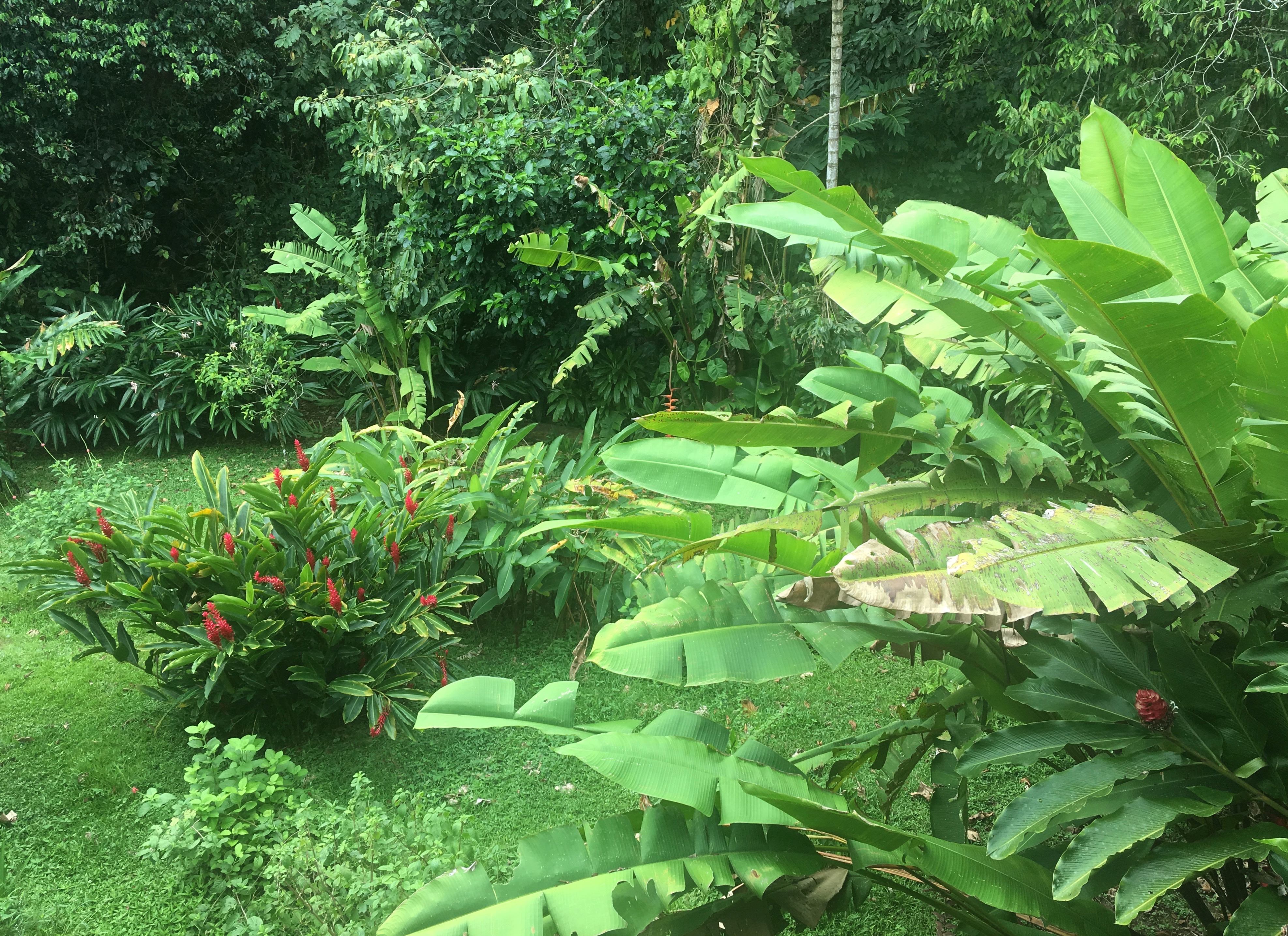
The grounds are beutiful
The grounds of the Tortuga Lodge and Gardens
DonQui always feels that he is part of the forest even when he is enjoying the civilised surroundings of the Lodge.
The dining area
Meals are served on an atmospheric dining area overlooking the river. Menu choices are relatively limited as food has to be flown in.
Seafood rice
After a few days the simple menu begins to grow a bit thin but the seafood rice is DonQui’s favourite staple.
Tortuguero river
So is Tortuguero worth a visit?
Absolutely yes, according to DonQui.
If you like nature, enjoy tranquility then there are probably few places than can beat it. In late summer/early autumn one can also witness the turtle nesting which gives the place its name.


















 donquiblog