DonQui could quite happily have spent another day in Verona but he must be on his way to the south of France.
It is a long journey first through the flat fields of Lombardy and then into the Ligurian alps. He decides to break his trip with an overnight stay in Genoa.
Genoa is perhaps not the most exciting of cities but it is pleasant enough for a quick visit and it is about half way along his journey. DonQui spends an enjoyable afternoon trotting around the streets before stopping for an aperitivo to watch the evening passeggiata.
Then he has his last meal in Italy which includes a delightfully flavoursome tortelli with sea bass, clams and bottarga (cured, dried fish roe). The bottarga adds a taste not dissimilar from parmesan cheese.
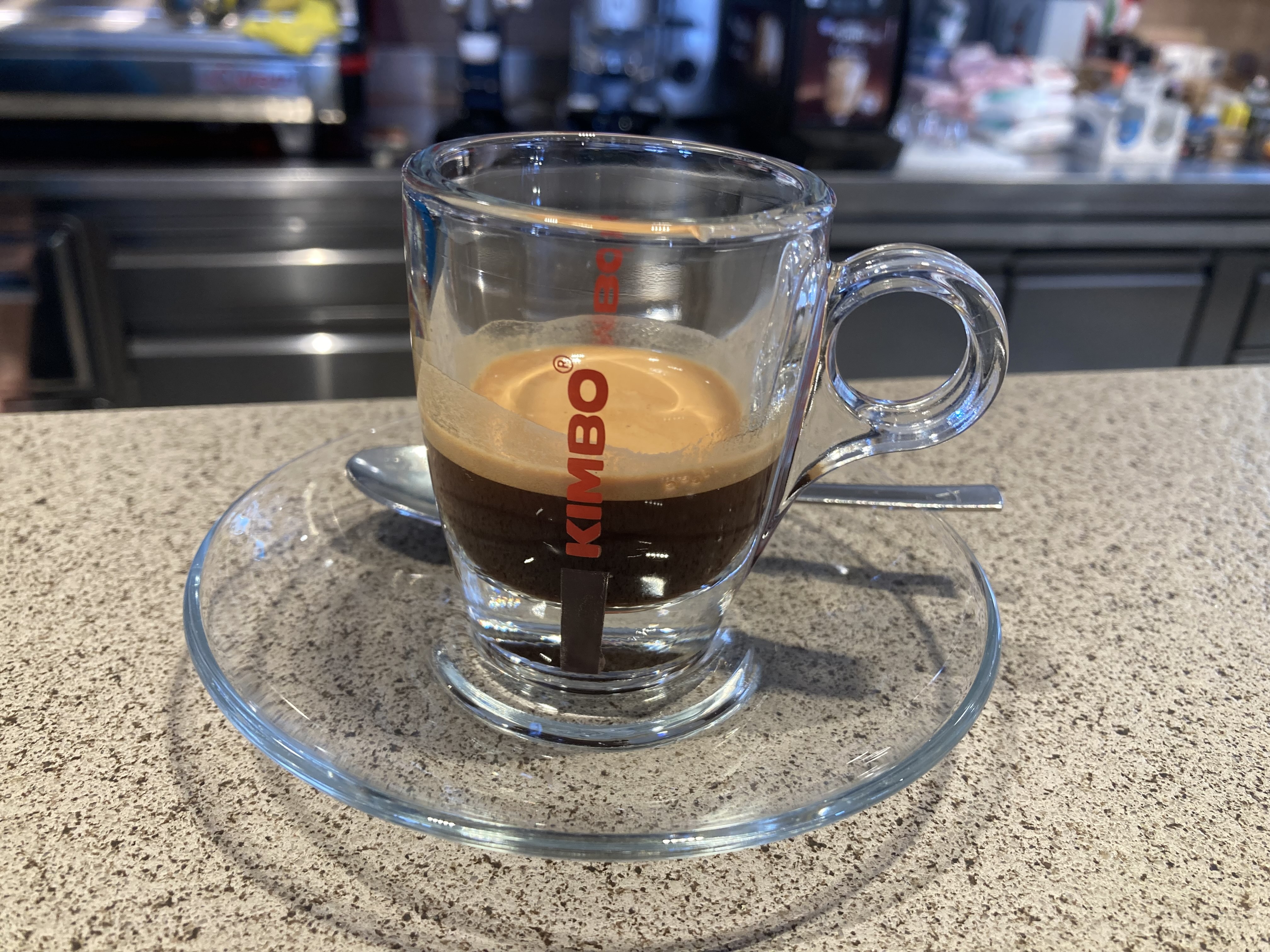
His car fuelled with petrol and his body fuelled with super concentrated Italian coffee, DonQui continues his journey the following morning. His route takes him along the coastal road that winds its way through the Ligurian alps and then the French alpes maritimes.
Reaching Monaco at around lunch time he makes a brief pit stop.
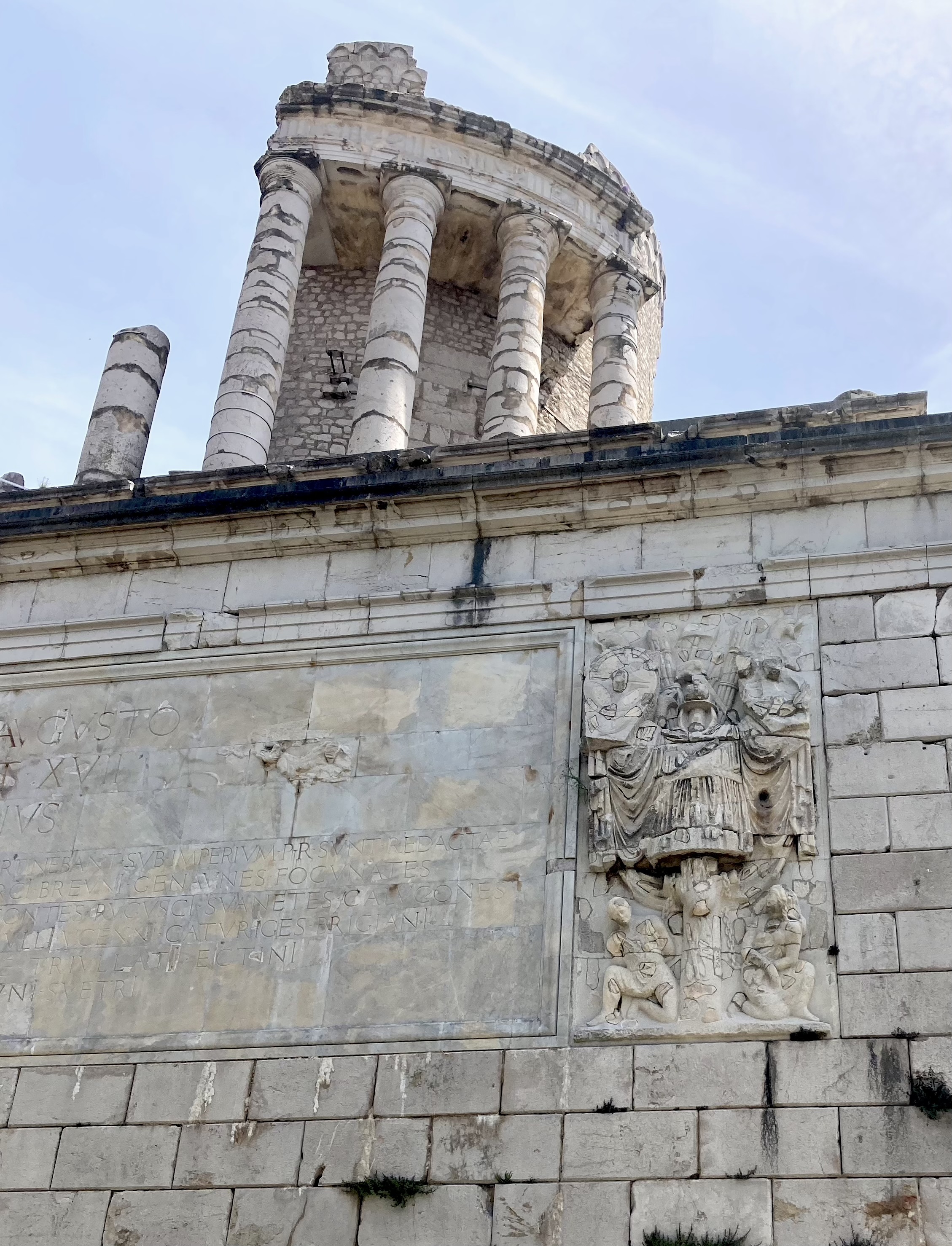
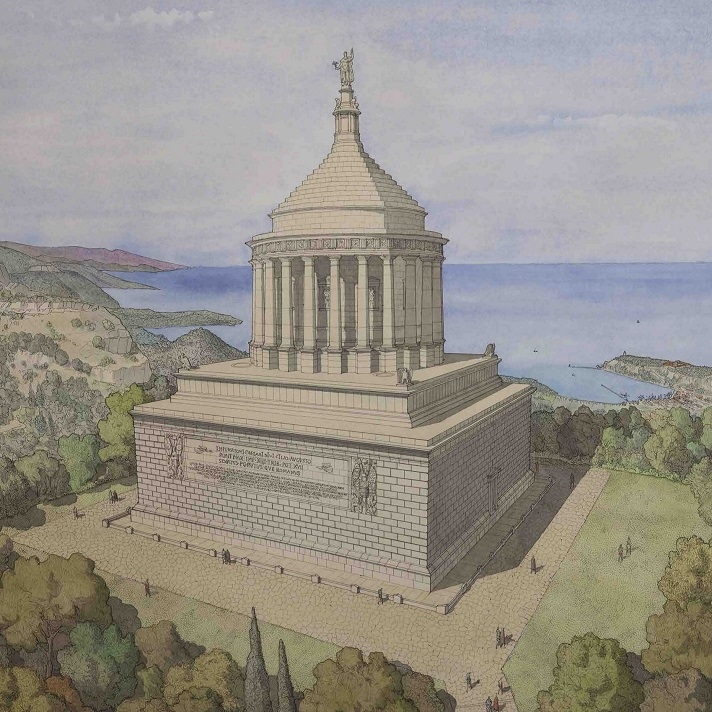
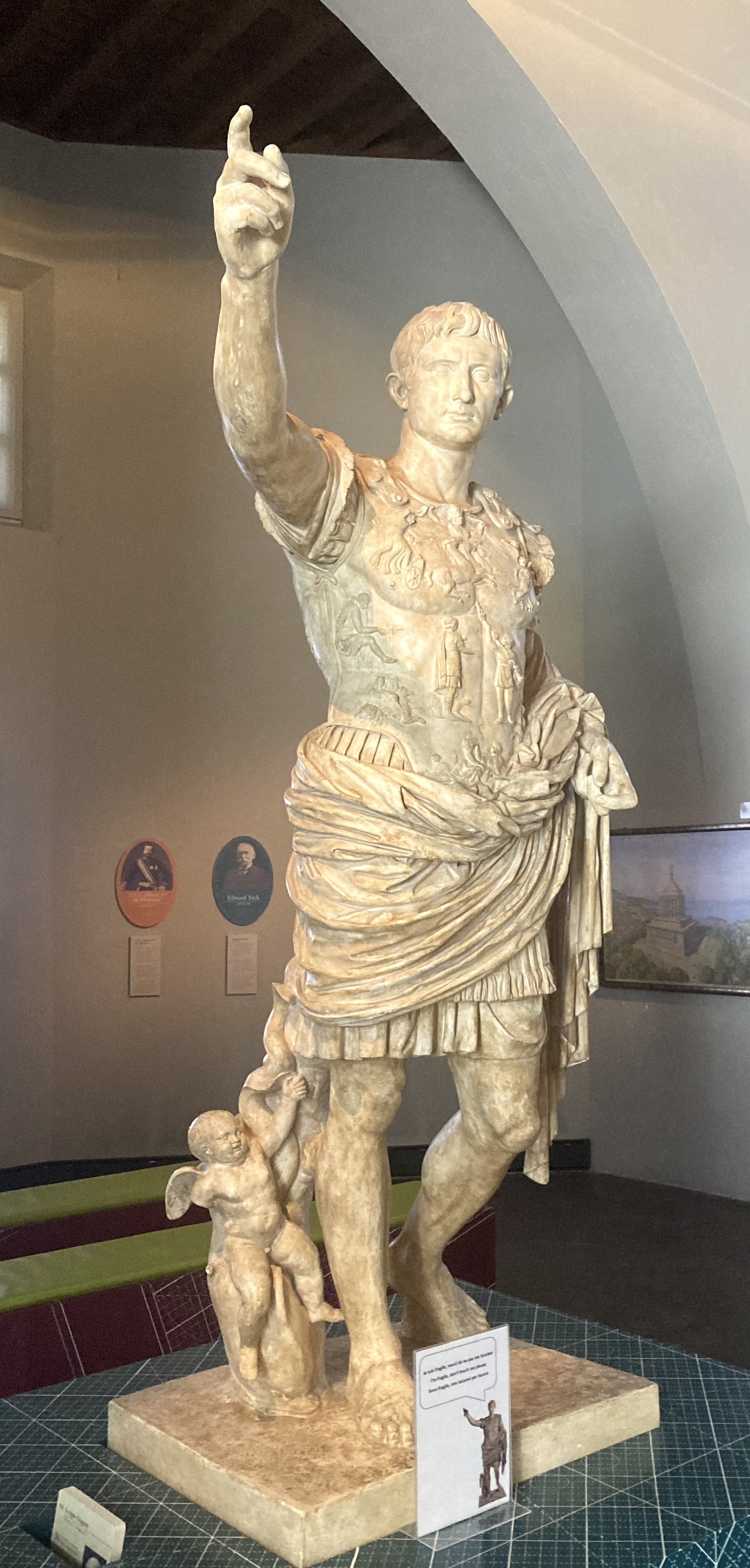
Then he heads up the small winding road to La Turbie to visit the massive ‘Augustus Trophy’ (Tropaeum Alpium). Dominating the landscape for miles around, this monument was built between AD 14 and 27 to commemorate the subjugation of the last Gallic alpine tribes by the Romans.
It probably looked like this when first built.
A fine statue of Augustus, which was probably on the top of the monument, is now housed in a small museum.
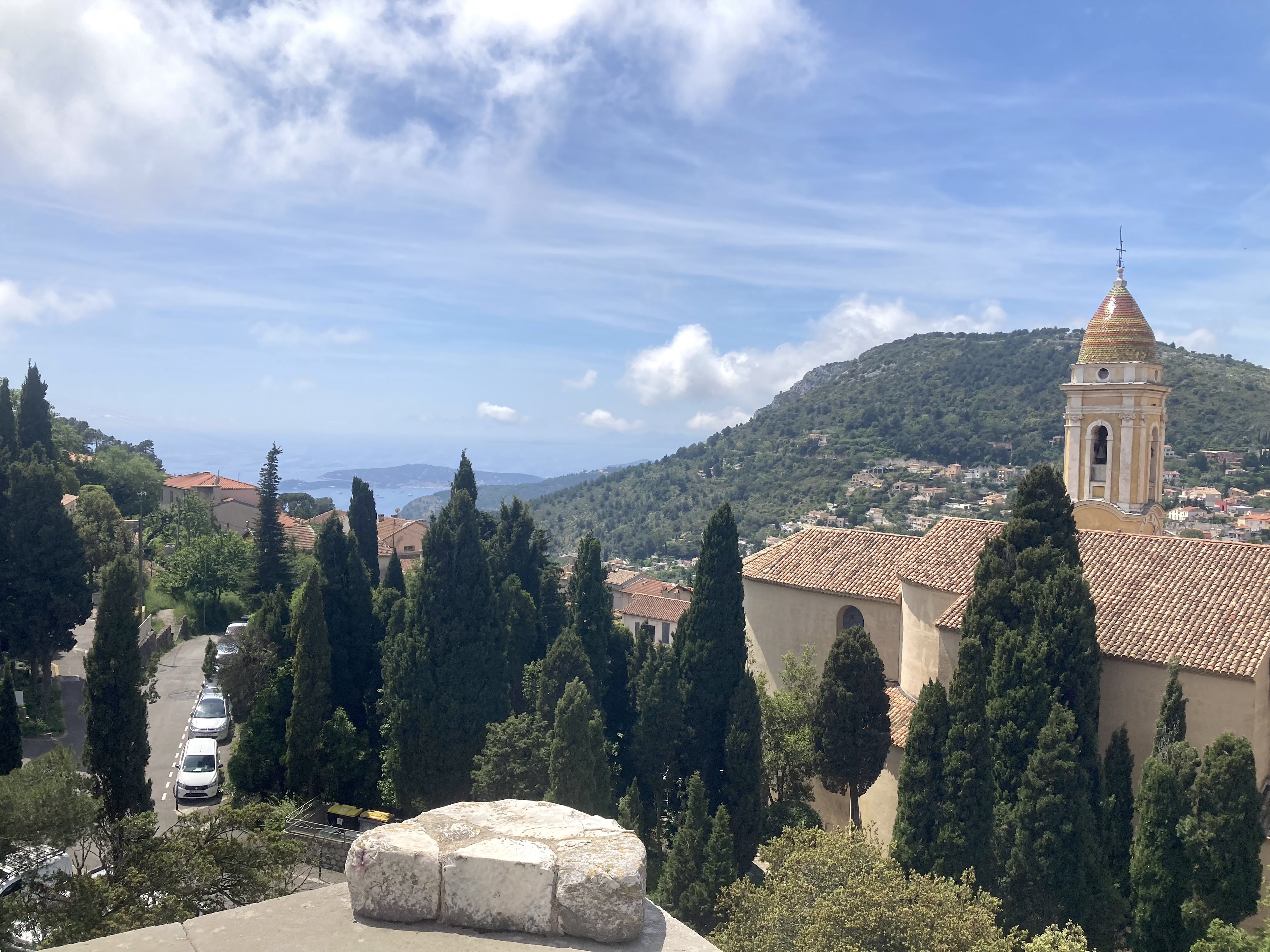
The views from the top are stunning.
Saying goodbye to Augustus, DonQui dives on along the Côte d’Azur to Arles where he shall be resting and exploring for the next couple of days.
Famous around the world as the setting for Shakespeare’s Romeo and Juliet, Verona is a wonderful place to spend a couple of days. Once you get through the ghastly industrial and commercial sprawl that blights the surroundings of most Italian cities — it is really stunningly beautiful.
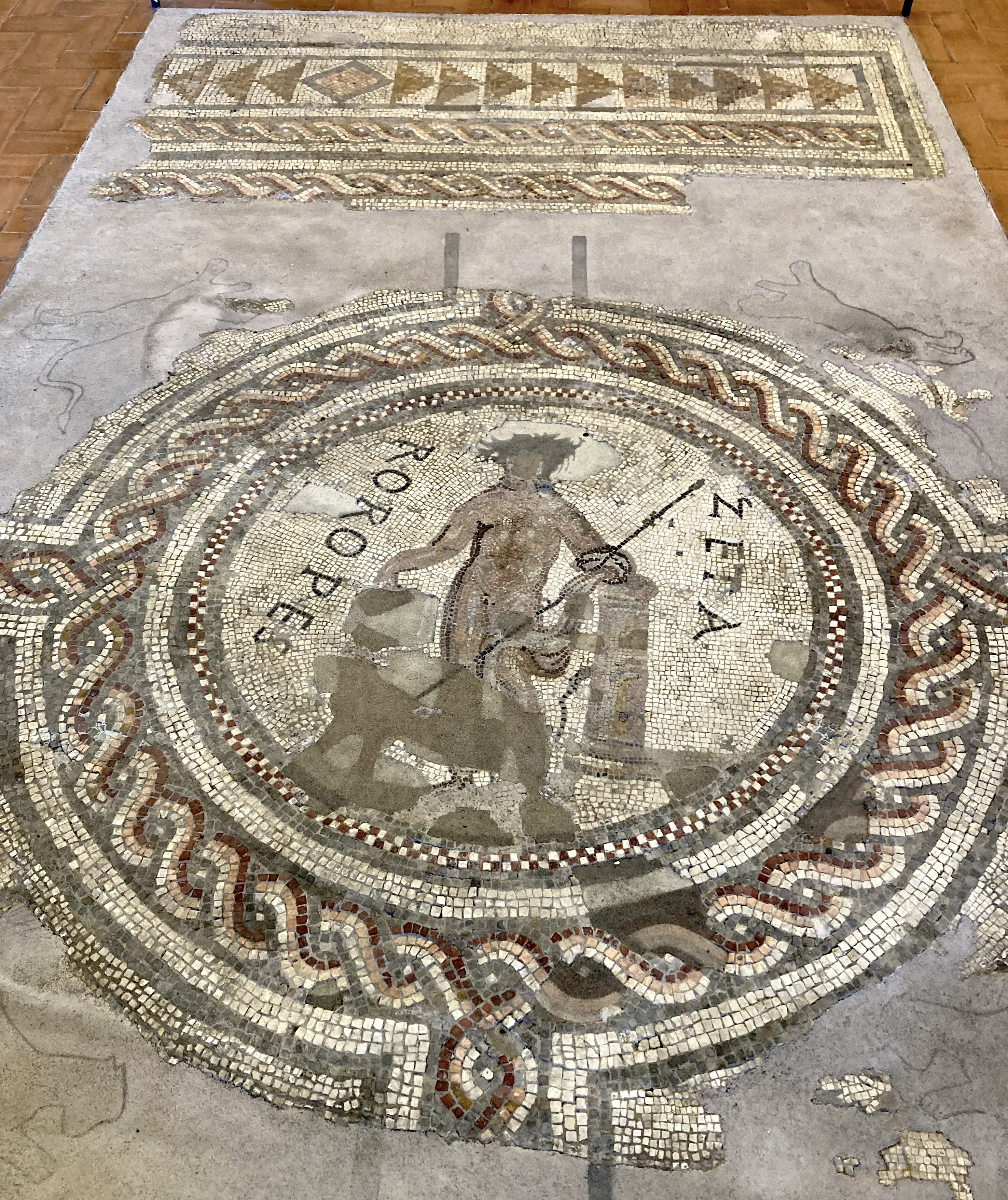
DonQui is a bit of a sucker for Roman stuff and Verona has some very good Roman stuff. So he hightails it over to the Roman amphitheatre and museum to get there just as the doors open. The amphitheatre is impressive but little museum does not have much of note apart from this nearly intact floor mosaic featuring Baccus — DonQui’s favourite deity by far.
At the other end of the old city is a nearly intact Roman arena. Both the amphitheatre and arena are still in use — hosting regular concerts.
The old city is compact and mostly pedestrianised. DonQui spends the better part of a very pleasant day trotting around the place and taking in the atmosphere.
Around midday the town has pretty well filled up with tourists (presumably day trippers as there were very few of them in the morning). So he takes shelter in a little bottega around the corner from the Roman arena to pay homage to Baccus. Here he spends a delightful hour with Bruno learning about the wines of Verona’s Valpolicella region.
Of course DonQui tastes some too — working his way from the relatively light twice-fermented Ripasso, up through the heady full bodied Amarone made from partially dried grapes, to the most ancient of the Valpolicella wines — the sweet Recioto which Bruno recommends having with cheese. Before getting into the Valpolicella DonQui also has a taste of a delightfully fresh and minerally white Lugano from the shores of nearby Lake Garda. Bruno explains that the retreating sea which created Lake Garda left salt deposits in the clay which gives Lugano wines their unique taste.
On less steady hooves than before, DonQui explores the delightful streets and squares a little longer.
Although not a great fan of churches he is most impressed with the 13th century church of San Pietro the Martyr.
He particularly admires the fantastic medieval art from the 14th and 15th centuries.
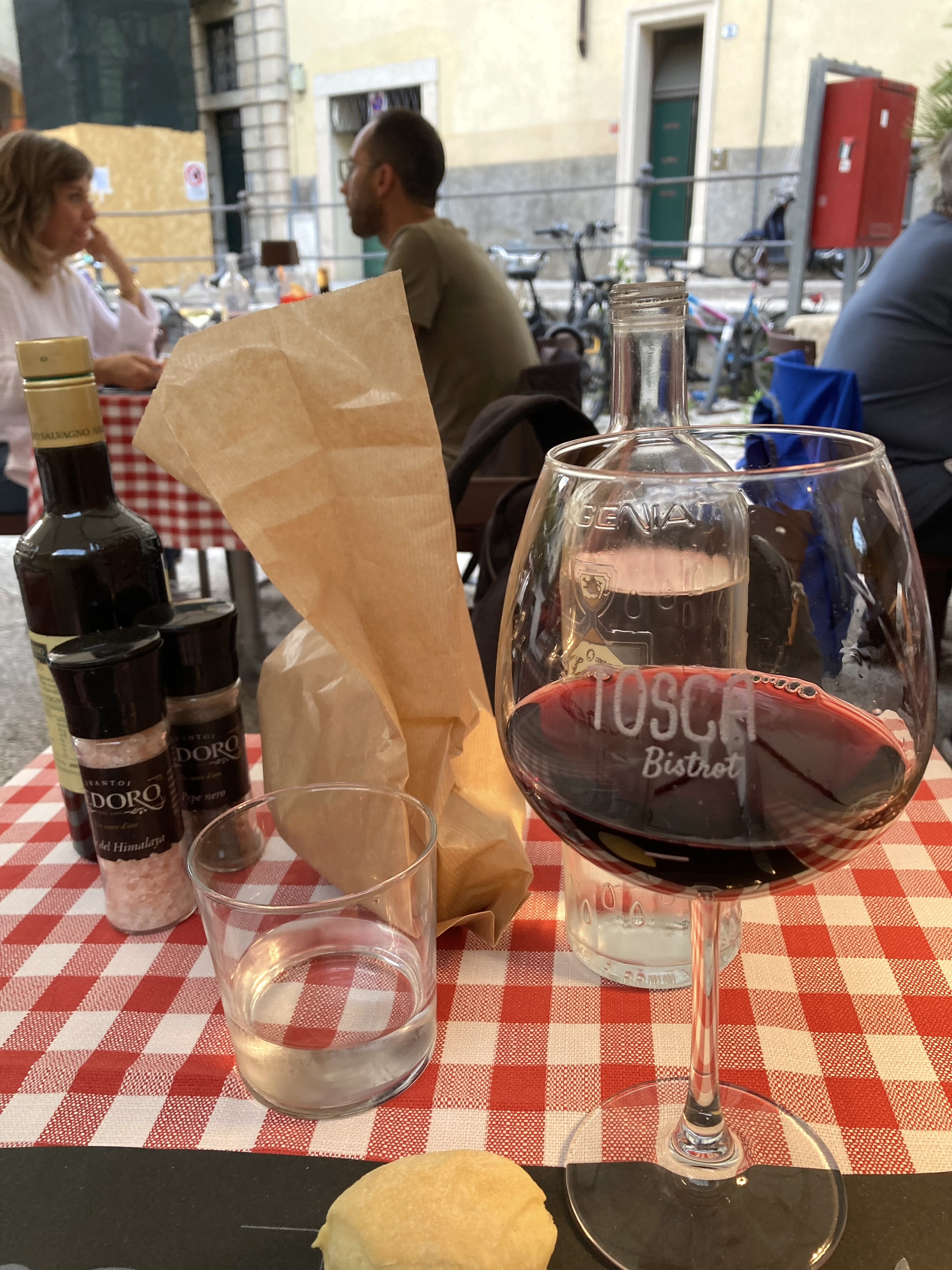
After a bit of a rest he heads out in the evening to taste some of the local specialties at the delightful Tosca Bistro.
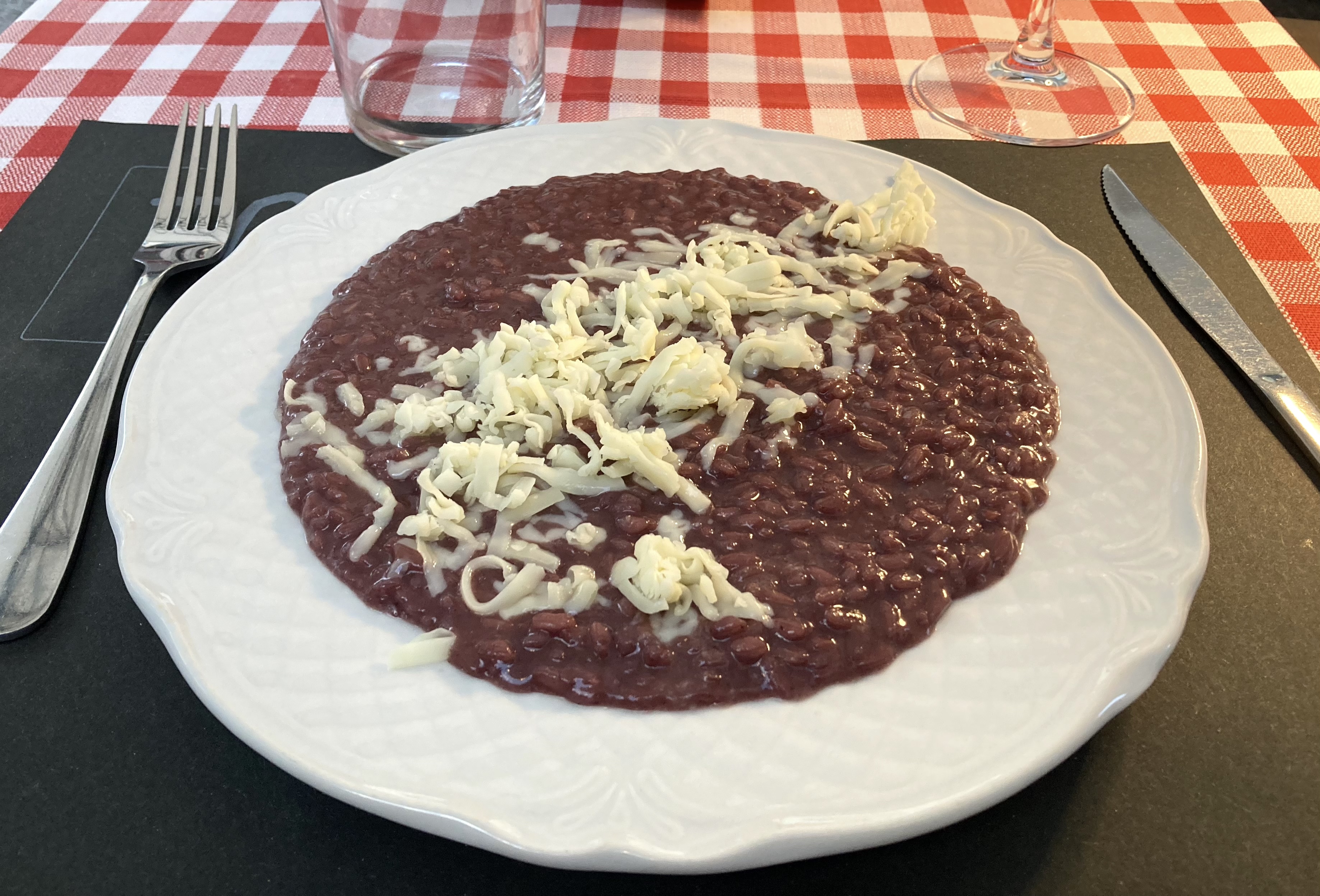
Here he samples an excellent risotto with Amarone, and horse meat stew with polenta. Both washed down with a glass of rich Amarone wine.
Tradition has it that the Veronese got a taste for eating horse after the battle between Theodoric and Odoacer in AD 489 which left large numbers of dead horses on the battlefield to provide an unexpected feast for the locals. The stew is rich, full of flavour and utterly delicious — it is something he will never be able to have in the UK.
Before resuming his journey the following morning, DonQui visits the reconstructed house of the Capuleti — better know as ‘Juliet’s house’ as the Shakespearian heroine was from the Capuleti family (anglicised to Capulet by the bard).
By arriving just after opening he is able to beat the hordes of tourists who were choking the place the previous afternoon. It is said that if you touch the statue of Juliet in the courtyard you will be lucky in love. DonQui does not bother as he is already lucky in that department.
DonQui is setting off to cross the Alps into Italy. He has done this before and it always feels like quite an adventure passing through the magnificent natural barrier that separates Italy from Northern Europe. His route passes through a bit of Austria then into Switzerland. This means he has to purchase road tax vignettes for both Austria and Switzerland which is mildly annoying especially as he will only be in Austria for ½ hour or so. At least Austria offers a cut price 10 day vignette!
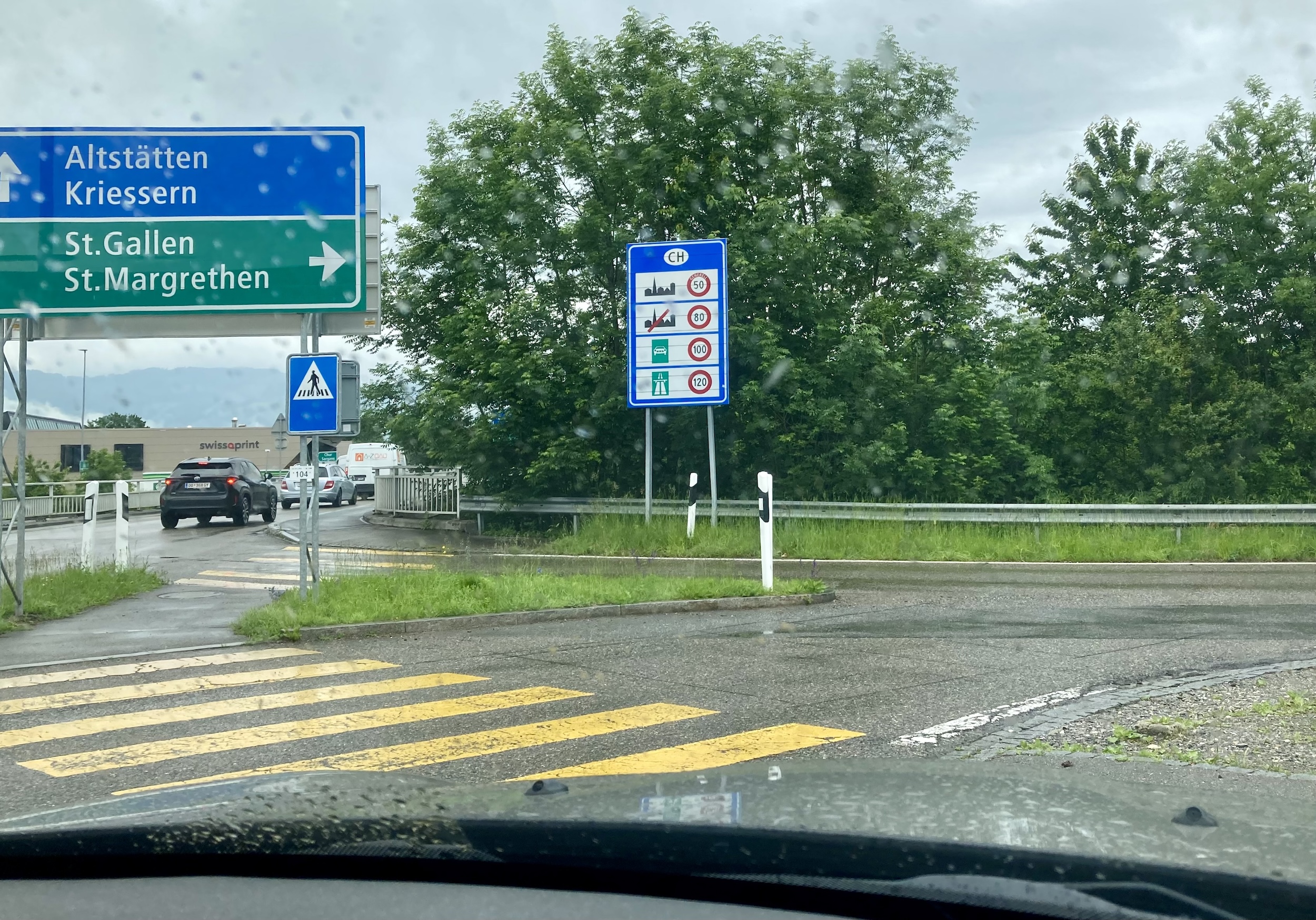
His plans nearly come asunder in the no-mans land between Austria and Switzerland. As Switzerland is not in the EU there are border controls.
DonQui shows his passport to the efficient Swiss border police. Then they ask for his car papers. The papers don’t seem to satisfy them so they direct him to pull over to the side. They want the ‘brown car ownership form’. Not having such a form nor ever having heard of one, DonQui does his best to show everything else he has including car insurance certificate, driving license and proof of having paid the Swiss road tax. After much toing and froing, furrowed brows and consultation with head office they finally let DonQui through after he tells them he is only transiting through Switzerland into Italy.
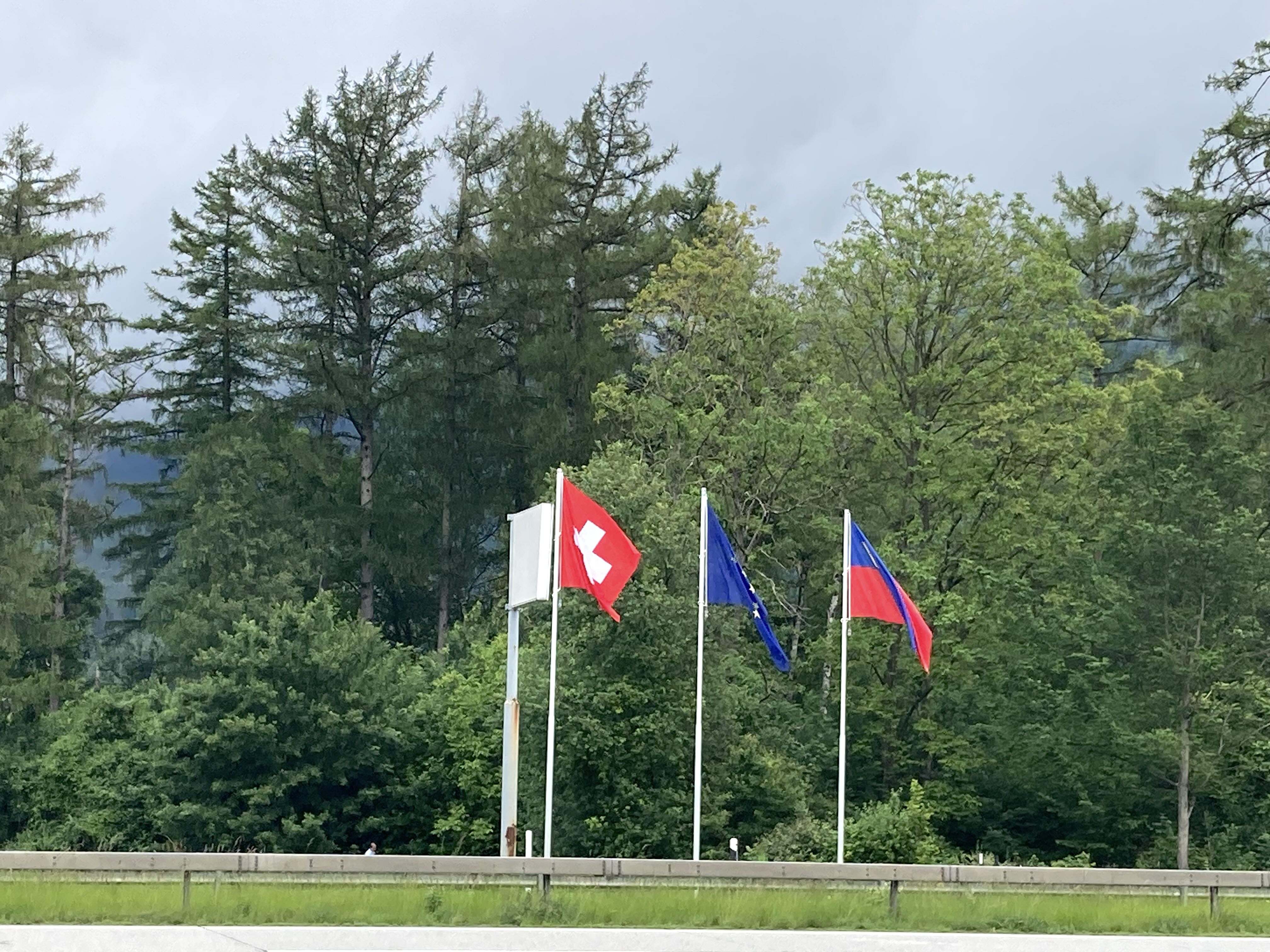
More than a little relieved DonQui is on his way again. He makes a brief pit stop in Liechtenstein just for the fun of it.
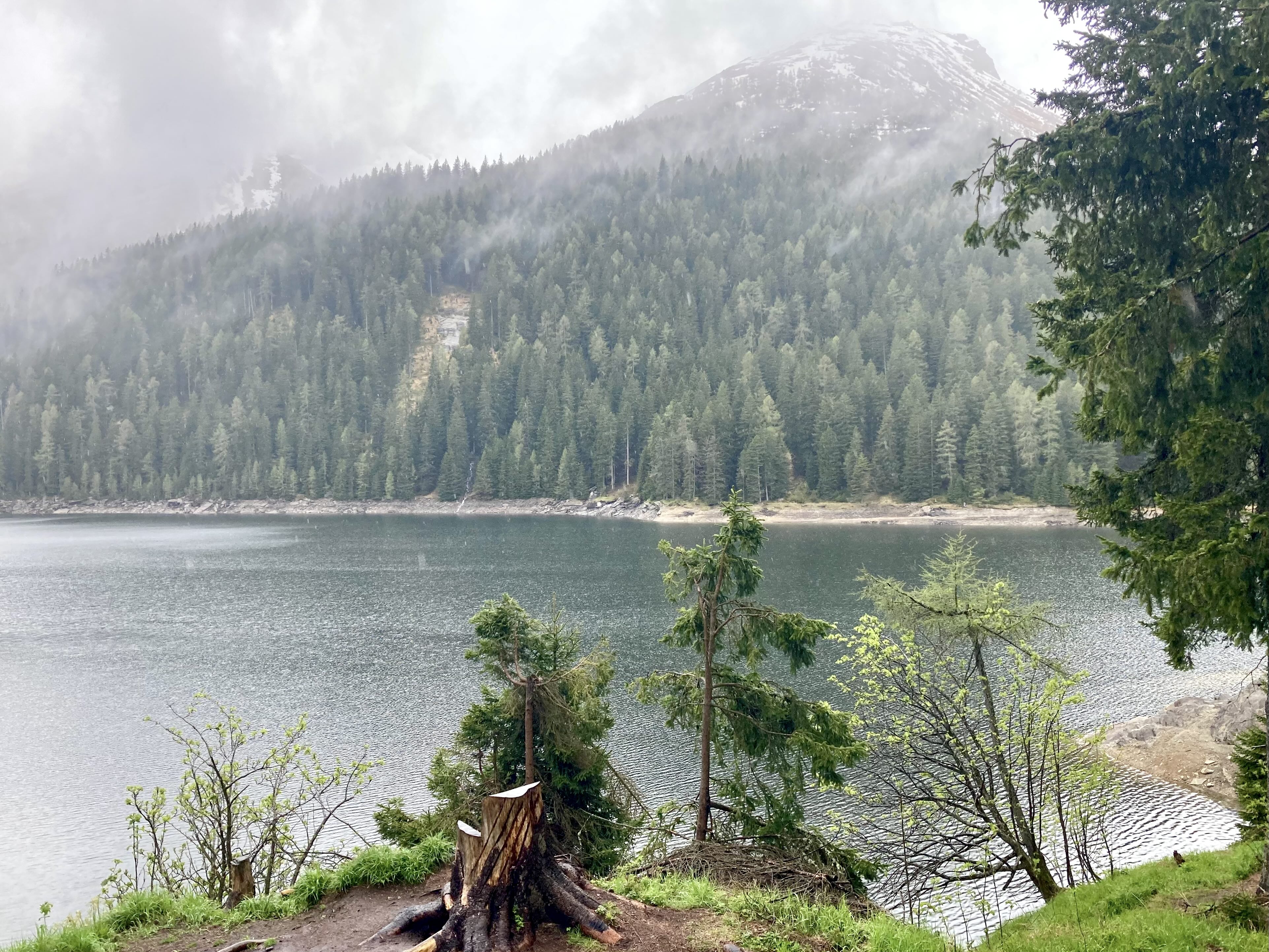
Driving through magnificent Alpine scenery he is heading towards the San Bernardino Pass at over 2000m above sea level.
The pass marks the Italo-German language frontier. Although still in Switzerland, once on the other side, all signs are in Italian rather than German as they had been before. Then the road makes a rapid descent towards the border.
As he approaches the Italian frontier DonQui has a nervous thought. What if the Italian authorities also want this mysterious ‘brown form’ and don’t let him in? Will he then be stuck in Switzerland? He need not have worried. The friendly, if perhaps not as efficient, Italian border police give him a smile and wave him on his way with no fuss at all.
It takes DonQui about four hours to pass through five countries: from Germany, through Austria, Liechtenstein, and Switzerland into Italy. There he takes a much needed break for a proper Italian coffee — a delicious shot of thick, syrupy, pure caffeine. It is a good job he does, as the next 3 hours (which should have taken 2) are along the Autostrade around Milan, choked with lorries and moving at a snail’s pace. To top it off the heavens open up with a torrential downpour!
Feeling a little bedraggled DonQui is delighted to finally arrive at his pleasant lodging in Verona. To further improve his mood the weather clears. So he resolves to take an aperitivo on the balcony of his apartment.
Continuing his exploration of Sicilian food, DonQui Oaty turns his attention to olives, the second most important staple of Sicilian cuisine (after wine!).
Olive grove in an ancient Greek quarry
The olive trees at Casa di Latomie near Castelvetranto on the west of the island, are rooted in the limestone of an ancient Greek quarry. They derive much of their flavour and nutrients from it. They are picked by hand from in order to ensure the careful selection of high quality olives.
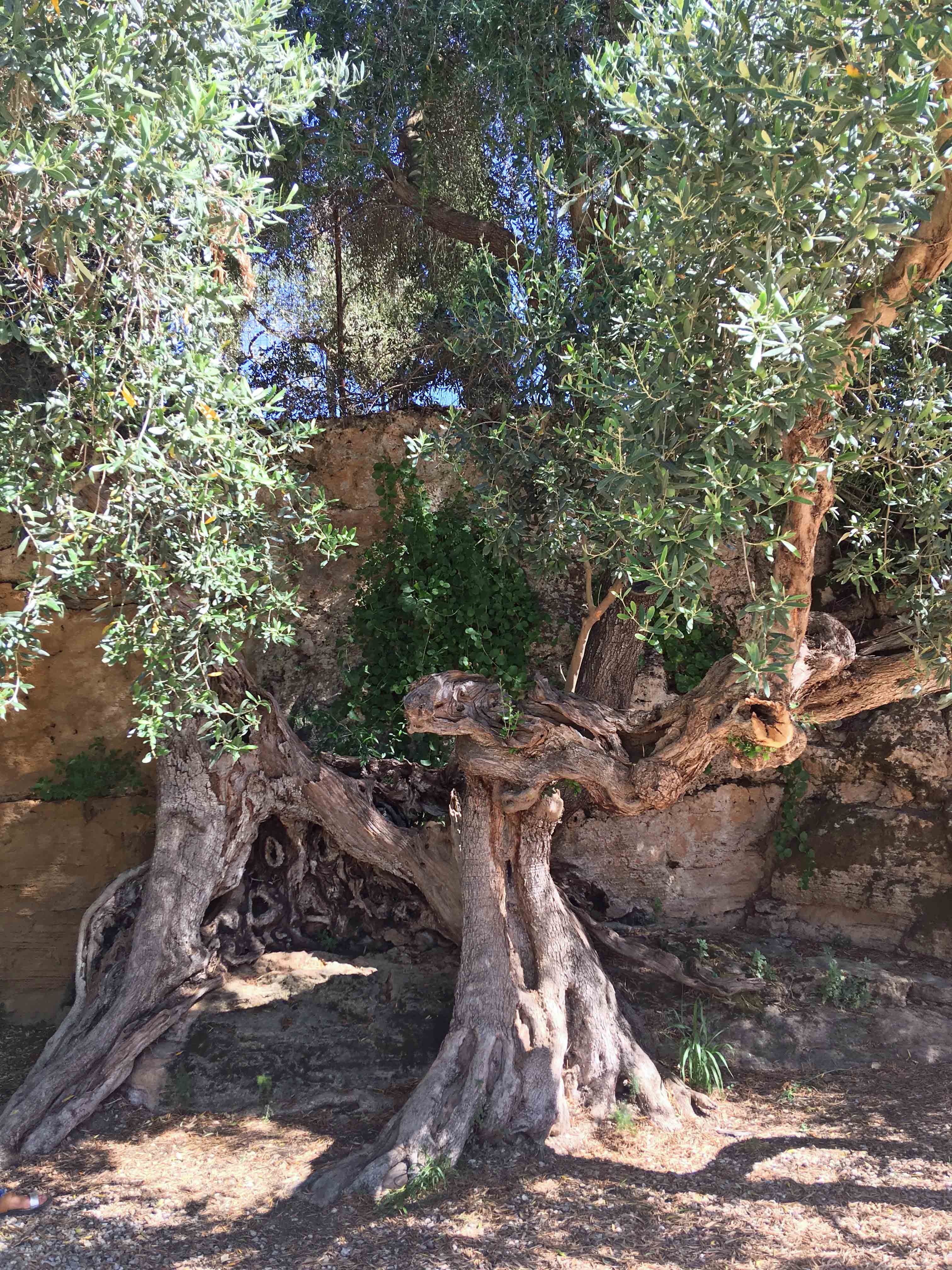
1200 year old olive tree
DonQui is introduced to the great-grandfather of the olive trees. 1200 years old, this tree was a sapling when the Arabs took Sicily from the East Romans and grew into maturity when the Normans came. It is still producing fruit.
Oil and tapenade with tumminia bread
The olives, the oil and tapenade that DonQui samples are utterly delicious. The tapenade is served on crusty rustic bread made from tumminia flour. This ancient grain has a delectable nutty taste and is unique to Sicily.
Animals are rarely seen in the fields of Sicily
Meat does not feature much in Sicilian cuisine. Milk and butter are noticeable only by their absence. Olive groves and vineyards dominate the landscape and, apart from a few sheep and and the odd cow or two, DonQui does not see any animals in the fields.
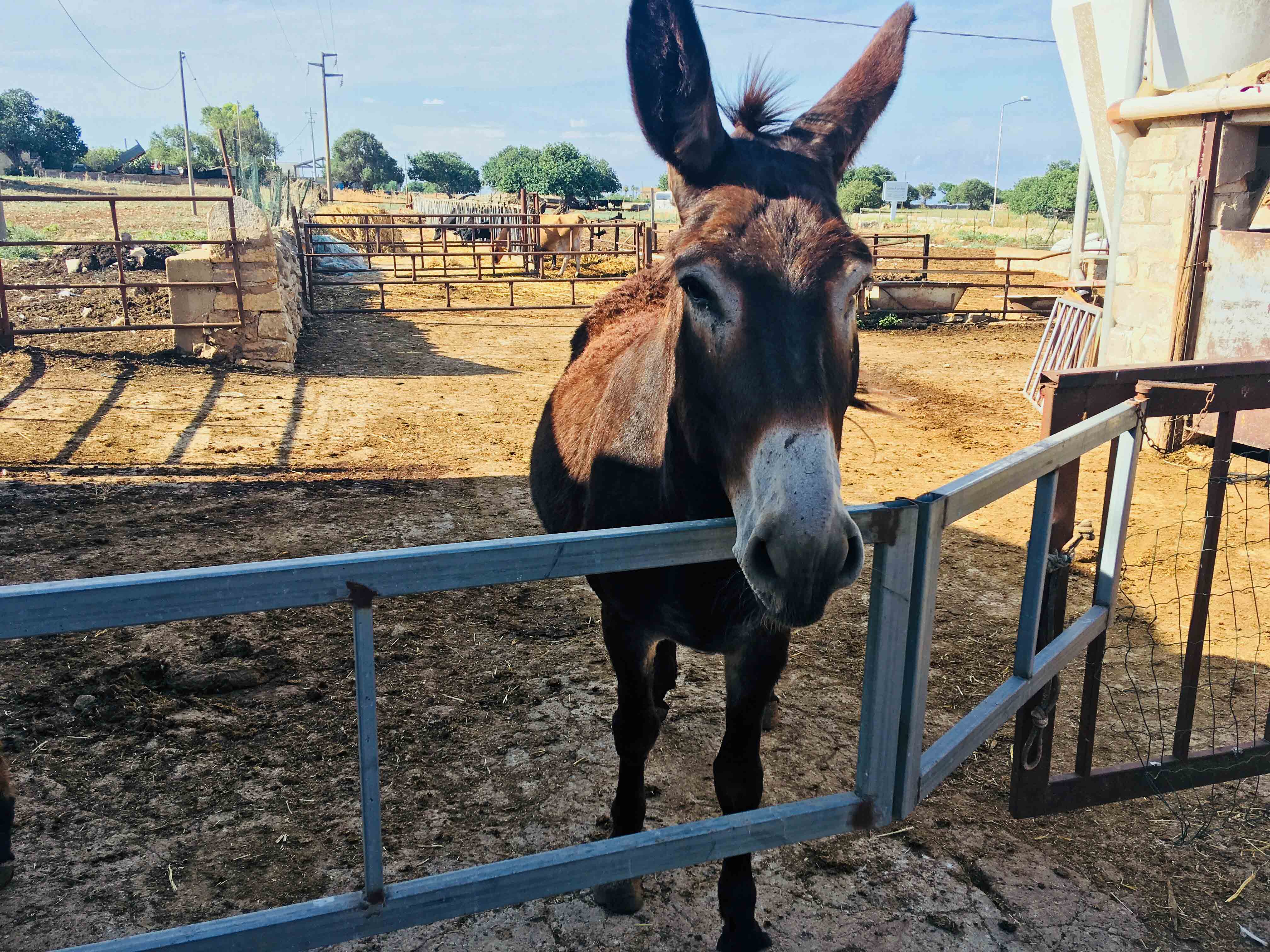
DonQui’s Sicilian cousin
Livestock is mostly important for cheese. At La Masseria dairy, near Ragusa, DonQui encounters a whole menagerie including a distant Sicilian cousin.
Shaping the cheese
At the dairy DonQui learns how caciocavallo is made. This a semi-hard cow’s milk cheese is quite mild.Sicilians prefer to use it rather than northern Italian parmesan on their pasta.
A selection of medium-aged and mature caciocavallo
DonQui finds it pleasant enough but a bit too bland to get excited about.
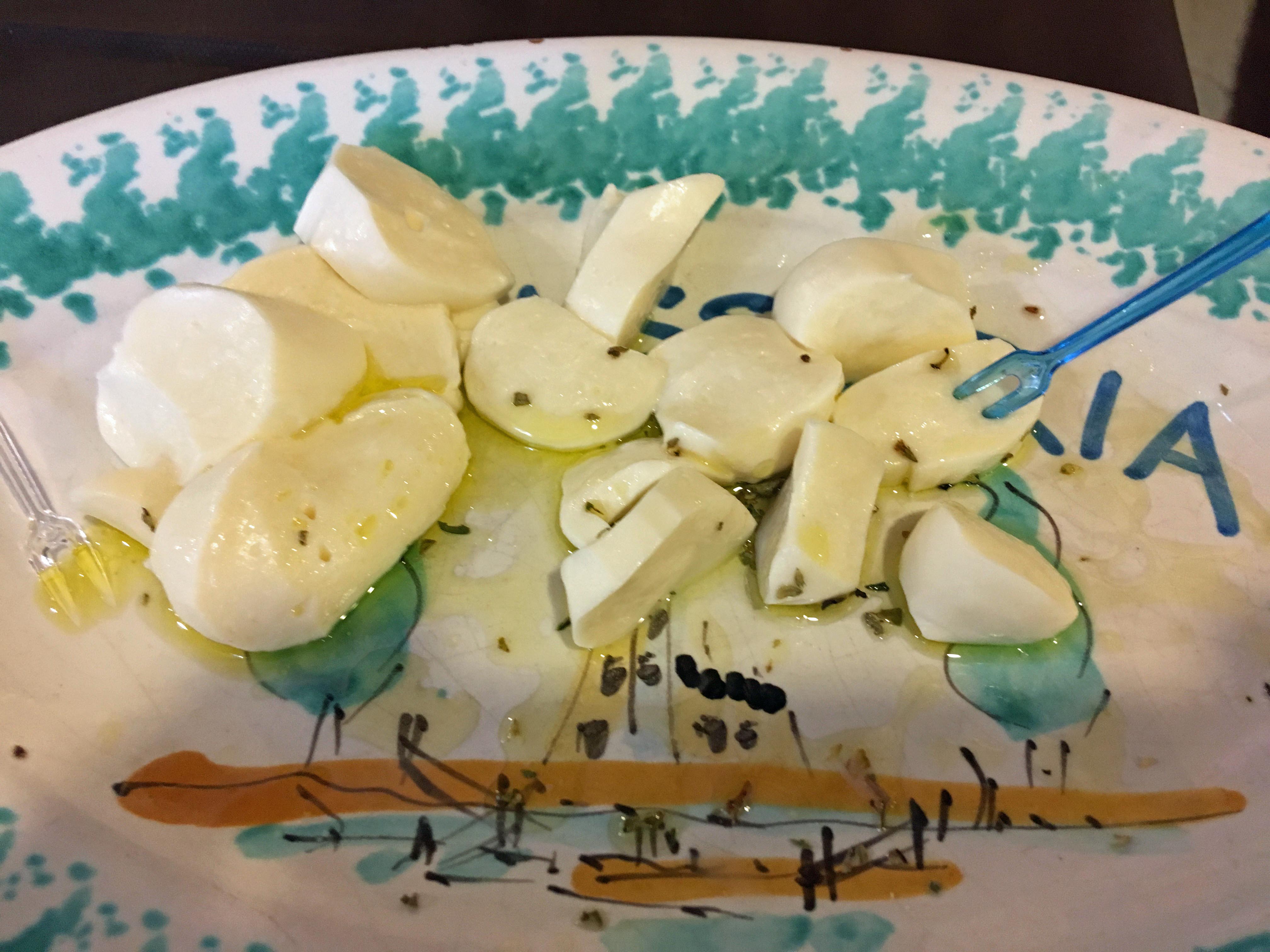
Fresh caciocavallo
He does rather like the fresh version which has not been aged and is served with olive oil and herbs. It is a bit like mozzarella but slightly firmer
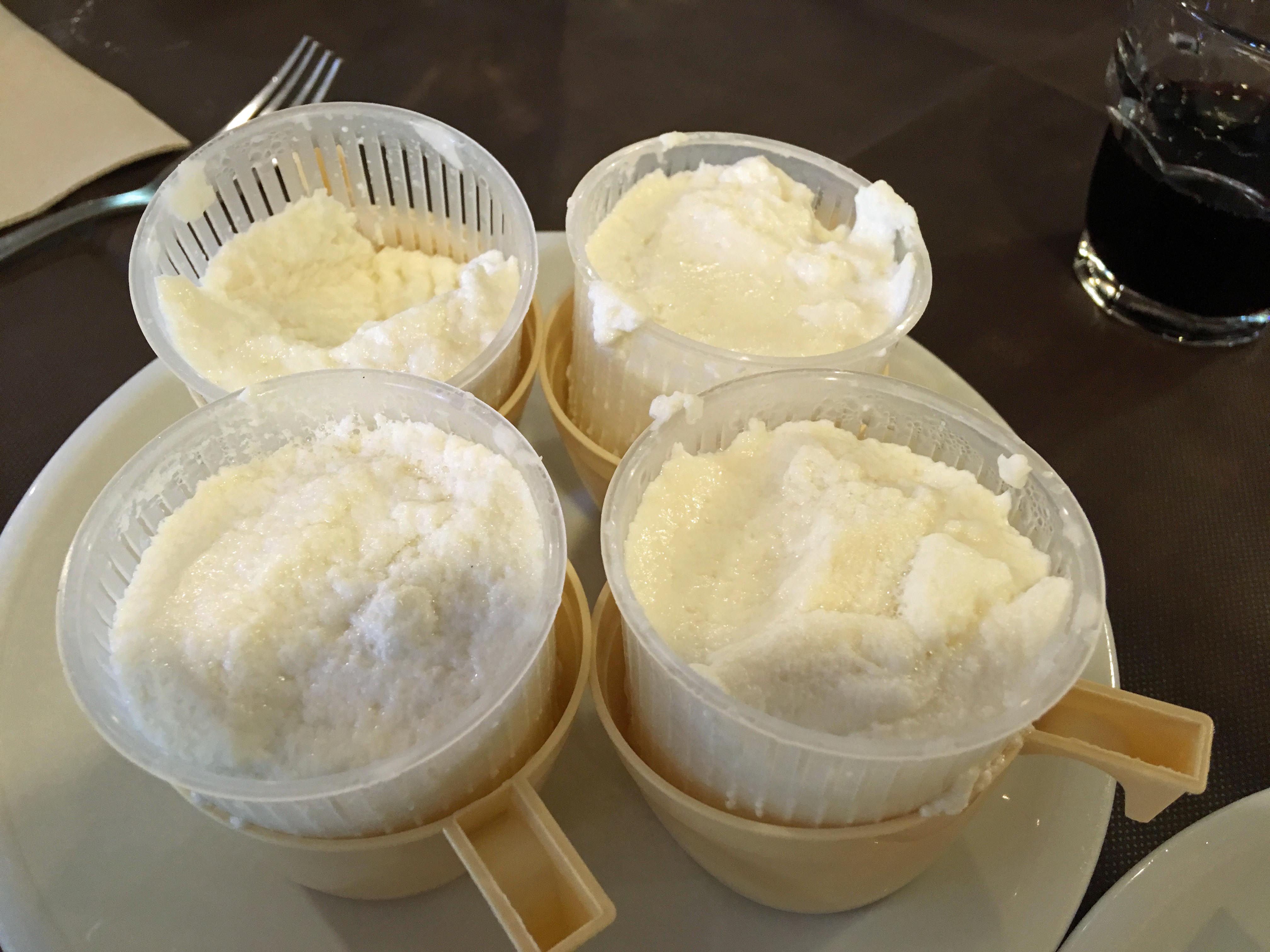
Fresh ricotta
The curds are made into a delicious ricotta. The taste is vastly superior to any ricotta DonQui has tasted at home in England.
The most wonderful cannoli
Sweetened ricotta is the filling for cannoli. These ones also have a few chocolate chips in them and they taste fabulous.
Since Roman times Sicily has been the bread-basket of Italy. The industrial revolution passed by the island without stopping. The result today is an agricultural landscape of small family farms abundant with vines, olives, almonds, lemons, oranges and grain. These together with cheese from livestock and fish from the sea have produced a delectable and healthy cuisine that harks back to the days of the Greeks, Carthaginians, Romans and Arabs.
In order to more fully appreciate Sicilian cuisine, DonQui Oaty is spending a bit of time exploring its sources. He starts with wine.
The sweet fortified wines from Marsala on the west of the island were made famous in northern Europe by the English in the 18th century.
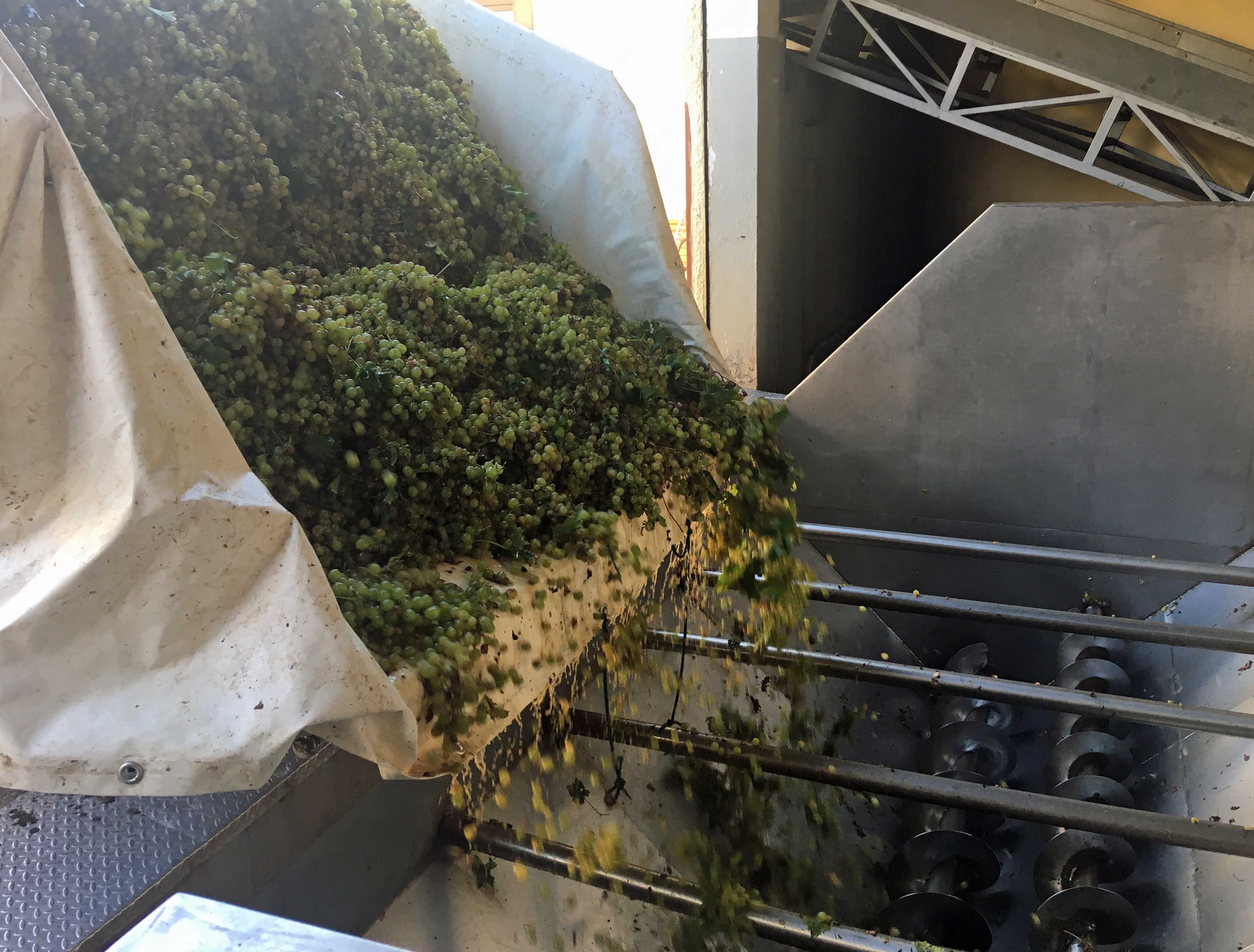
At the Alagana winery DonQui has the opportunity to see the grapes being delivered from the surrounding vineyards to make this most well known of Sicilian wines.
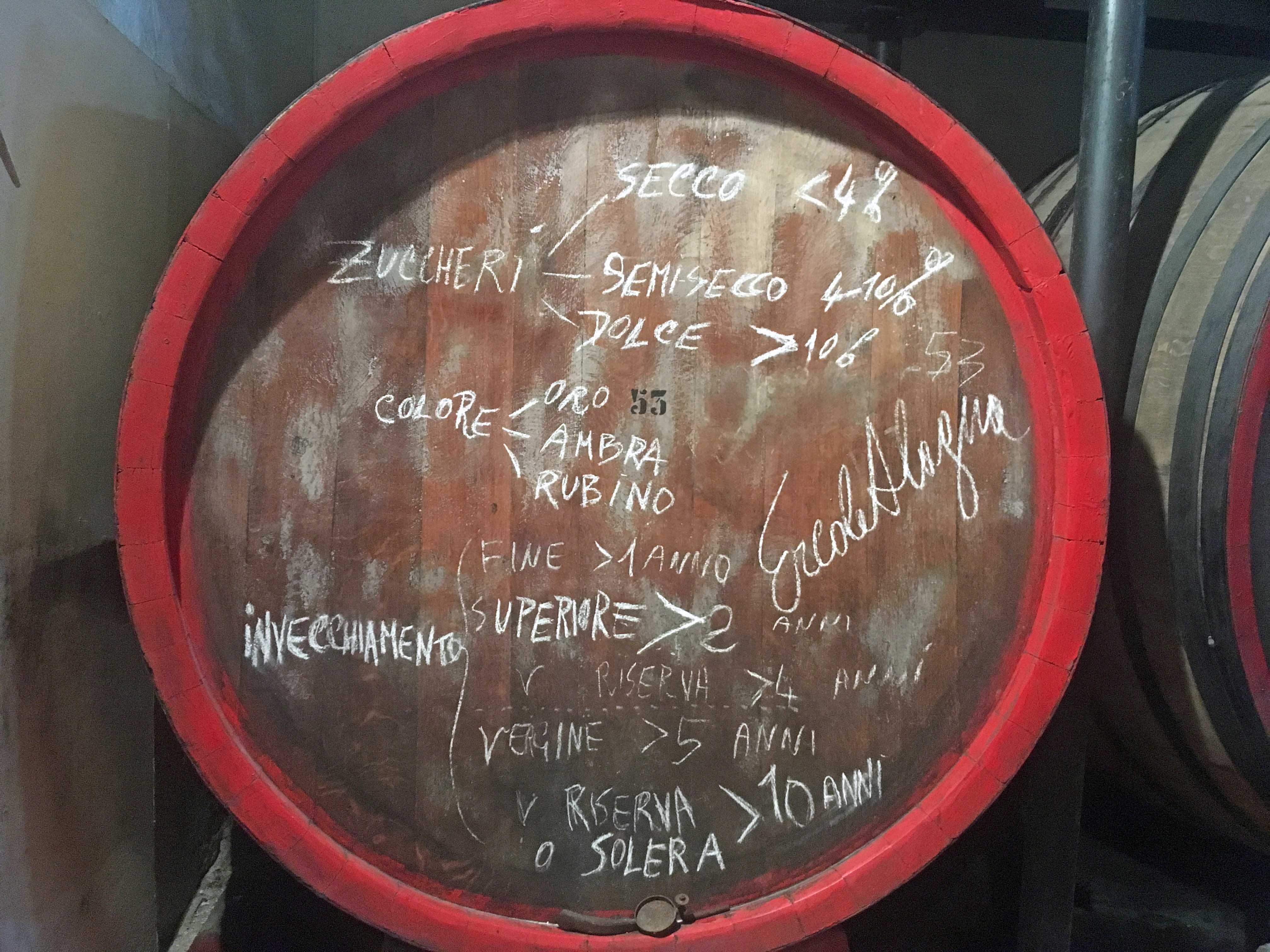
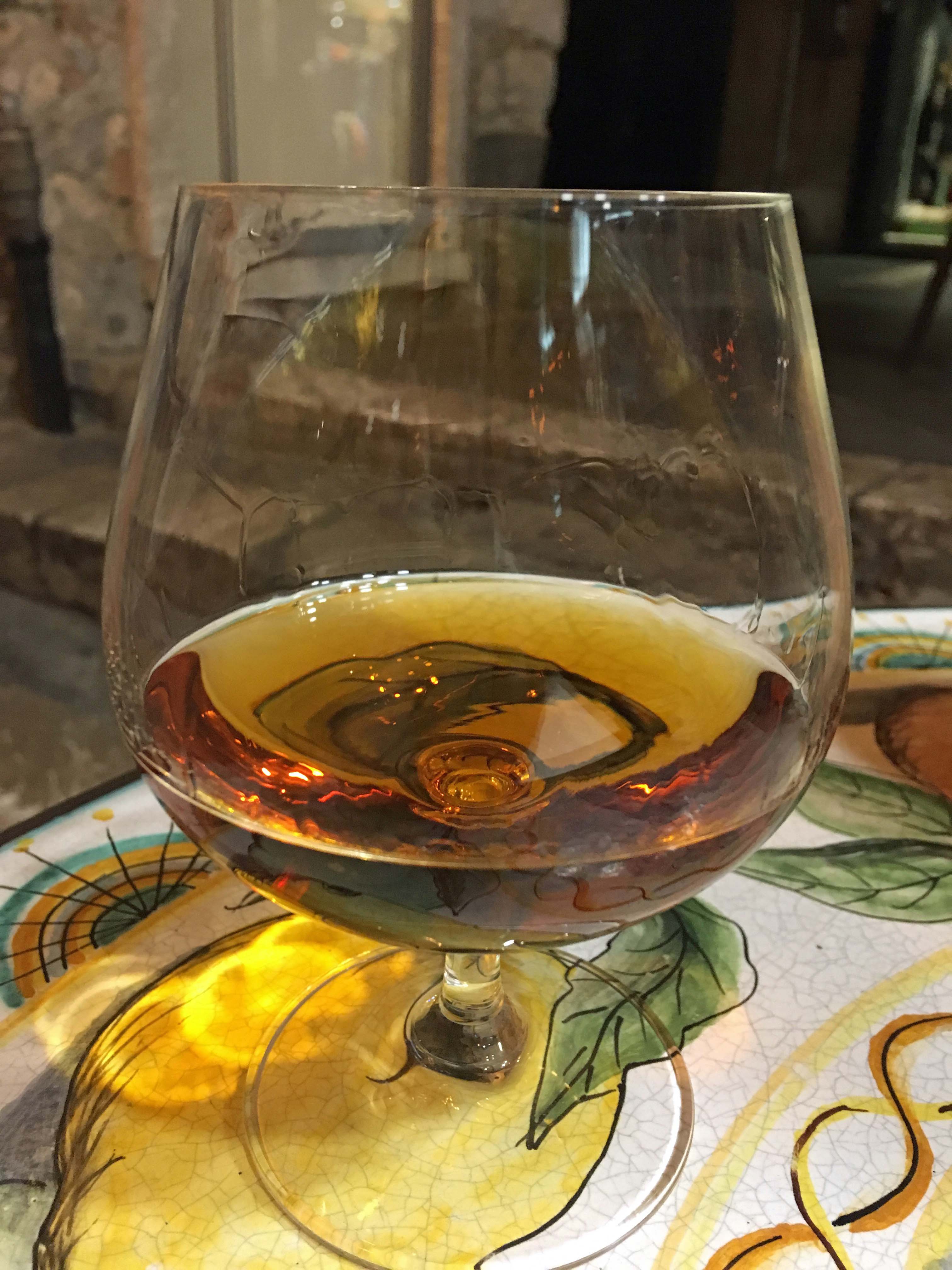
DonQui had thought that Marsala was Marsala — strong, sweet wine. He learns that there are actually many types of Marsala wines. Although the sweet ones are the most well known there are also dry and semi-dry versions, tasting a little bit like dry sherry. Marsala ranges in colour from oro (gold) to ambra (amber) and rubino (ruby). The latter is made from red grapes while the others are from white. The amber wine gains its darker colour from simmering the grape must until it reduces and caramelises.
DonQui is rather impressed by the Cotto which is the highly concentrated non-alcoholic grape must (musto). It can be used as an alternative sweetener in dressings, sauces and deserts. The locals recommend pouring it over chunks of rustic bread for a simple sweet treat.
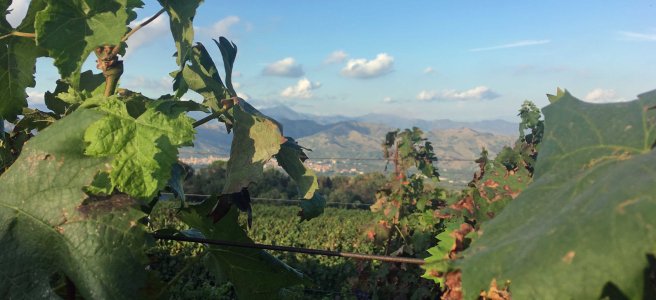
The west of Sicily is best for its white wines. DonQui particularly likes the dry yet fruity Grillo made from a grape unique to Sicily and particularly well suited to the climate and conditions of the Marsala region.
He is also rather fond of the sweet Zibibbo. This is an ancient grape variety related to Muscat. The name is derived from the Arabic word for grape. It is as good a desert wine as DonQui has ever sampled. It is said that this is the wine favoured by Cleopatra and it is sometimes called Muscat of Alexandria.
The volcanic slopes of Mount Etna in the east of Sicily are particularly good for red wines. In the past these were produced in bulk and exported to mix with northern Italian and French vintages. Over the past 40 years there has been a move away from quantity in favour of quality—something DonQui utterly approves of.
At Gambino Vini, on the northeastern slopes of Mt Etna, DonQui has the opportunity to sample several excellent wines along with some rather tasty titbits.
He particualrly likes the Tifeo, named after Typhon, the monster of ancient Greek mythology whom, according to legend, is the source of Mt Etna’s volcanic eruptions. This full-boddied wine has earthy, mineral tastes derived from the volcanic soil in which it is grown. The 2016 is just ready to drink but would benefit from a bit more time in the bottle. It would keep well for up to up to another 8 years according to the vintner.
Even better (and quite a bit pricier) is the elegant Petto Dragone made from the Nerello Mascalese grape, originally brought to Sicily by the ancient Greeks.
Later at a caffe DonQui samples a local brandy (Brandy Siciliano). It is quite rough and not at all up to the standards of a basic Cognac or Armagnac. The Sicilians still have a bit of work to do in this department.
After a few tastings DonQui is anything but an expert on Sicilian wine. He has, however, had his taste buds awakened by delicious new flavours from ancient and nearly forgotten grape varieties. He vows to learn more.
Having decided to eat his way around Sicily, DonQui begins his gastronomic tour in Palermo.
Time for an espresso
The coffee from the machine in the hotel breakfast room is not that great so he takes a tip from a local and starts his day with a super-charged shot of espresso from the bar over the road.
Capo market
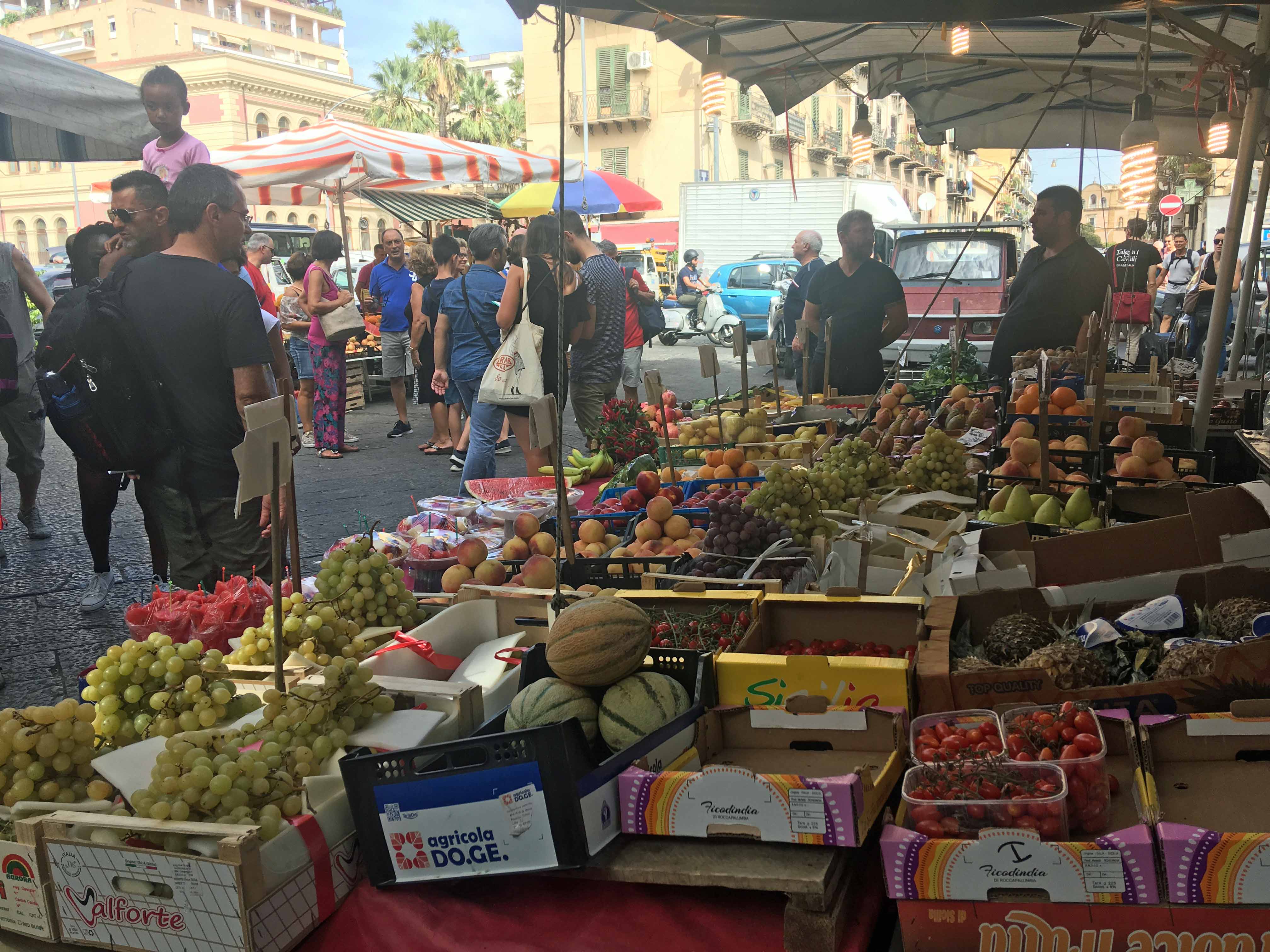
Then he makes his way over to Capo market which is reminiscent of an Arab souk. This is hardly surprising given that it sprung up during the Arab occupation of Sicily 1200 years ago.
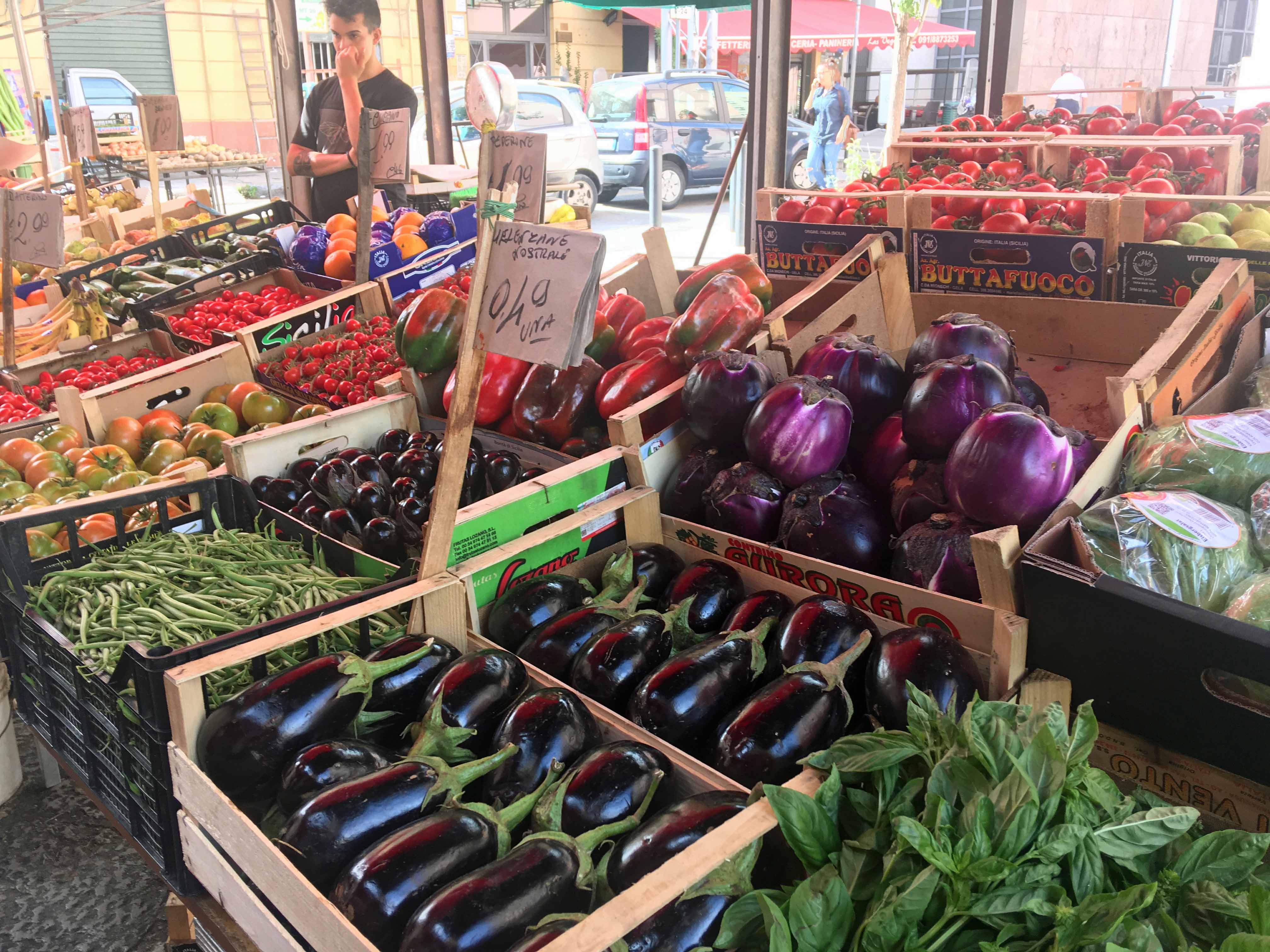
The tastefully arranged displays of vegetables are amazing and DonQui learns a couple of interesting facts.
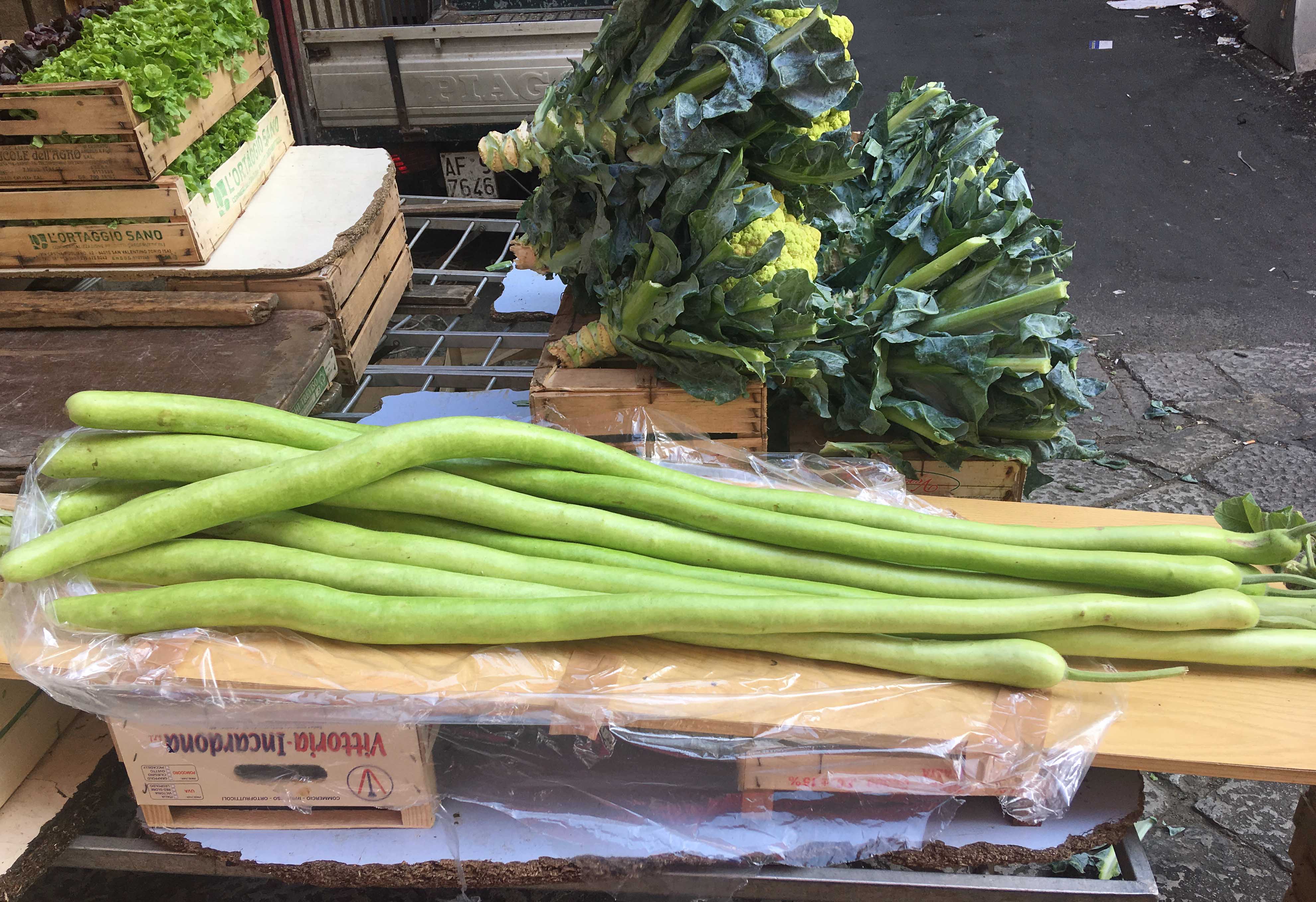
Long Zucchini
These super long zucchini (courgettes) are a local speciality. They are grown over trellises which allow the zucchini to hang down and gain their long length.
When broccoli becomes cauliflower
In Palermo, broccoli is called “sparacelli” and cauliflower is called “broccoli”.
Palermo is famous for its street food.
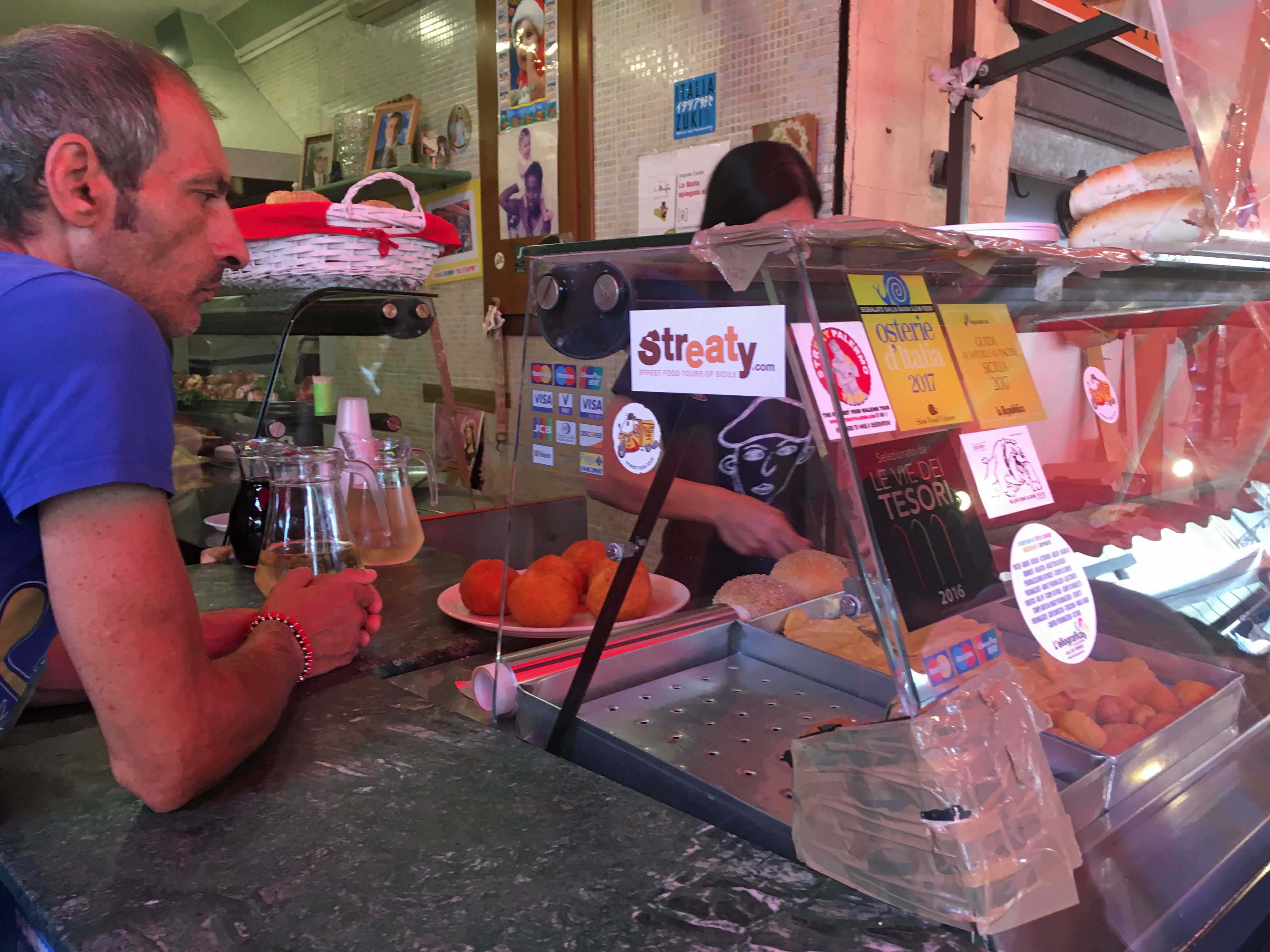
After a bit of a wander around the market, DonQui stops off atArianna’s “Friggitoria Gastronomia” to sample some.
Cazzili are a sort of potato fritter flavoured with mint and parsley. Although not a great potato eater, DonQui rather likes them although one is plenty for him.
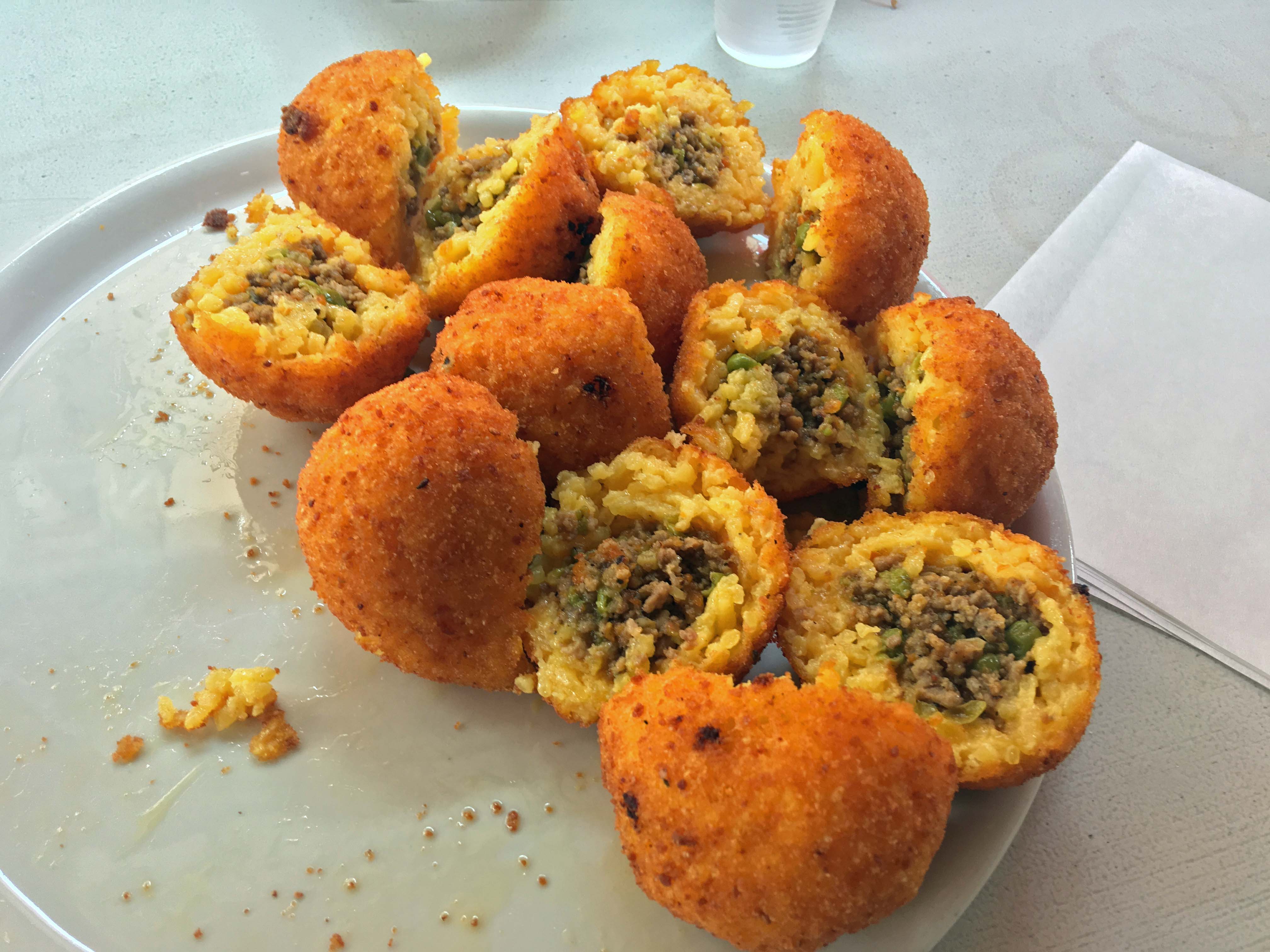
Next up are arancine — deep fried balls of saffron-flavoured rice with a filling of meat and vegetables. These can be found all over Italy but these ones use the original recipe which pre-dates the introduction of tomatoes to Europe. They are utterly delicious and DonQui much prefers the saffron rice to the tomato infused version often served elsewhere.
DonQui is informed by his local guide that a good arancina needs to be crisp and crunchy on the outside. This can only be achieved if freshly fried. If left in a display case for any length of time the steam will cause it to go soggy.
Panella — a fritter of chickpea flour is OK but a bit boring. It needs a good squeeze of lemon to give it some cut-though but even then it is rather bland, stodgy and a bit greasy. DonQui can imagine that it would be the sort of thing he might enjoy later in the evening after a few too many beers.
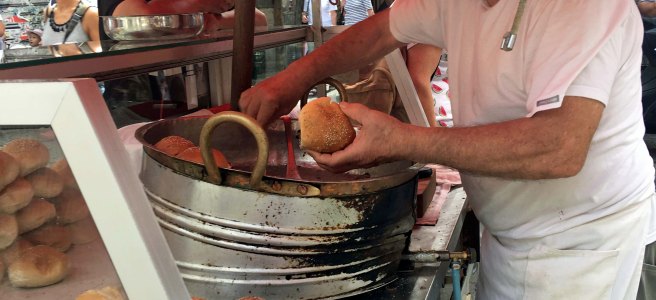
After a bit of a trot around the old city to work off one or two calories, DonQui summons up the courage to taste that most infamous of Palermo street food — the pani ca meusa, or spleen sandwich.
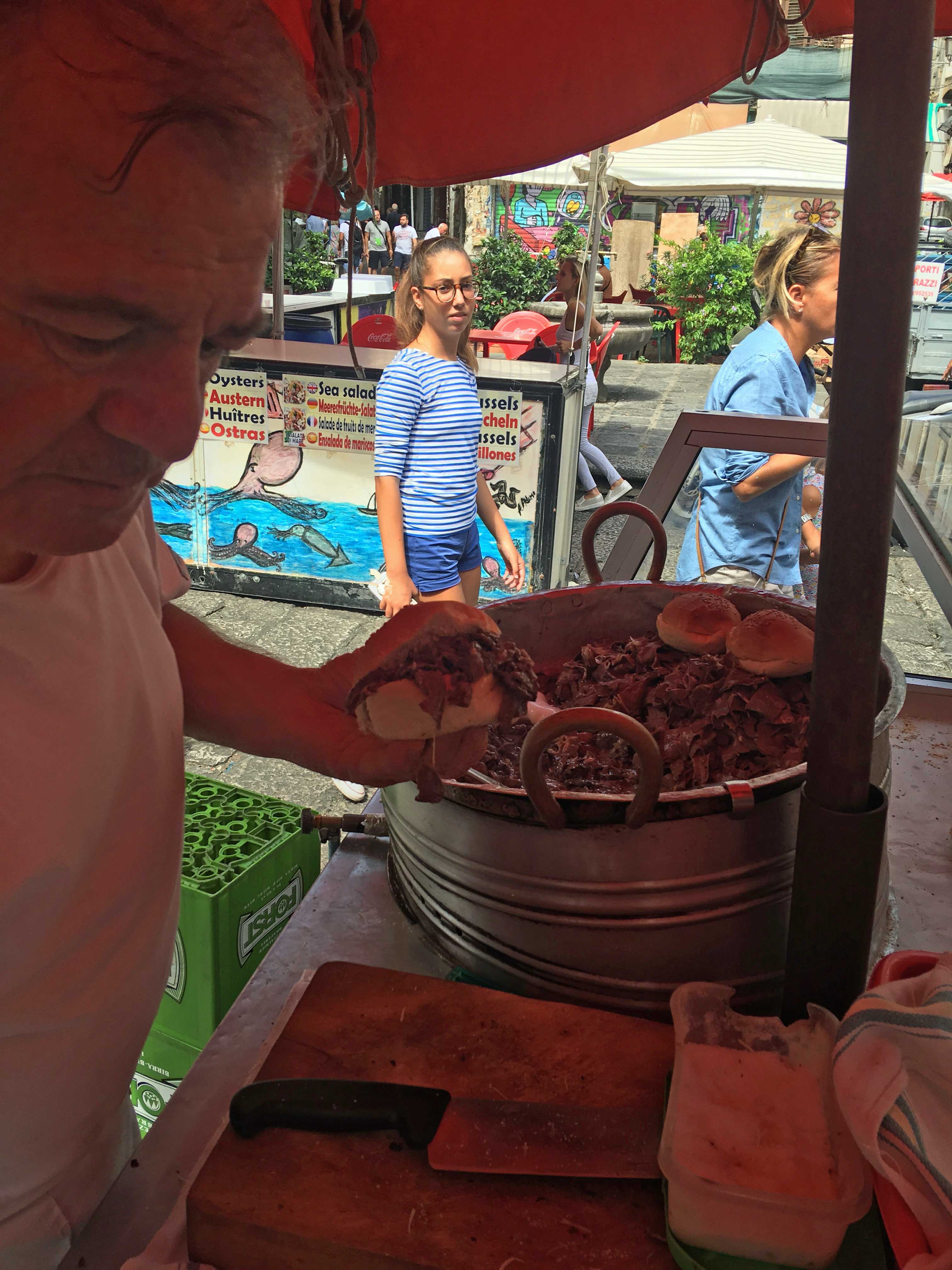
Pippo serves up his Palermo delicacy
The inhabitants of Palermo love their spleen sandwiches and 72 year old Pippo has been preparing them since he was 6. His are reputed to be the best in the city.
Thinly sliced pieces of offal are slowly simmered in a cauldron. The only spicing is salt. You can have them “single” with just a squeeze of lemon, or “married” with a sprinkling of cheese as well. DonQui goes for the former as his guide advises that it is best to remain single at first and only contemplate marriage later.
DonQui finds it absolutely delicious. The meat is very tender and quite mild-tasting. The lemon juice provides a bit of a zing which balances the flavours perfectly. Maybe next time he will try ithe ‘married’ version with cheese.
A short trot away from Pippo’s spleen sandwich stall is a tiny taverna which has been operated by the same family since the 19th century.It is a bit of a dive but DonQui rather likes this as the place has plenty of atmosphere.
A barrel of Sangue
Here he samples the local sangue or “blood wine”. This is a rough, sweet, fortified wine — a little bit like port without any refinement. It is rather good and DonQui is glad he tried it, even if it does not quite match the taste of a good port or marsala.
Sfincione
To accompany his sangue he nibbles on some cheese and a piece of sfincione — thick soft bread with a topping of tomato, onion and anchovies. Although often described as Sicilian pizza, DonQui thinks it is perhaps more like a soft bruschetta. It is OK but not outstanding.
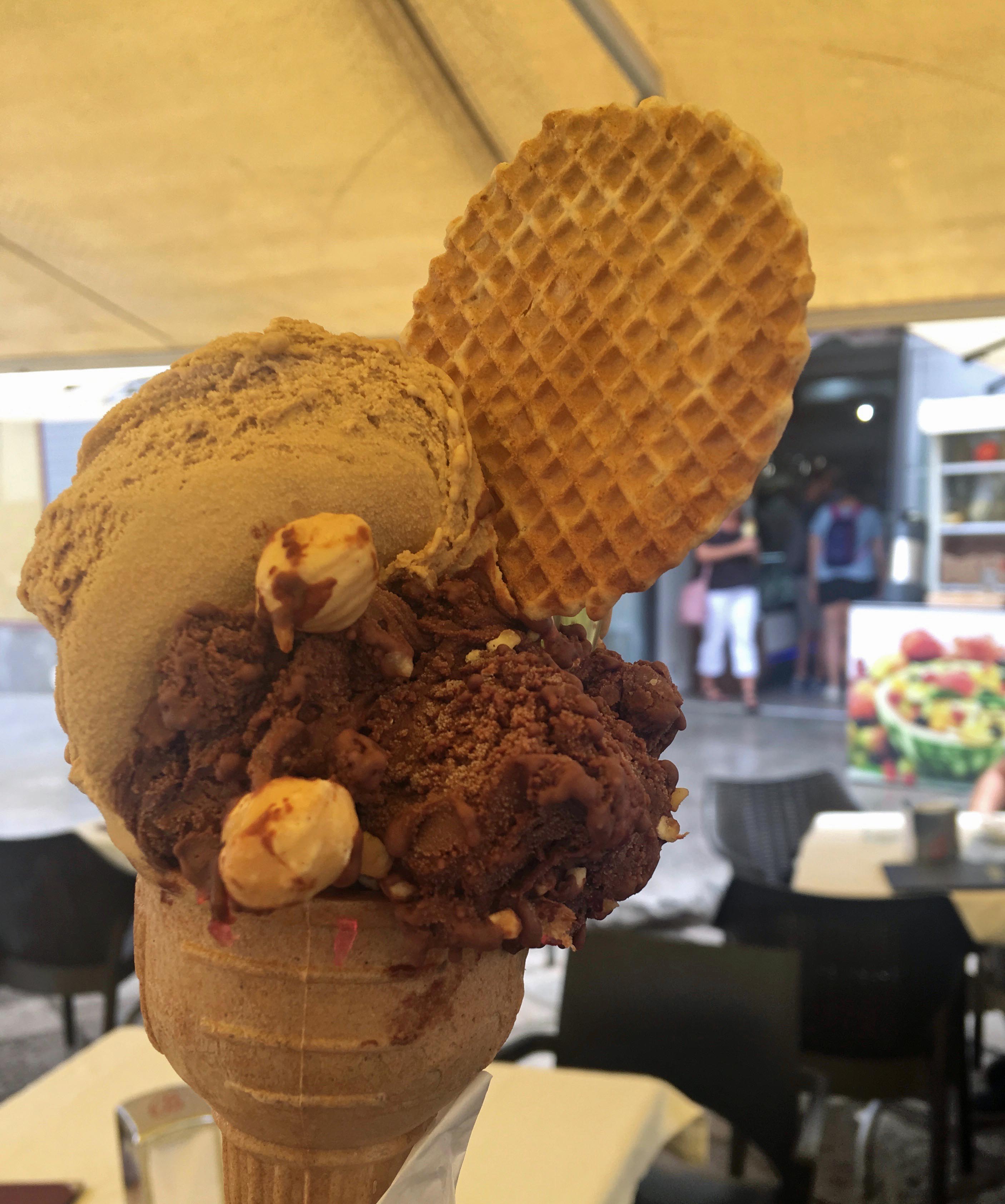
Having grazed his way around the old city, DonQui stops off at a gelateria for a coffee and bacio ice cream. A more traditional way to have an ice cream in Palermo would have been a broscia which is a brioche cut in half with an ice cream in the middle. Since he has eaten so much already DonQui decides to stick with a cone as do most of the locals eating there.
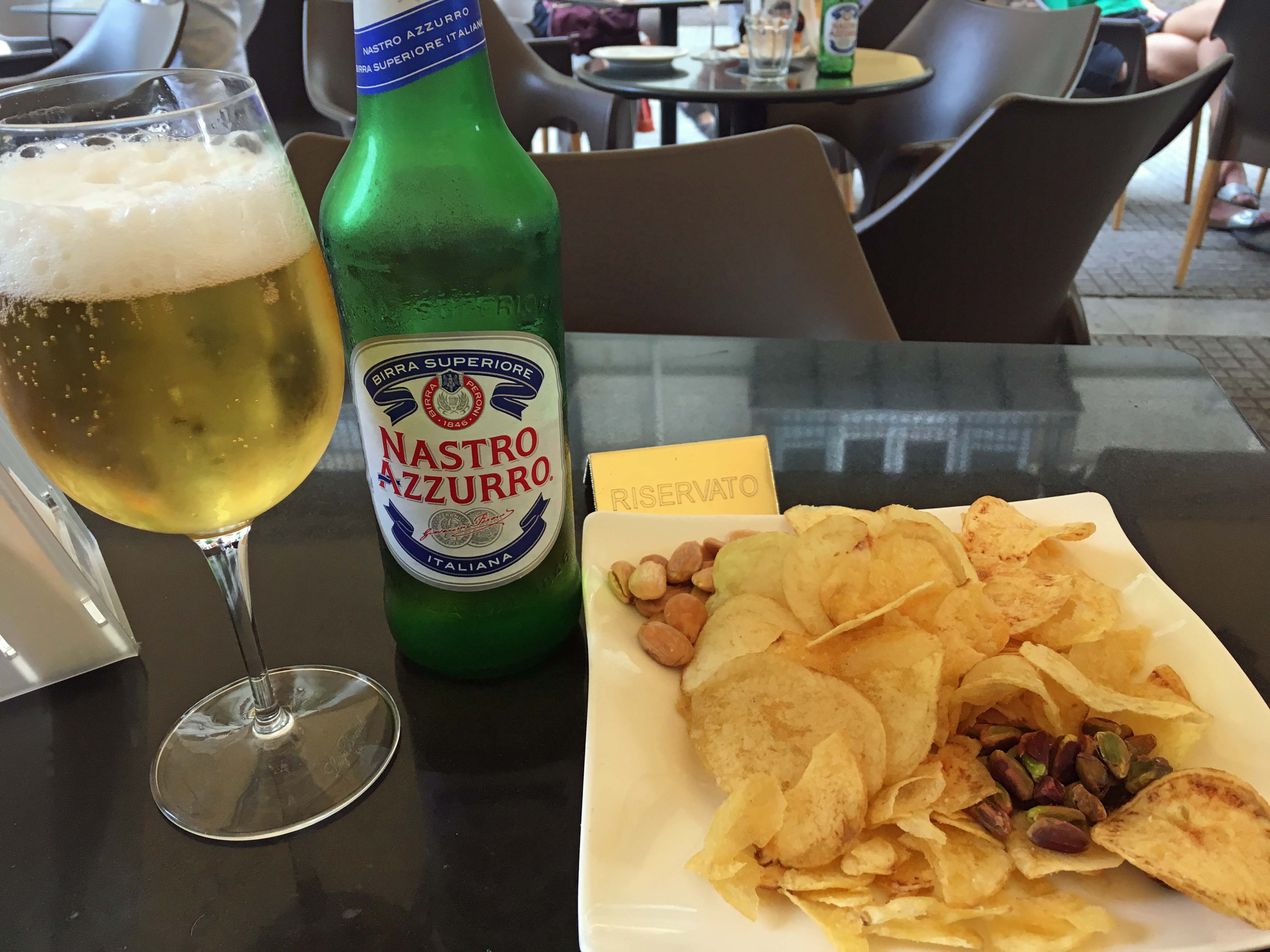
His stroll around the city provides DonQui with more than enough food to last him the day. In the evening he settles down at the very pleasant Caffe Spinnato on via Belvadore for a beer or two.
As these come with copious snacks he has no need to seek out a restaurant for dinner.
Note:DonQui likes to portray himself as an intrepid, independent explorer. He has a bit of that in him but the truth is that he would never have discovered the delights of Palermo street food on his own. His guide was the knowledgable and cheerful Marco on Exodus’ Sicily Food Adventure tour.
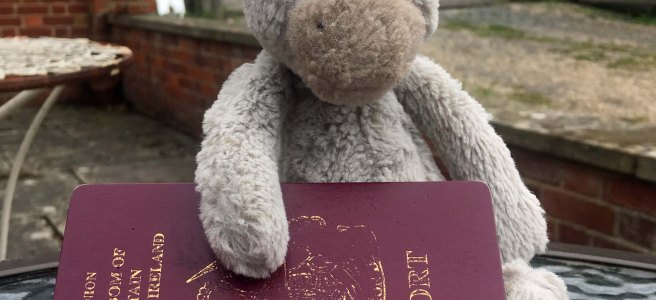
Clutching his well-used passport, DonQui Oaty is getting ready to leave his home paddock on a new adventure.
He very excited to be going to Sicily for a week.
He has often wanted to visit the island but has not managed it before now. His intention is to take in the many historical sites as possible, indulge in a bit of Sicilian cuisine, and enjoy the late summer sun.
No doubt he will be writing about his adventures as they unfold.
Feeling in need of a bit of exercise after all the good Italian food he has been eating, DonQui decides to go off and explore the Valle delle Ferriere behind Amalfi, away from the coast.
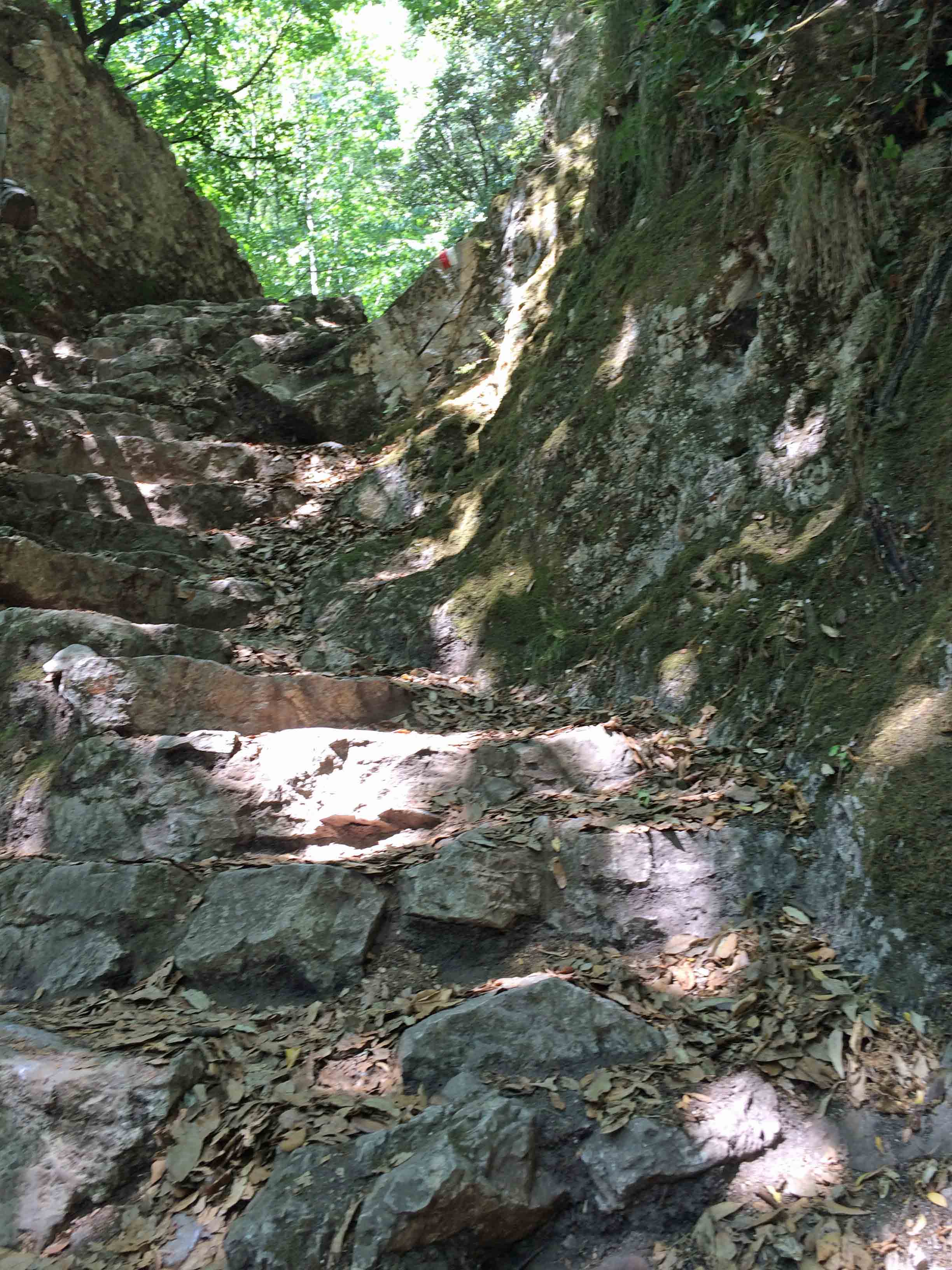
He is advised that it is a moderate hike which involves some climbing but that there are steps up the steeper bits. Being a fairly sure footed beast, DonQui sets out in the morning intending to beat the late rising tourists and fast rising sun.
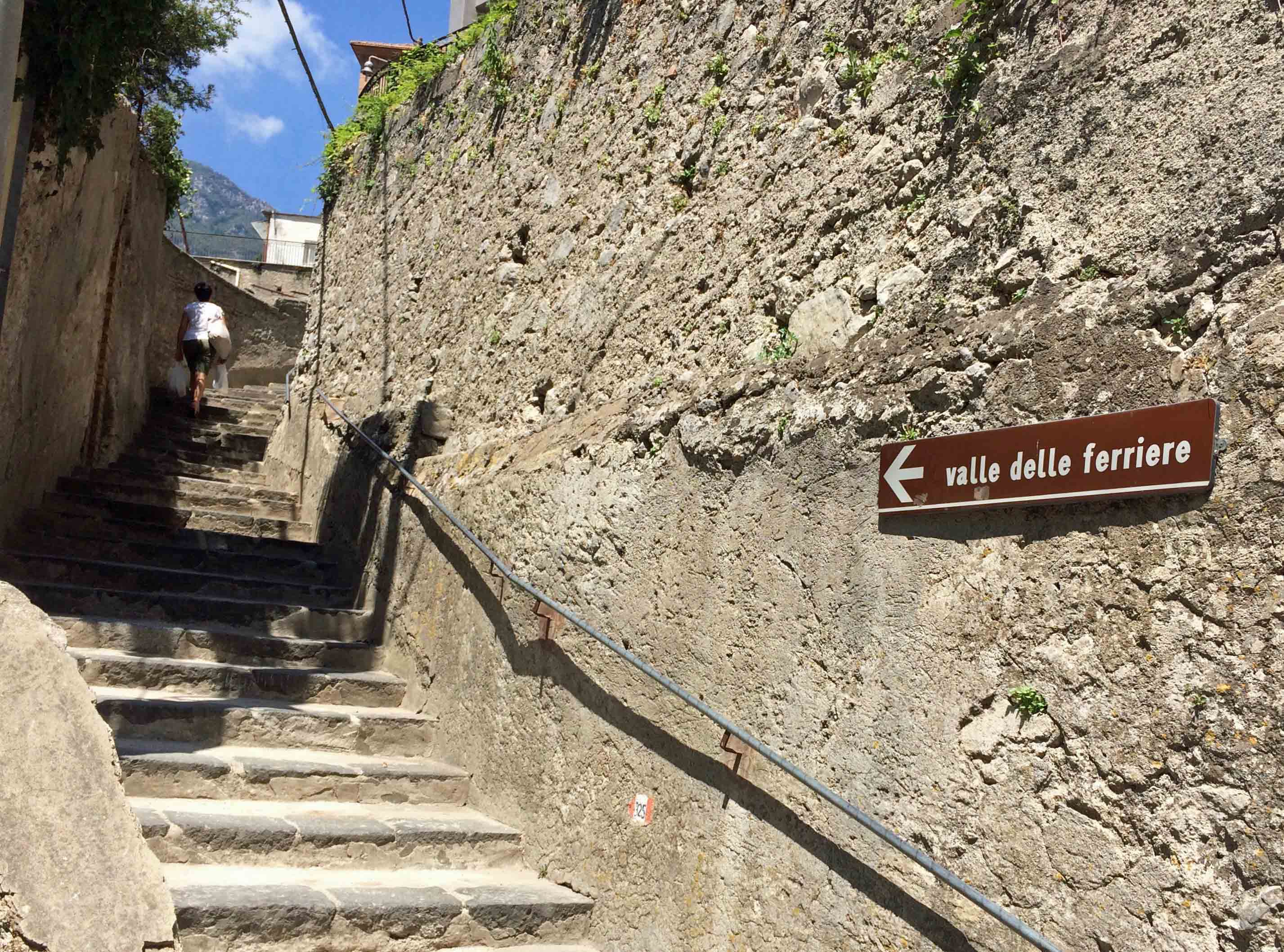
The steps from the end of the town lead up steeply and it is a pretty exhausting climb.
DonQui pauses from time to time to catch his breath and take in the views as the steps go up and up over the lemon groves at the back of the town.
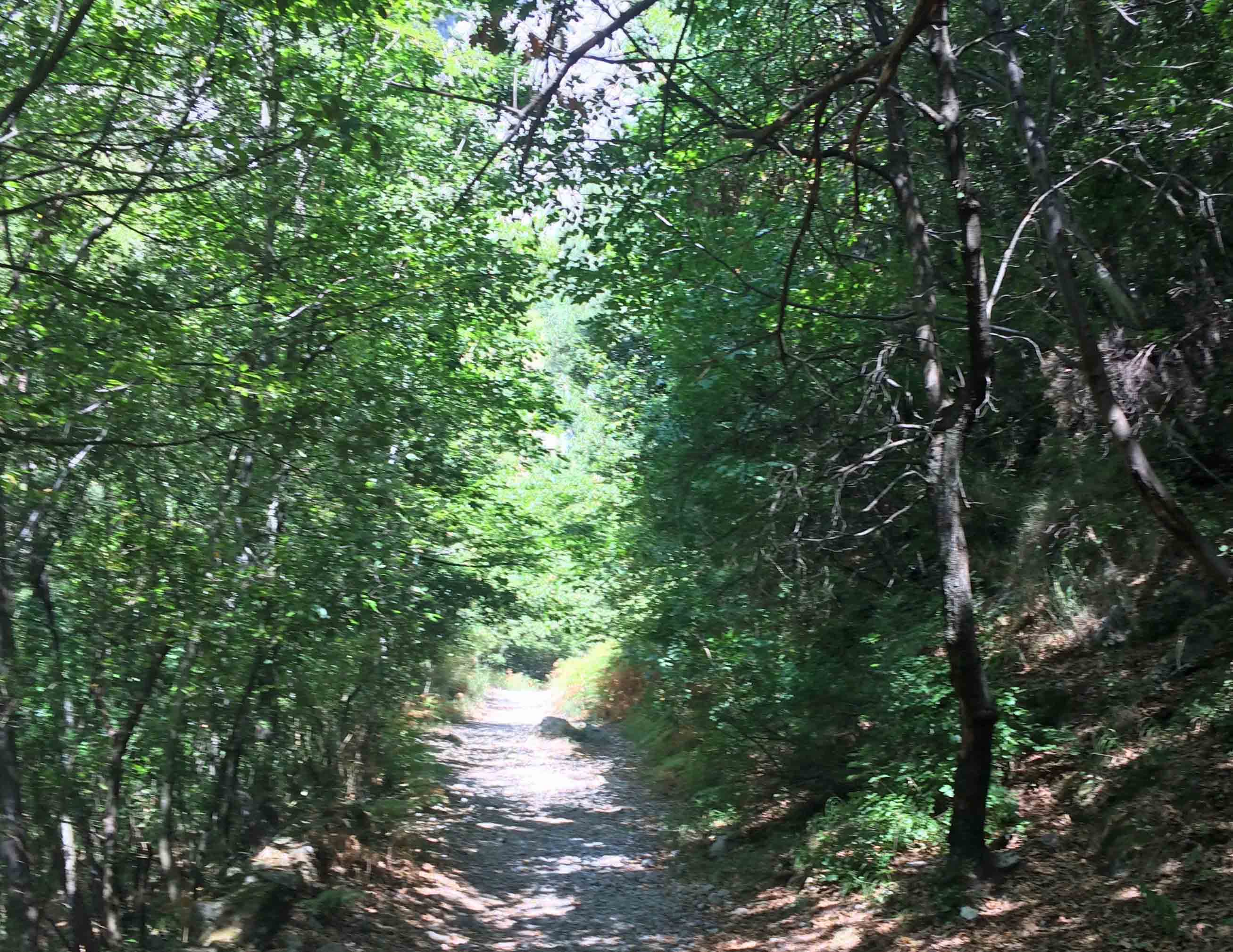
A few overhanging fig trees give some shade over the 30 minutes it takes DonQui to reach the end of the steps and the start of the woodland train.
While the views looking back towards Amalfi are quite spectacular.
Feeling a bit like Tolkien’s Last Homely House, the Fore Porta Organic Farm is the last watering hole before the wilderness beyond. As it is still early the Fore Porta is just setting up, so DonQui resolves to stop off on the way back for a bit of refreshment.
Then he heads off down the trail, glad that the slope has levelled off. He is equally glad that, despite the tourist crowds down in Amalfi, up here is is utterly alone.
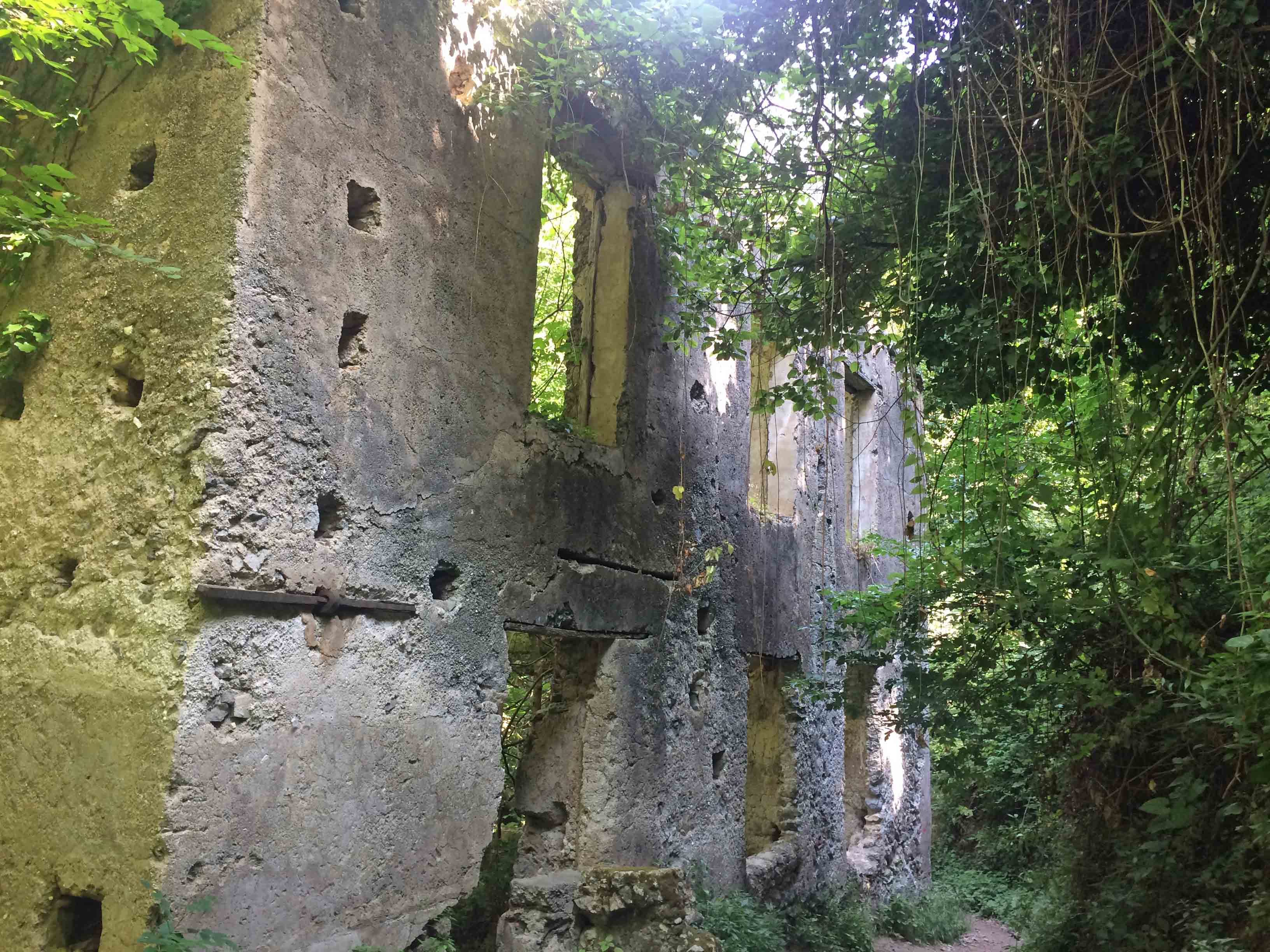
Passing ruined paper mills abandoned centuries ago and now covered with vines and other vegetation, DonQui feels a little like one of Conan Doyle’s explorers discovering lost cities and lost worlds.
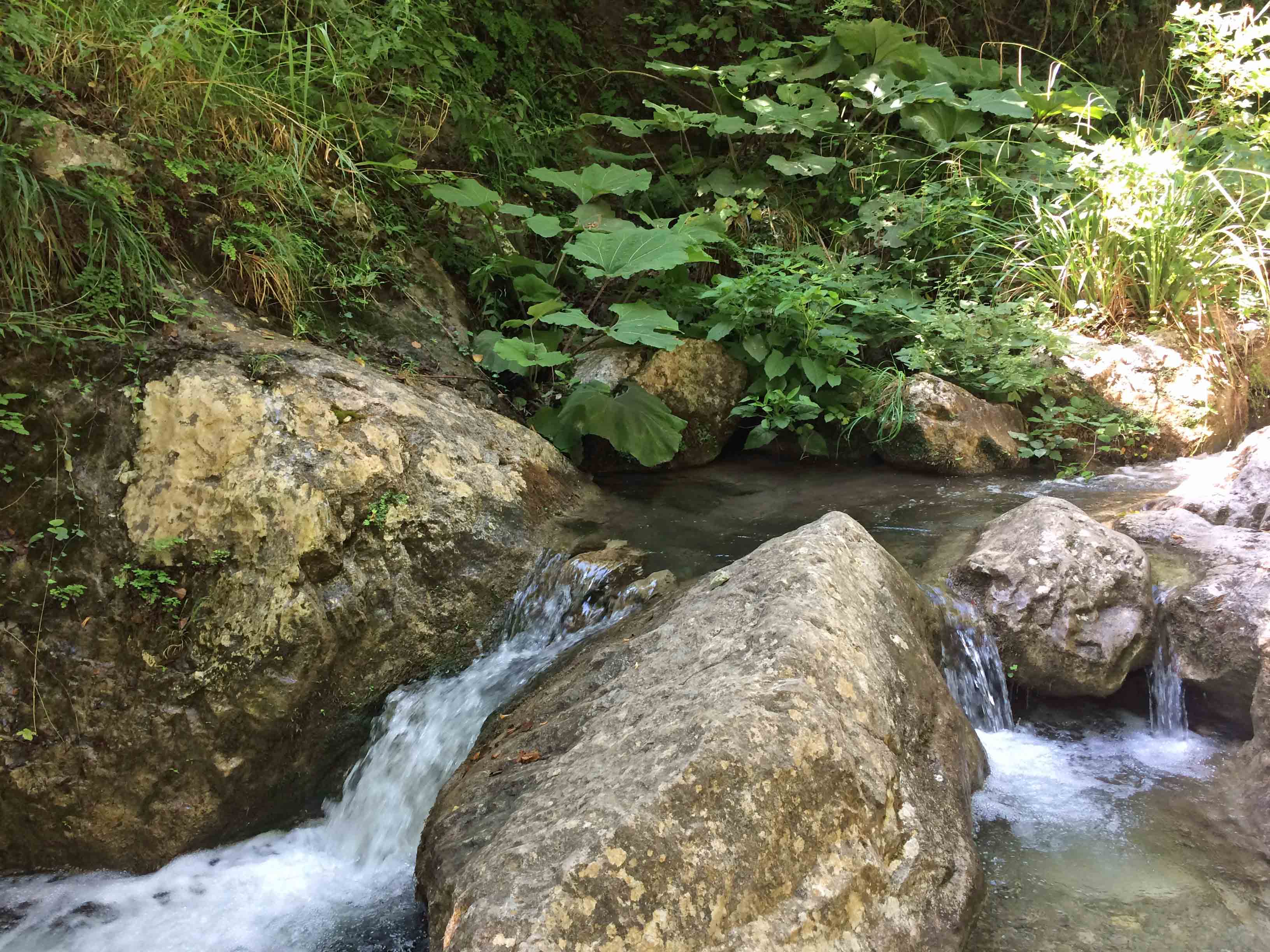
The trail follows a fast moving stream which cascades through, over and down the rocks.
It is this stream — the Ferriere — which powered the ancient paper mills when Amalfi was a centre of paper making in the late middle ages.
It is almost an hour before he encounters the first humans. A small group of them have stopped at a waterfall to splash about a bit. DonQui decides to cool off in the water for a moment or two then heads on to rediscover the peace of being alone again in this wonderful setting.
The vegetation, the abandoned mills, the fast flowing water and the solitude set his imagination off again.
He can almost imaging the leaves parting at any moment to reveal a Lost World dinosaur as he crosses a rickety wooden bridge.
Unsurprisingly he does not encounter any fearsome beasts but the many smaller ones he does come across do help to fuel his imaginings of their larger cousins.
After another 30 minutes without meeting any humans he does come across a group of indigenous people camped by the river. They seem friendly enough and DonQui reassures himself that they are not likely to slaughter him for food.
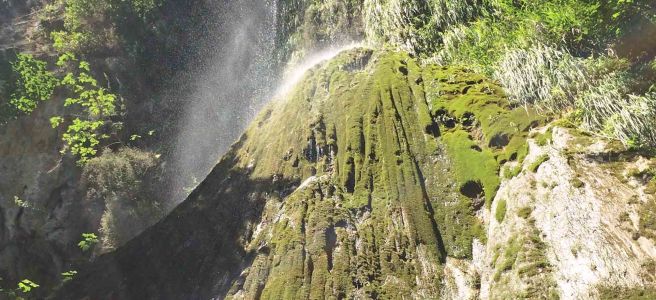
One hour in from the Fore Porta DonQui comes to the end of the trail where a succession of waterfalls provide a magnificent vista.
These are not huge cascades but rather various trickles and sprays of water which fall down the cliffs, creating a wonderfully primeval atmosphere of water, rock and vegetation.
The trip back down towards Amalfi is a little faster and as noon approaches more people are to be seen along the trail.
One most welcome group is a troop of boy scouts offering lemon water and lemon pieces sprinkles with sugar. They provide DonQui with a most needed energy and hydration boost in exchange for a donation to whatever they are collecting for.
DonQui’s final stop at the Fore Porta is also most welcome. Here he sips on a lemon granita before heading back down to Amalfi.
It is 36º in Naples. Far too hot for DonQui to consider doing much of anything at all.
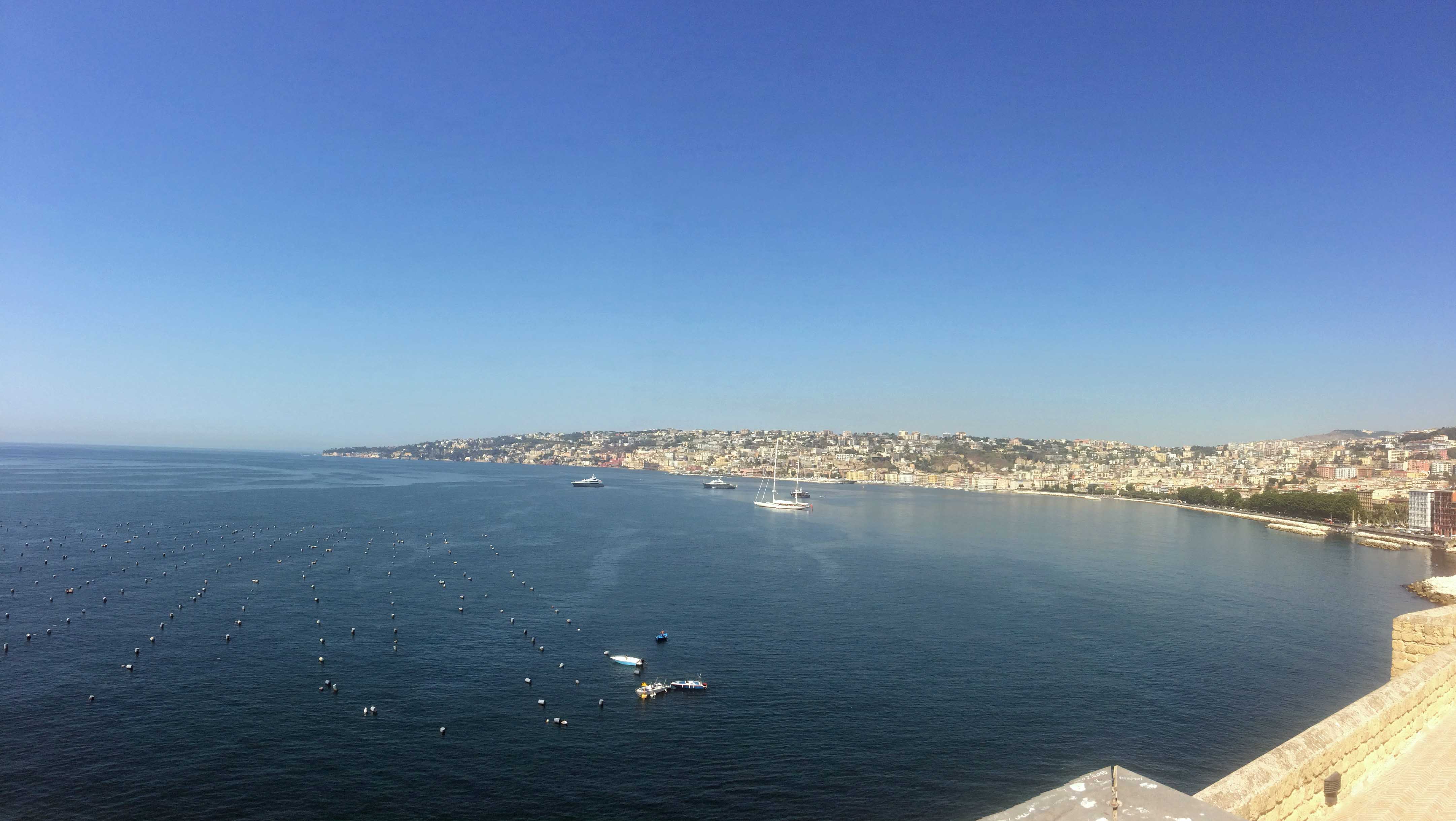
Fortunately his hotel — the rather nice Excelsior on the pedestrianised seafront promenade Via Partenope — is nicely air-conditioned. It also has great views over the bay of Naples, with Mt Vesuvius and Capri in the distance, and the Castel dell’Ovo and harbour in the foreground.
DonQui is quite happy, therefore, to spend the heat of the day simply lazing around the hotel.
Lunch at the hotel terrace restaurant is pretty good too, if a little on the pricy side.
The Castel dell’Ovo is worth a visit. Not only is it free but the the thick sandstone walls keep the passageways very cool — even in the blistering Naples heat. Although dating back to Roman times, the restored fortification has a distinct 15th century appearance.
The views from the top are quite magnificent.
Once the worst of the midday heat is passed, DonQui trots out onto the Via Partenope to take a look around his immediate neighbourhood.
Some of the locals have taken to the water but this is not something DonQui is tempted to do, knowing of the bay’s pretty awful reputation for water quality.
Naples is not an elegant city. It is chaotic, hectic and ill-disciplined. Although not as dirty and litter-strewn as DonQui remembers it from years ago, the city is still pretty dilapidated in parts.
Yet it has its own charm – a bit like a naughty child who gets away with mischief due to a cute smile.
Although the city may not be elegant, the Neapolitans, like most Italians, most certainly are.
Just around the corner from apartments with crumbling facades…
… are many chic shops and boutiques catering to the well dressed denizens of the city.
As the sun starts to go down the streets come to life, first for a bit of early evening shopping, then an aperitivo at a favourite bar, followed by a stroll along the promenade and then maybe a little dinner.
DonQui feels lucky to have found the Officina Bistro, just around the corner from his hotel on Via Santa Lucia for his aperitivo.
Here he sips on an Aperol spritz, nibbles on the various little snacks that are offered and watches the pantomime of Neapolitan street life acted out in front of him.
By getting here a little early (around 19:00) he and Duchess are able to secure a prime table outside. By 8pm there is a waiting list for tables with many people seated on one of the several benches awaiting their turn.
The Via Partenope fills with people as the sun sets. Many just taking a stroll, others deciding on which of the many eateries to try out for dinner. There is even a ‘silent party’ with revellers listening and dancing to the music pumped out by 3 DJs over wireless headphones.
DonQui only spends a day in Naples and as readers can tell he does not really do very much at all. That is probably the best way to spend a hot day in Naples.
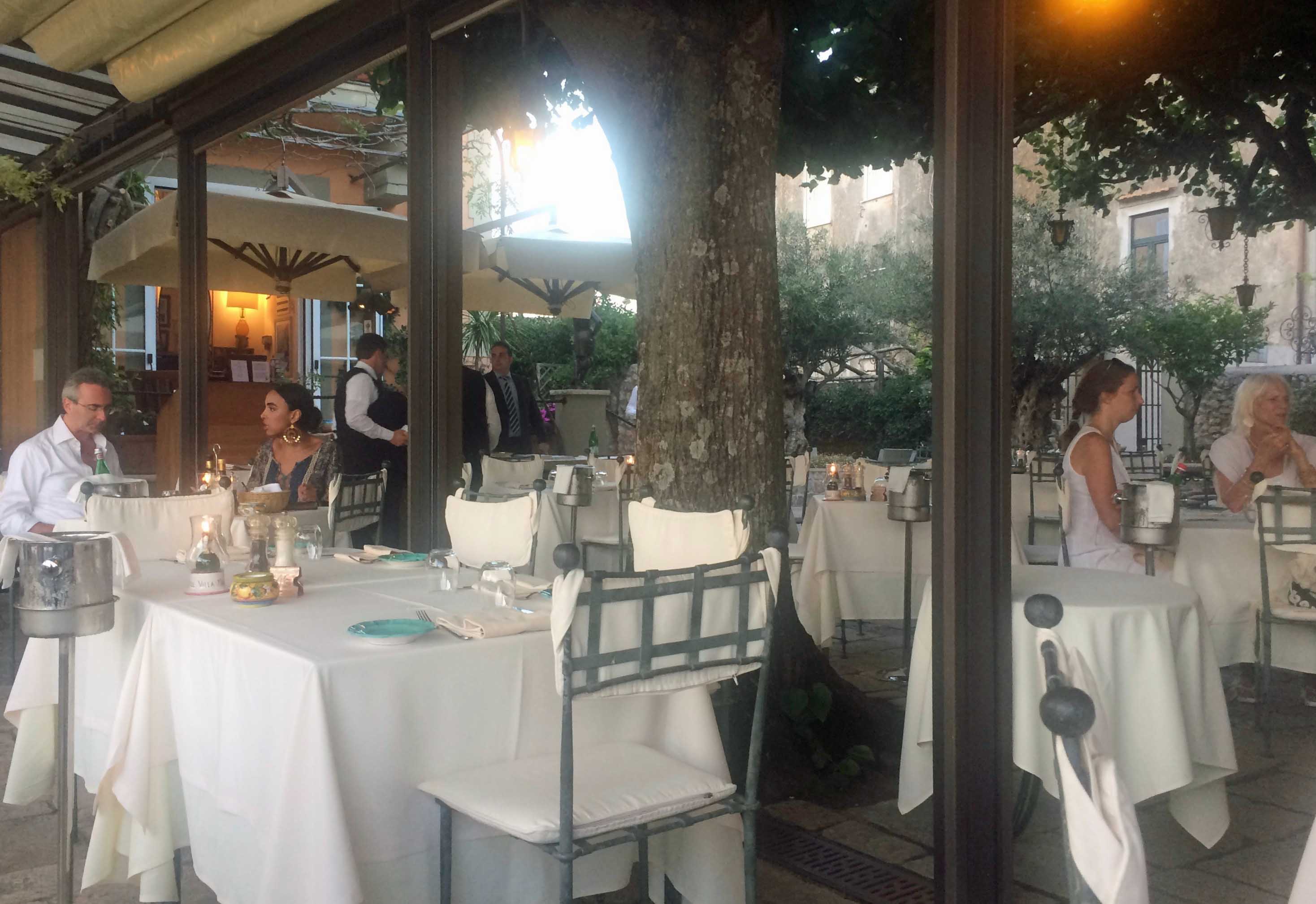
Every once in a while DonQui stumbles across a restaurant which manages to combine great food and perfect atmosphere to create something truly memorable. The Villa Maria restaurant in Ravello is just such a place.
Set on a beautiful leafy terrace overlooking the hills above Amalfi and the sea beyond, the location is truly spectacular.
After sunset the Moon and Venus, being close together in the night sky, create a stunning effect.
The staff are super friendly and very helpful. When DonQui is not entirely sure on which dishes to order the recommendations are spot-on. The waiter gives DonQui a run-down on the ingredients and how the dish is prepared, steering him in the right direction every time.
The wine recommendation is equally helpful, guiding DonQui through the pluses and minuses of the various local vintages. Although the waiter can no doubt discern that DonQui Oaty is a donkey of distinction, he does not linger too long on the first page of the wine list which includes some prime Bordeaux at over €4,000 a bottle!
There are so many tantalising dishes on the menu it is hard to decide which to go for. Most of the are locally sourced with fruit, vegetables and herbs coming from the Villa’s own organic garden.
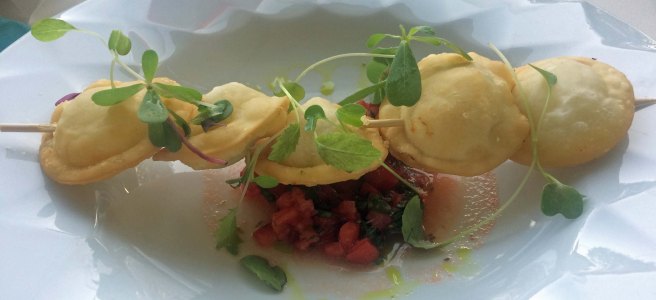
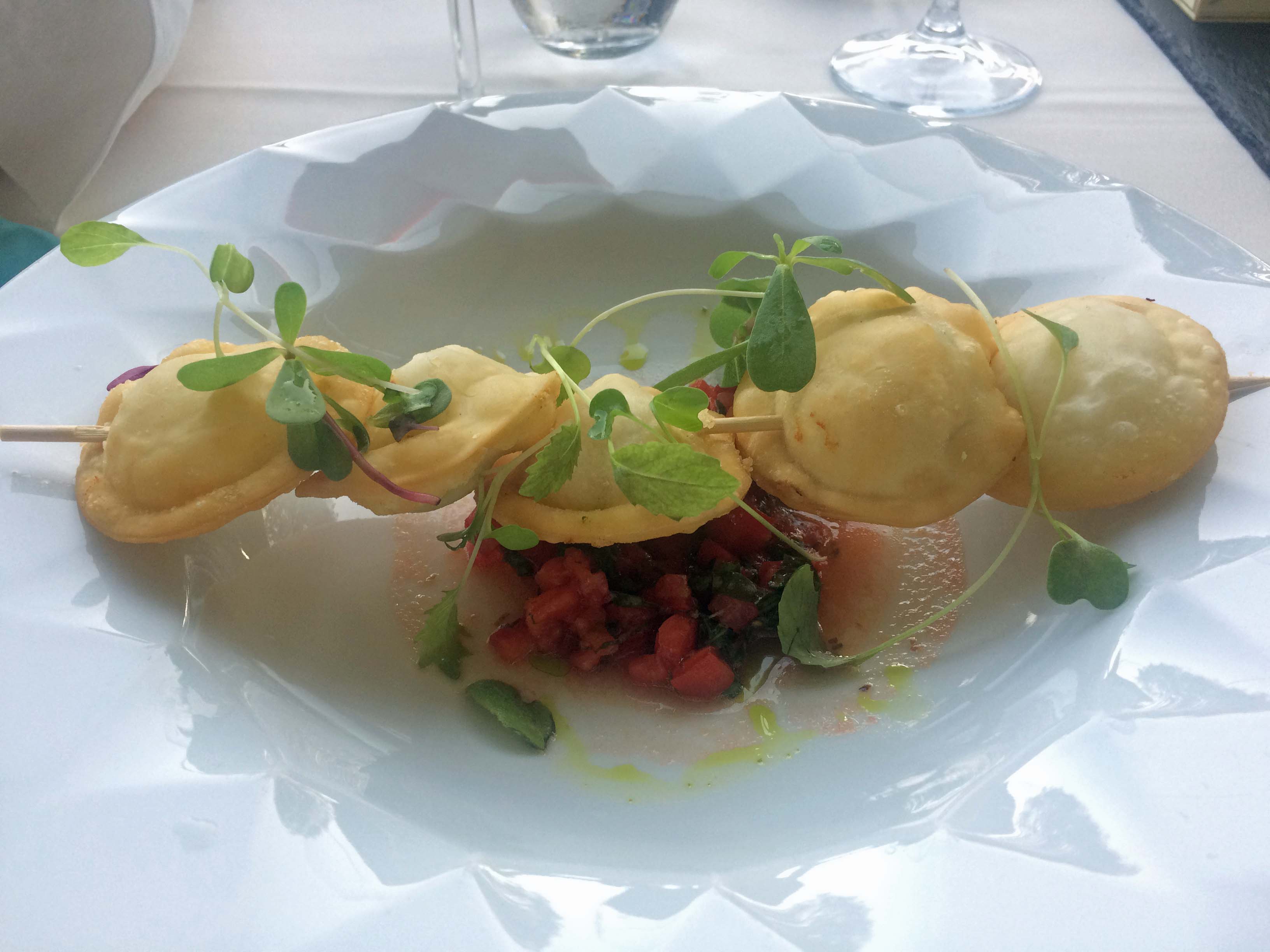
In the end DonQui opts to start with ‘crunchy ravioli’ filled with local cheese and served on a bed of fresh herby tomatoes. The ‘ravioli’ is more like a super light pastry than pasta — hence the ‘crunch’.
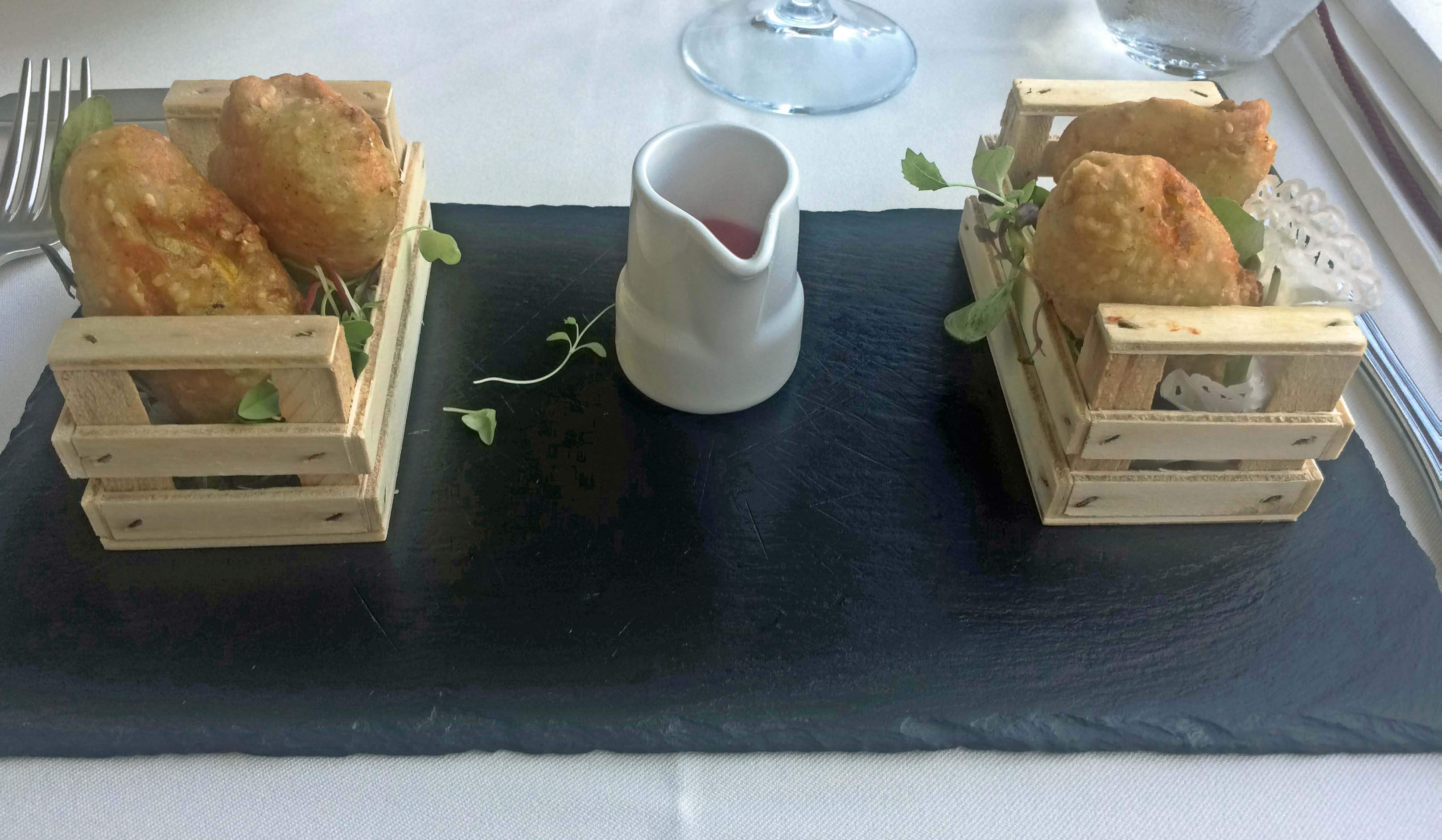
Duchess chooses zucchini (courgette) flowers also filled with cheese, deep fried in a sesame and ginger batter and served with a tomato coulis. Both were superb, although Duchess was a little disappointed not to taste any ginger — something she is rather fond of.
DonQui decides to order Italian style — savouring each course before deciding on the next one.
Wishing something quite light after her appetiser, Duchess decides on ‘Organic garden vegetables with parmesan broth’ for her second course while DonQui tries the waiter recommended ‘Slow cooked amberjack with kumquat, sea asparagus and champagne sauce.’ Not having encountered amberjack before DonQui enquires what sort of fish it is? He learns that it is a large predatory fish with white flesh.
“It is not as delicate as sea bass”, the waiter informs DonQui, assuring him that his local Ravello light red wine will go very well with it despite the accompanying champagne sauce.
The waiter is quite correct. The flesh has an almost bouncy constituency with deep flavour. DonQui finds it absolutely delicious, the taste perfectly set off by the accompanying quartered kumquats and champagne sauce. Sea asparagus turns out to be what DonQui knows as samphire.
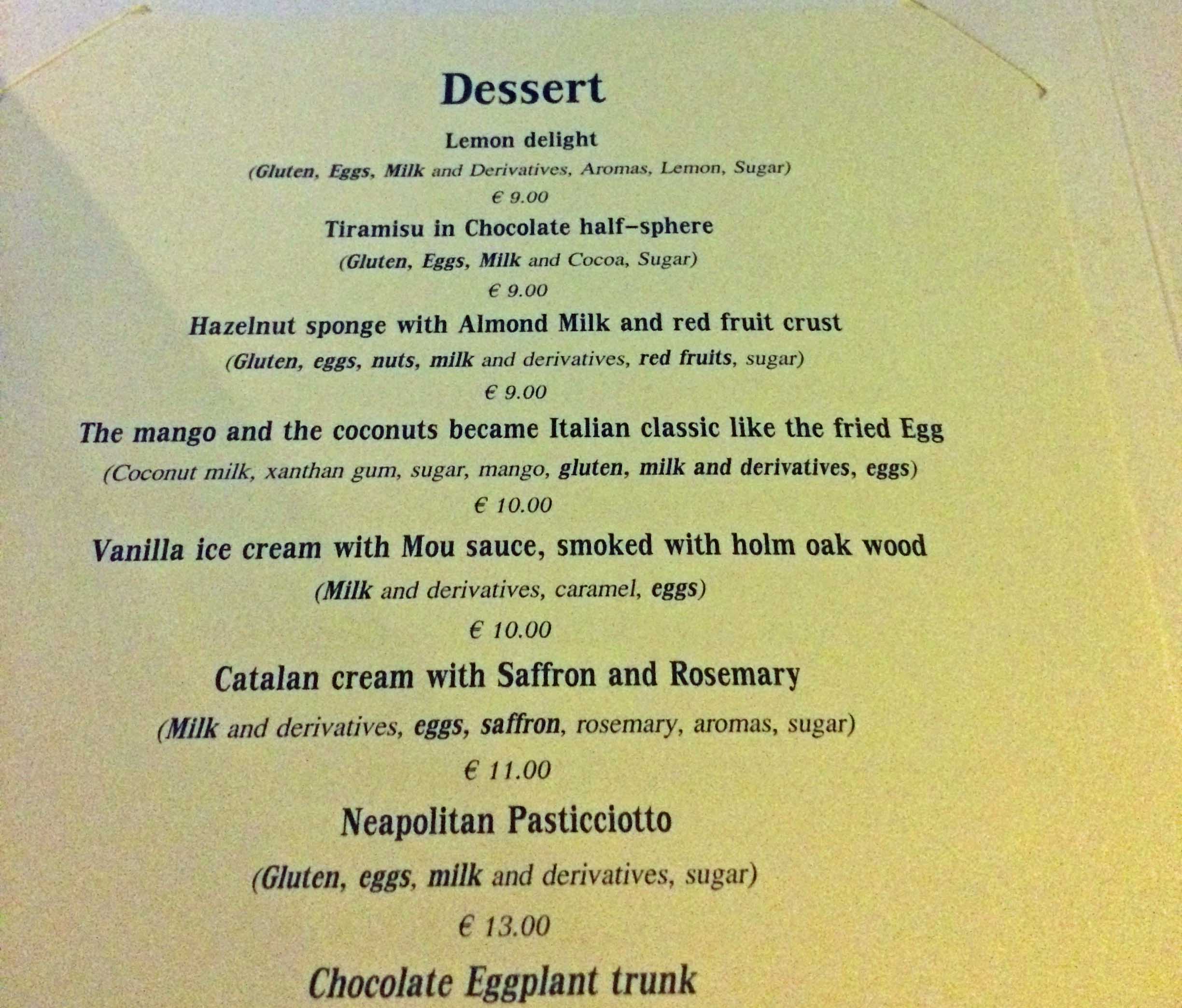
The deserts are as stunning as the previous courses. DonQui is rather tempted to try out ‘The mango and the coconuts become Italian classic like the fried egg’, if for no better reason than its enigmatic (presumably mis-translated) name. The chocolate eggplant trunk also sounds intriguing.
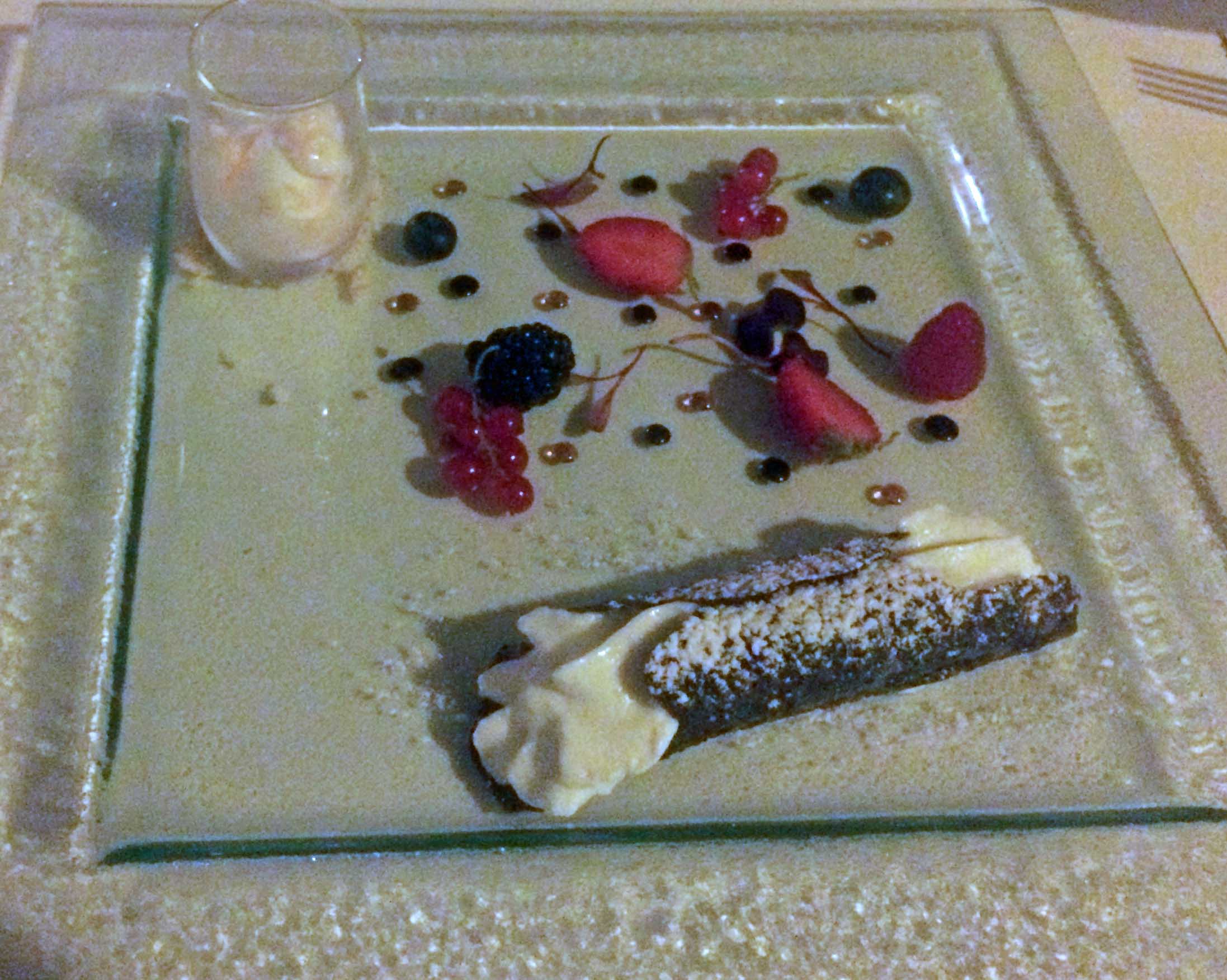
On the waiter’s recommendation, however, DonQui orders the the cannolo with Aperol sgroppino (sorbet made from Aperol and prosecco), and the tiramisu. The waiter explains with pride that the tiramisu is ‘not classic’. It has been deconstructed and reinvented, retaining the coffee/marscapone/chocolate flavours served up in a very different way.
Both deserts are incredibly good.
Dinner at the Villa Maria is without a doubt one of the best meals DonQui has experienced. At the end, the bill seems quite reasonable considering the quality and style. Without a doubt he will return one day — perhaps to stay a few nights at the villa as well as once again sampling their delicious food.












































 donquiblog