Exploring ancient Sicily

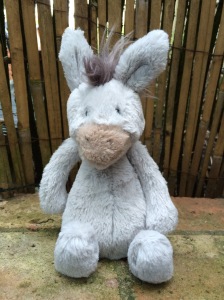
DonQui not only loves his food and drink, he is also a bit of a history fanatic, particularly when it comes to the ancient Greeks and Romans.

Roman soldier.jpg
Mosaic of a late Roman soldier

Fortunately for him the Greeks and Romans left lots of stuff behind in Sicily. The Arabs and Normans also left their marks. There are even a few traces of the Carthaginians which is pretty rare as the Romans did their best to eradicate everything Carthaginian they came across.

Lilybaeum.jpg
Carthaginian and Greek foundations of ancient Lilybaeum

In Marsala (ancient Lilybaeum) there are traces of the early Carthaginian city. This probably looks like a pile of old rocks to most people but DonQui gets quite excited by it.
salt pans.jpg
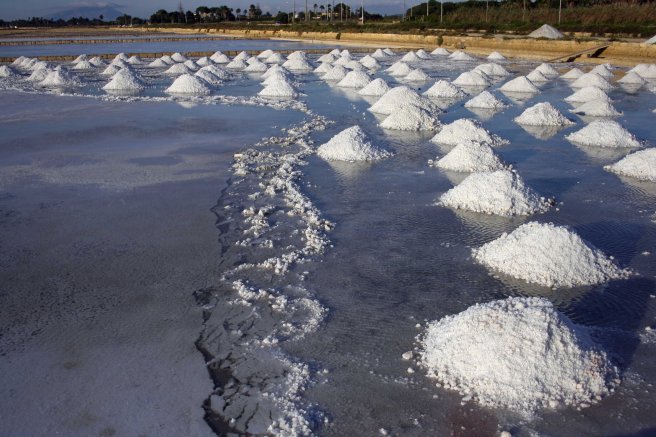
Salt pans near Marsala

He is also fascinated by the salt pans which have been in operation (with a few breaks) since Carthaginian times. The salt is still harvested by hand.

juno.jpg
The temple of Juno at Agrigentum

Three magnificent Greek Doric temples still proudly stand at Agrigento (Greek Akragas, Roman Agrigentum). The beauty of their perfect architectural design takes DonQui’s breath away. 

While appreciating their beauty DonQui spares a thought for the 25,000 enslaved Carthaginian prisoners of war who were put to work building the so-called Temple of Juno (Juno being a Roman goddess) circa 450 BC . It is hardly surprising that newly victorious Carthaginians did their best to destroy it half a century later.
concordia.jpg
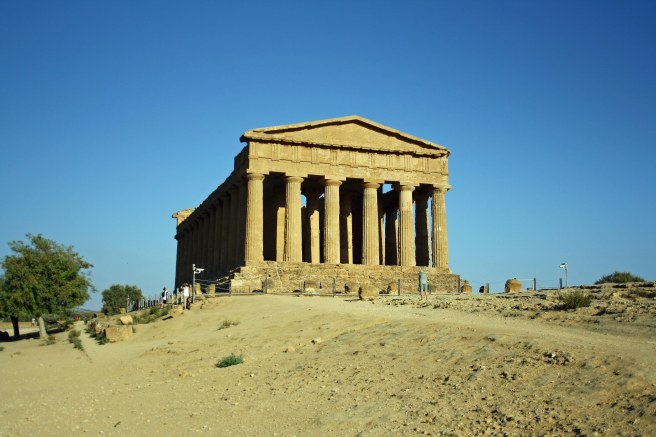
The Temple of Concordia

The temple of Concordia is still pretty well intact thanks to the fact that it was converted into a Christian church in the 6th century AD

walls.jpg
Late Roman city walls and tombs at Agrigentum

Parts of the Roman city walls are also still standing. Carved into them are Christian tombs from the 5th-6th  centuries AD when Agrigentum was controlled variously by the Romans, Vandals and Goths. 
villa.jpg
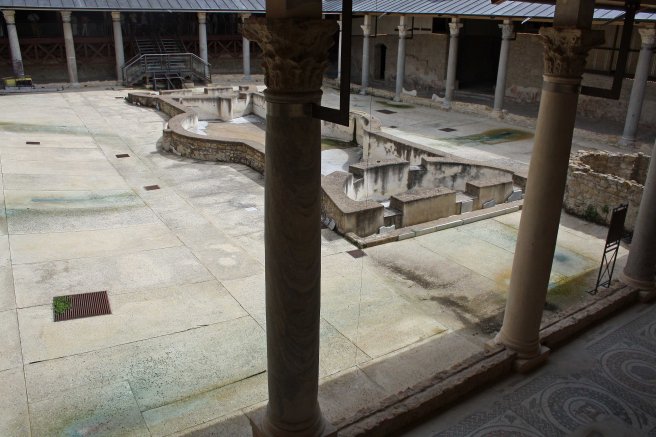
The huge late Roman villa near Piazza Armerina

Some way inland lies the 3rd – 4th Century Roman villa at Piazza Armerina. It is utterly stunning in its scale and in the beauty of the incredible floor mosaics. 

pa 1.jpg
Hunting scene mosaic
IMG_3746.jpg
Expedition to India mosaic
pa2.jpg
Mosaic of female gymnasts
pa3.jpg
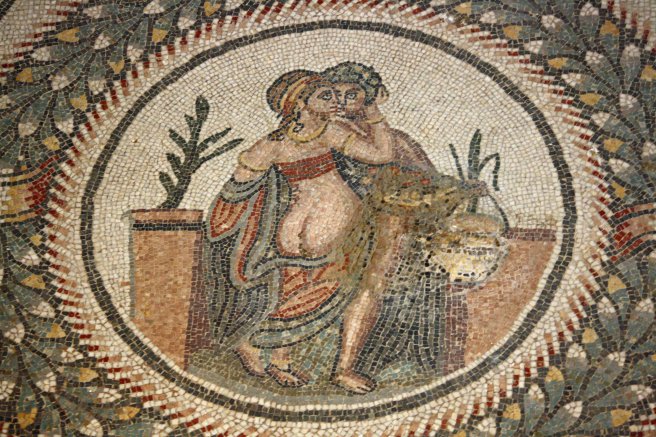
Mosaic from the floor of the master bedroom

DonQui has seen photographs of some of the mosaics before but nothing compares to seeing them in-situ.
palermo church.jpg
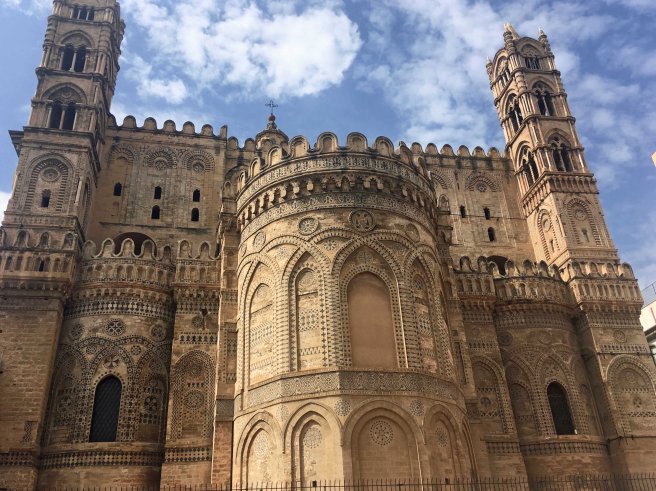
Norman cathedral of Palermo showing Arab influences

The Normans came to Sicily to drive out the Arabs in the 9th century AD, more or less at the same time as they took over England.

monreal.jpg
The Norman cathedral of Monreale decorated by Byzantine craftsmen

The Norman conquerors of Sicily employed Arab and East Roman craftsmen to build some magnificent churches incorporating Arabesque features in the architecture along with Roman mosaics to rival Ravenna and Constantinople.

porta marina.jpg
The remnants of the walls of Syracuse

The ancient Greek City of Syracuse rivalled Athens in the 5th century BC. Its strong defensive position on a small island allowed the city to fend off many invaders over the centuries. Not much remains of classical Syracuse but wandering around the narrow streets, DonQui gets a sense of the ancient city. 

labarynth.jpg
DonQui enters the Labyrinth

Plunging underground he is able to explore the foundations of the Greek city below modern Syracuse. Trotting around the dimly lit, deserted underground passages, he feels a little bit like Theseus descending into the Labyrinth. 
Some fine old stuff

There cannot be many places in Western Europe which had their glory days at the end of the 5th century AD. Ravenna Italy is probably the only city which did. This is where DonQui finds himself — as ever on the trail of ‘old stuff’.   And what a wonderful collection of ‘old stuff’ it is!

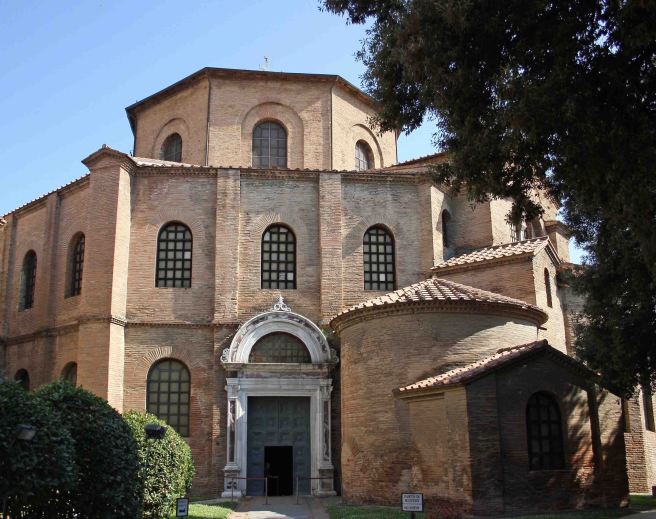
San Vitale
The 6th century Basilica of San Vitale

If you are thinking of a few piles of rubble which mark where this or that ancient Roman building used to stand, think again. Not only are many buildings still in tact, thanks to the fact that they were Christian churches, but their interiors are covered with incredibly vibrant mosaics.

Galla Placidia
The 5th century mausoleum of Galla Placidia

Ravenna was the capital of the West Roman empire in her last years as it was more easily defensible than Rome thanks to the surrounding marshes. The Ostrogoths made it their capital in the 6th century and later the East Roman empire took it back.

train

To get here, DonQui flew to Bologna and then took the train. Compared to the sleek modern intercity which took him from Madrid to Toledo a couple of weeks back, the small regional train was far less swish but it did the job, getting him to Ravenna after a journey of 1 hour 30 minutes through fairly uninteresting countryside.

street

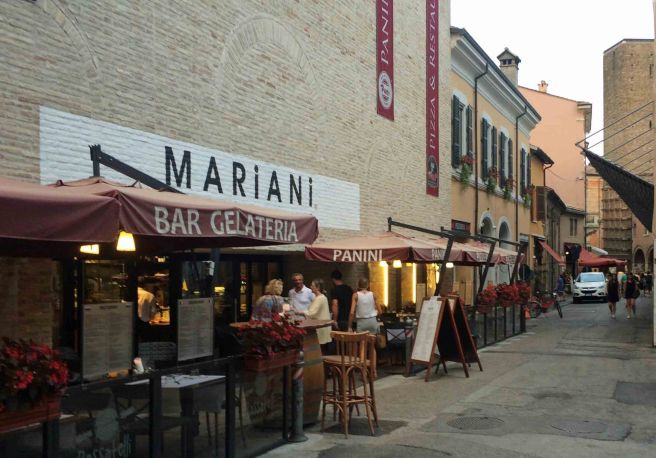
It is not just old stuff in Ravenna. The beautifully kept, elegant streets are filled with fine restaurants, stylish shops and fashionably dressed people.

food shop

It is just as DonQui expected — this being northern Italy after all!

Martins Caffe
Martins Caffe

At 7pm it is far too early to eat by Italian standards so DonQui goes in search of a watering hole where he can sit down to write. Spotting a young man with a computer in front of Martins Caffe he decides this will do the trick. Half the place is devoted to selling stupidly expensive handbags to fashionistas who inexplicably like such things. The other half houses a tempting bar. DonQui cannot help but admire the business acumen of the owners in providing a shop for ladies and a bar for their men-in-waiting.

bar snacks

DonQui sits himself down and orders a Moratti Bianca — a ‘white’ wheat beer which is perfect for the 27 degree evening temperature.  It comes complete with an astonishing array of tasty comestibles (at no extra charge) which does away with the need for supper given that DonQui had a very good lunch earlier.

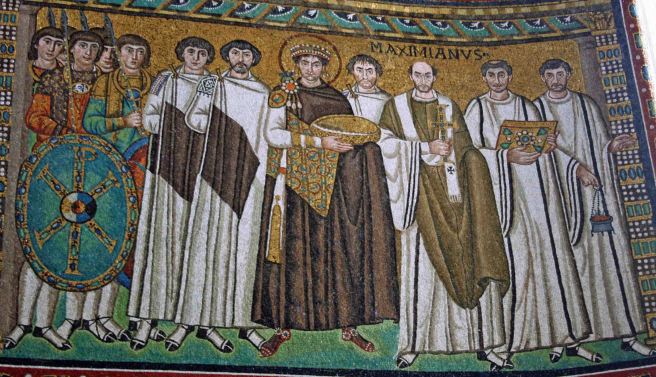
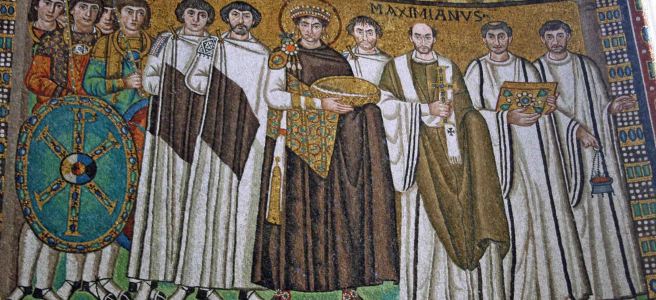
Justinian
Mosaic of the 6th century Emperor Justinian at San Vitale

Tomorrow he will explore some more.