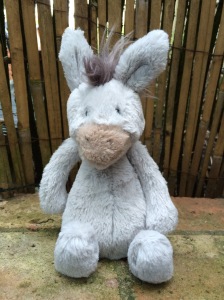

DonQui has timed his arrival on the Med at the end of May to hopefully coincide with the sort of weather conducive to lazing around on a beach but without it being overrun with other sun seekers.
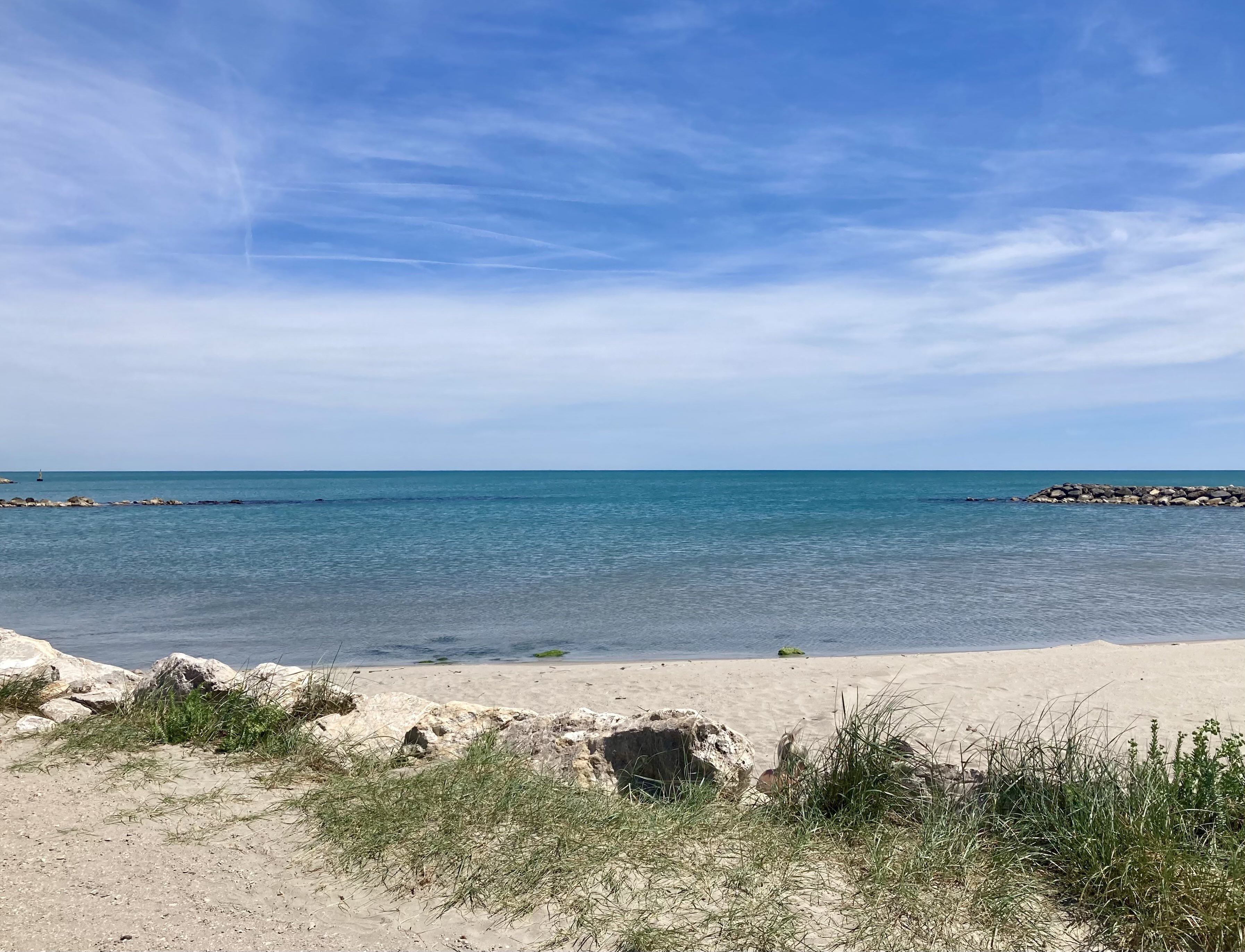
His destination is Les-Saintes-Maries-de-la-Mer with its 36kms of sand beaches at the mouth of the Rhône. It is only about a ½ hour drive from Arles.

It is a fairly laid back place and nothing like as expensive or as up itself as the Côte d’Azur further east.

Les-Saintes-Maries-de-la-Mer gets its name from the three saintly Marys (Magdalene, Clopas and Salome) who were present at Jesus’ crucifixion. In AD 46 the three Marys escaped Roman persecution in Palestine by boat, coming ashore at the village of Ra which is today (you guessed it) Saintes-Maries-de-la-Mer. Fortunately for them there were no patrols attempting to stop small boats carrying unwanted asylum seekers.

The ‘discovery’ of the relics of Mary Clopas and Mary Salome in the 15th century ‘verified’ the story and kicked off a lucrative pilgrimage which still continues today. The fate of Mary Magdalene is shrouded in legend and remains a favourite theme for thriller writers and holy grail hunters.

DonQui admires the impressive 9th century fortified church which houses the relics of two of the saintly Marys.

This is a serious fortification, complete with a well to sustain the 9th-10th century inhabitants when they sought sanctuary from Viking or Saracen raiders.
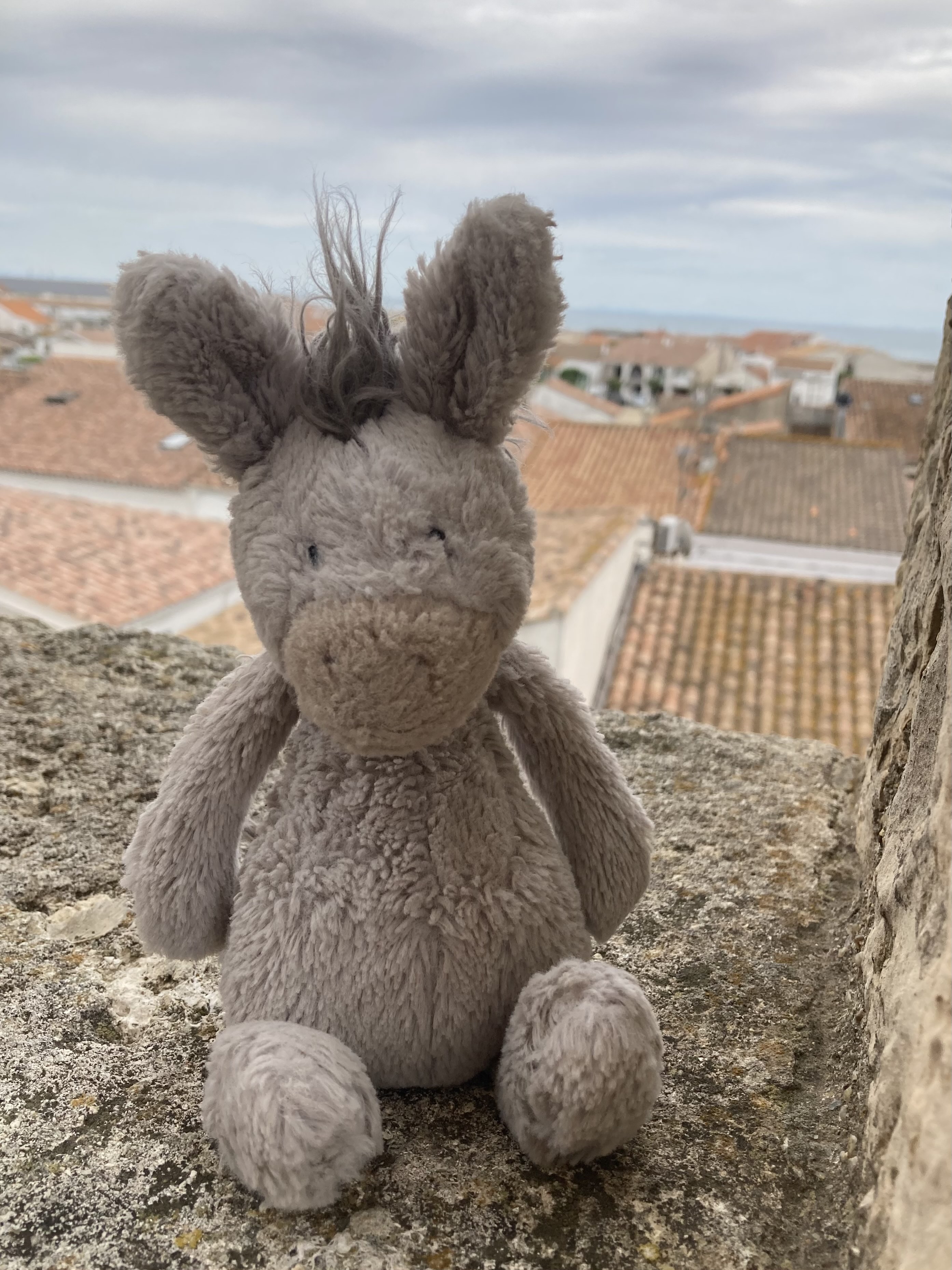
The view from the battlements provides good early warning of any malicious sea raiders. Perhaps DonQui is not the most alert of look-outs but then he has reliable intelligence that no Viking raiders are expected any time soon.

With forecasts of windy days ahead, DonQui decides to embark now on a boat tour along the coast and up the Petit Rhône into the heart of the more than 340,000 acres of marshland that constitutes the Camargue.

Along the way he sees a wide variety of birdlife including a couple of flamingoes flying overhead. Then (no doubt carefully timed with his boat’s progress) a gardian (Camargue cowboy if you like) rides up to the shore herding some of the animals in his charge.

The Camargue is famous for its free-ranging black bulls and white horses. The former are bred for non-fatal bull fighting but also end up the dining table. DonQui can attest to the deliciousness of their meat.

The horses are primarily work horses but, unlike their Veronese cousins, do not end on the dining table. The colts are born dark and only acquire the famous white coat when they get older.

After the boat trip DonQui spends a lazy few days at Saintes-Maries-de-la-Mer. With day time temperatures pleasantly in the mid 20s and few other tourists to spoil his view, he very much enjoys his time by the beach. The water is a little on the cold side still — not North Sea cold — but cool enough for DonQui to limit his bathing to simply getting his hooves wet.
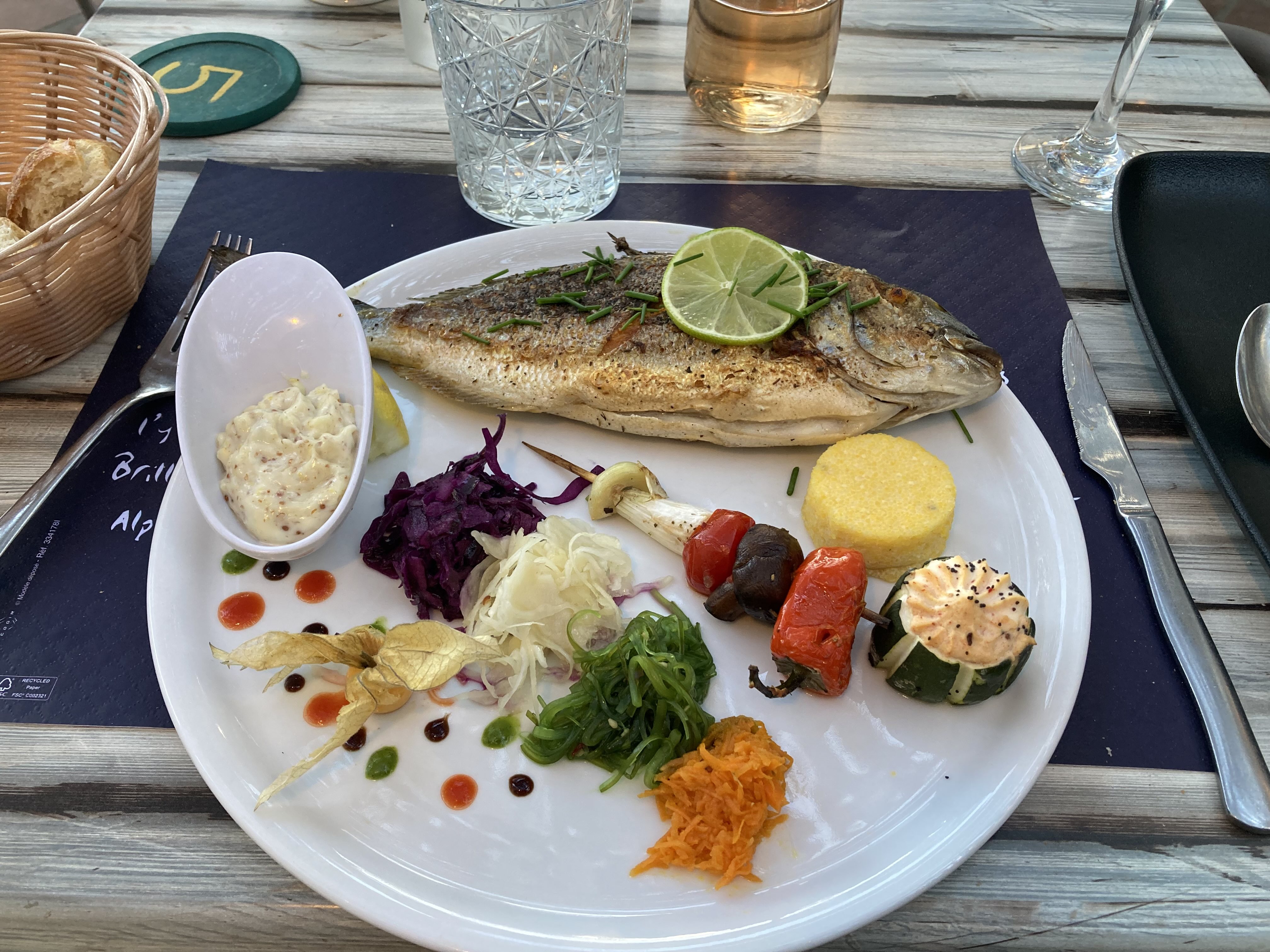
Having previously tasted Camargue bull (gardiane de taureau) in Arles , he feasts on local seafood whilst at the coast.

DonQui’s favourite dish by far consists of tellines cooked in a creamy garlic and parsley sauce. These are tiny clams (apparently wedge clams in English) raked up from the first 10 cm of sand at the water’s edge. A speciality of this region of Provence, they are not easily available elsewhere due to the labour-intensive harvesting. He likes them so much that he samples them at several restaurants on succeeding days.

He is also quite taken with poutargue. This is the same dried, cured fish roe he had in a pasta in Genoa where it is called bottarga. At the excellent Restaurant Les Launes the friendly waitress explains to DonQui that here it is eaten as a starter on thin slices of bread with butter and a squeeze of lemon. The taste is not dissimilar to a strong hard cheese with only a hint of fish. DonQui is very glad he got the opportunity to sample it.
 donquiblog