

DonQui has found himself traveling to Riga quite a lot recently.

This is perhaps not the best time of year to visit if, like DonQui, you prefer heat to cold. With the UK basking in double digit temperatures the mercury in Riga is barely rising above freezing.

There are however some compensations such as mulled wine served from a cauldron over an open fire at the Old Town Christmas Fair.
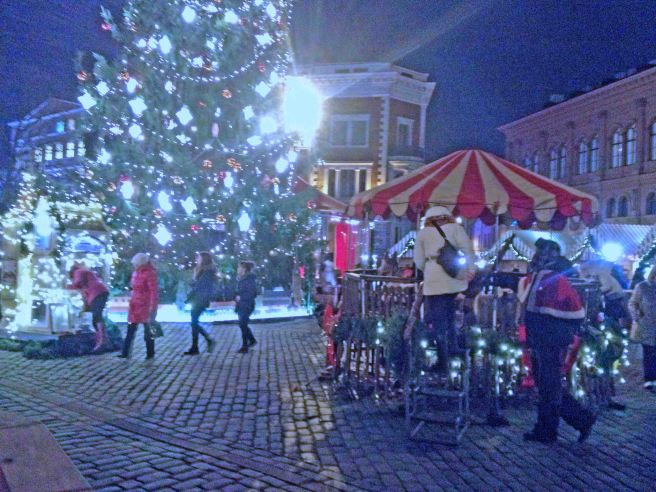
In DonQui’s view Riga, the capital of Latvia, is a rather pleasant place to spend a few days.

Old Town, with its narrow winding cobbled streets, is incredibly atmospheric — especially in the warmer months when DonQui enjoys sitting outside at one of the many cafés and watching the world go by.
 Wandering around the city it is not difficult to image oneself transported back in time to the medieval glory days when it was a Hanseatic city. The only downside is that such musings can be interrupted by embarrassing groups of drunken Brits on a stag-do or hen party. Fortunately there seem to be less of these now than a few years ago.

Further our from the old centre there are several streets featuring some of the best Art Nouveau buildings in Europe. It is well worth taking a walk up to Alberta Iela which is lined on both sides with some incredible architecture.

This part of town also has some very good restaurants including DonQui’s absolute favourite Riga eatery — the wonderful Muusu. Featuring top end modern European cuisine with a Latvian twist it is not the cheapest place in town but it is well worth it.

DonQui has enjoyed several delightful meals there and when he returned after a break of several months the very friendly waitress remembered his favourite wine.
 Latvia’s modern history has been troubled to say the least. The 1920s saw a conflict which involved Red and White Russians, Germans, Poles, British and others piling in to support various factions in a civil war which resulted in a brief period of independence.
Then came a Soviet occupation, followed by a Nazi occupation and then another Soviet occupation.

Latvians who backed the wrong side at the wrong time were killed or transported into exile, leaving a bitter legacy that remains to this day. A visit to the Museum of Occupation gives visitors a glimpse of what it was like in the dark days from the 1930s to 1980s. Continue reading
 donquiblog