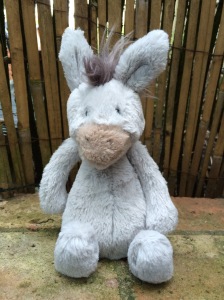

Famous around the world as the setting for Shakespeare’s Romeo and Juliet, Verona is a wonderful place to spend a couple of days. Once you get through the ghastly industrial and commercial sprawl that blights the surroundings of most Italian cities — it is really stunningly beautiful.
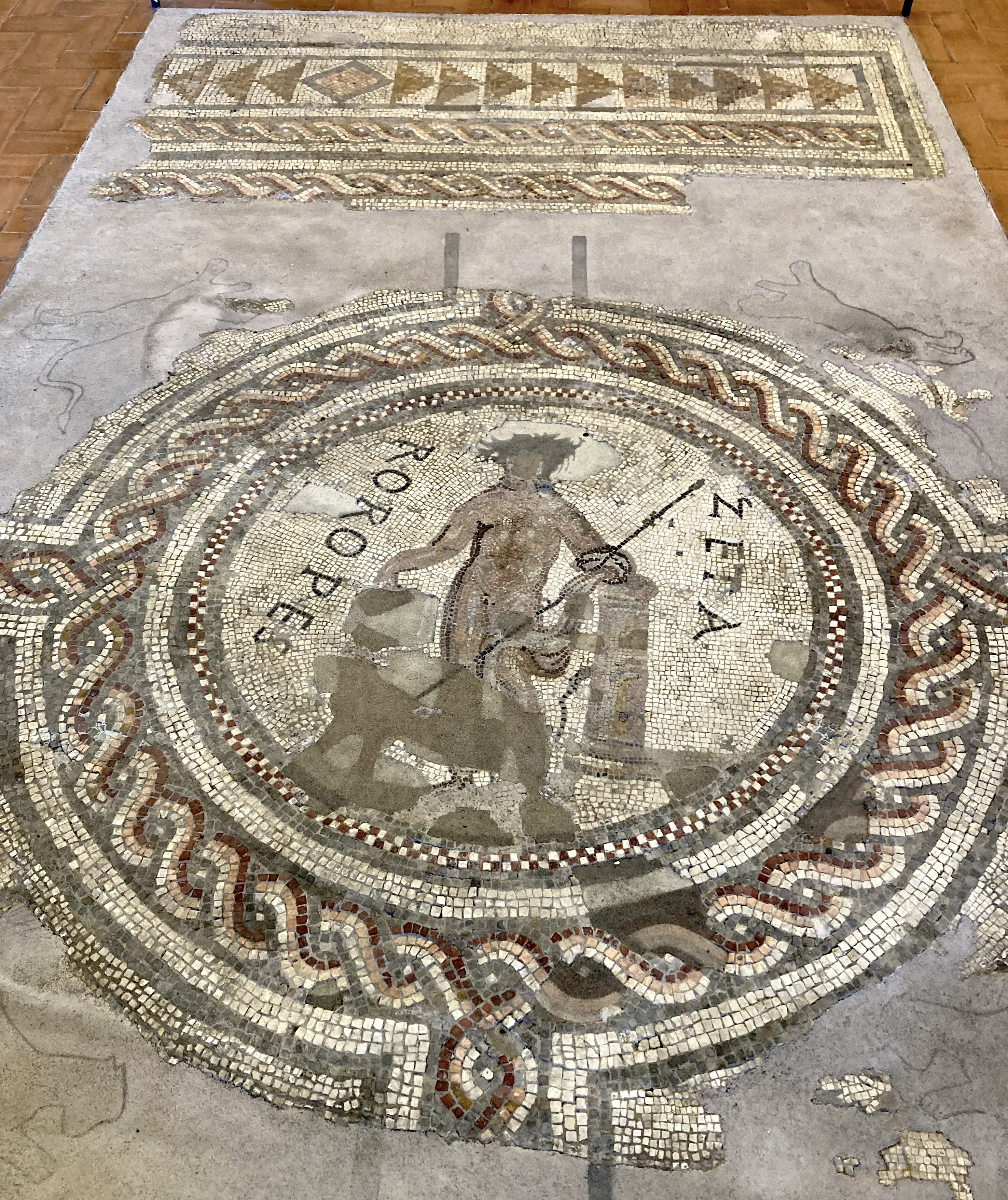
DonQui is a bit of a sucker for Roman stuff and Verona has some very good Roman stuff. So he hightails it over to the Roman amphitheatre and museum to get there just as the doors open. The amphitheatre is impressive but little museum does not have much of note apart from this nearly intact floor mosaic featuring Baccus — DonQui’s favourite deity by far.

At the other end of the old city is a nearly intact Roman arena. Both the amphitheatre and arena are still in use — hosting regular concerts.

The old city is compact and mostly pedestrianised. DonQui spends the better part of a very pleasant day trotting around the place and taking in the atmosphere.

Around midday the town has pretty well filled up with tourists (presumably day trippers as there were very few of them in the morning). So he takes shelter in a little bottega around the corner from the Roman arena to pay homage to Baccus. Here he spends a delightful hour with Bruno learning about the wines of Verona’s Valpolicella region.

Of course DonQui tastes some too — working his way from the relatively light twice-fermented Ripasso, up through the heady full bodied Amarone made from partially dried grapes, to the most ancient of the Valpolicella wines — the sweet Recioto which Bruno recommends having with cheese. Before getting into the Valpolicella DonQui also has a taste of a delightfully fresh and minerally white Lugano from the shores of nearby Lake Garda. Bruno explains that the retreating sea which created Lake Garda left salt deposits in the clay which gives Lugano wines their unique taste.

On less steady hooves than before, DonQui explores the delightful streets and squares a little longer.

Although not a great fan of churches he is most impressed with the 13th century church of San Pietro the Martyr.

He particularly admires the fantastic medieval art from the 14th and 15th centuries.
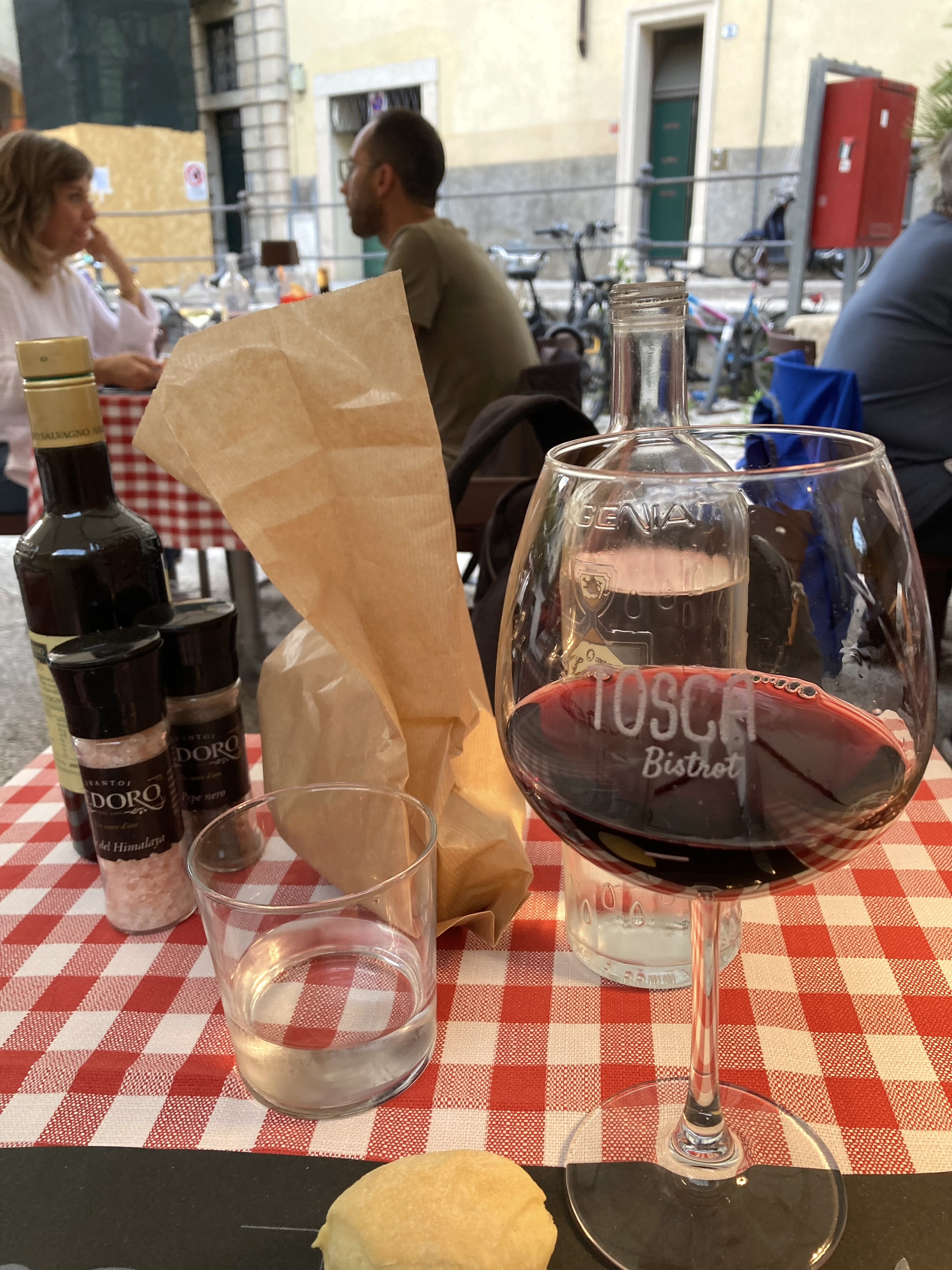
After a bit of a rest he heads out in the evening to taste some of the local specialties at the delightful Tosca Bistro.
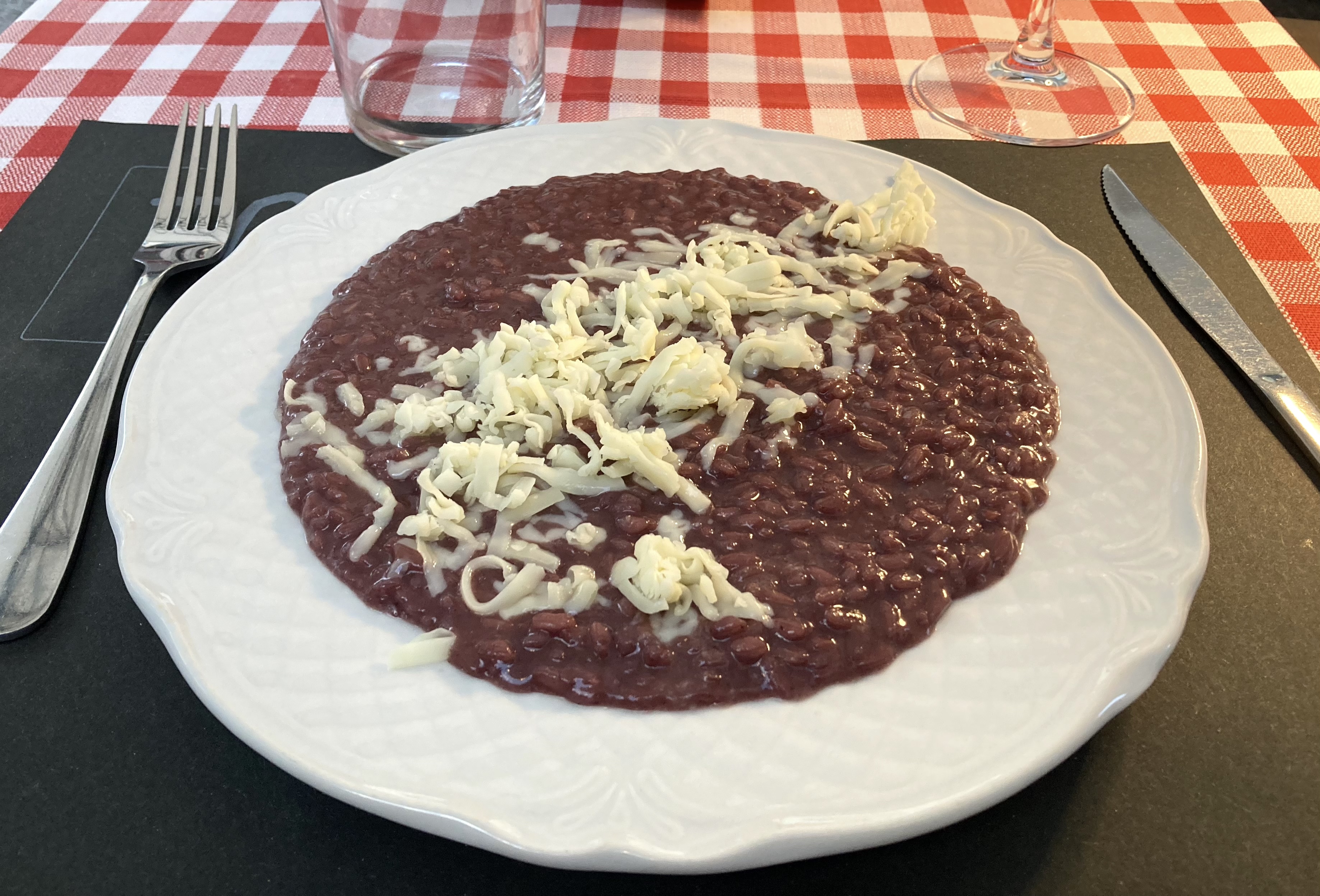
Here he samples an excellent risotto with Amarone, and horse meat stew with polenta. Both washed down with a glass of rich Amarone wine.

Tradition has it that the Veronese got a taste for eating horse after the battle between Theodoric and Odoacer in AD 489 which left large numbers of dead horses on the battlefield to provide an unexpected feast for the locals. The stew is rich, full of flavour and utterly delicious — it is something he will never be able to have in the UK.

Before resuming his journey the following morning, DonQui visits the reconstructed house of the Capuleti — better know as ‘Juliet’s house’ as the Shakespearian heroine was from the Capuleti family (anglicised to Capulet by the bard).

By arriving just after opening he is able to beat the hordes of tourists who were choking the place the previous afternoon. It is said that if you touch the statue of Juliet in the courtyard you will be lucky in love. DonQui does not bother as he is already lucky in that department.





 donquiblog