DonQui’s Goat Curry

Readers will be pleased to learn that DonQui’s frivolous musings on political matters have been put to one side for more important things — food.

Inspired by the gorgeous goat curries he had in Tanzania he has decided to try to recreate something similar. DonQui has cooked goat curry before, using a Jamaican recipe. It was rather good but this time he wants to create something different, based on the flavours he remembers from Africa.

Goat Curry 6a

So here goes — and once again DonQui apologises for his lack of exact measurements. He is not a very exact creature and tends to do things to taste rather than measurement.

Ingredients

3-400g diced goats meat (DonQui gets his from the Wild Meat Company)
coconut oil for cooking (vegetable oil can substitute)
1 onion chopped
1 red chilli seeded and chopped
1 garlic clove chopped
a good sized piece of ginger root chopped
2 tablespoons of mild curry powder
500ml lamb or beef stock (lamb is better if you can find it. DonQui gets his from Waitrose)
1 teaspoon dried thyme (DonQui normally uses fresh but with winter coming his supply has dwindled)
three or four dried curry leaves
a good dollop of tomato purée
chopped coriander leaves
juice of 1 lime
salt to taste

Method

Goat Curry 1

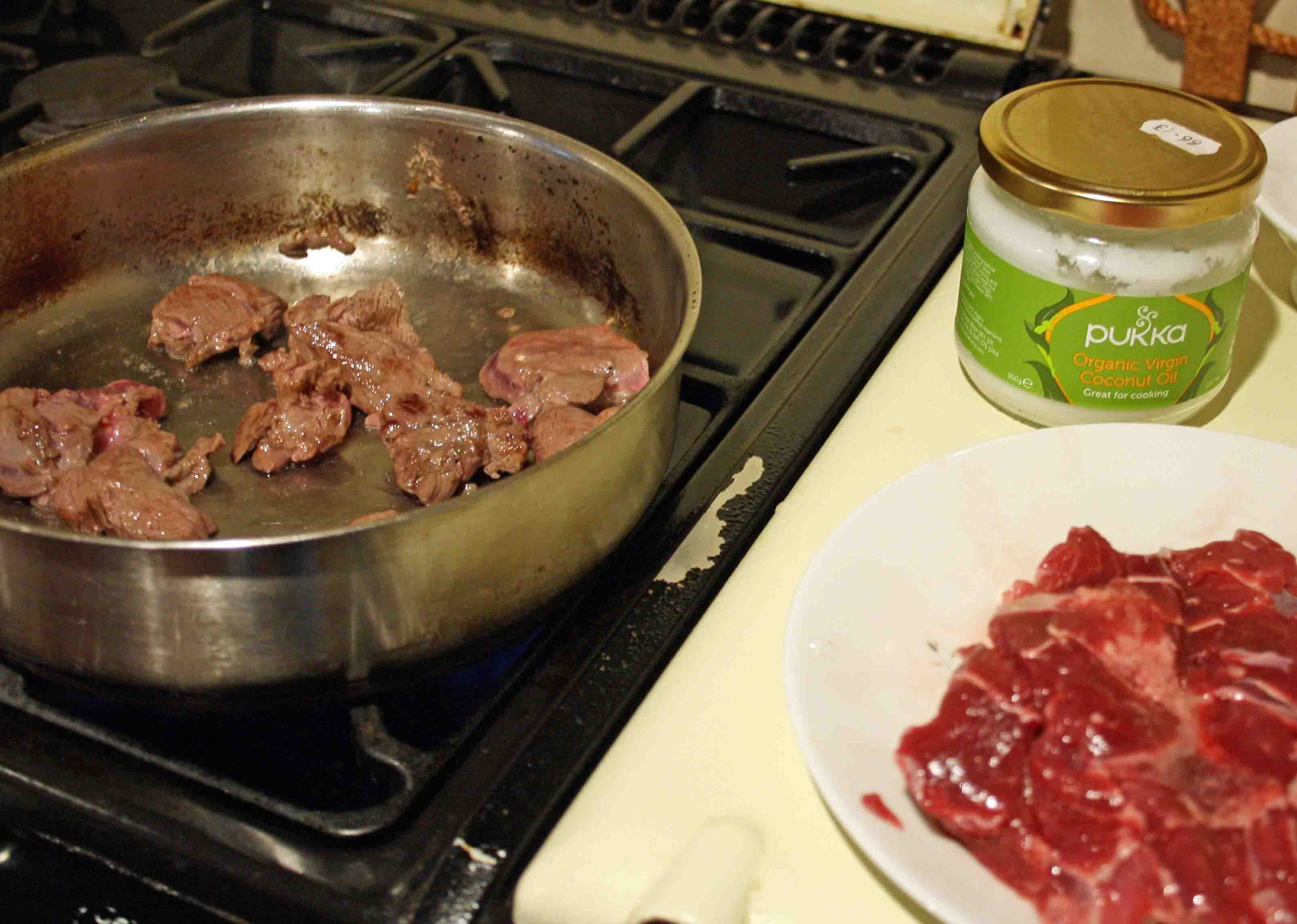
Brown the goat in the coconut oil at high temperature. It is better to do this in small batches so the pan remains hot. Once done set the browned goat to one side.

Goat Curry 2

In the same pan gently fry the onion until it starts to brown. Then add in the garlic, ginger and chilli. Stir around for a minute or two then throw in the curry powder.

Add the lamb stock to the pan, stir it around well to take up all the brown bits, bring to the boil and then let simmer to blend and reduce for a while.

Goat 4

At this point you could put the goat back into the pan, cover and simmer for a few hours.
However, DonQui thinks it a far better idea to bung it all in a slow cooker so he can go off to the pub for a couple of pints without worrying about having to watch the stove. So this is what he does.

The goat and the spiced stock from the pan go into the slow cooker along with the thyme, curry leaves, tomato purée, coconut cream and salt. DonQui puts a lid on it and goes to the pub leaving it to simmer together gently for at least 3 hours or 3 pints, whichever takes longer.

If you do not have (nor want to use) a slow cooker then simply put it all together in the pan, cover and again simmer for 3 hours or more.

Goat Curry 5

After 3 hours slow cooking the goat should be falling apart tender. If you cooked it in the pan you simply need to take the lid off, turn the heat up and let the liquid reduce to a rich deep sauce. If, like DonQui, you used a slow cooker then tip out most of the liquid into the pan and cook it down while the meat remains warm. Then put back together.

Goat Curry 6

Stir in the juice of 1/2 a lime, and serve with the chopped coriander on top, rice on the side and the other half-lime for more juice for those who want it.

Prawn Fried Rice

DonQui really loves rice. In fact if he had his way he would probably serve it with just about everything.

When he cooks rice he often makes more than he needs and saves what is left over to make a fried rice dish the next day. There is a bit of a myth that one should not re-cook rice. However, as long as the rice is kept in the fridge and not left out at room temperature for any length of time, then there is no problem. If concerned you could always cook the rice on the day rather than using left-over rice.

rice serve

He plays around with the ingredients depending on his mood but this is one of his favourites.
Ingredients

cold cooked rice
coconut or vegetable oil for cooking
1 garlic clove, finely chopped
4 spring onions, finely sliced
grated ginger root (about 1 cm or to taste)
1 red chilli, finely sliced
1/4 teaspoon cumin powder
1/2 teaspoon turmeric powder
1 egg, beaten
frozen peas thawed and blanched
cooked prawns
soy sauce to taste

Method

rice 1

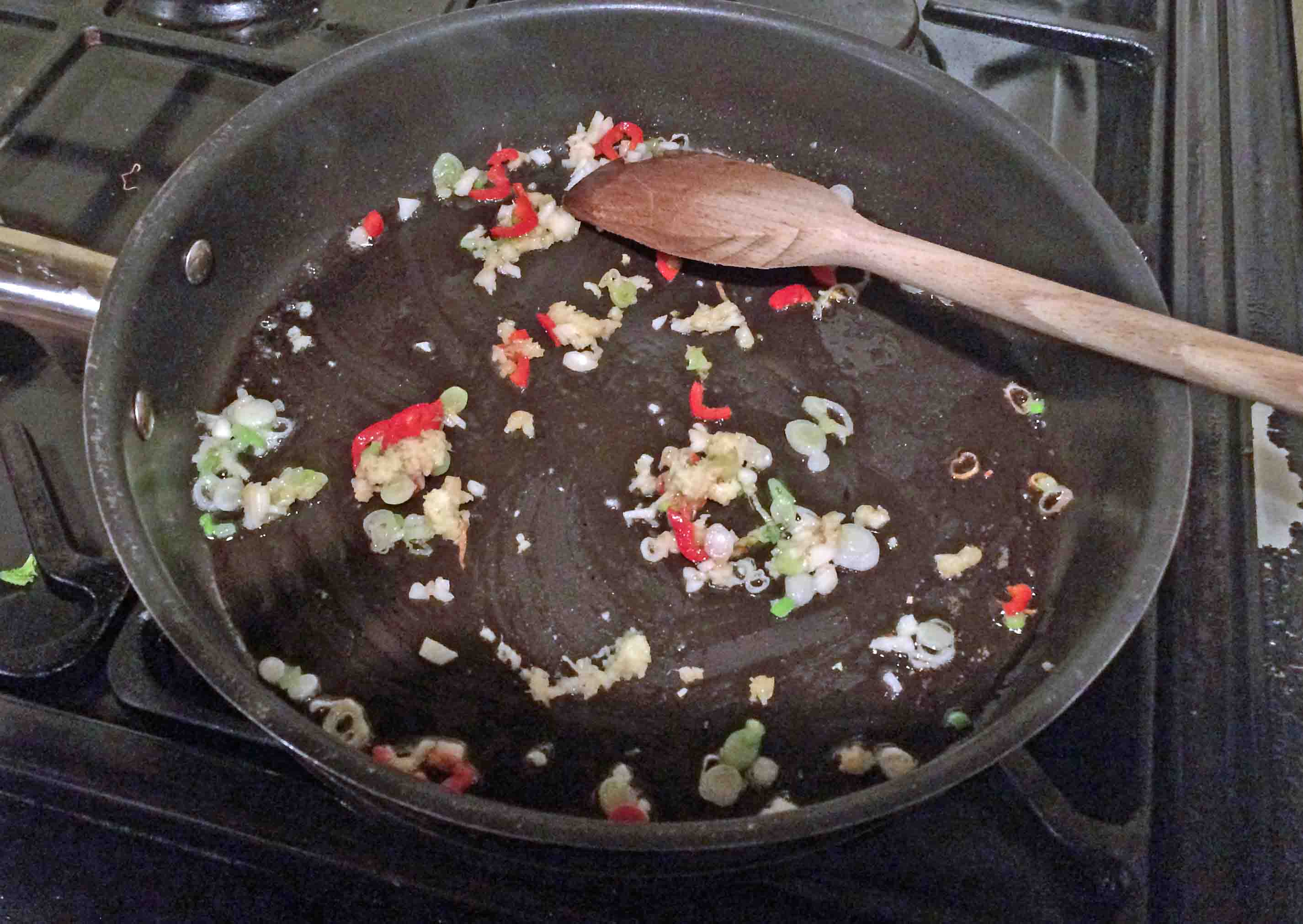
Heat the oil in wok or large frying pan. Add the spring onions, garlic, ginger and chilli, then cook for a couple of minutes

rice

Add the turmeric and cumin and stir together for a couple of seconds.

rice add rice

Throw in the cooked rice, and mix it all up for a minute or two until the rice is evenly coloured.

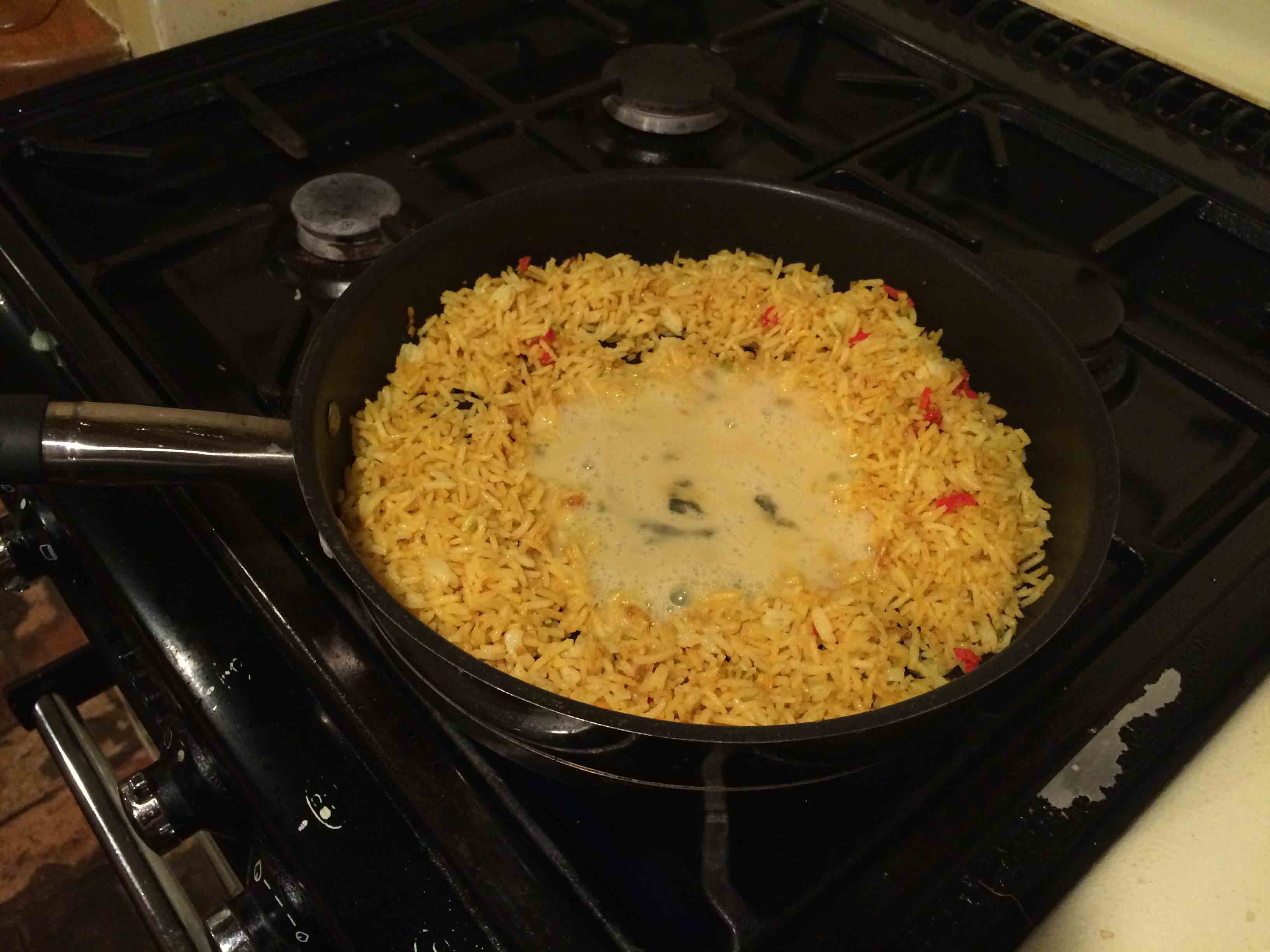
rice eggCreate a well in the middle of the rice, pour in the beaten egg and scramble it together with the rice for a couple of minutes.

rice prawns

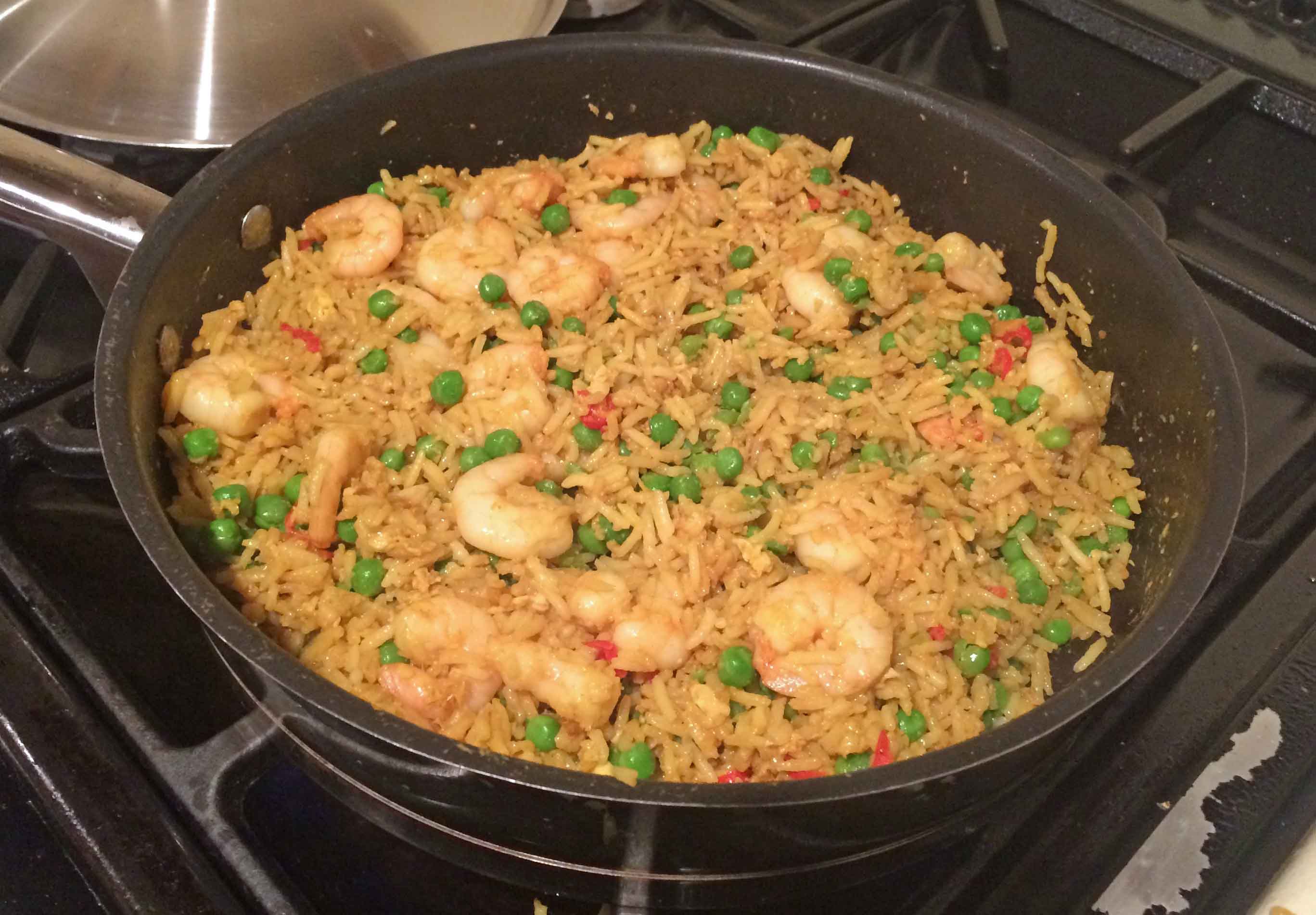
Then add the peas and prawns, stirring together with a good splash of soy sauce until everything is nicely blended and warmed up. DonQui often puts a lid on the pan for the minute to help it heat up.

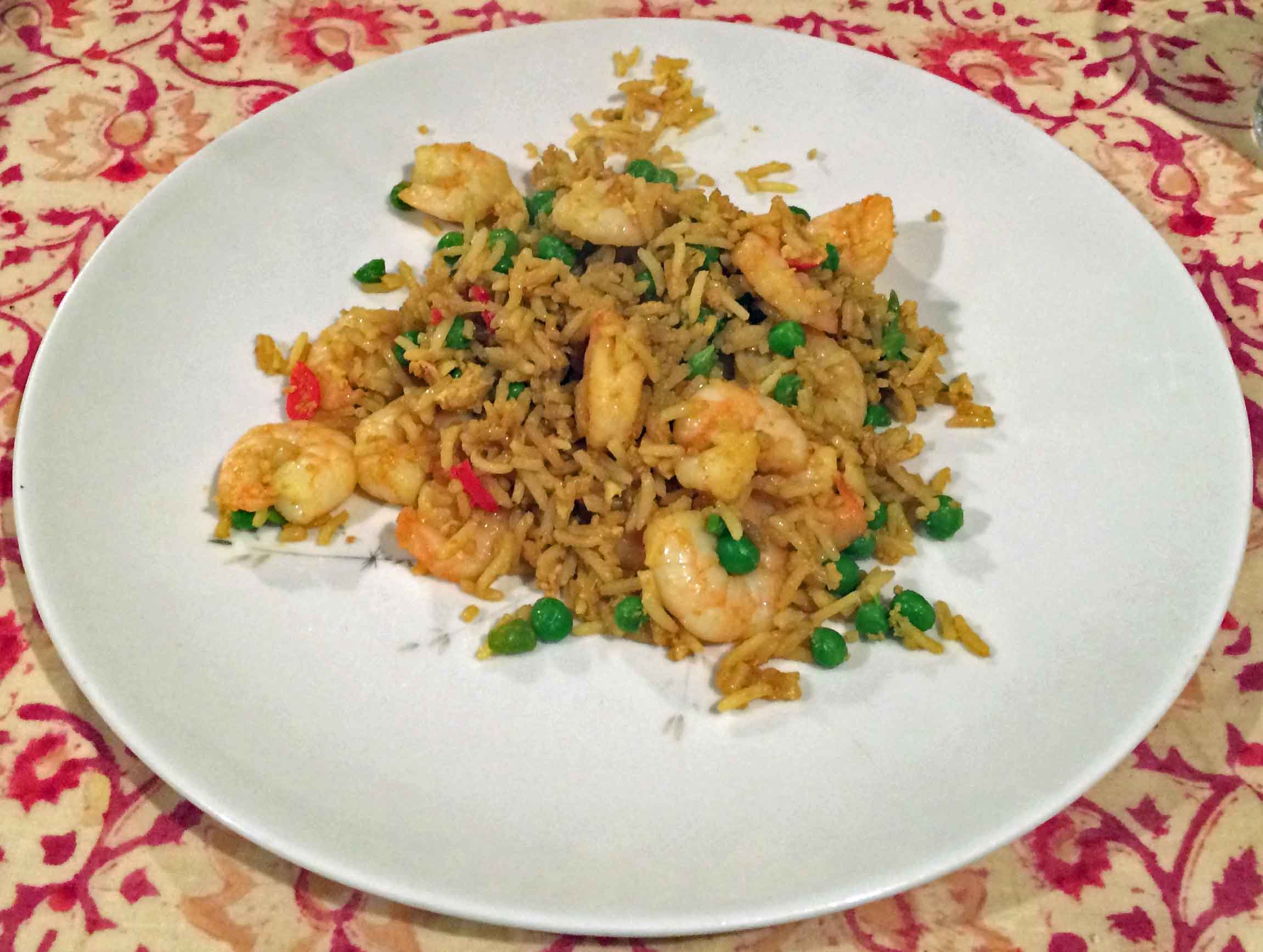
rice lastServe with extra soy sauce and sliced spring onions on the side.

A Medieval Chicken

Back home now after his various wanderings, it is time for DonQui to get cooking again.

limona book

Now DonQui’s interest in history is as strong as his love of good food. When he was in France earlier in the year, he came across a beautiful little book — La Cuisine du Moyen Âge, by Brigitte Racine.

limona illustration

DonQui decides to try out the Limonia — a recipe for lemon chicken adapted from the Liber de Coquina which is believed to have been written by a Neapolitan chef in the 14th century.

The original recipe, which uses egg yolks to thicken the sauce, has been adapted by Brigitte Racine in her book and DonQui in turn also makes a few adaptions of his own.

Ingredients (for 2 people)
3 or 4 Chicken thighs
1 onion finely chopped
a handful of lardons (or thick smoked bacon pieces)
500ml/1 pint of unsalted chicken stock
oil and butter
juice of 1/2 lemon
lemon zest
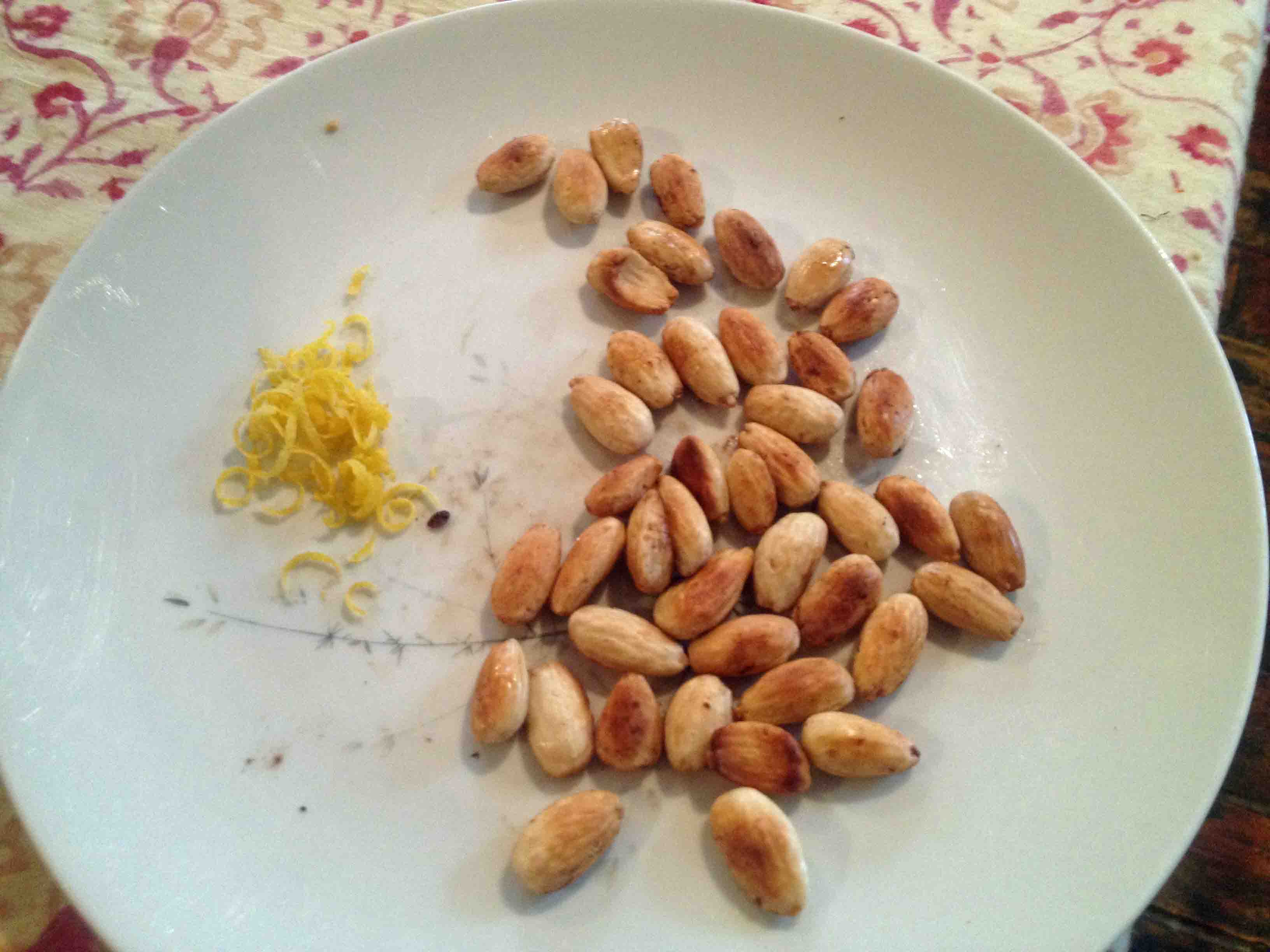
a handful of blanched almonds
1 teaspoon ginger powder
salt and pepper.

Note: it is best to use unsalted liquid stock and not bouillon or stock cubes. The reason is that stock cubes are mostly salt and with the smoked lardons the dish will be too salty. In the UK DonQui gets his stock from Waitrose which he tends to stock up on (pardon the lame pun) and freeze until needed.

Method

limona lardons

Fry the onions and lardons in a little oil until the onions begin to brown. Take out and reserve.

limona brown chicken

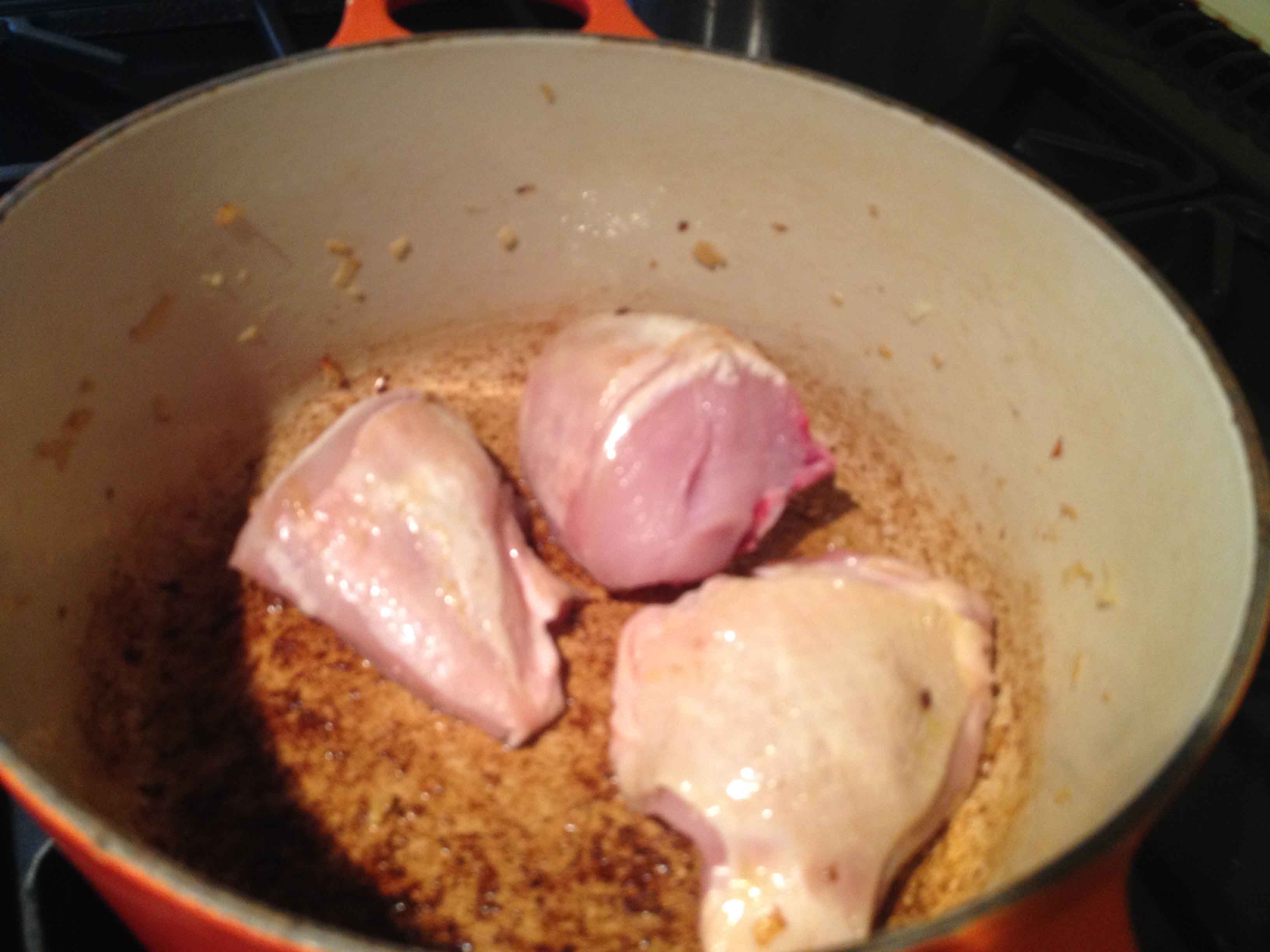
In the same pot, brown the chicken thighs in a mixture of butter and oil

limona simmer

Add the ginger and pepper and put the onion/lardon mixture back int the pot. Stir together for a minute or so then add the chicken stock, bring to the boil, cover and simmer gently for approximately 30 minutes.

limona almonds

Meanwhile toast the almonds under the grill or stir fry in a little butter until they begin to brown. DonQui prefers the latter method as it adds a bit more taste.

limona lemon

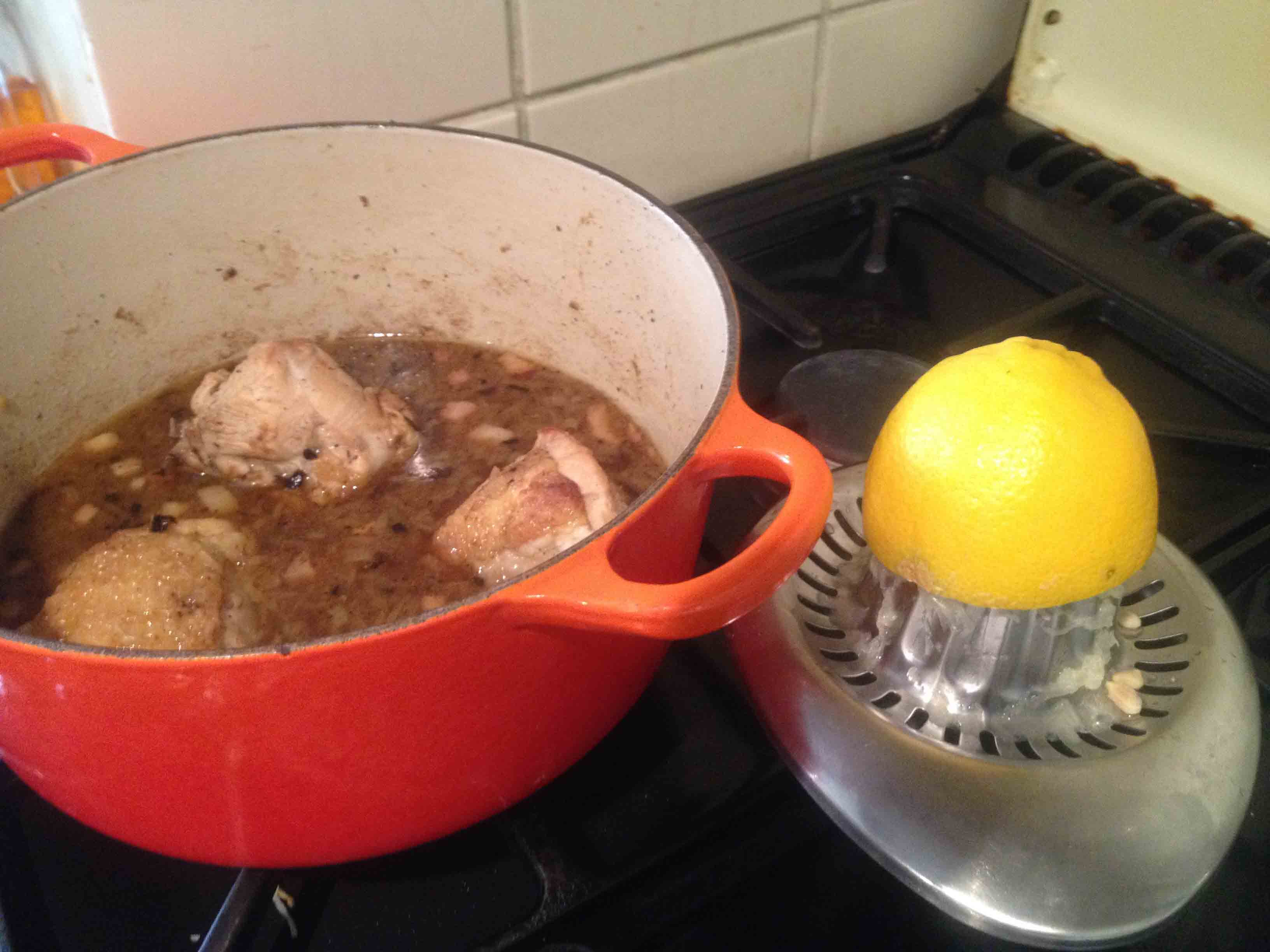
After 20 minutes take the lid off the pot, add the lemon zest and let the sauce reduce for the last 10 minutes of cooking. If you want a thinker sauce then take the chicken out to keep warm while you reduce the sauce further. Add the lemon juice just before serving.

When using lemon juice DonQui always adds it at the end as the vitamin C is destroyed by long cooking.

limona serve

Season to taste and serve covered with the sauce and almonds.

limona final

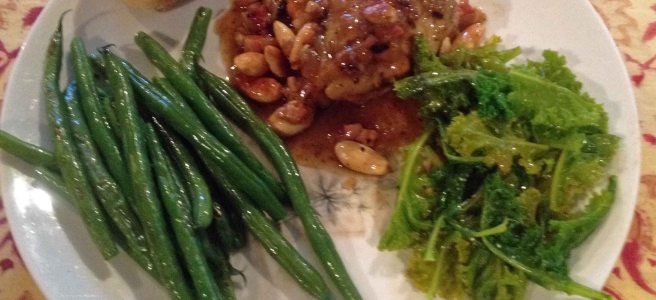
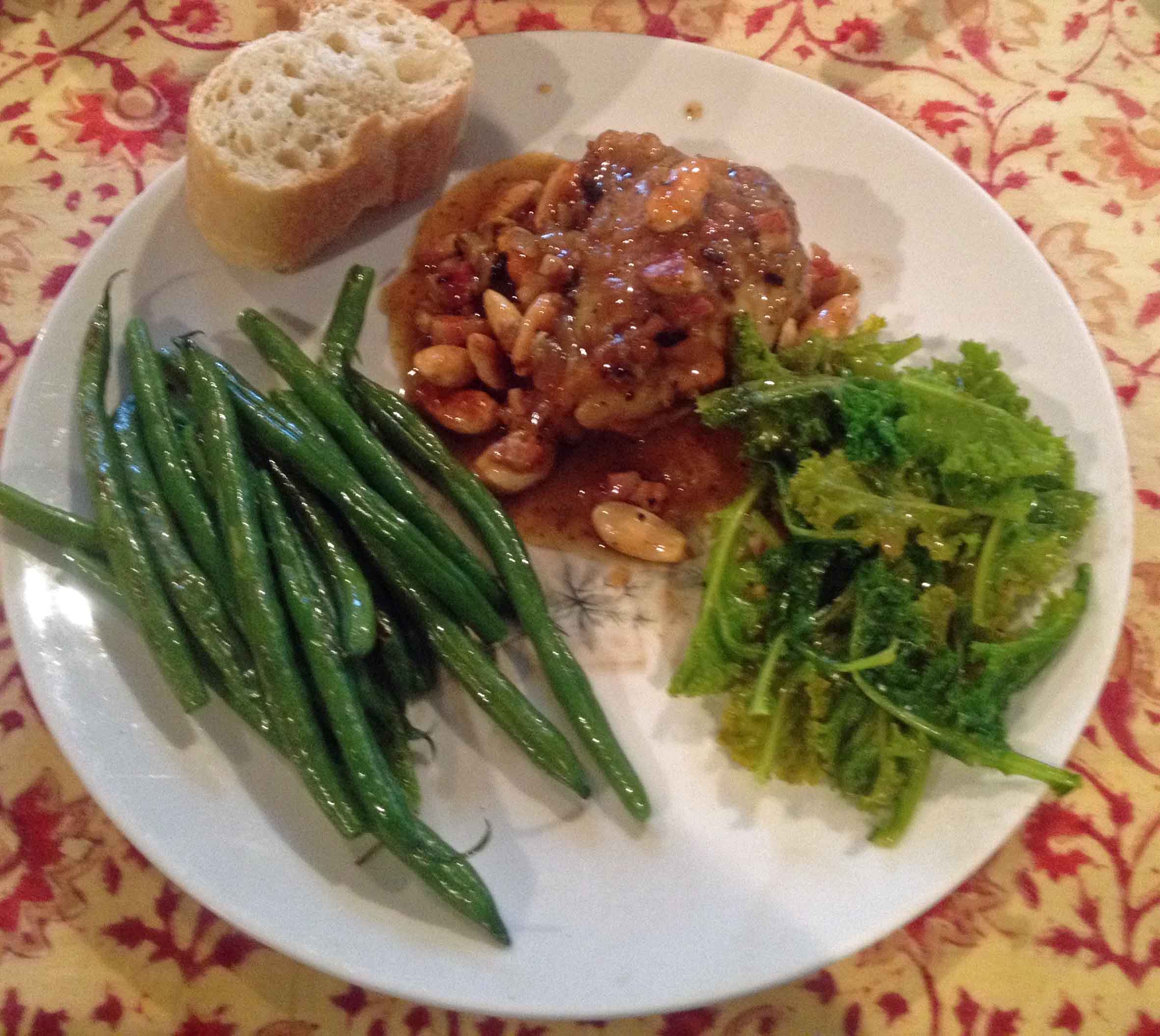
To be true to the medieval origin of the recipe DonQui served the chicken with beans, kale and bread. The latter would have been the most usual carbohydrate accompaniment to a 14th century meal. The potato was unheard of and rice was an expensive import, not cultivated in Europe until the 15th century. Pasta would have been a historically correct possibility as variations on it had been around in Italy since Roman times. Contrary to popular myth, pasta was not brought to Italy from China by Marco Polo.

Very simple to cook, DonQui thought the taste was utterly delicious. With its lemony/ginger/almond sauce it had a depth of flavour that reminded him of modern Moroccan cuisine. DonQui has since seen that the original recipe was thickened with ground almonds, much like some Indian dishes. He will try doing that next time.

For Latin readers the original recipe from the Liber de Coquina is as follows:

De limonia: ad limoniam faciendam, suffrigantur pulli cum lardo et cepis. Et amigdale mundate terantur, distemperentur cum brodio carnis et colentur. Que coquantur cum dictis pullis et speciebus.
Et si non habentur amigdale, spissetur brodium cum uitellis ouorum.
Et si fuerit prope horam scutellandi, pone ibi succum limonum uel limiarum uel citrangulorum.

England’s Atlantis

DonQui is relieved to arrive back in England to crisp, sunny, autumn weather. Although it certainly feels cold after Tanzania’s mid 30° temperatures, at least it is not grey and rainy.
It being that day of the week, DonQui decides to partake in the English ritual of a walk in the country followed by a Sunday roast at a suitable pub.

One of his favourite places to do this is Dunwich.

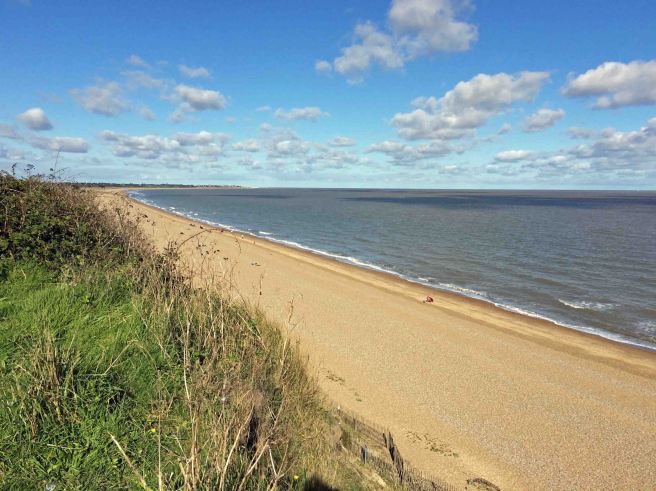
Dunwich beachNow not many people have heard of Dunwich and with good reason… Like Atlantis, most of it lies under the sea.

Yet back in medieval times Dunwich was one of England’s most important towns. It was in the top ten listed in the Doomsday Book of 1086, growing in size and prosperity over the next 300 years. Trade with Flanders and the royal shipyards made Dunwich the most important port on the East coast, second only to London. It was here that King Edward III’s fleet was built for the invasion of France in the Hundred Years War.

a53876498ff71cf21698b55617168735

However, the sand cliffs on which Dunwich is built are highly vulnerable to erosion. A great storm in 1347 swept away 400 houses as the cliffs crumbled and fell into the sea. In the years that followed the once great port silted up and the Blyth River changed its course. By the beginning of the 17th century Dunwich had lost 3/4 of its original size and the erosion continues still.

Dunwich greyfriarsToday all that remains of the once great medieval city are the ruins of the Greyfriars monastery and St James’ chapel which once administered to a leper colony. Both of these buildings were inland from the original city walls. All that was once inside the walls is now under the sea.

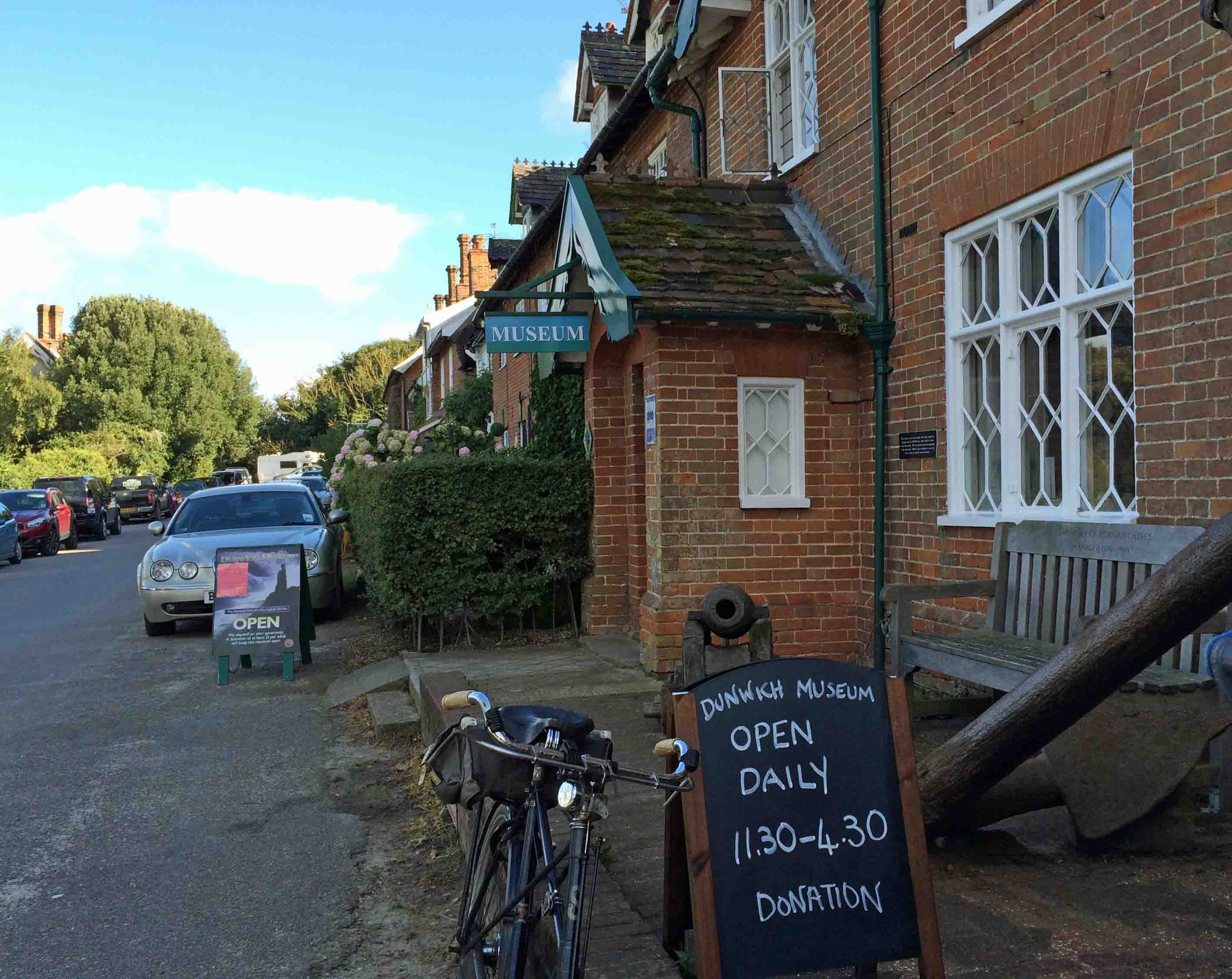
Dunwich museum

The more than 5000 inhabitants of medieval times has shrunk to a modern population of less than 200. A rather good little museum tells the story

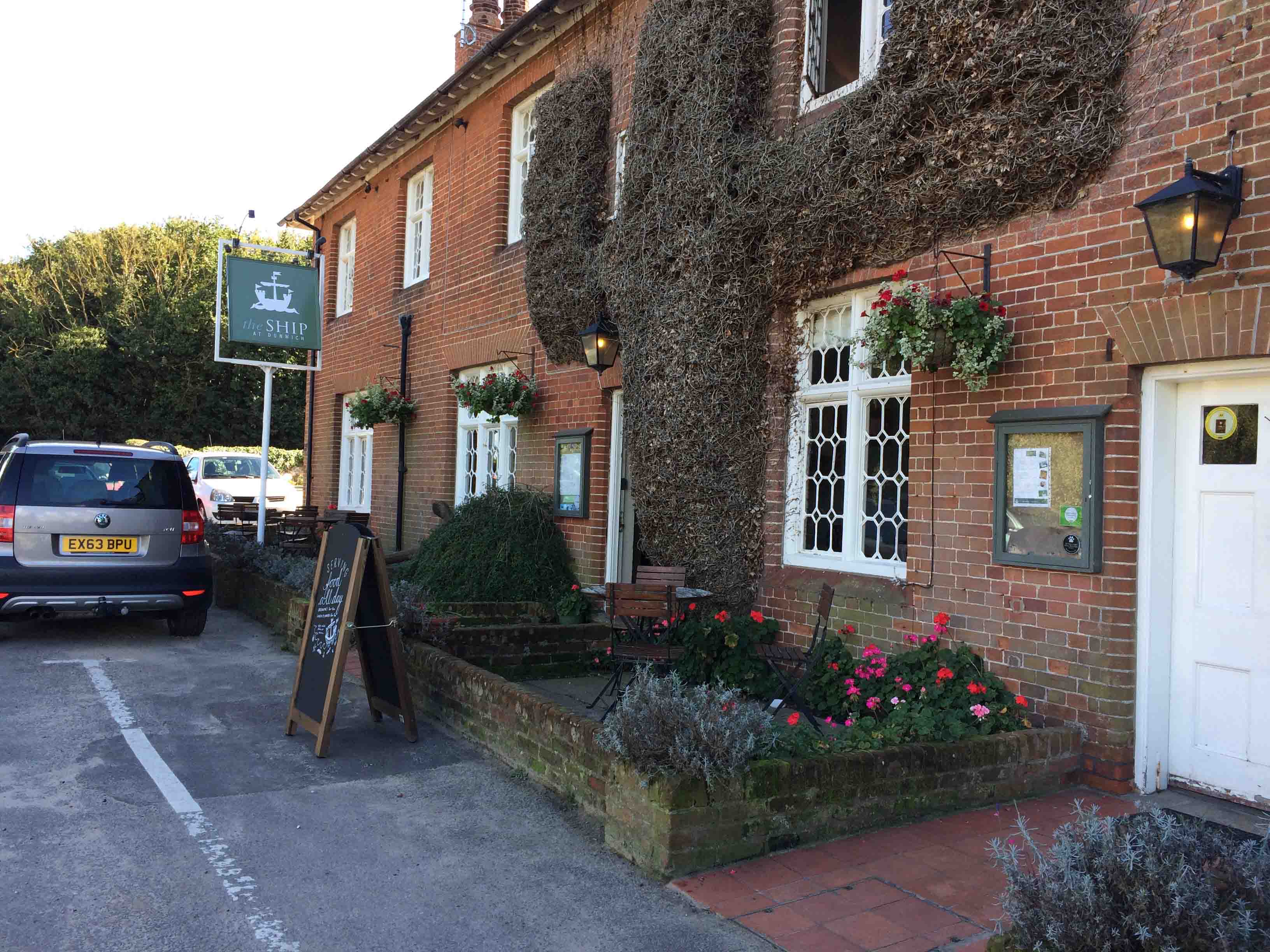
Dunwich Ship

Tucked in amongst the cottages of modern Dunwich is the Ship Inn — one of DonQui’s favourite pubs in the area. After a circular walk over the cliffs, through Greyfriars’ Wood and around the monastery DonQui is ready for a pint and some roast beast with all the trimmings.

Dunwich inside

The Ship is a free house serving an ever changing selection of local beers and ciders. This is a rarity in these parts where most pubs are tied to Southwold’s Adnams’ brewery. Now in the past there was no love lost between Dunwich and Southwold so it is perhaps not surprising to find the Ship maintaining its independence. Although DonQui is a great fan of Adnams’ beers he finds it refreshing to have a wider choice every once in a while.

Dunwich bar

He samples the Jenny Morgan, and finds it quite refreshing with a light hoppy taste. Brewed by Green Jack of Lowestoft it is apparently named after a girl in an old mariners’ song who waits at home for her sweetheart who is out at sea.

Dunwich menu

Unlike many pubs on Sunday, The Ship offers other options in addition to the traditional Sunday Roast. However it is roast than DonQui wants, choosing the beef while Duchess goes for the pork. They also decide to share the watermelon, feta, pumpkin seed and basil salad as a starter. It simply sounded too interesting to pass up and DonQui was glad he didn’t — it was utterly delicious.

The Ship always does an excellent roast and this time was no exception. Both were very good but DonQui thought that the pork possible had the edge on the beef. Unfortunately he tucked into the food right away rather than taking photographs.

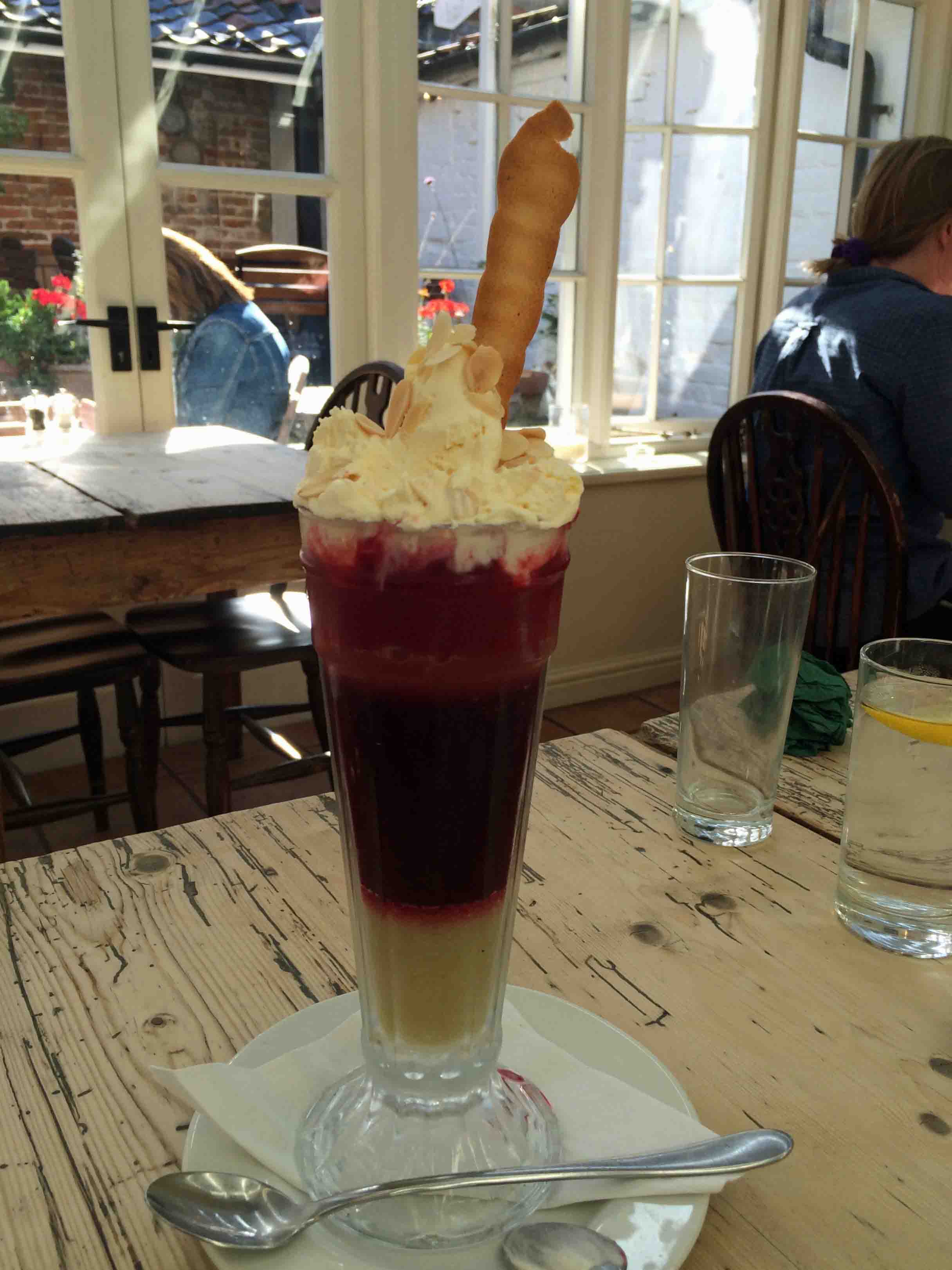
Dunwich knickerbocker

However he did remember to capture the image of the rather spectacular knickerbocker glory which served as an excellent shared desert.

A Most Wonderful Meal

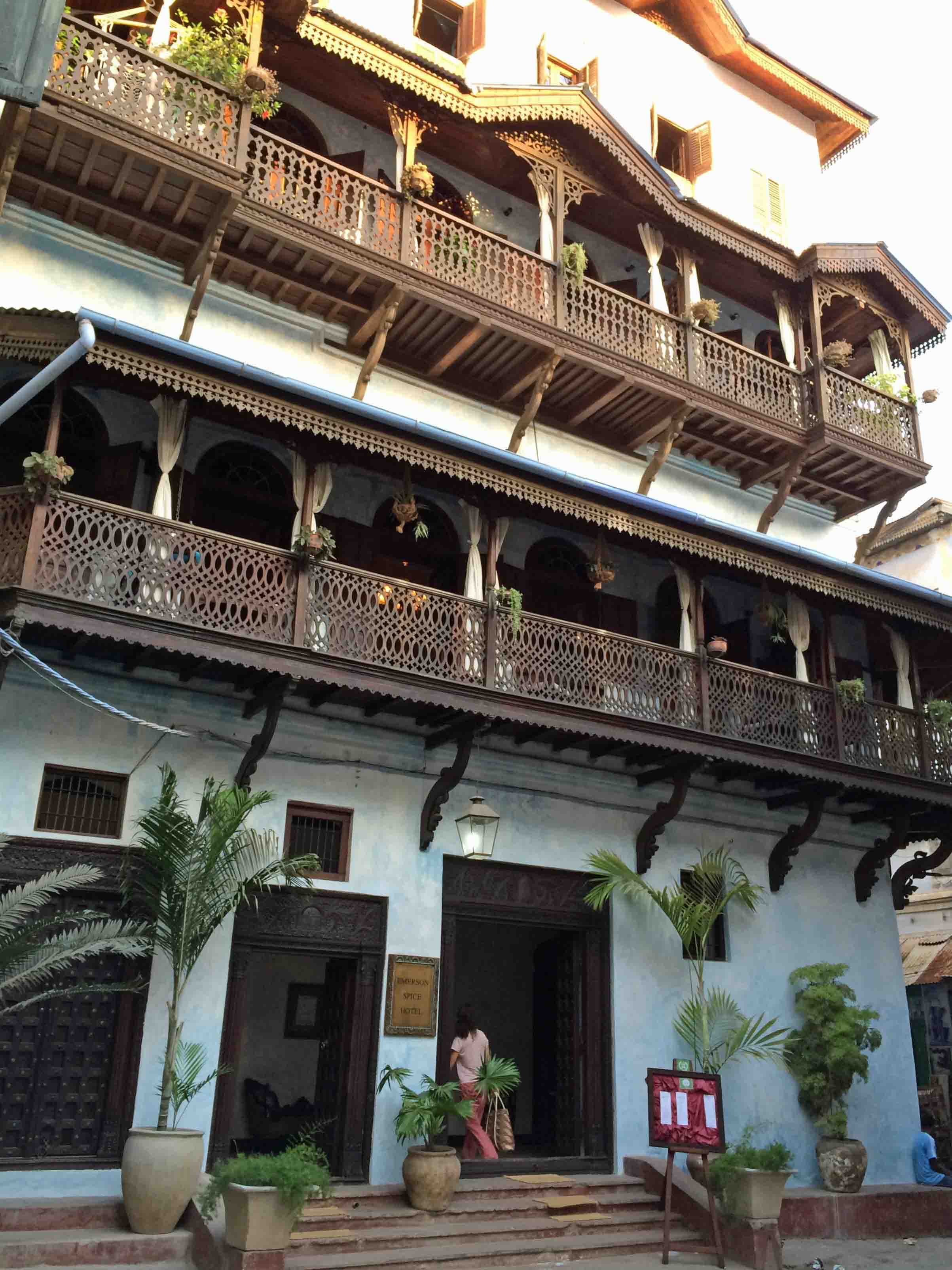
DonQui decides to try out the highly recommended Tea House Restaurant on the rooftop of the Emerson Spice hotel for dinner.

Emerson Spice

Being tucked down the back streets of Stone Town the Emerson Spice is a bit tricky to find.  Although he has a fairly good nose for direction DonQui eventually has to admit defeat and ask for directions — something he absolutely hates doing.

donqui spice

Up several flights of wooden stairs of the beautifully restored merchant’s house  and DonQui finds himself on the rooftop terrace. Dinner, a five course seafood tasting menu, starts at 7 and he was advised to arrive an hour earlier to watch the sunset over the town,

sunset

He is glad he did.

The restaurant is quite small, taking a maximum of 30 diners so booking is essential. They take a deposit on booking. Tonight there are about a dozen people dining and quite a few others come up for a drink to watch the sunset.

pinot noir

DonQui selects a South African pinot noir to drink. It is a light red, served chilled like the Alsacian pinot noir wines it reminds him of. He was quite glad of his choice as it went perfectly well with the citrus flavours of many of the dishes.

The fist course consists of three small dishes:

first courseSembe cake with fish paté. The fish is shredded rather than compressed in a paté. It is served under a parsley salad and on top of a small sembe cake, which reminds DobQui of a soft biscuit. The flavours are delicate, and deliciously enhanced with a light citrus dressing.

Chaza tomato. A luscious deep red ripe tomato stuffed with a mildly spiced mixture of rice and mince.

Passion fruit ceviche. A small thin fillet of white fish served on a shell with the most gorgeous, intense passion fruit. Marinade. The flavours all work beautifully together, leaving an exquisite lingering aftertaste in DonQui’s mouth from the spices in the tomato playing with the tartness of the ceviche.

tuna

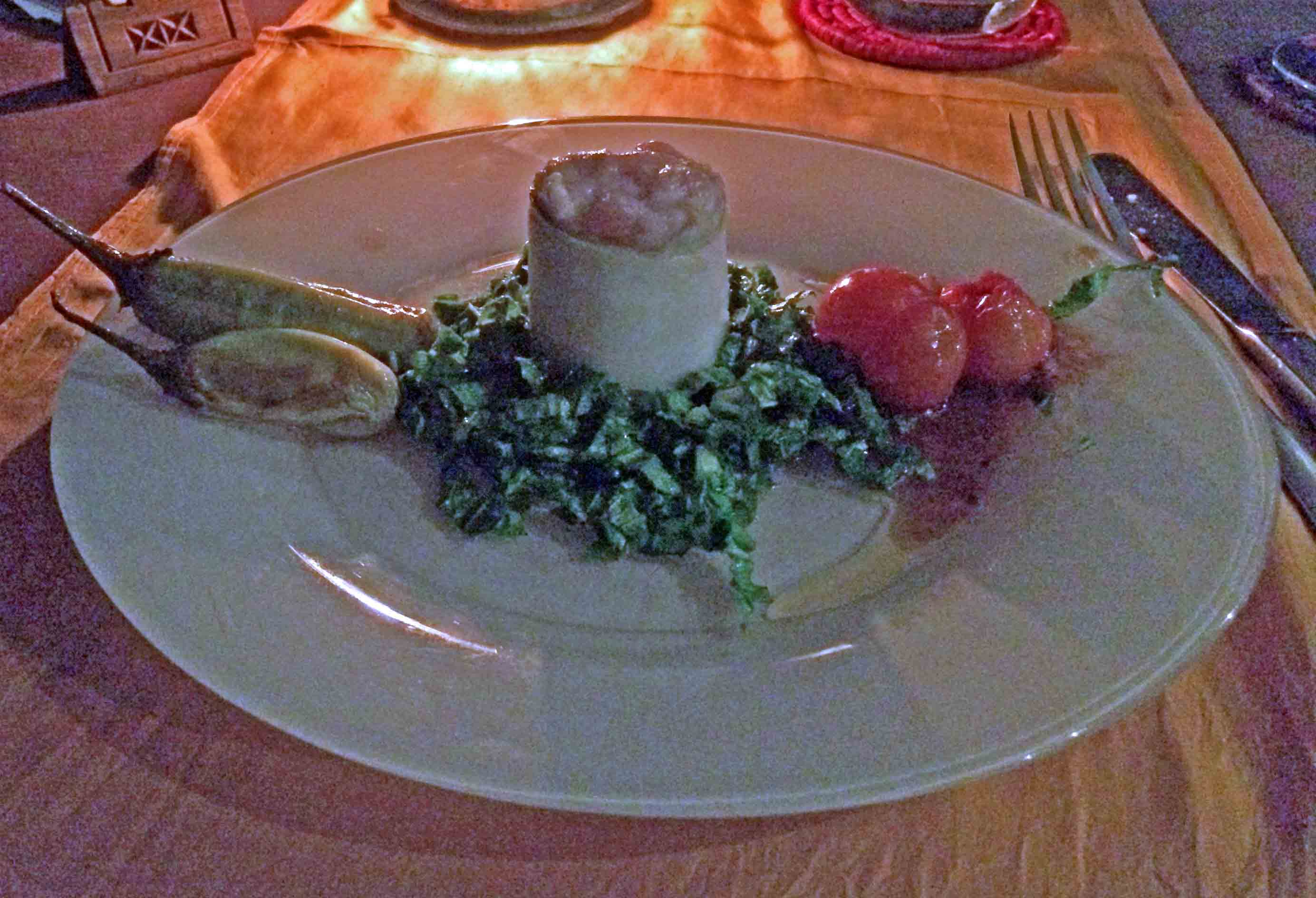
Tuna timbale is the next course, served on a bed of parsley with garlic nyanya chungu (or African eggplant) and sautéed cherry tomatoes. The whole dish is infused with light citrus flavours and the tuna wrapped with fine slices of cucumber which gives a nice fresh counterpoint. Nyanya chungu is something new for DonQui. Seeming like a cross between a fruit and a vegetable, it is rather good.

lobster

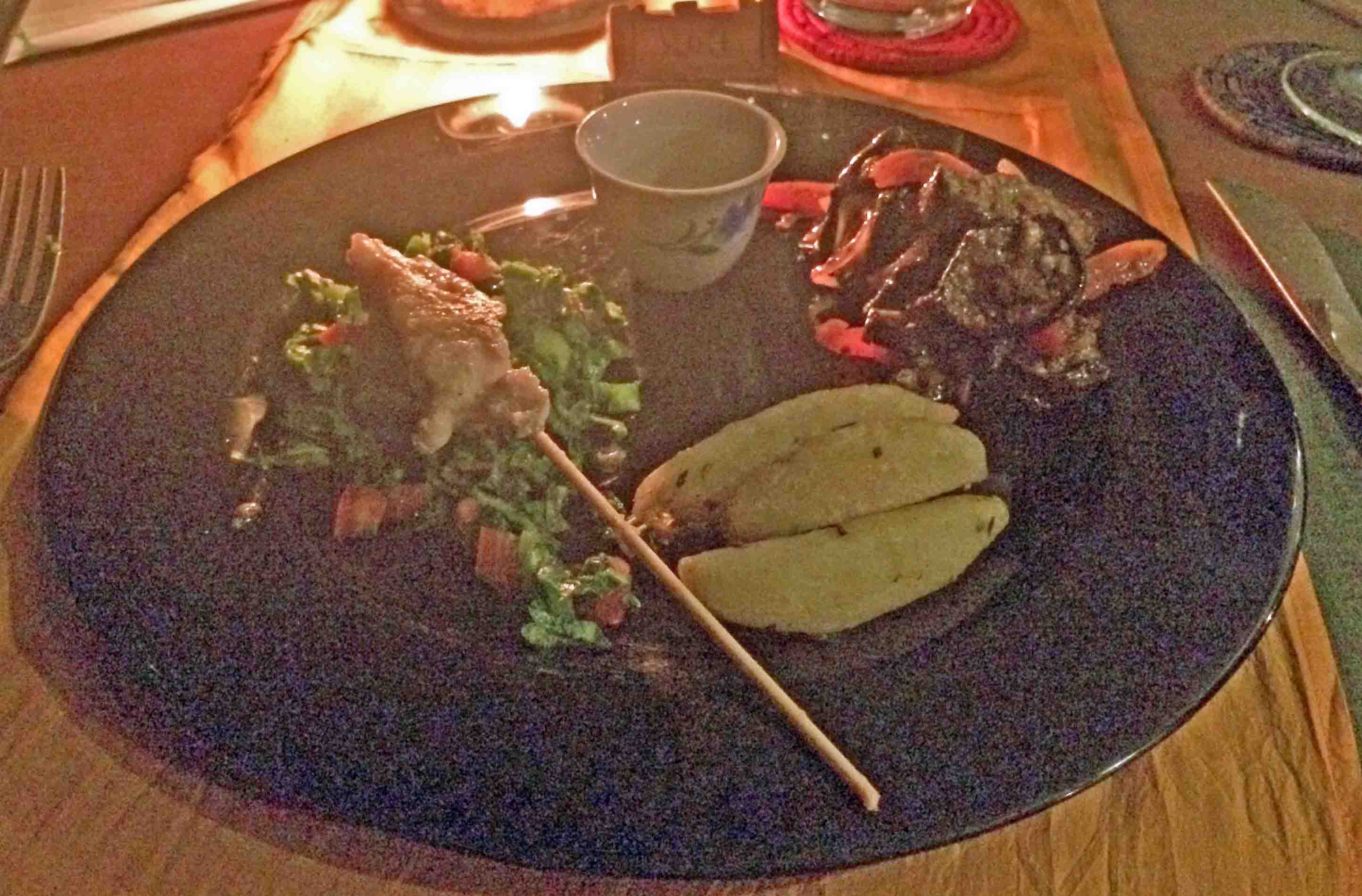
Then comes lobster on a skewer, cooked with a hint of chilli and served with vanilla sauce on the side. It is accompanied by lightly roasted potatoes with fennel, and an aubergine salad. Now DonQui is not a great fan of fennel so he is pleased to find it a very subtle flavouring and actually rather good. He can say this for all the dishes. The spices and flavours blend together beautifully to create a balanced taste without any one ingredient overpowering. The lobster is succulent and the vanilla sauce an unusual addition which goes very well with it.

kingfish

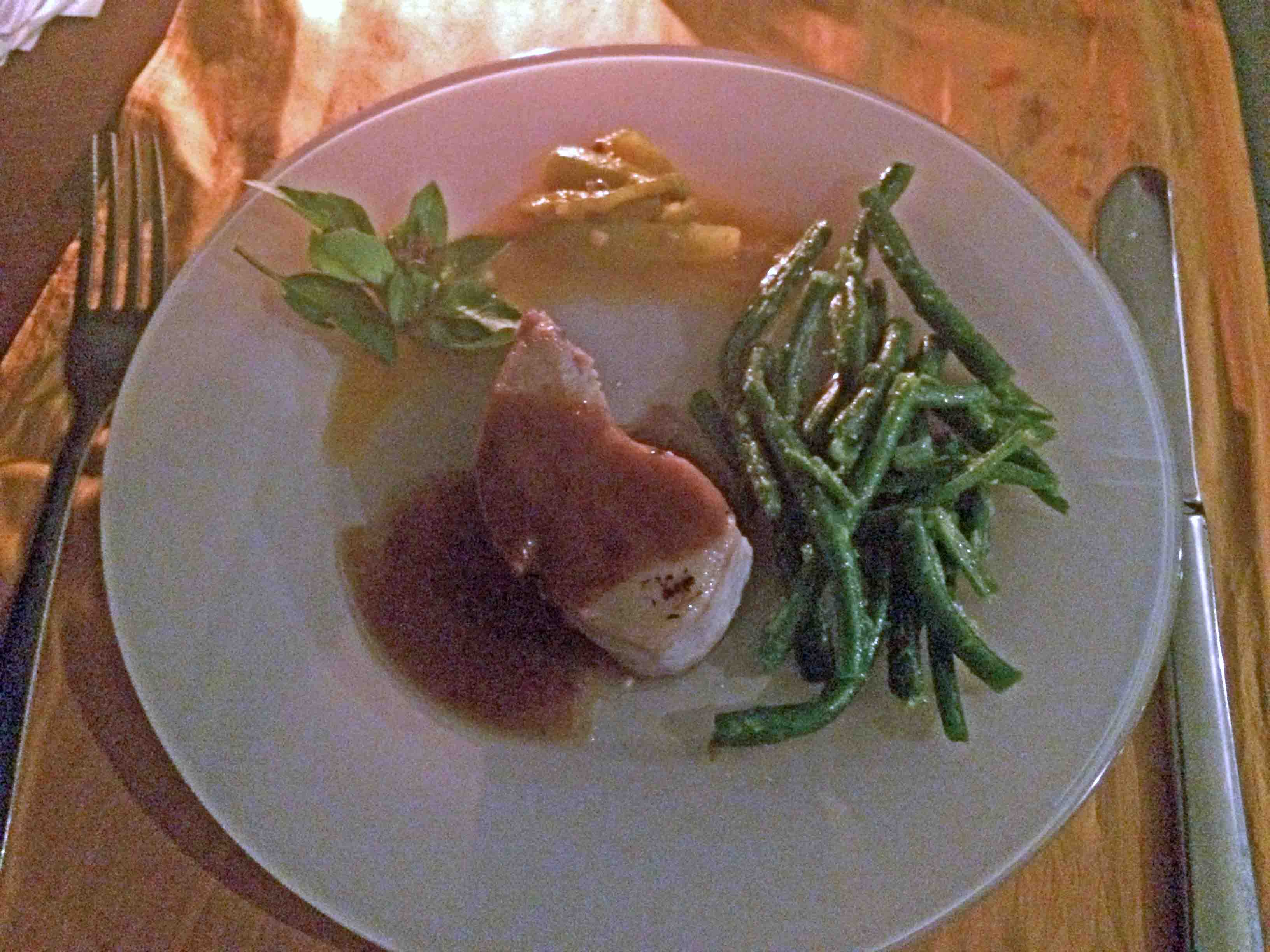
King fish with ukwaju sauce, green beans and mbirimbi pickle is the next dish for DonQui to sample. He likes the meatiness of the fish and the ukwaju sauce (made from tamarind) is simply divine. Mbirimbi pickle from the cucumber tree (averhhoa bilimbi) is quite a taste sensation with an intense salty-sour-citrus taste which makes it a rather good accompaniment to the fish. DonQui’s only criticism of the entire meal is of the green beens. They were cold and crunchy and while DonQui hates overcooked vegetables the beans still had a green, raw taste that a couple more minutes of cooking could have improved.

desert

Desert was a trio of dishes like the first course:

Staffeli Saffron Givré which DonQui can only describe as similar to a sorbet but slightly different. The saffron flavouring was again very subtle and it was served in a lemon shell.

Mtoto wa Jang’ombe — a coconut/chocolate creation wrapped in a thin pancake; and

Peanut Kashata — a very fine peanut brittle

chef

Chef Suliman Sadallia (right of photo) describes himself as a ‘creative chef’ and DonQui thinks this is a very apt description. His dishes are all creations in which the flavours come together to become something new and delicious. He uses fresh, local ingredients and draws on Zanzibar’s multi-ethnic heritage to create food which is traditional and very modern at the same time.

As for the cost? Well it is not cheap, but $40 for five delightful and imaginative courses in a wonderful setting seems to DonQui to be very reasonable indeed.

The Sail Loft Southwold

Duchess has a surprise for DonQui. It involves food and drink as she knows what he likes. It also appears to be something new, something DonQui has not yet tried.

Now DonQui is firmly of the option that the food in Suffolk is amongst the best to be had in England. Fresh and locally sourced, it may not have the international variety one can find in London but the quality and value for money are simply outstanding.

Being the sort of animal who constantly seeks out all the best pastures, DonQui had assumed that he had sampled all there was to be had close to his home paddock. Imagine his surprise, therefore,when Duchess leads him to a new place just beyond the sand dunes of the Southwold beach.

Sail Loft Southwold

Sail Loft in Southwold opened a few months ago, after renovating an old Italian restaurant that had been closed for years. DonQui’s initial impression is very positive.

Yes it had an inevitable nautical look but it was done in a very tasteful way without any fishing nets, faux pirate junk, nor any other kind of tourist tat. Instead there was lots of distressed, reclaimed wood which gave a modern and comfortably casual up-market atmosphere.

IMG_5534a

DonQui’s mane stood up in delight when he saw the rather good wines and the seasonal specials on offer.

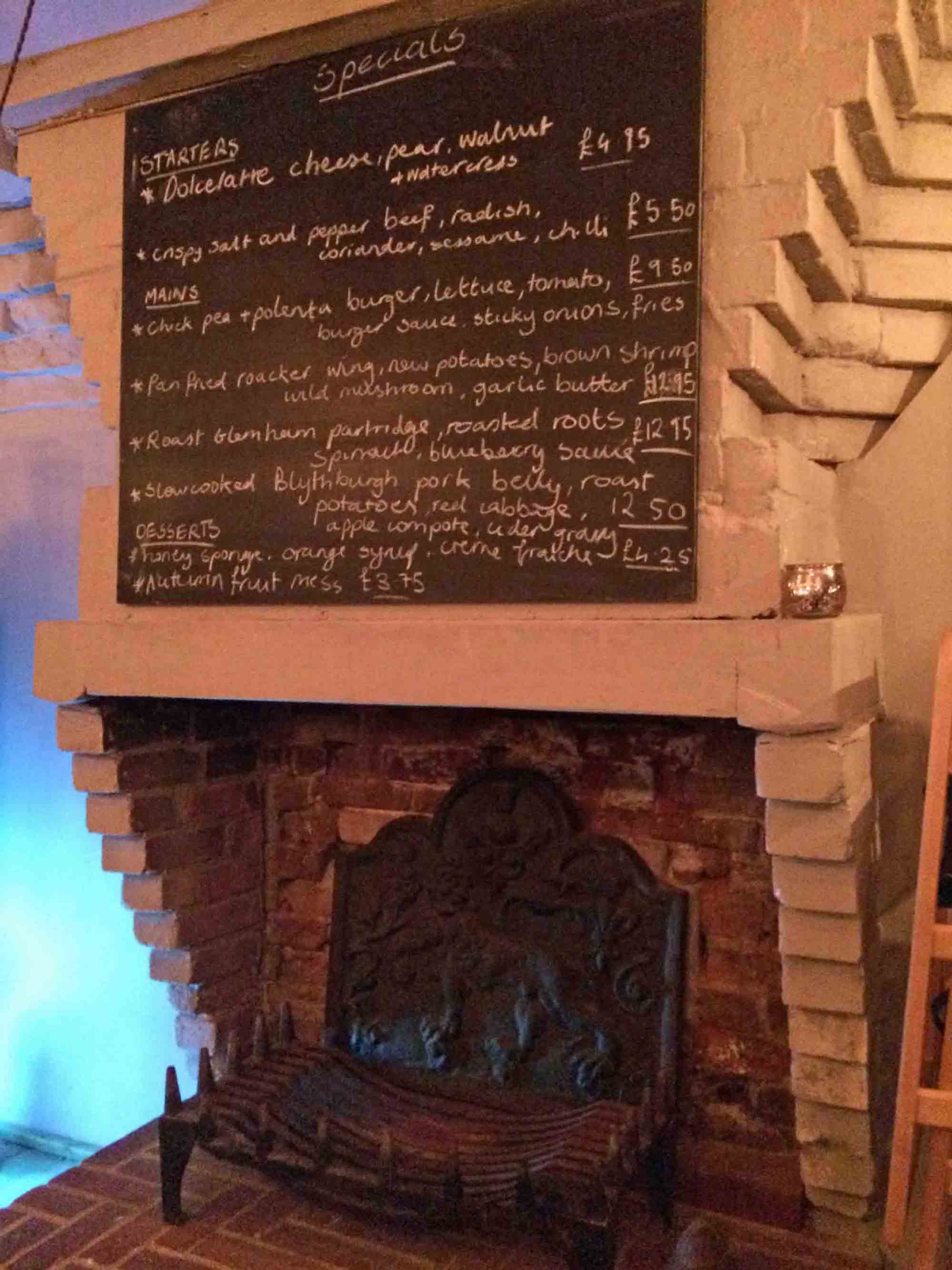
Sail Loft menu

Despite the nautical name this was not the sort of place for sea-side holiday fish and chips!

crispy beef

A plate of crispy salt and pepper beef with carrot, radish and coriander serves as a shared starter. It is out of the ordinary and very tasty indeed. More than enough for two to share, it serves admirably to keep the wolf away while waiting for the main course and sipping on a most excellent Argentinian Malbec. The wine is a bit on the expensive side for Suffolk (although it would be a bargain in London) and DonQui appreciates the option of a glass, a carafe or a bottle.

partridge

The main courses are roast partridge with root vegetables and a blueberry sauce, for DonQui; slow cooked Blythburgh pork belly with red cabbage, roast potatoes and cider gravy for Duchess. Both are exquisite. Autumn is game season and DonQui can rarely resist a game option when it is on the menu. Some game birds can, however, be a bit on the tough side. This one however is succulent and perfectly cooked. The sweetness of the blueberries in the sauce is a perfect counter-point to the full flavour of the game bird.

Dingley-Dell-Pig-Art-006

Blythburgh pork, from just across the river from Southwold is becoming increasingly sought after and DonQui has seen it on menus in several London restaurants. How much better to have it close to home just a few miles from where the pigs are reared? It is ’melt in the mouth’ tender and full of delicious taste. The red cabbage, cooked with apple, is a perfect compliment. DonQui’s only criticism is that by serving the pork belly on top of the red cabbage the lovely cider gravy became lost in the cabbage. The latter does not need it, while the pork is a little on the dry side without. This is fixed when the chef provides a jug of extra gravy on request.

Desert is a shared ‘autumn fruit mess’ — a seasonal variant on Eton Mess (non Brits may have to look this up). Figs, apples and blackberries are the fruit and they worked brilliantly together with the cream and broken up meringue. DonQui tucks into it with such delight that he completely forgot about taking photos!

DonQui will most definitely be going back!

A Corner of Italy in London

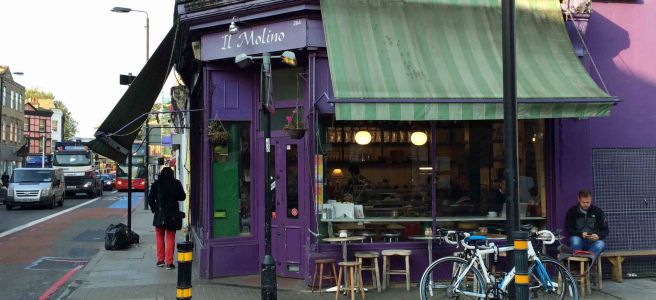
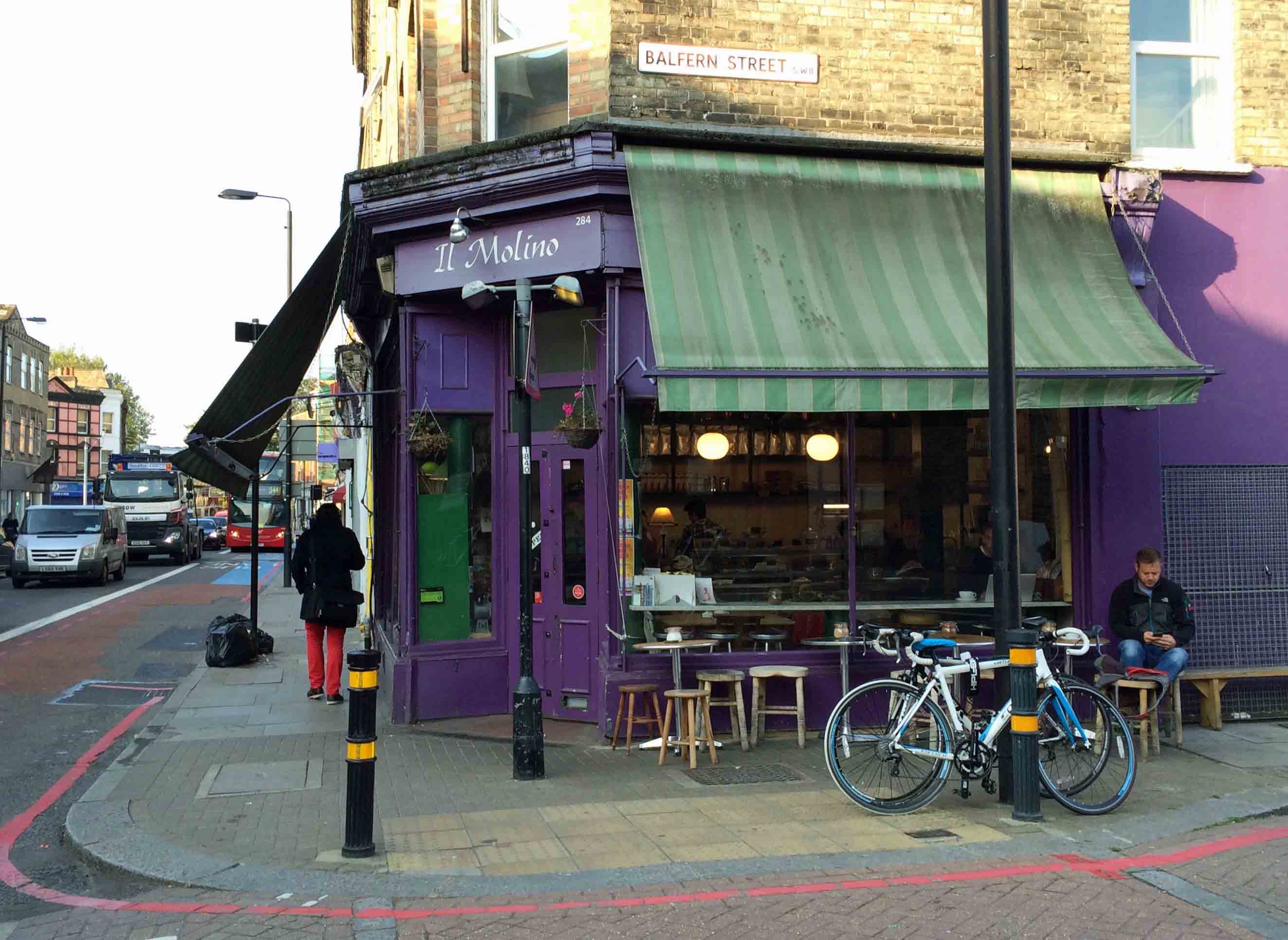
By now readers will be well aware of the large role breakfast plays in DonQui’s life. When he is in London, his breakfast of choice is often a croissant with fresh pressed orange juice and a large milky coffee at Il Molino on Battersea Park Rd.

Il Molino1
With the world being colonised by identikit coffee shops DonQui is very happy whenever he finds a good independent. The furnishings are a delightful mishmash of distressed wood tables (none of them matching) with a bar under the window covered with newspapers and a few seats outside. Various Italian food stuffs are stacked on shelves around the walls both for decoration and purchase.
The staff are young, friendly, and mostly Italian. They approach their work and customer service with that typical southern European insouciance which DonQui rather likes. There is none of this ghastly American: ‘how may I help you’ or ‘have a nice day’ — or worst of all when the servers tell DonQui their name in hope of getting a better tip. Not likely – it only makes him more curmudgeonly!

Il Molino2

Il Molino, therefore, is not a place to come if you are in a rush — there are plenty other places for those who prefer cold efficiency or saccharine over-exaggerated friendliness. Il Molino is a place to come and have something to eat and drink, read the paper, watch the world go by or maybe get the laptop or pad out to do a little work. Just like in France or Italy, for the price of a single coffee you can stay all day.
The coffee is excellent as are the various pastries. They also have a deli counter with items more suitable for a light lunch. These look good but as DonQui has not yet sampled any, he cannot vouch for them. There is music in the background but not too loud. With the likes of the Who, Pink Floyd, and Rolling Stones on the play list last time he was there, it is the kind of music DonQui approves of.
Although it has a youngish, slightly trendy vibe the customer base is as eclectic as the furniture. They may be an old man sitting in the corner with a paper, a couple of yummy mummies with tots in tow, an urban professional playing with his iphone, and workers dropping in from a nearby building site. No bearded hipsters, however — after all, this is Battersea not Shoreditch.

A Roast Chicken Dinner

DonQui has guests coming over. Immediately his thoughts turn to supper.
Should he cook something?
Yes, please.
Chicken?
That would be great
Roast Chicken?
Yum!
So while Duchess goes to Southwold to select a bird from his friends at Mills and Sons Butchers,  DonQui goes up to the allotment to pick some curly kale, pull up some carrots and go to the farm shop for some potatoes (as he did not grow any this year).

allotment

Now DonQui believes that the trick to a good roast dinner is getting everything ready well in advance. Potatoes and vegetables parboiled, gravy base prepared and then everything can be finished off at the end with no stress.
When it comes to gravy he is a bit of a stickler. He likes to make it all from scratch without any packaged stuff — most of which tends to be salt and various additives.

So with the guests arriving in a couple of hours, DonQui gets to work.

His basic plan goes something like this:

1. Parboil the potatoes and set aside.
2. Prepare the gravy base.
3. Put the chicken in the oven to roast
4. Prepare and parboil the carrots and kale
5. Put the potatoes in the oven to roast when there are 45 minutes remaining for the chicken
6. Take the chicken out and set aside to rest
7. Finish off the gravy and vegetables

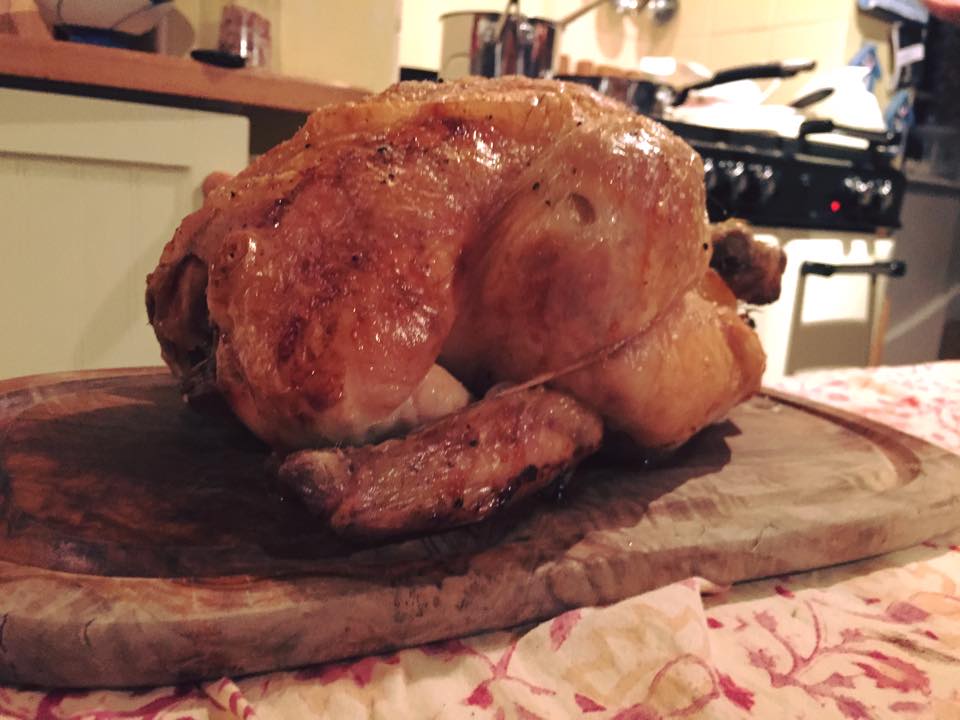
chick10

And here are his recipes:

For the Roast Chicken
1 good quality chicken (approx 1.5 kg)
1 onion
2 carrots
2 sticks celery
1 lemon
olive oil
salt
freshly ground black pepper
a mix of fresh herbs such as thyme, rosemary, oregano, sage.

Method
Take the chicken out of the fridge at least 30 minutes before cooking so it comes up to room temperature.
Preheat the oven to 240°C.
Roughly chop carrots and celery, quarter the onion, then place vegetables onto a roasting tray and drizzle with olive oil.
chick1

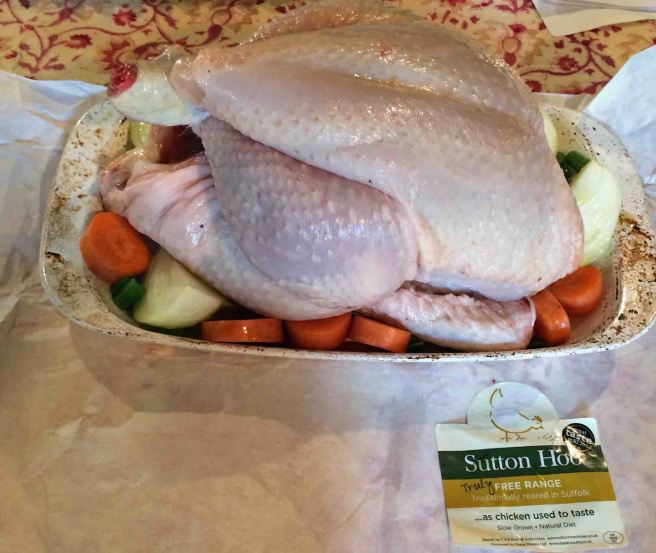
Place chicken in the middle of the roasting tray on top of the vegetables. Drizzle with olive oil and rub salt and pepper all over it.
Cut the lemon in half and put in the cavity along with the herbs.
Put the chicken into the preheated oven and turn down to 180°C.
Cook for 1 hour and 15 minutes.
Baste the chicken halfway through cooking and if the veg look dry, add a splash of water to stop them burning.

chicken resting

Take the chicken out of the oven and put it on a carving board to rest for 15-20 minutes. Some people like to cover it with tin foil while resting but DonQui does not like doing that as it makes the nice crispy skin go soft.

While the chicken is resting finish off the gravy and vegetables.

Ingredients for the Chicken Gravy
2 table spoons butter
2 table spoons flour
500 ml chicken stock (preferably unsalted)
salt and pepper to taste
a bunch of frush herbs (such as thyme, rosemary oregano, sage).
a chopped mushroom (optional)
a couple of chopped tomatoes (optional)
vegetables from the roast chicken
a good splash of white wine

Method
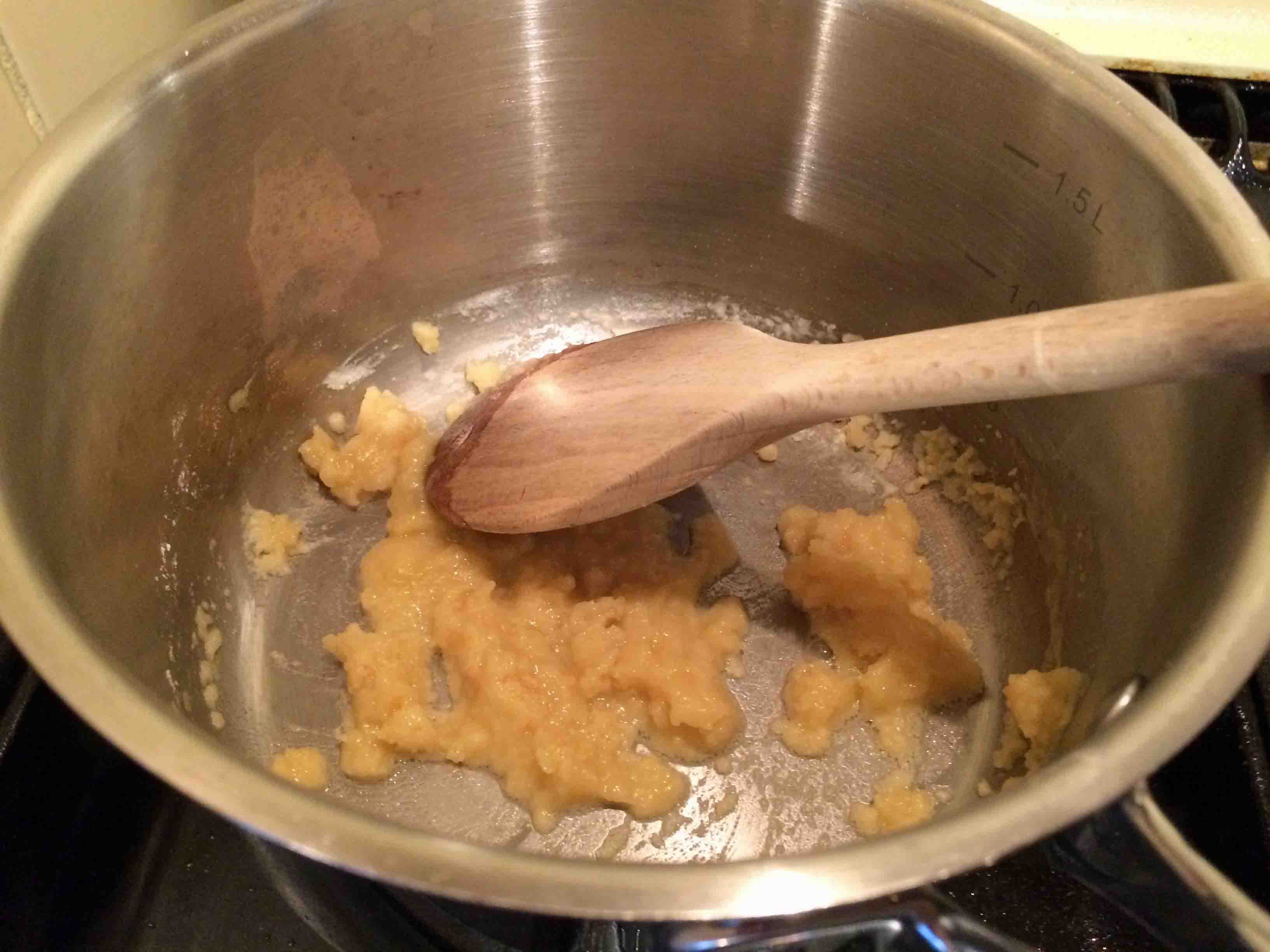
Make a roux by combining the flour and butter in a heavy bottomed saucepan.
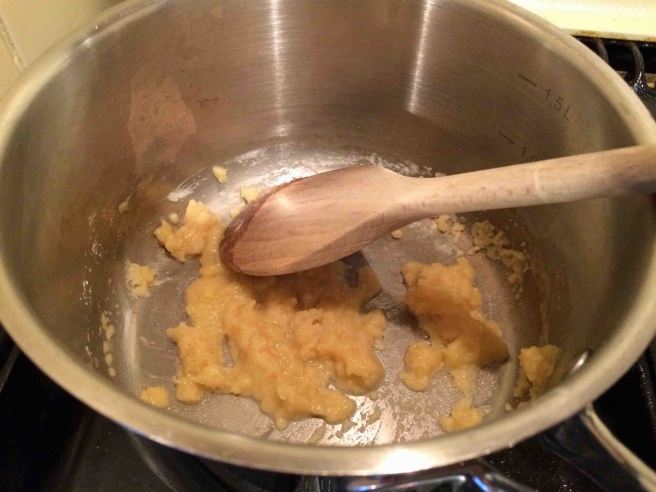
chick2Cook over a low heat, stirring frequently with a wooden spoon until the roux begins to darken slightly.
chick3

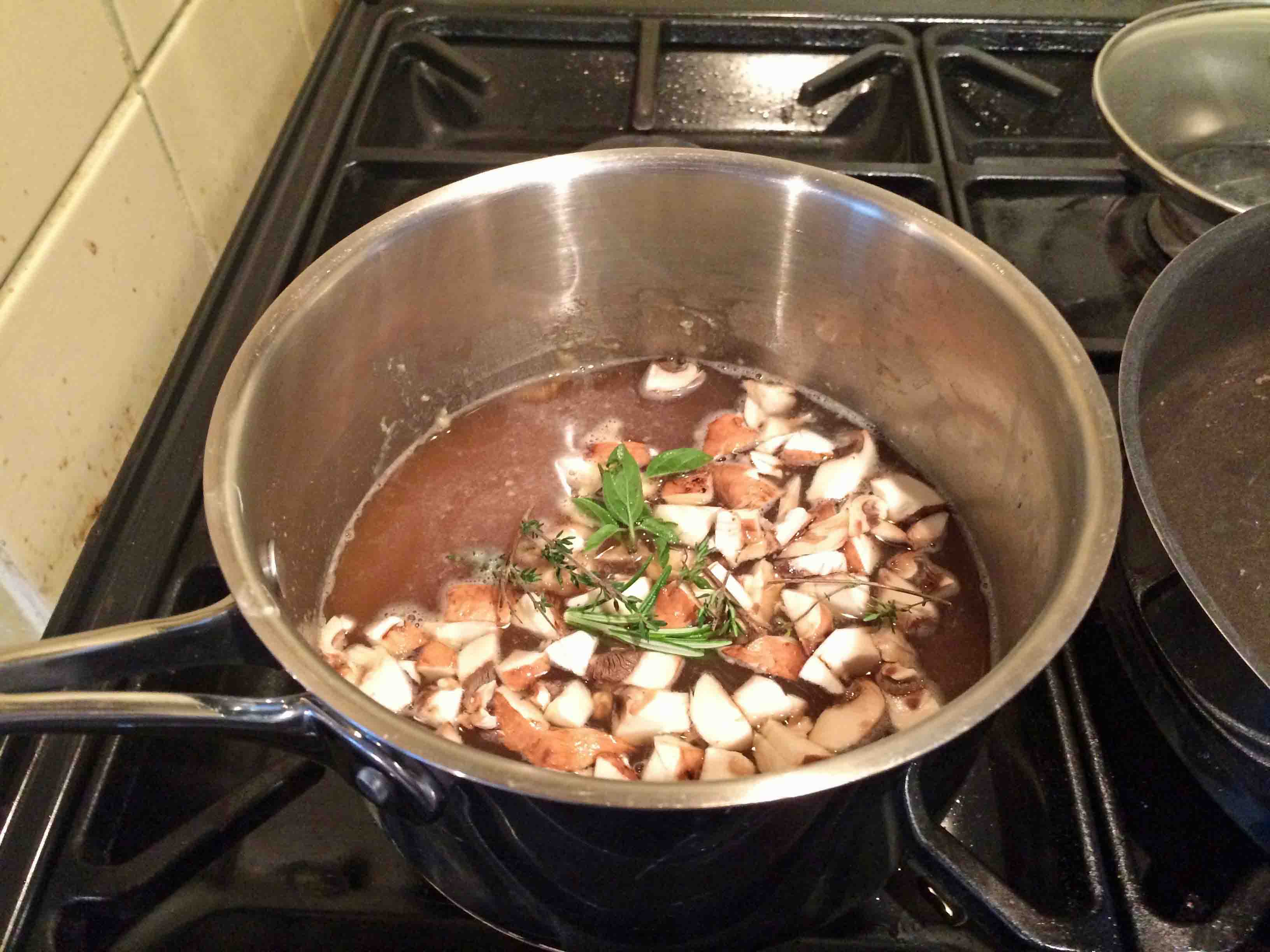
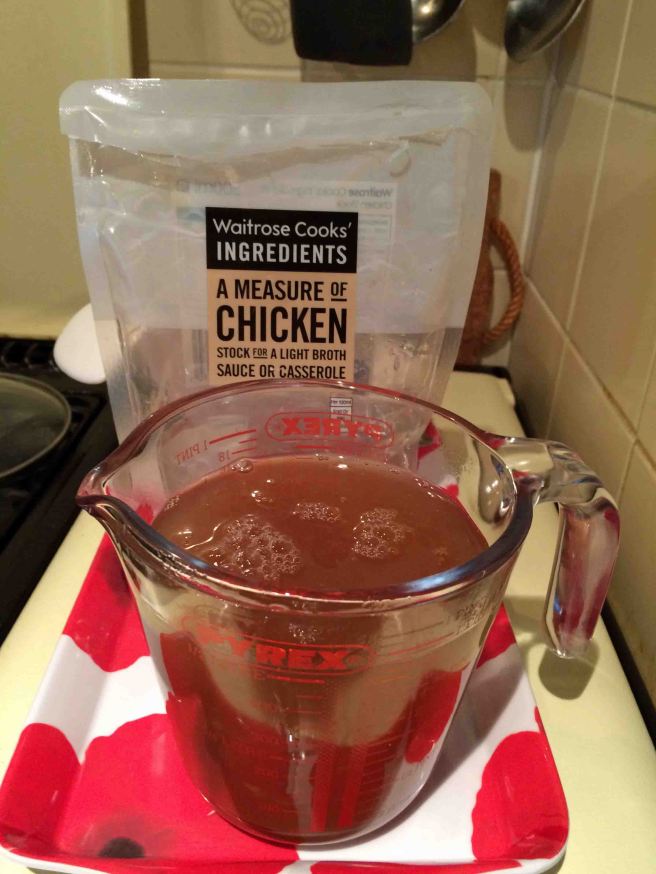
Remove from the heat and let cool for about a minute then whisk in the stock. Add vegetables, herbs, salt and pepper. Be careful with the salt. Some chicken stock is often already heavily salted so it is better to taste it and gradually add the salt. It is easy to add more, impossible to take any out.

chick4

Cook on a very low heat for 20-30 minutes then strain.
Put the strained gravy base back into the pot and wait until the chicken is cooked.
Once the chicken is resting, place the roasting pan with the vegetables on the stove top on low-medium heat.

chick5
Deglaze the pan with the white wine making sure to scrape up and disolve all the brown bits.
Strain into the pot, pressing any residual juices from vegetables through the sieve. Whisk together with the rest of the gravy base and then simmer very gently until everything else is ready.

Roast potatoes
Wash and quarter a couple of medium potatoes per person. You can peel them if you like but DonQui often likes to leave the skins on as he does on this occasion.
Parboil in salted water for 10 minutes, drain and set aside until you are ready to begin roasting. All of this can be done well in advance.
Place the potatoes on a roasting pan, drizzle with a goodly amount of oil — DonQui likes using a mix of oils, and goose or duck fat if he has some. Put them in the oven with the chicken when there is about 45 minutes of cooking time left for the chicken. The potatoes should take about an hour to get nice and crispy brown. Turn every 15-20 minutes and sprinkle with salt in the just before serving.

Curly Kale

chick6

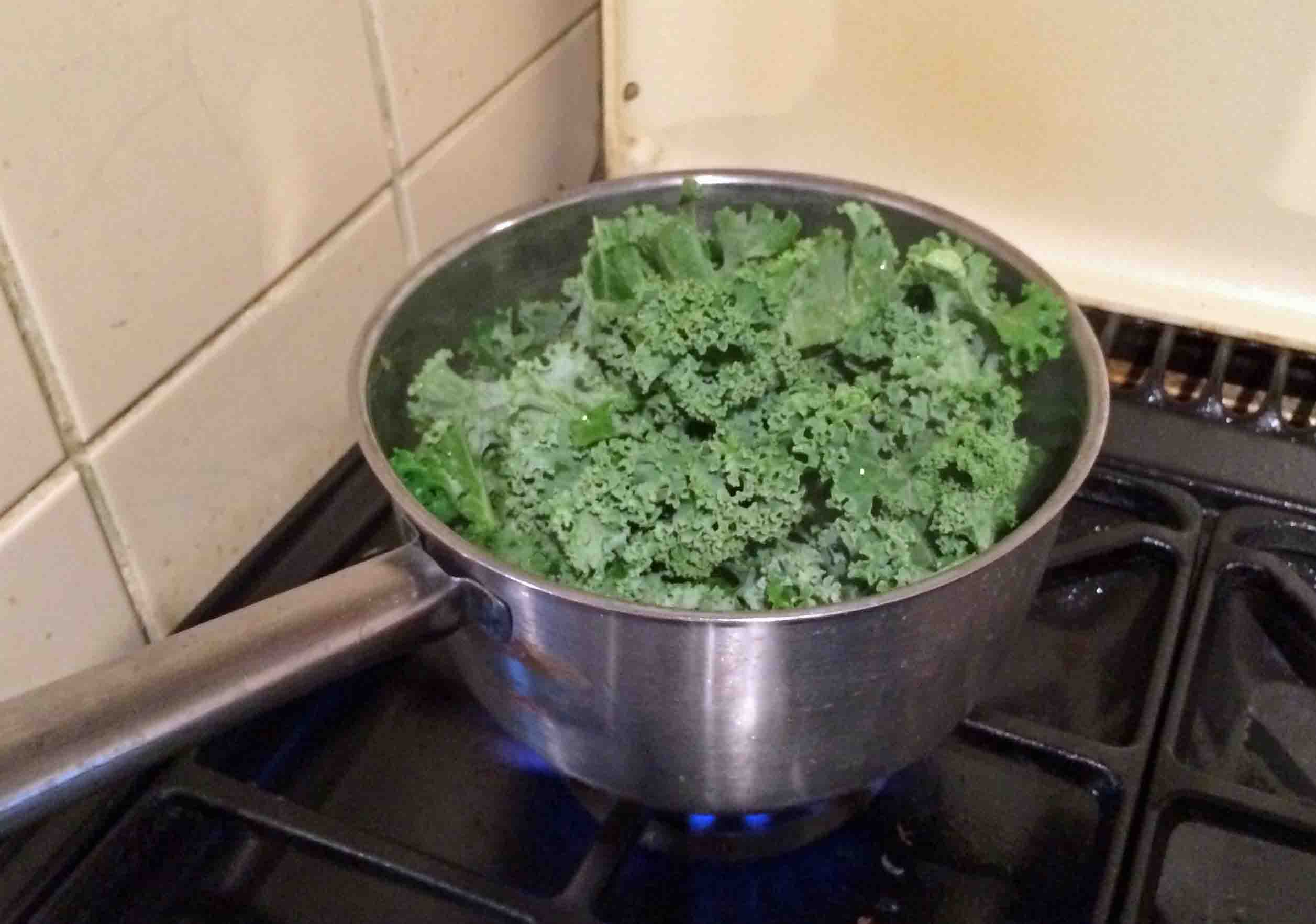
Wash the kale, strip the leaves from the stalks and roughly break apart into small pieces.
Bring a small amount of water to the boil in a pot, add the kale, put on a lid and simmer for 5 minutes.

chick7

Don’t worry if it seems like a lot of kale at first. It will reduce down.
Drain and set aside until the chicken is out of the oven and resting

Carrots
Wash and scrape the carrots. Cut into relatively even pieces. DonQui prefers carrots cut lenghwise rather than across but it is a matter of personal taste. Boil the carrots in salted water for 7 minutes. DonQui also likes to add a bit of sugar to the carrot water.
Drain and set aside until the chicken is out of the oven and resting.

The Finishing Touches.
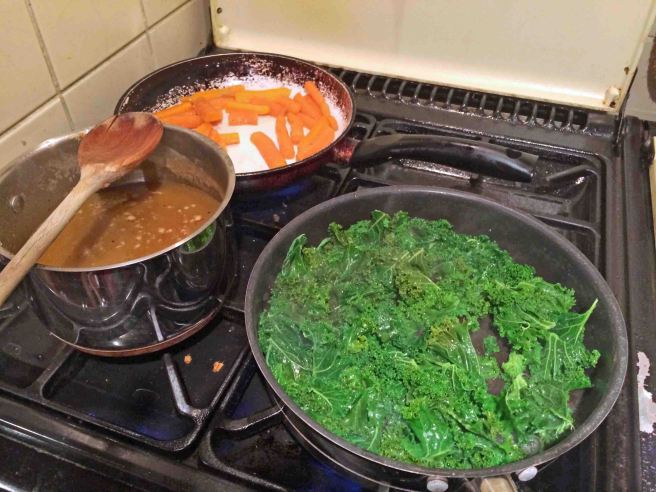
With the chicken resting, the potatoes done and the gravy simmering it is time to finish off the kale and carrots. In both cases the method is the same.
chick9

Simply melt a bit of butter in a pan, add the partially cooked vegetables and stir around in the butter until heated through. This will take around 3-5 minutes.

chick11

DonQui thought is all went rather well and his guests seemed to quite enjoy the meal…
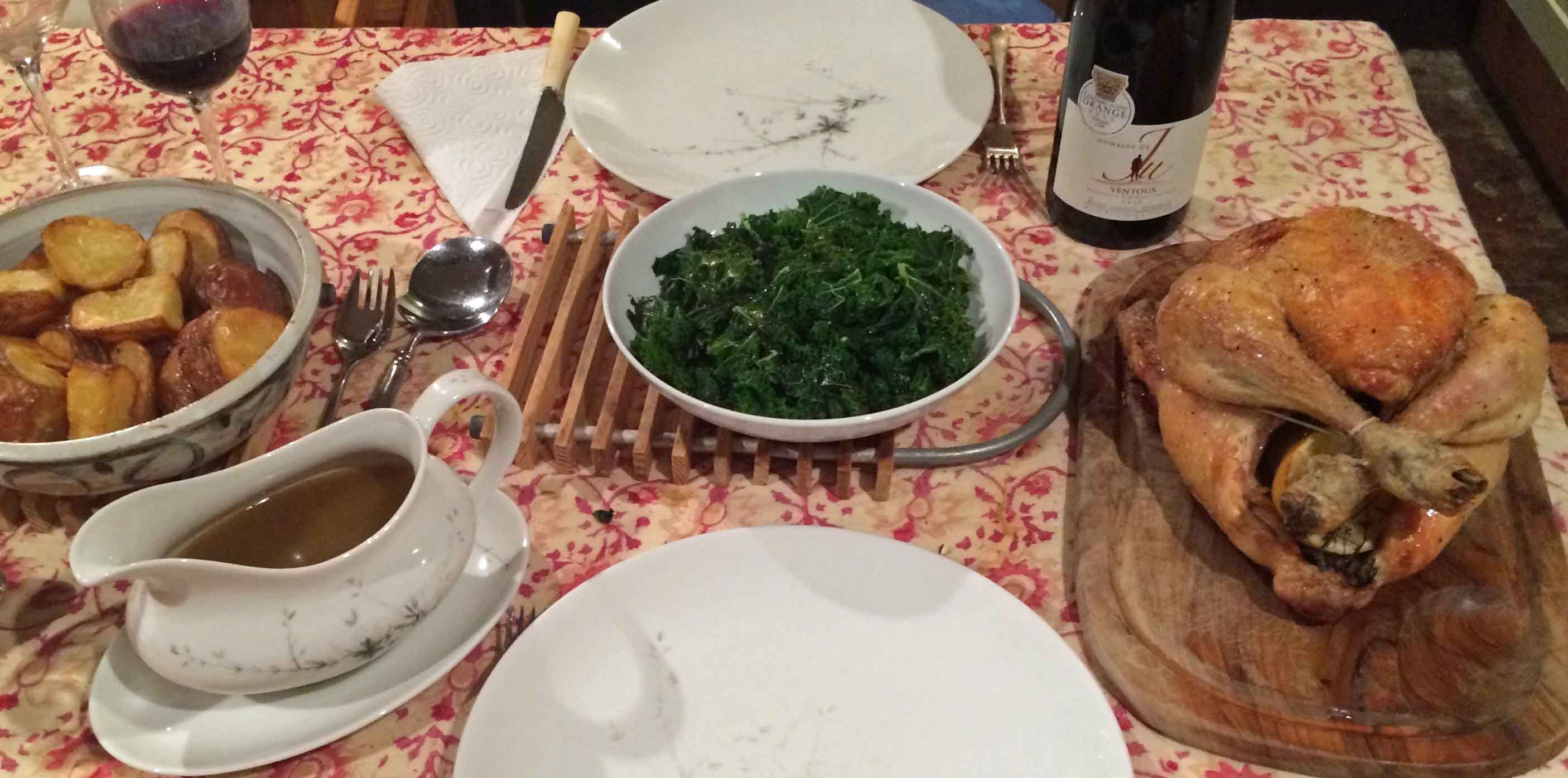
chick12

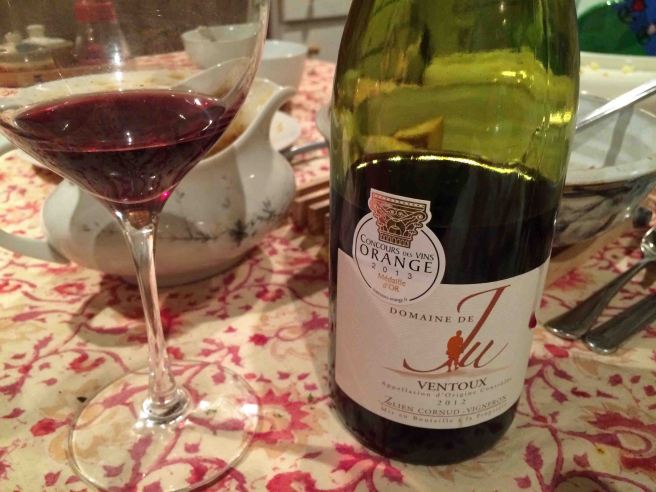
…which was rather nicely washed down with a fine bottle of Côtes du Ventoux which DonQui had picked up in the South of France a few months ago.

And to finish off…

strawberries and cream

…strawberries from DonQui’s autumn crop along with a few grapes from the garden and clotted cream.

Trout with Sea Vegetables

On his way back home from London to the Shires, DonQui decides to pick up something simple but tasty for supper.

As it so happens he has to pass by the nice Mr Waitrose’s shop on the way, so he drops in to see what is on offer. As is always the case when he stops off at Waitrose, DonQui ends up buying far more than he had intended. His shopping basket is filled with buttermilk (for pancakes) and Canadian maple syrup (amber mind you not just the ordinary medium) to go with it. Some coconut cream for stir fries; liquid unsalted stock for sauces; and thin streaky bacon (difficult to find in the UK) for breakfast. As it happens there is also a Rioja, a Chablis and a Calvados on offer at reduced prices and so these too manage to find their way into DonQui’s shopping basket.

At the fish counter there is one remaining large trout filet. This will do for supper, DonQui thinks, adding a medley of ‘sea vegetables’ (samphire, sea aster and okahijiki – or Japanese land seaweed) to his purchase.

trout

DonQui cooks the trout ‘en papillote’ baked in the oven for 15 minutes with herb butter, lemon and parsley. Waitrose seals the fish in a parchment parcel for him in store. Previously DonQui has cooked fish like this by simply placing it in an ovenproof dish and covering with tin foil. He serves the trout filet with boiled charlotte potatoes tossed in parsley and butter alongside the sea vegetables. The latter are incredibly easy to prepare as all they need is a 2-3 minute stir in butter.

A Stroll Through Soho

Avid readers of his blog will not be surprised to find DonQui in Soho. After all he made a promise to himself yesterday while wandering around Piccadilly.

DonQui likes Soho. Full of eating, drinking and entertainment establishments there are plenty of possibilities for a decent lunch or a good night on the town. There are still even a few naughty places left over from its 1950s-70s heyday as London’s capital of sleaze, not that DonQui knows anything about such matters. Although rather gentrified now, there is just enough grit left for DonQui to feel that that the area has not become too sanitised.

Bypassing the tourist hell of Piccadilly Circus and Leicester Square, DonQui heads straight for the back streets to the north of Shaftesbury Avenue.

Soho 1

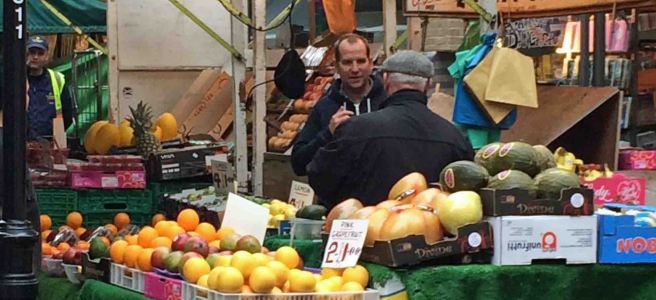
A stroll up Berwick Street reveals plenty of options for good  food. From the fruit and vegetable sellers…

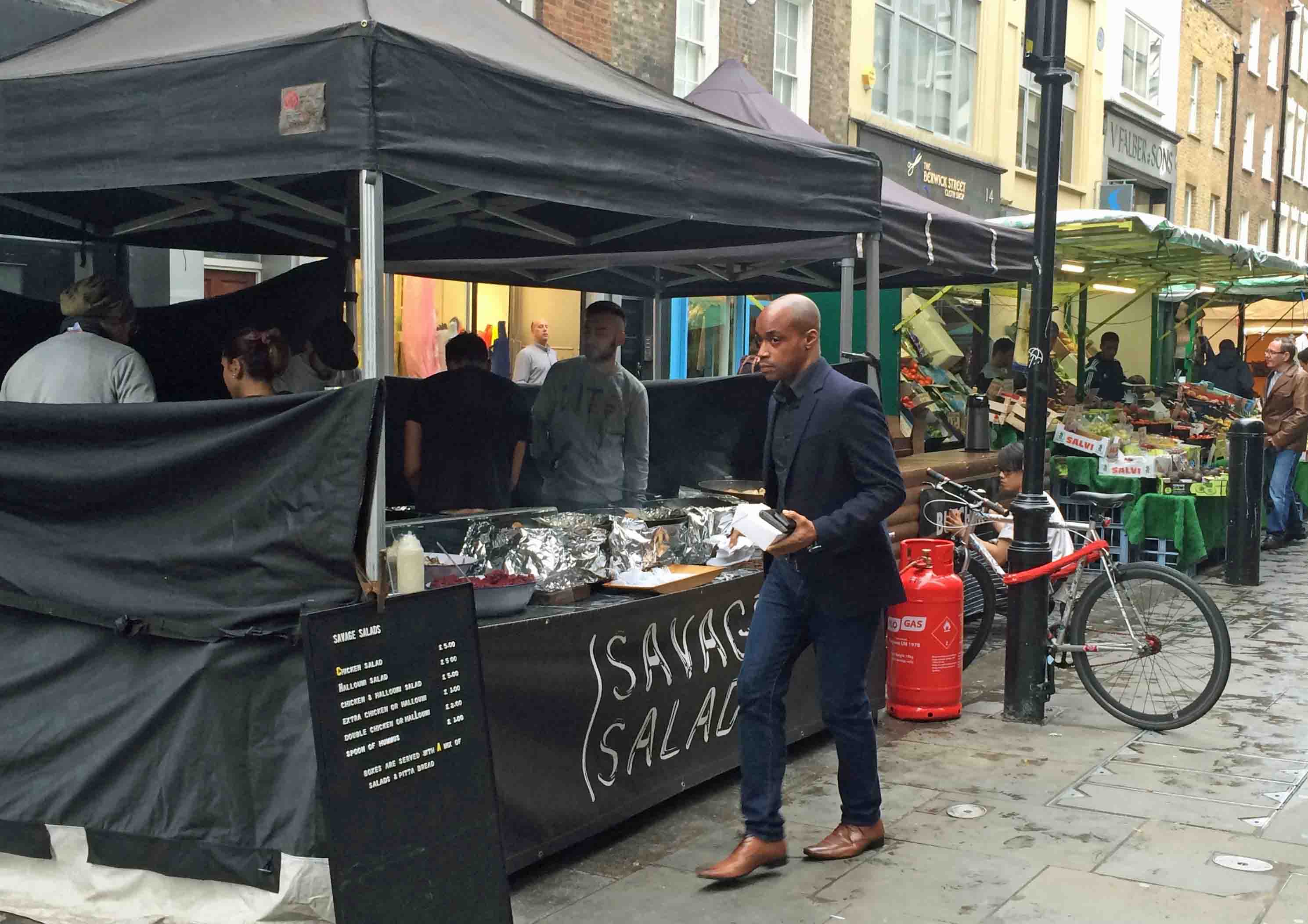
Soho2 to pseudo street-food stalls offering everything from burritos…

Soho3

to salads…

Soho4

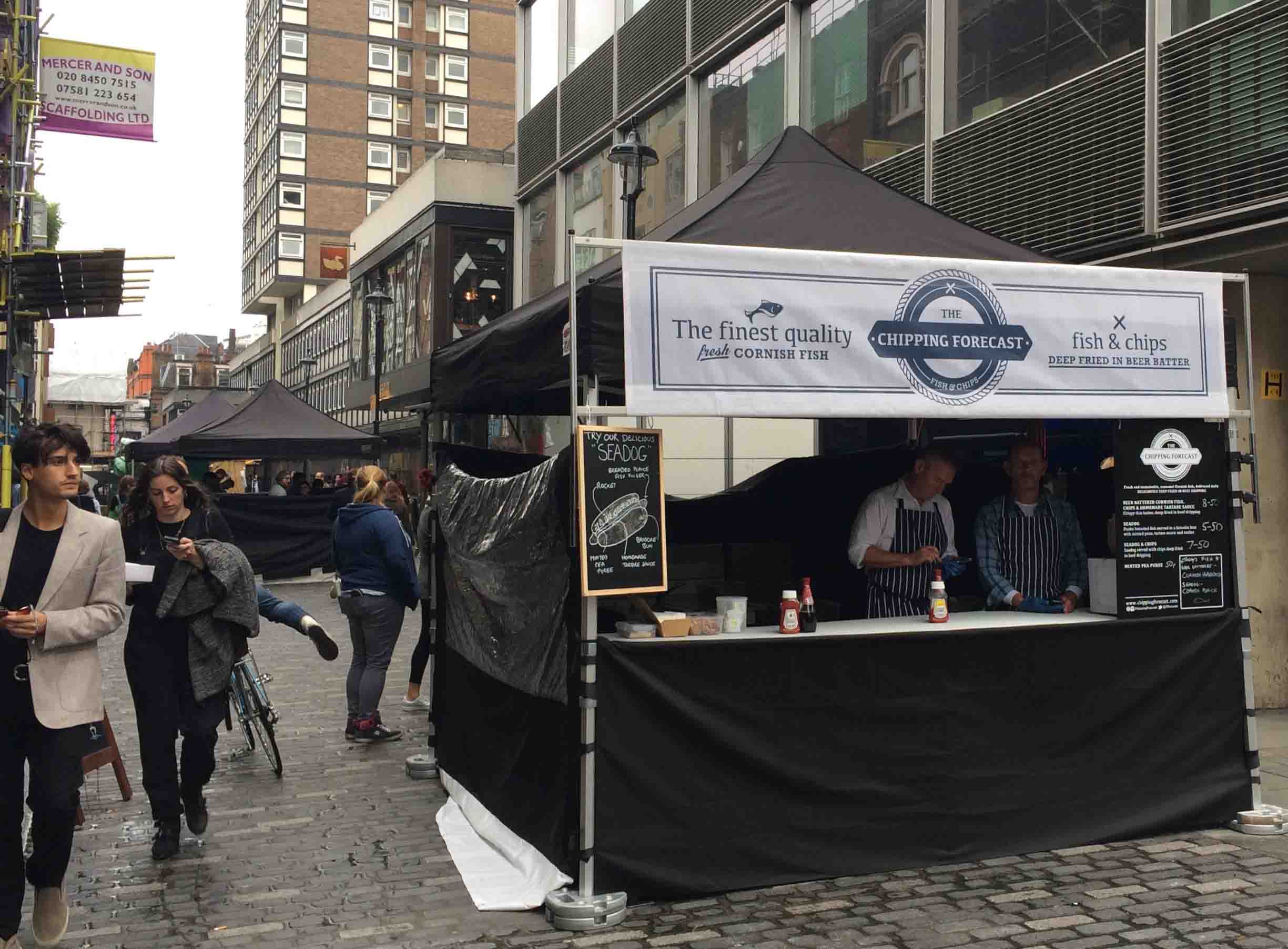
and even fish and chips; there is plenty on offer if you don’t have the time for a sit-down lunch.

Before too long, DonQui finds himself on Dean Street. This is where he usually finds himself when he is in Soho as it houses some of his favourite stopping off places.

Prix Fixe

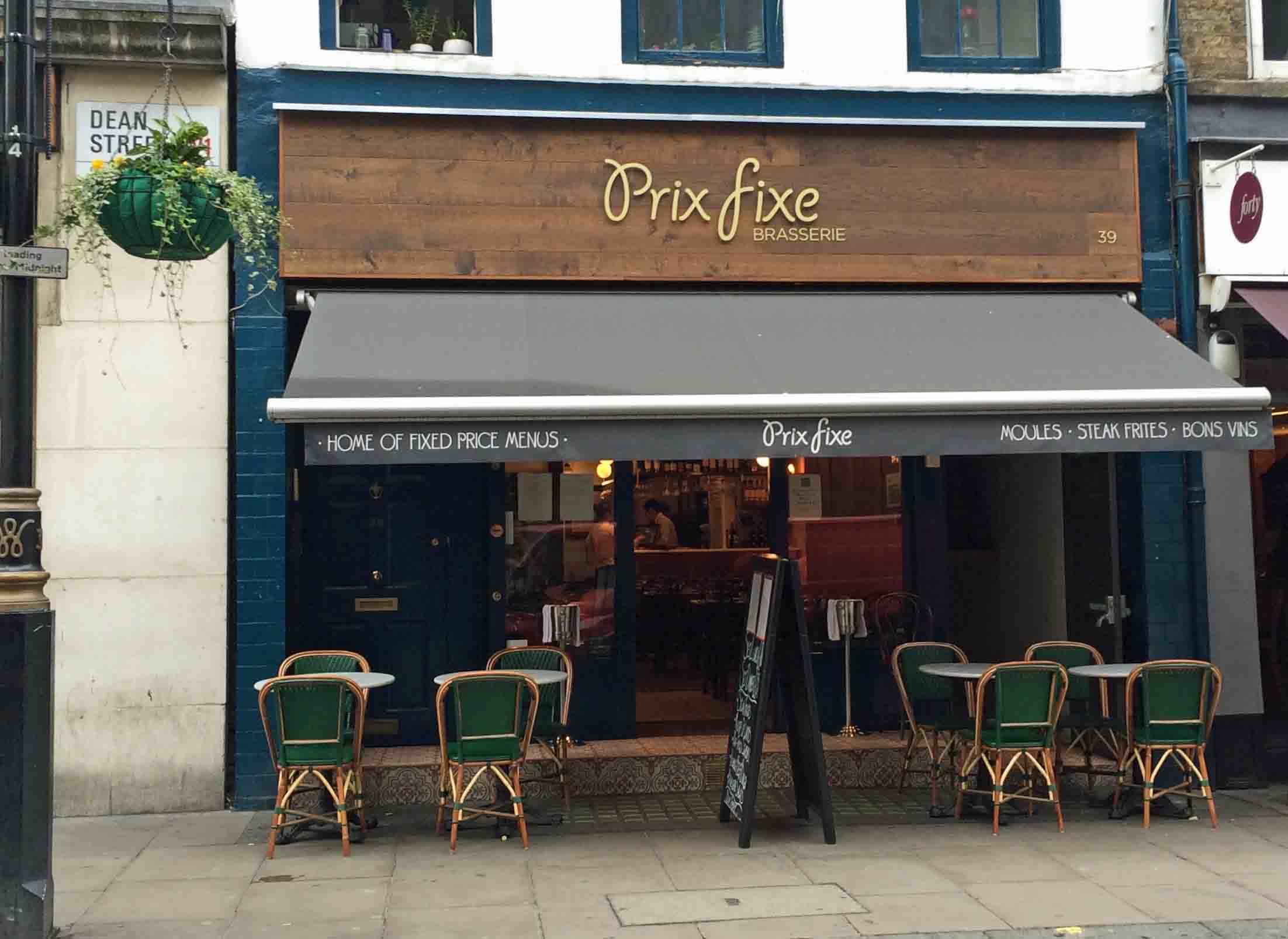
Prix Fixe is an excellent lunch or dinner spot in the manner of a French brasserie. They have a set menu offering incredibly good value in a relaxed atmosphere. Inevitably DonQui ends up having a steak-frites as his main course. The frites are proper thin french style — crispy on the outside and soft in the middle.

French House

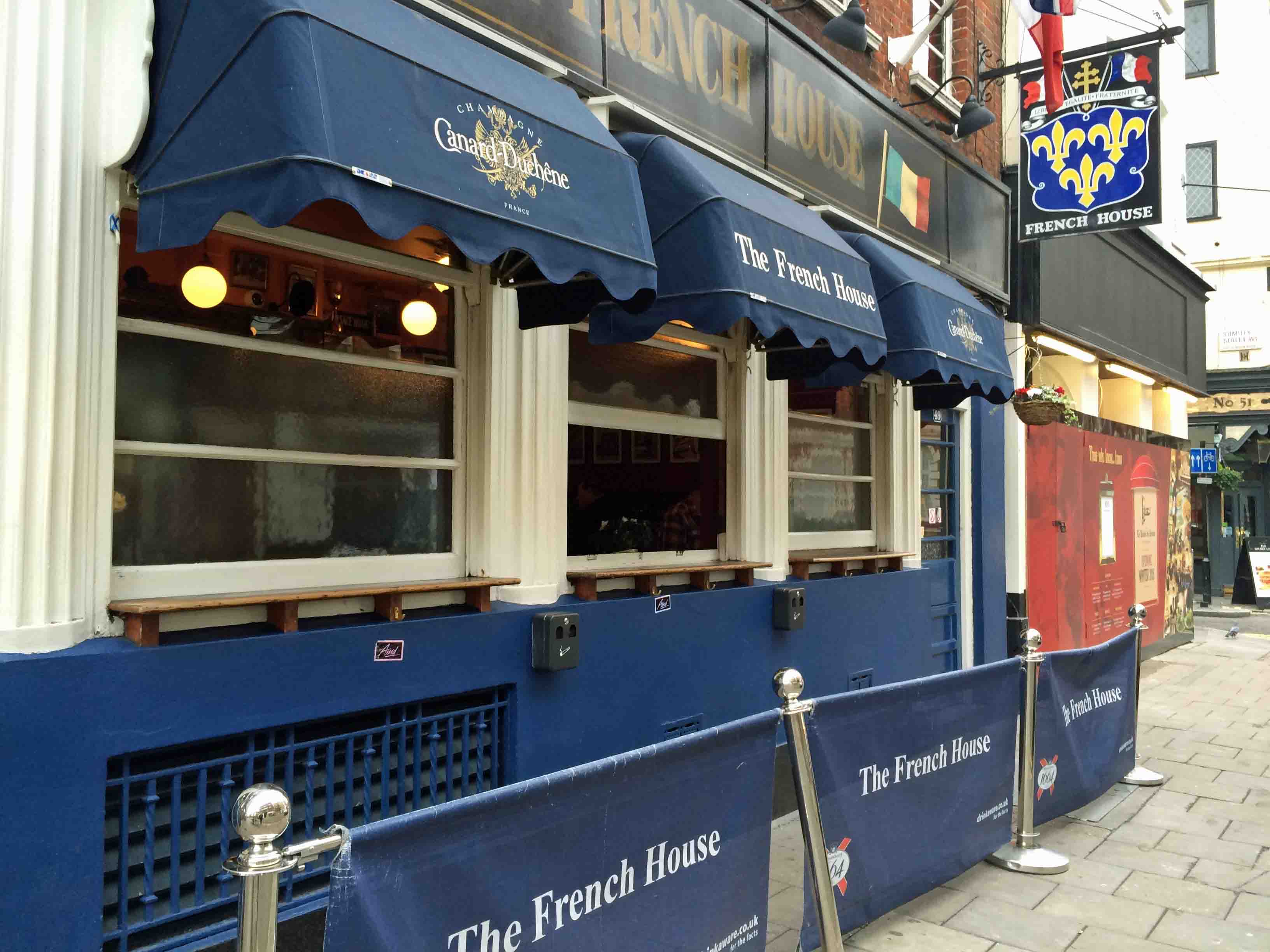
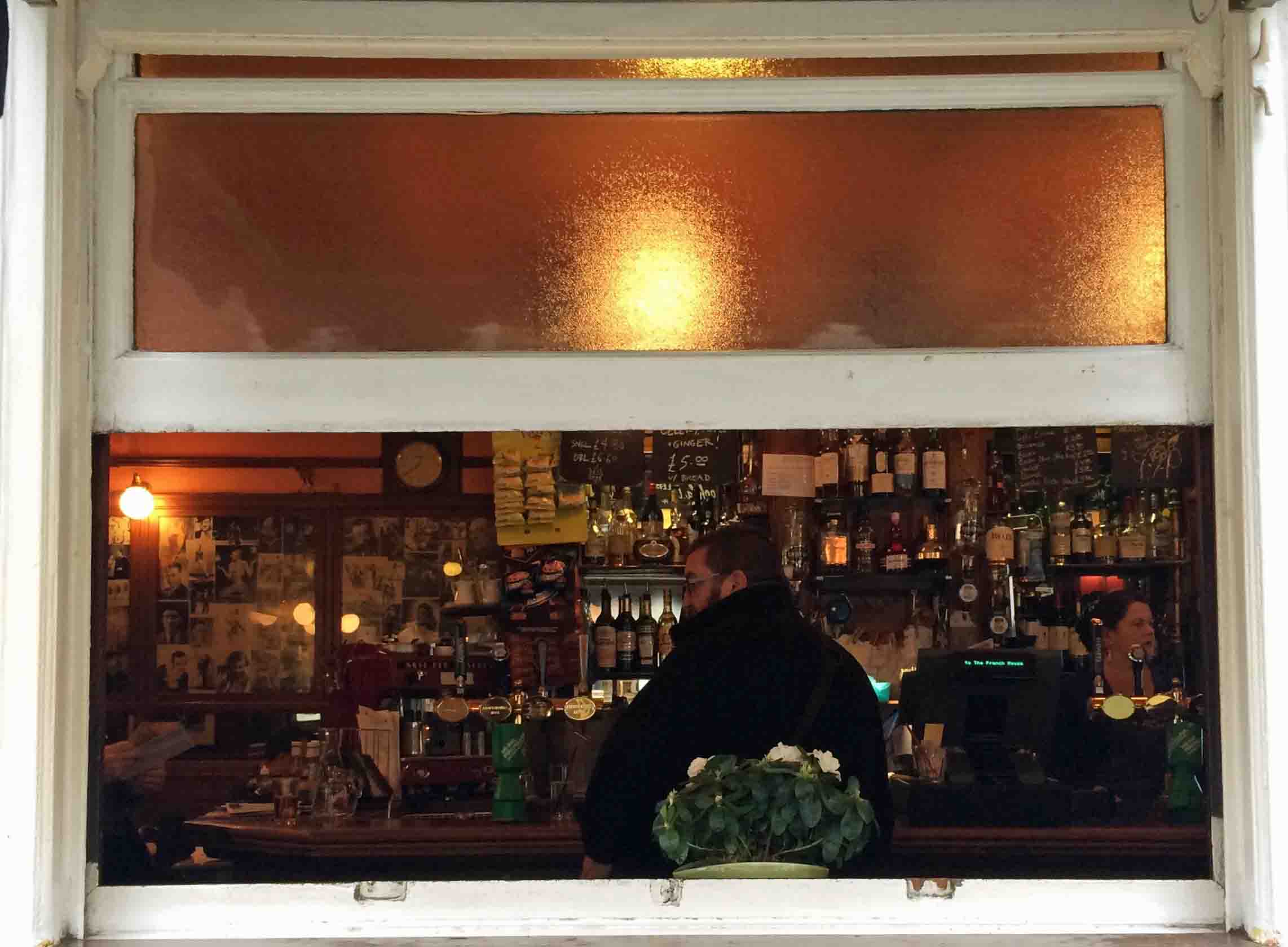
The French House, a bit further down Dean St, is one of DonQui’s favourite watering holes. During the second world war it was the unofficial headquarters of de Gaulle’s Free French and this is the root of the name. The French House still retains its character and is a perfect place to meet for a drink before going to dinner or for turning a lunch into an all afternoon affair. French and Belgian beers are on tap, served in half pint glasses only, and they also have some excellent Breton cider.

Soho8

Favoured by actors, writers, bohemians and all sorts or reprobates it is about as far as one can get from a blonde wood and chrome chain pub. There is no music, no slot machines, no sports on television and woe betide anyone who uses a mobile phone.

Just the sort of place DonQui likes.

Coach and Horses

The Coach and Horses around the corner on Greek Street used to be another haunt. It was a ‘proper boozer’ and one of the few remaining Soho stalwarts. Sadly, since the departure of Norman in 2006, it has begun to tidy itself up. Norman, who ran the pub for 62 years was the self-proclaimed ‘rudest pub landlord in Britain’ and would not tolerate boring people nor anything that might get in the way of lively conversation or proper drinking.
DonQui drops in for a quick pint and is horrified to learn that it has now become a vegetarian pub. He shakes his head in disbelief and thinks that Peter O’Toole and Francis Bacon (who were once regulars) must be turning in their graves.

DonQui also Recommends
Andrew Edmunds 46 Lexington St for a cosy, intimate atmosphere, high quality food and a great wine list — a good place to take a date.
Ronnie Scott’s 47 Frith St, for a night of top end jazz with big names often playing there. A Soho institution since 1959
Bar Italia 22 Frith Street for a proper Italian espresso in a proper Italian atmosphere. Across the street from Ronnie Scott’s it has been running since 1949
Pizza Express 10 Dean Street for both good pizza and good jazz. Although DonQui generally avoids chains he makes an exception for this one. There is nothing chain-like about the Jazz Club downstairs.
La Boheme 13 Old Compton St for a lively atmosphere from breakfast through to dinner and then late drinks. The public face of the original Soho House (once a fine members club and now an industry) it is a good place to go for the buzz rather than an expectation of exceptional or good value food.
Ain’t Nothing But the Blues Bar, 20 Kingly St for a lively buzzing atmosphere and great live blues until the wee hours of the morning.