Off for some winter sun

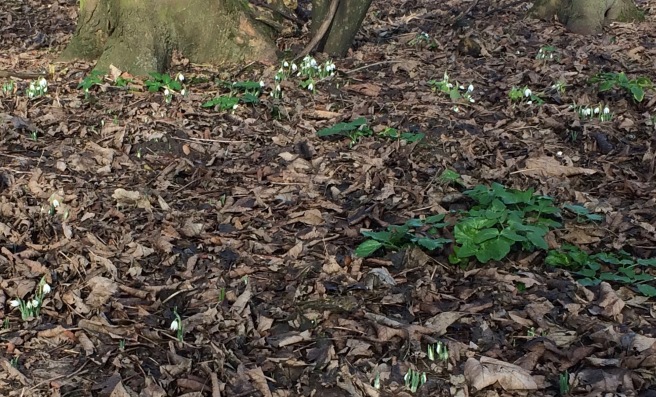
IMG_9786.jpgThe first snow drops may be on their way…

Adnams-Jack-Brand-Mosaic-Pale-Ale-label.jpg… And Don Qui’s favourite Mosaic summer ale may be back on tap at his local.

Both of these are signs that Spring must be just around the corner. But it does not feel like it.

DonQui is heartily sick of the long cold, grey, damp, winter and so he has decided to head off to find some winter sun.

bloc hotel.jpg

His flight leaves from Gatwick Airport in the morning. Not being a great early morning animal he decides to stay overnight at the Bloc Hotel which is right inside Gatwick’s Terminal 2 by the departure gates from where his British Airways flight will be departing in the morning.

IMG_9898 2.jpg

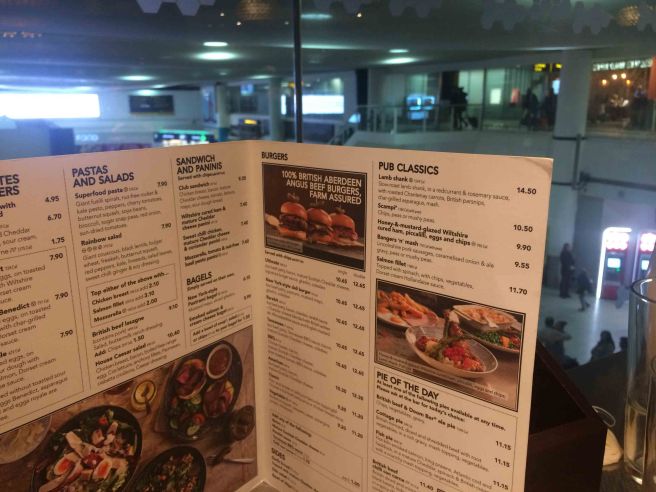
A Weatherspoons’ pub is not the sort of establishment Don Qui would normally frequent. There are not any better options so not expecting much Don Qui goes inside in search of some refreshment. While far from gourmet, it is surprisingly OK and reasonable value for money.

bloc 2.jpg

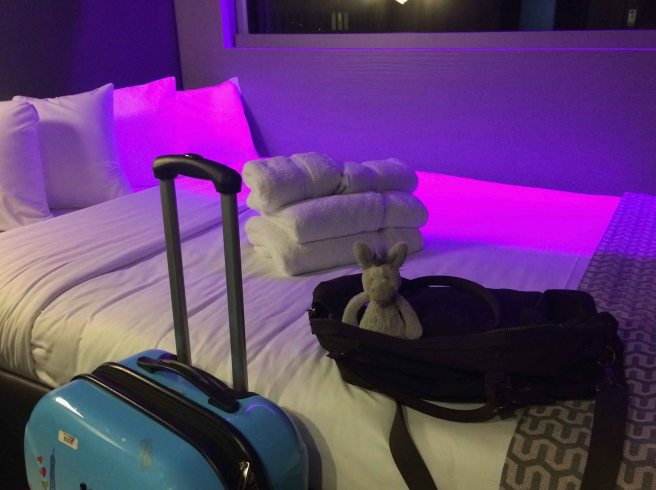
The Bloc Hotel is clean, functional, modern and has a few nice touches. Don Qui has stayed here before and finds the handy location by the departure gates more than make up for the somewhat utilitarian surroundings.

Bone with a hole

Continuing his enthusiasm for great veal dishes DonQui offers his take on the classic north Italian osso bucco. Originating from Milan, osso bucco translates roughly as ‘bone with a hole’ which is probably why it is never translated on menus.

osso bucco.jpg

Osso bucco is made from thick slices taken from across a calf shank with the bone in the centre filled with delicious marrow. This dish is all about the sauce and the marrow. It is frequently served in restaurants in a tomato based sauce and the first time DonQui tried osso bucco it was served this way. The classic version, however, is cooked in a white wine reduction without tomatoes and DonQui resolves to try such a version.

For once DonQui takes notice of the quantity he uses in his recipe, although his measurements are typically quite approximate. He is making this just for himself so the measurements are for one person. This should make the mathematics of scaling it up for several people relatively easy — even for someone as numerically challenged as DonQui.
IMG_9778.jpg

Ingredients 

1 slice of veal shin. If you ask a good butcher for osso bucco he should know what you mean.

a tablespoon of flour seasoned with salt and ground white pepper for dusting the meat

1/2 an onion, finely chopped

1/2 a celery stick, finely chopped

2 small carrots, finely chopped

a handful of mushroom stalks, skins or bits finely chopped (optional)

a few chunks of pancetta or speck (optional)

2 tbsp olive oil and a knob of unsalted butter for frying

zest of one lemon

4 sage leaves

150ml dry white wine

150ml chicken stock

2 teaspoons of cornflour mixed with a little water for thickening the sauce (optional)

salt to taste.

Method

IMG_9764.jpg

Pat dry the meat and dredge it with the seasoned flour
IMG_9762.jpg

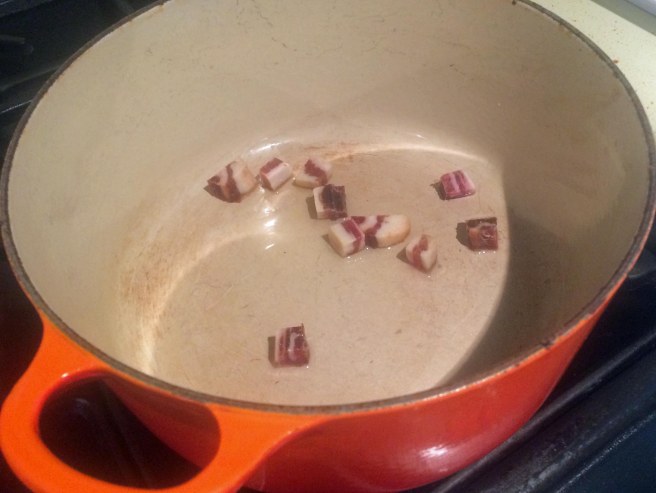
Brown the pancetta or speck in a little of the oil then take out and set aside. This will add a bit of a smokey taste to the sauce which is not absolutely necessary and not part of a classic recipe but DonQui likes it.

IMG_9765 2.jpg

Add more oil and brown the meat on both sides over medium-high heat in a heavy bottomed pan or casserole. Then take it out and set to one side.

IMG_9769.jpg

Add the butter along with the chopped onion, celery, mushrooms and one of the chopped carrots, reserving the second carrot for later. Cook together over a medium heat until the vegetables soften, reduce and begin to colour. Then add a sprinkle of salt, the sage and the lemon zest.

The mushroom bits are not essential but as DonQui has some leftovers in the fridge he decides to use them to give added depth to the sauce.

IMG_9770 2.jpg

Turn up the heat, add the white wine and let it reduce by about half.
IMG_9771.jpg

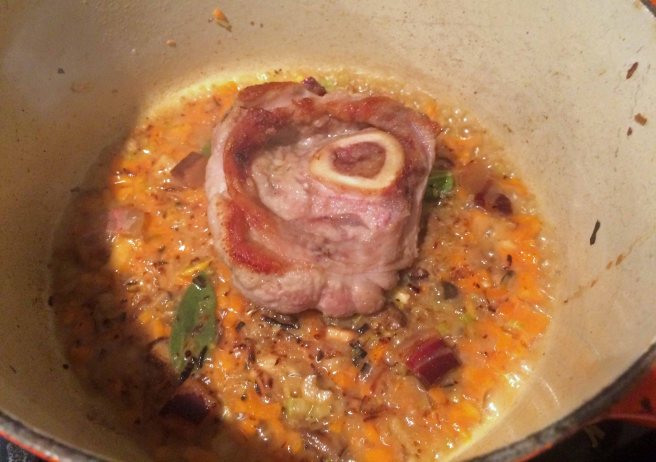
Place the meat on top of the vegetables, add the stock, bring it to the boil. Then cover and let it simmer very gently over a low heat for one and a half to two hours. Check progress and gently turn the meat every 30 minutes or so until the meat is very tender.

Up to this point you can do everything in advance, leaving it off the heat to finish the final steps later.

Ten to 15 minutes  before serving, gently take the meat out of the sauce and place to one side. Then strain the sauce and discard the vegetables. This is not an essential step and a classic recipe will not call for it. DonQui, however, is not keen on vegetables which have been cooked for a couple of hours. They have done their job by imparting their flavour to the sauce.

IMG_9773.jpg

Put the meat and the strained sauce back into the pan along with the second chopped carrot.  Bring it all back up to the boil and simmer for 5-10 minutes until the new carrot bits are cooked but still retain a little crunch (this is how DonQui likes them!).

Taste for seasoning, adding a little more salt or pepper if you think the sauce needs it. You might also wish to considering it reduce a little more uncovered. Then, if you prefer a slightly thickened sauce, add the cornflour/water mixture and bring back up to just boiling so that it thickens.
IMG_9777.jpg

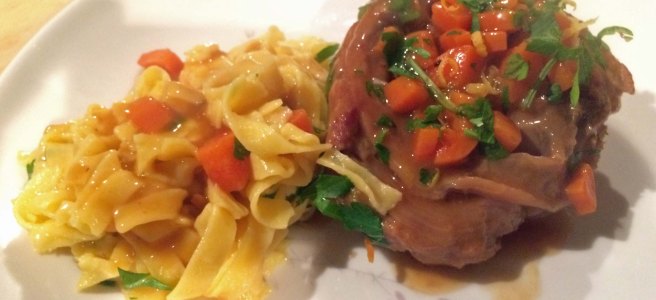
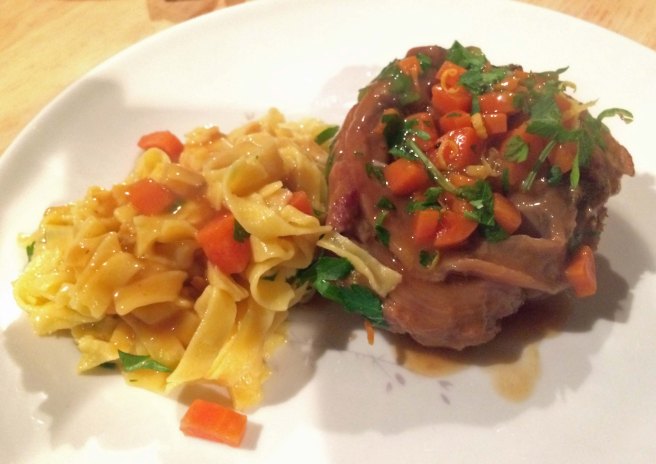
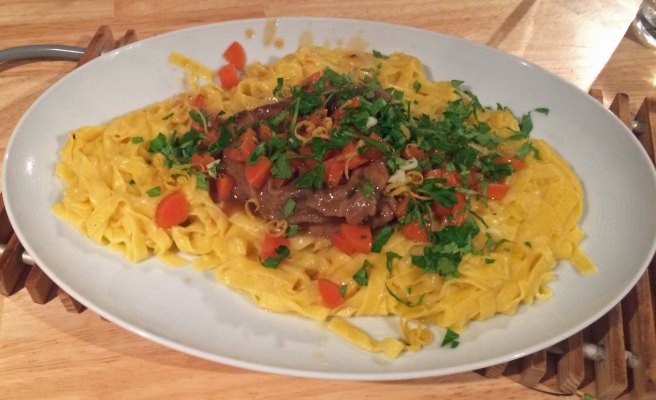
Traditionally Italians tend to eat a meat course on its own without any accompaniment but DonQui likes to serve it with pasta or, perhaps, a saffron risotto.  He spoons the carrots with some of the sauce on top of the meat with a sprinkling of gremolata on top and the remaining sauce on the side.

IMG_9775.jpgGremolata is simply a mix of chopped parsley, finely chopped garlic and lemon zest with a bit of salt.

DonQui thinks this version of osso bucco vastly superior to one cooked in a tomato base. Done this way the delicious flavour of the slow cooked veal shin comes through. Adding tomatoes tends to overpower it in his opinion.
Veal Sauté

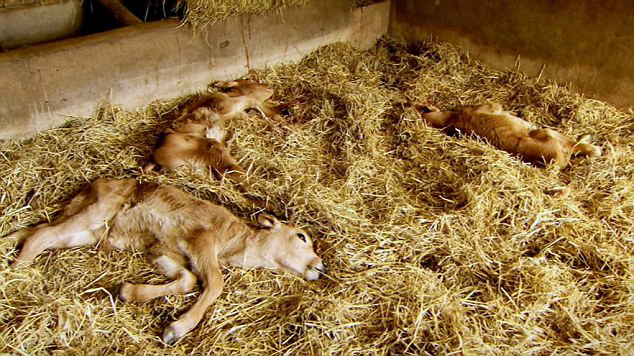
For reasons DonQui’s cannot quite comprehend, most Brits don’t eat veal. Many seem to have animal welfare issues associated with it.  Despite campaigns by various celebratory chefs, British ‘Rose Veal’ has not really caught on even though the calves are raised normally — giving a pinkish tinge to the meat and hence the name.

Adding to the absurdity, Calves’ liver seems to sell well enough — probably because it is not marketed as ‘veal’. Many people who might be squeamish about eating baby cows seem happy enough to eat even younger lambs while avoiding older mutton.

article-2152402-135D6456000005DC-209_634x356.jpg

Coupled with an export ban, the result of misguided animal welfare concerns is that each year in the UK hundreds of thousands of male dairy calves are simply killed at birth and incinerated as there is no British market and they cannot be exported. DonQui thinks that this is a shameful waste. Veal is better for us than beef and it lends itself to a delicious range of cooking methods. It is actually one of his favourite meats.

IMG_9755.jpg

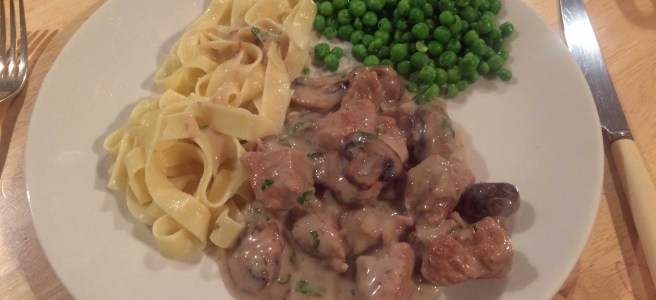
The following recipe is one of his favourites, matching tender veal with mushrooms, wine and cream — a classic combination. He does not always approach it in quite the same way but if you follow this basic recipe you can play around with it as you wish.

Ingredients

Stewing veal cut into chunks. DonQui got his in France where it iwas labelled as ‘Sauté de Veau’. As this recipe involves slow cooking you do not need the very best nor the leanest cuts.

Mushrooms, halved or roughly sliced.

Dry or medium-dry white wine

Veal or chicken stock

Thick cream or crème fraîche

Chopped parsley

Salt and ground white pepper to taste.

Butter and oil for frying

A little corn flour mixed with water (optional in case you want a thicker sacue)

Method

mushrooms.jpg

Fry the mushrooms in butter and oil until they begin to colour and reduce. Take out of the pan with a slotted spoon and set aside.

brown.jpg

Brown off the veal chunks in the same pan, adding a little more butter and oil if necessary.

wine.jpg

Add a good glass of white wine (DonQui apologises for never measuring). Deglaze the pan, scraping up all the brown bits and then letting it reduce a little.

Add the stock (about the same amount as the wine), salt and pepper. Bring back up to the boil and then let it all simmer very gently, covered, for at least 1 1/2 hours or even longer. The idea is to cook it long and slow so that the meat starts to almost fall apart and all the flavour is imparted into the sauce. You could transfer it into a slow cooker if you wish. Be careful not to over-salt at this stage. A pinch will do. You can always add more later but much harder to take it out. Once the meat is beautifully tender you can leave it to finish off later.

IMG_9753.jpg

Ten minutes before serving add the mushrooms you set aside earlier and let it all cook together for 5-10 minutes. Taste the sauce and maybe let it reduce a little to add greater depth of flavour. If you wish a thicker sauce then add the cornflour-water mixture and bring up to a gentle boil so that it thickens.

cream.jpg

Then stir in a good dollop of cream and mix it in well on a low heat so it comes almost back up to the boil but not quite. If you cook it too vigorously at this stage the cream may separate.

serve.jpg

Taste for seasoning then sprinkle with parsley and serve immediately.

IMG_9760.jpg

DonQui likes this dish with noodles or rice. In this case he had it with egg tagliatelle with peas. The bright green peas add an appetising splash of colour. Carrots also go very well with the wine-cream sauce.

The Frontline Club

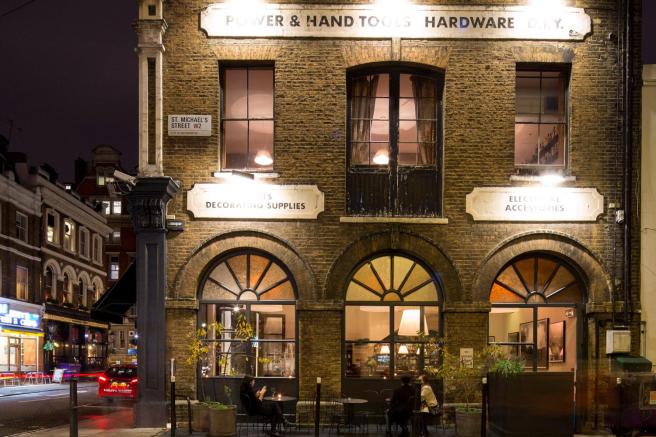
On an otherwise unremarkable street near Paddington Station lies DonQui’s home away from home in London…

frontline-club-pic

…this is the Frontline Club.

image.jpg

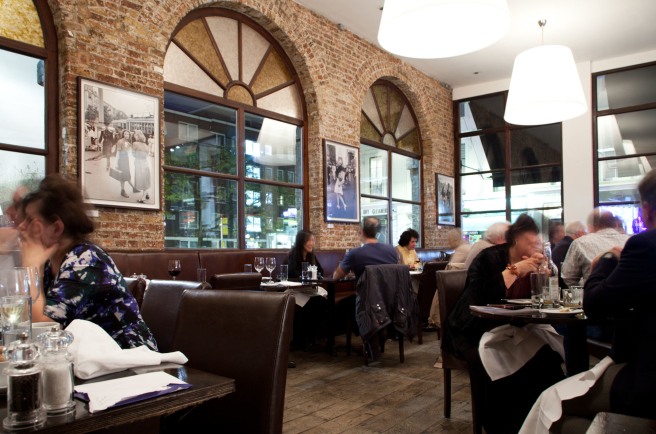
On the ground floor at 13 Norfolk Place, London, W2 1QJ, is the excellent Frontline Restaurant which is open to non-members. While most of this part of London is given over to quick eats and the occasional good Middle Eastern or Malaysian establishment, Frontline offers excellent modern British cuisine. Fresh ingredients are often sourced from the Suffolk/Norfolk borderlands not far from DonQui’s home paddock of Southwold.

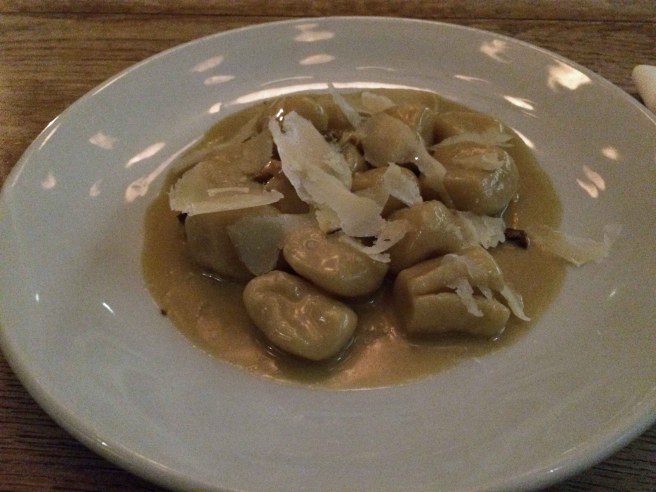
gnocci.jpg

The menu is relatively small with a few standard classic dishes and an ever-changing array of more interesting choices. Tonight DonQui opts for a deliciously simple dish of gnocchi with wild mushrooms and pecorino cheese. It is utterly delicious and quite satisfying, the cheese adding a lovely tang to the velvety mushroom sauce.

Membership.jpg

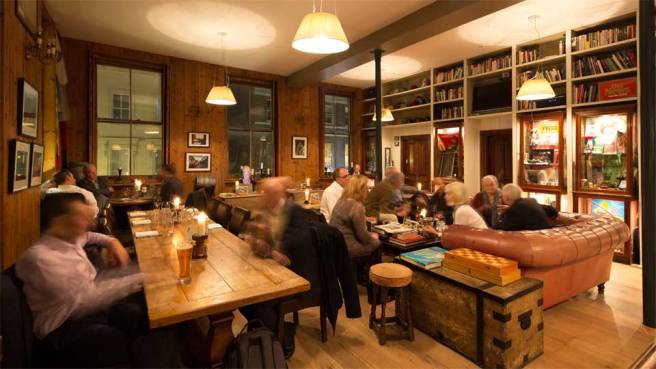
Upstairs is the cosy members’ clubroom and bar. It is a perfect place to sit back, relax, have a drink or three and do a bit of work at the same time. DonQui is not the only one with his lap top open and a pint of Adnams beer (brewed in Southwold) by his side. There are also a number of rooms and it is in one of these where DonQui will rest his head tonight.

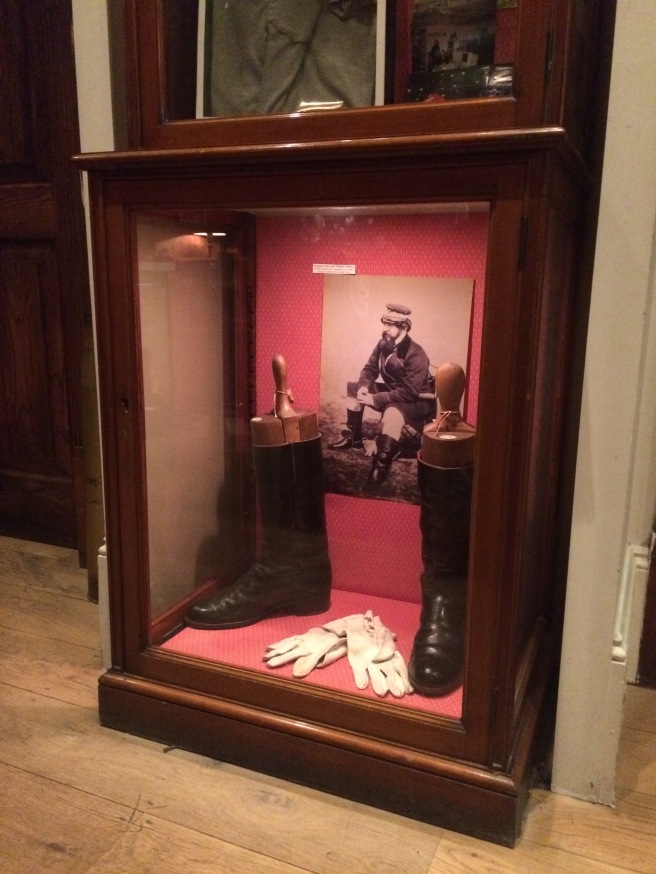
IMG_9735.jpg
William H. Russel’s boots and gloves from the Crimean War

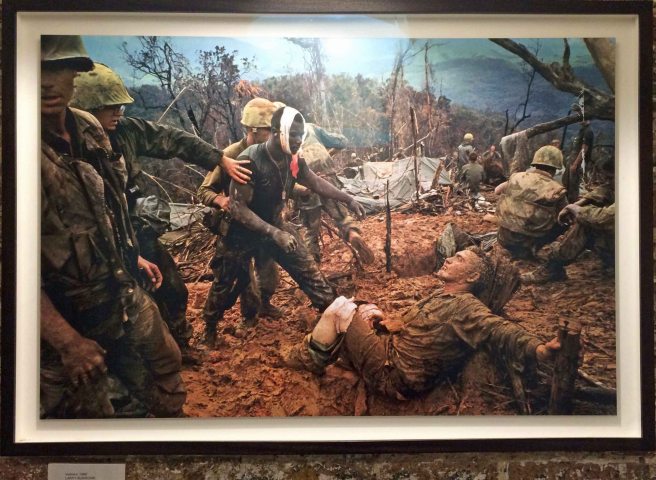
The club was founded by war correspondents and caters particularly to journalists who have worked on the ‘frontline’. The restaurant and club are decorated with iconic photographs of war and  conflict while the members clubroom housed bric a brac brought back by journalists from the Crimean War in the 1850s to modern Afghanistan and Syria.

vietnam.jpg
One of the iconic war photos adorning the walls – this from the Vietnam War

As DonQui has a bit of a history trotting around various war zones with the media he feels quite at home here. You do not have to have had such experiences to become a member. If images of war and conflict put you off your dinner, however, you may not feel quite as at ease here as DonQui does.

IMG_9740.jpg

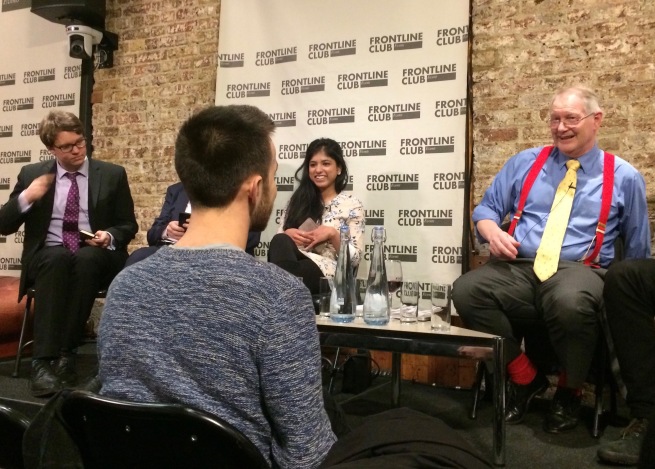
The Frontline hosts an interesting series of talks, screenings and workshops which are also open to non-members.

In 2010 Vaughan Smith, the Frontline’s founder, offered refuge to Julian Assange of Wikileaks. This caused quite some consternation amongst many members, DonQui included. Fortunately the Club distanced itself from Vaughan’s personal support for Assange. This did not prevent the American journalist James Kirchick from slagging off the club in The Spectator, as place “where members preen like latter-day Hemingways amid lovingly curated war-reporting memorabilia.”

Maybe DonQui fancies himself as a latter-day Hemmingway. Whether true or not he rather likes the place.

Chocolate Indulgence

Earlier last year DonQui visited Bakewell. While there Duchess treated him to a day long Chocolate making course at Harrington’s School of Food and Drink.

choco course.jpg

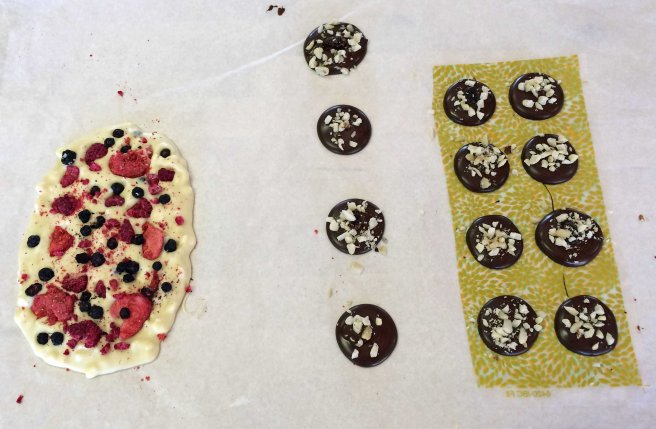
Apart from making some rather delicious treats, DonQui learned quite a lot about chocolate and how to use it.

chockies.jpg

Generally speaking DonQui tends to concentrate on savoury courses, often going without dessert, having cheese instead or simply making a fresh fruit salad. Now, despite a slightly expanded Christmas waistline, he decides to put his chocolate skills to the test and try his hand at making a chocolate mousse.

With apologies for DonQui’s usual lack of precision measurements, his recipe is as follows:

ingedients.jpg

Ingredients
good quality dark chocolate broken up into bits (about 2/3 of a bar)
a knob of unsalted butter
3 egg whites
2 egg yolks
a splash of whipping cream (or liquid double cream)
a scoop of caster or icing sugar

Method

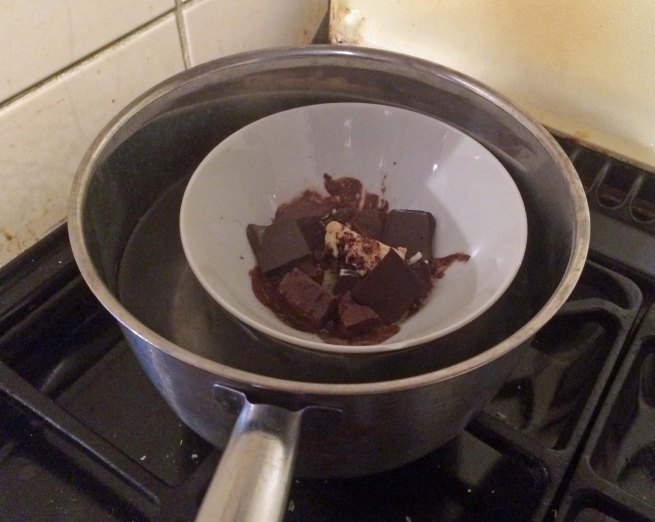
bain marie.jpgGently melt the chocolate and butter in a bain-marie (in a bowl over warm water)
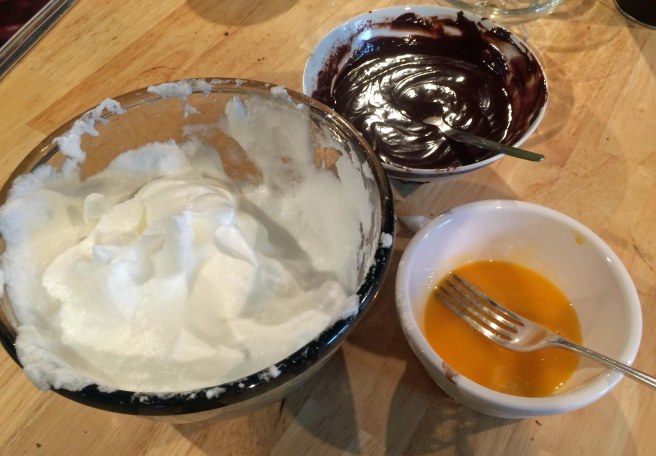
Whip up the egg whites until they form stiff peaks then gradually add in the sugar, continuing to beat it all together.

Beat the egg yolks and set aside

set asside.jpg

Warm up the cream until just short of boiling

Take the melted chocolate and butter mixture off the head and gradually add the warm cream, stirring it gently until well mixed. Then add the beaten egg yolk and do the same.

Gently fold the chocolate mixture into the stiff sugared egg whites. Mix it all together but not too vigorously as that will collapse the egg whites.

in fridge.jpg

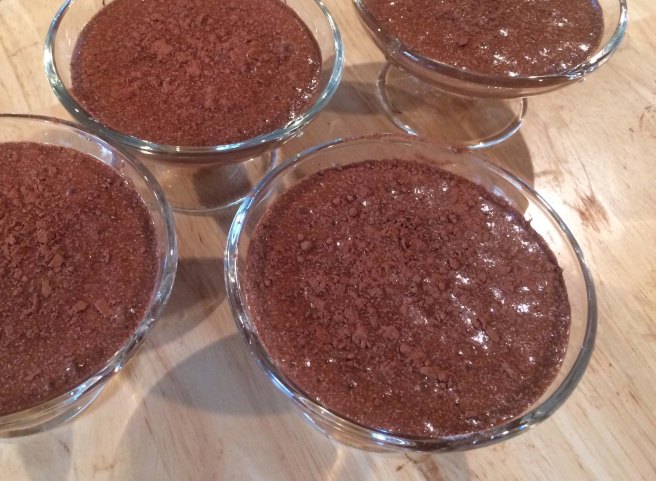
Spoon into serving dishes, sprinkle with a bit of unsweetened cocoa powder on top and put in the fridge for at least 6 hours.


Black Forest Adventures

Reisling.jpg

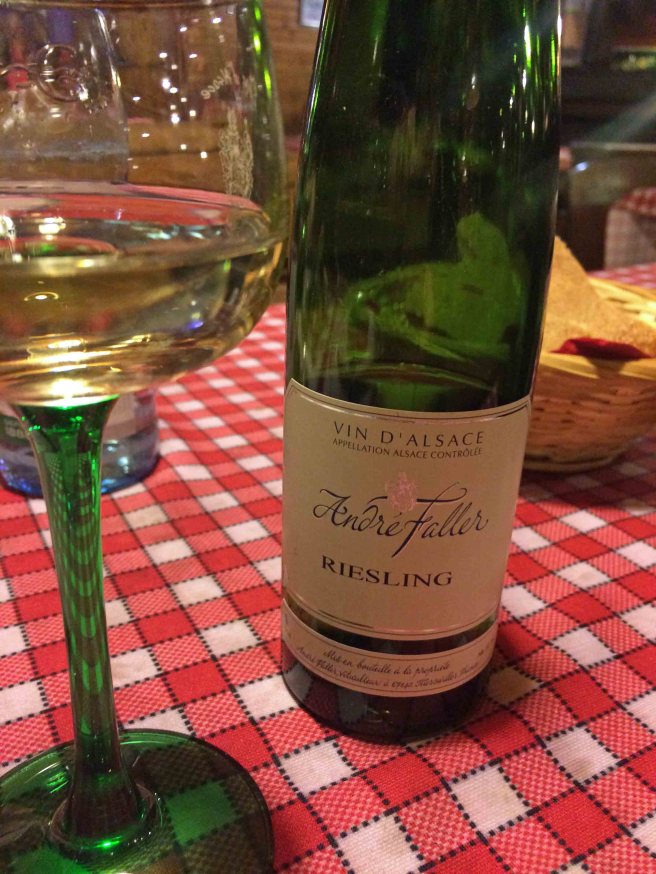
After a couple of days in Strasbourg, during which DonQui took the opportunity to have a glass or three of the most excellent Alsatian Riesling (unfortunately very hard to find in the UK), he hires a car and makes his way over to the German side of the Rhine for a brief trip around the Black Forest.

Durbach.jpg

His starting point is amongst the vineyards of Durbach where, in DonQui’s opinion, some of the best wine in Germany is to be found. None of it is exported so it is a treat he very much looks forward to whenever he is in the region. Those whose who have no experience of German wine, apart from the mass-produced stuff that makes it overseas, may be surprised by the superior quality that the inhabitants of the Rhine valley keep for themselves

Rebstock.jpg

He stays at the most excellent Hotel Rebstock. In high summer season the prices there can be a bit eye-watering but off season it is very reasonable for a top-end establishment.

food.jpg

The food is superb…

atmosphere.jpg

.. and the atmosphere most congenial.

fire.jpg

In acknowledgement of the cold winter temperatures, they even lit fires in the grounds.

black forest.jpg

Beyond the low vine covered hills at the edge of the Rhine Valley lies the Black Forest, so named for the dark pine trees which grow on the slopes of the steep hills (almost low mountains).

house.jpg

As he descends into the valleys DonQui cannot help but admire the wonderful architecture of the Black Forest farms. The pre-Christmas scene is made more atmospheric by the dusting of snow on the hills. At one point he spies two magnificently antlered Hirsch (large deer) grazing in a meadow.

triberg.jpg

DonQui’s destination is Triberg, home of the Cuckoo Clock and also Germany’s highest waterfall. A well maintained walkway allows him to wander up alongside the waterfall where icicles form along the sides.

Gengenbach.jpg

On the way back he stops off at the beautifully preserved late-medieval town of Gengenbach. This was a Reichsstadt (Imperial city) in the 15-1700s — held directly by the Holy Roman Emperor in Vienna rather than being controlled by local nobles. A Christmas market is in full swing so DonQui takes the opportunity to stock up on a few comestibles.

town hall.jpg

The town hall is decorated as an advent calendar with each window representing the days before Christmas.

IMG_9329.jpgWandering through the Black Forest it is hard not to imagine ancient stories of wolves, trolls and fairies. DonQui even spies one dipping her toes in a pond.

Strasbourg by Train

DonQui is off on his travels again. This time he is going to Strasbourg — one of his favourite European cities.

bus-class

He has rather gone off flying these days. Except for those far too rare occasions when he manages to upgrade to business class, he finds airports and aeroplanes increasingly unpleasant.

train
Encouraged by the success of his trip to Spain by train last year, DonQui again decides to take the Eurostar from London and the super fast TGV (train à grande vitesse) on to Strasbourg.

platform

Rather than changing trains in Paris he takes a tip from the kindly Man in Seat 61 and goes to Lille where he can change trains at the same station. He booked his tickets through Loco 2 which makes trans continental booking all very simple.

It all goes very smoothly. The 30 minutes between the Eurostar’s arrival in Lille and the TGV’s departure to Strasbourg is more than enough time. Changing in Paris necessitates a change of stations which involves more of hassle, uncertainty and time.

So why Strasbourg and why this time of year?

pl-keber

Well it is cold — bitterly so from DonQui’s perspective even if his Canadian relatives might beg to differ. Claiming the title of ‘Christmas Capital’ Strasbourg hosts the oldest constantly running Christmas market in Europe, dating back to 1570.

decorations.jpg

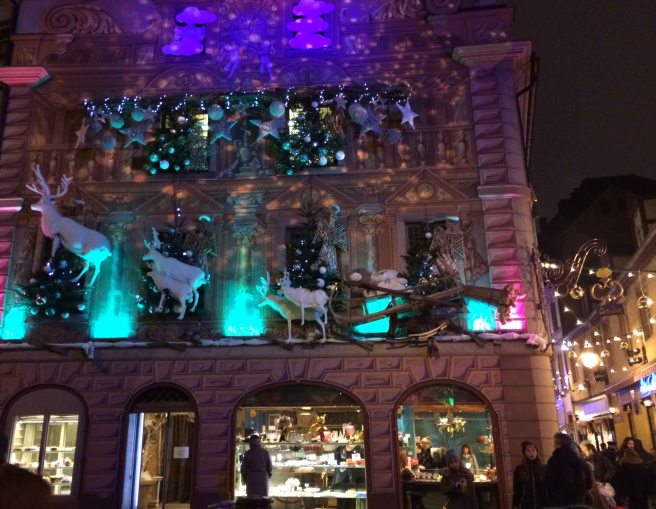
Some of the decorations are a little bit ‘over the top’ perhaps so much that they start to become ironic. Despite the cold weather the atmosphere is congenial and there are plenty of places to warm up with waffles, Glühwein and even hot spiced orange juice.

resto

Packed full of excellent restaurants serving hearty Alsatian fare washed down with excellent local wines (Alsatian riesling is the best in DonQui’s opinion) there are plenty of great excuses to get out of the cold and settle in for a couple of hours.

p-france-1

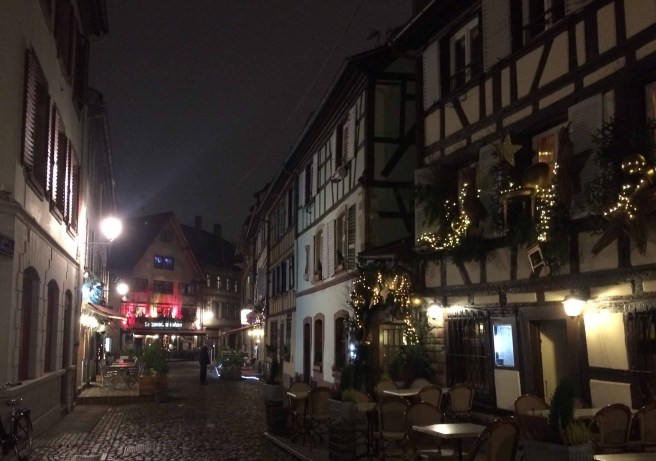
The wonderfully compact medieval centre of Strasbourg is made for strolling although a boat tour around the circumvallating River Ille is well worth it in DonQui’s opinion. With its mix of French and German culture it is the sort of place to wander around, discover hidden secrets down a cobbled ally, and take in the atmosphere. It is just the sort of place DonQui loves returning to.


The Food of Kings

Beasts of field, stream and forest are going into hiding. It is game season and DonQui is in a particular carnivorous mood.

With a herd of visitors on their way, DonQui decides that a haunch of venison is in order. There are few meats he enjoys more than this food of Kings — except perhaps for wild boar. Good wild boar is almost impossible to find in England. What is sold as such is cross-bread with domestic pigs, or farmed, or both. So venison it is.

1460978_718114018198994_959428340_n.jpg

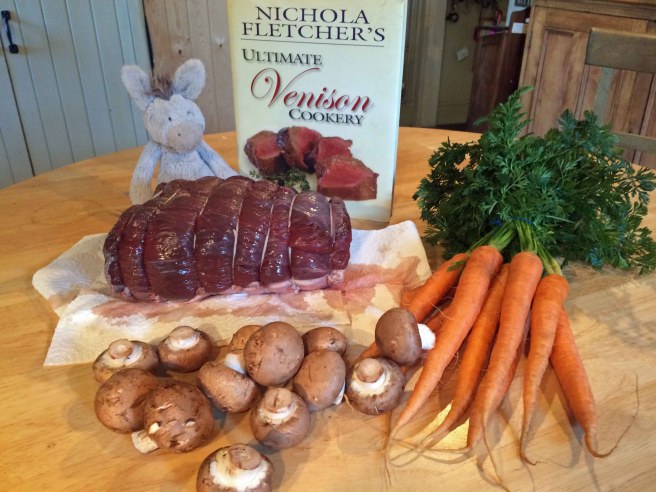
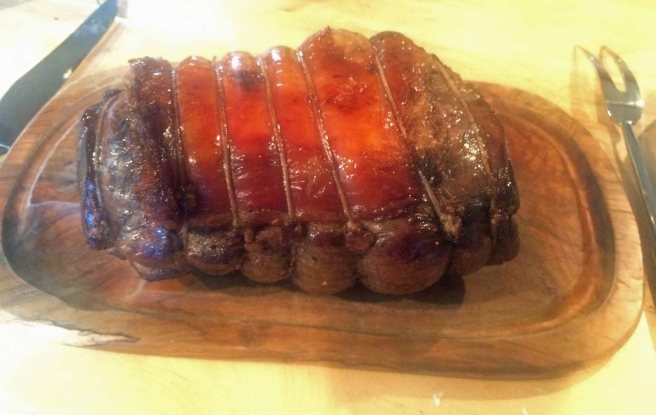
The friendly butchers at Mills and Sons (and daughters) in Southwold, have prepared a particularly excellent 1.7kg joint for him. It is from a wild Red Deer hind which had been happily running around the local fields not very long ago. It has been hung, tied and larded with fat to gently baste the meat as it cooks. Proper wild game has virtually no fat, this is one reason why it is such a health source of protein. A bit of larding (added fat) on the outside really helps the cooking process and stops the outside from drying out. Some vegetables from the local farm shop will be added to the feast.

larding

Aiding him in his quest to produce the perfect roast venison is Nichola Fletcher’s most helpful Ultimate Venison Cookery book. She advises roasting times based on the width of the joint rather than overall weight. This makes sense to DonQui as, after all, a long thin piece of meat might weigh more than a short fat one but is likely to cook more quickly.

The trick is to roast quickly at high temperature followed by a very long resting time. When resting the joint will continue to cook slowly — the result being something that is evenly pink and tender. As it has no fat, roast venison will dry out, becoming dry, tough and tasteless if it is cooked more than ‘medium rare.’

brown

DonQui rubs the outside with a mix of salt and pepper then browns the haunch on all sides in oil and butter at high heat. This gives the outside nice colour and flavour. If you do not do this beforehand the outside can tend to look a little greyish.

Then he pops it in a pre-heated oven at 200º C for 40 minutes. This is based on Nichola Fletcher’s advice of 3 minutes per centimetre of width. DonQui’s haunch is 14cm thick at the widest point so 40 mins seems about right. Then he takes it out of the oven, covers it loosely in tinfoil, and leaves the meat to rest for another 40 minutes while he gets on with the roast potatoes and finishing off the gravy.

resting

The lovely juices which collect in the pan during the resting process are added to the gravy. This DonQui makes from a variation of his usual rich meat sauce with the addition of 12 crushed juniper berries, mushroom stalks, thyme, rosemary, garlic, tomato paste and red current jelly. This time he does not make a roux, as through reduction it seems thick enough. This is rather fortuitous as, unbeknownst to him at the time, one of his guests likes to avoid gluten.

roastOvercooking roast venison will toughen it and leave you with nothing better than old shoe leather. The meat should be a lovely even pink throughout — DonQui is delighted to see that this is indeed the case.

carved

As he carves, he can tell that it is also beautifully tender. He has heard that some people do not like rare meat. If that is the case then they should not try roasting a haunch. Far better in that case to slow cook diced venison in a wine-based stew until the meat falls apart.

final

DonQui serves his venison carved on a platter with some of the gravy poured on top with the addition of fried mushrooms along with a scattering of chopped parsley and thyme.

Slow Roasted Lamb Shoulder

DonQui has been looking forward to trying out the lamb shoulder he had marinated overnight (see previous post).

img_9231As soon as he gets up, even before his morning cup of tea, DonQui chops up some vegetables (shallots, carrots and celery, along with a couple of garlic cloves and a sprig of rosemary) and pops them into a clay oven (Römertopf) which had been soaking in water overnight.
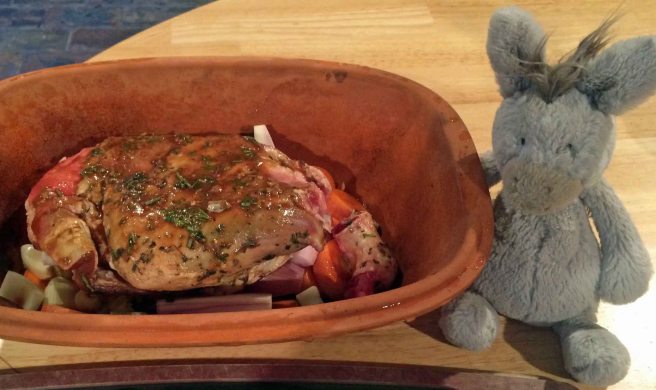
img_9232

The lamb goes on top along with the residual marinade (see previous post), a splash of white wine and a splash of lamb stock.

img_9233The lid goes on and the clay pot goes into a cold oven (otherwise it could crack) which DonQui turns up to 120º C. It resides undisturbed in the oven for the next 5 hours.

img_9235

DonQui seeks a peak at around the 3 hour point. All looks great and the kitchen is filled with the most wonderful smells.

img_9236Thirty minutes before serving, DonQui sets the meat off to one side to keep warm while he cooks up some red Camargue rice and prepares the vegetables.

img_9238To make the gravy he strains the lovely juices from the bottom of the clay pot into a base of lamb stock thickened with a roux of flour and butter. He discards the vegetables as they have done their job infusing the sauce. He separately prepares some far less cooked carrots, broccoli, mange-tout, mushrooms and cherry tomatoes  for eating.

DonQui apologises that he forgot to take a photo of the finished dish. The lamb was so tender that he just pulled it apart, set it on a bed of rice, and arranged vegetables around it. He poured some of the sauce overtop, with extra on the side along with some recurrent jelly.

He will most definitely try this again.

Food Anticipation

DonQui loves slow cooked food and he also loves lamb.

A neighbour who keeps sheep as living lawnmowers has just had a lamb slaughtered and DonQui takes the opportunity to acquire half of one of them.

He decides that tomorrow he would like to try cooking a slow roasted lamb shoulder.

lamb-shoulder

His first step is to marinate half a shoulder in a mixture of rosemary, thyme, white pepper and crushed garlic, along with a dash each of white wine and soy sauce, as well as a teaspoonful of Dijon mustard. He will leave this covered in the fridge overnight.